Tacoma changed tax breaks for apartment developers. How will they help affordability?
READ MORE
Inside Tacoma’s apartment boom
Thousands of units are in development around the city, but will it help bring down sky-high rent. This series explores the factors at play.
Expand All
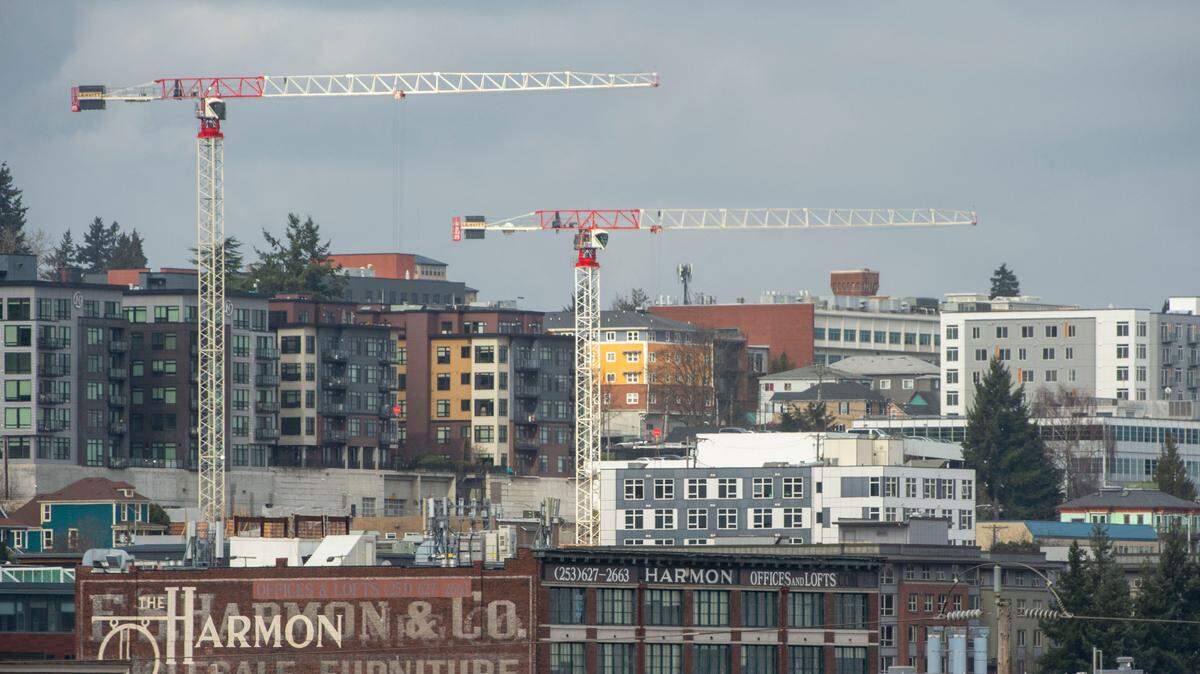
Thousands of new apartments are on the way in Tacoma. Will they help bring down rents?
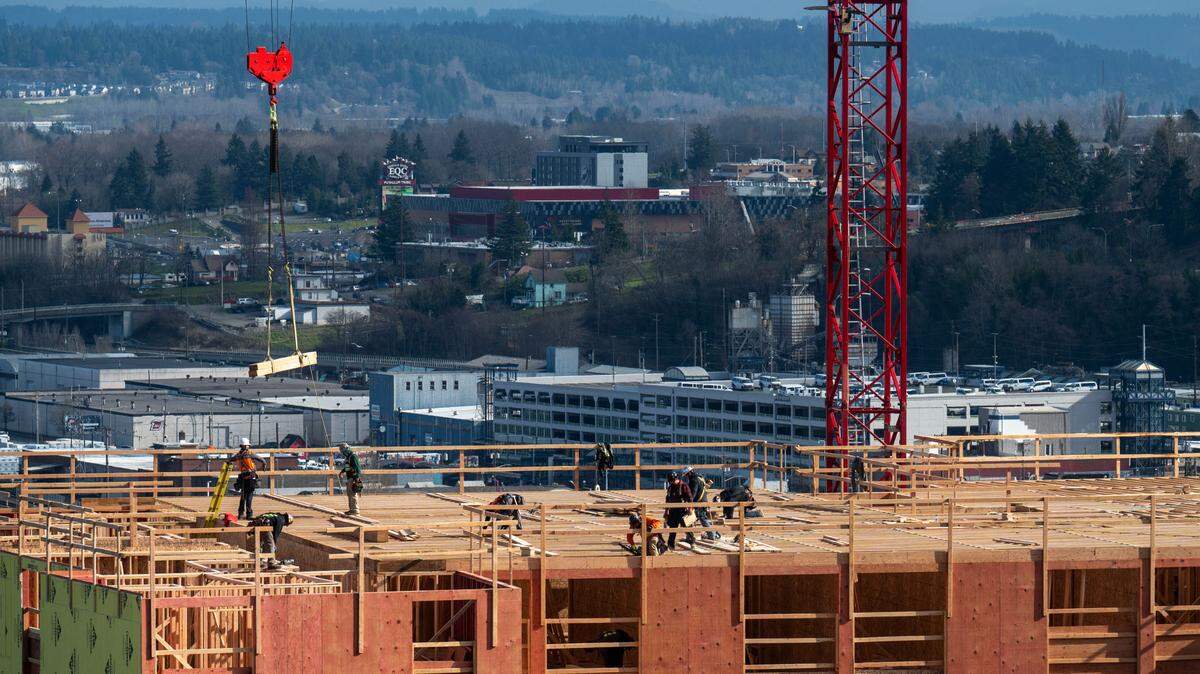
Here are list, maps of multifamily housing under construction or recently completed in Tacoma
Tacoma changed tax breaks for apartment developers. How will they help affordability?
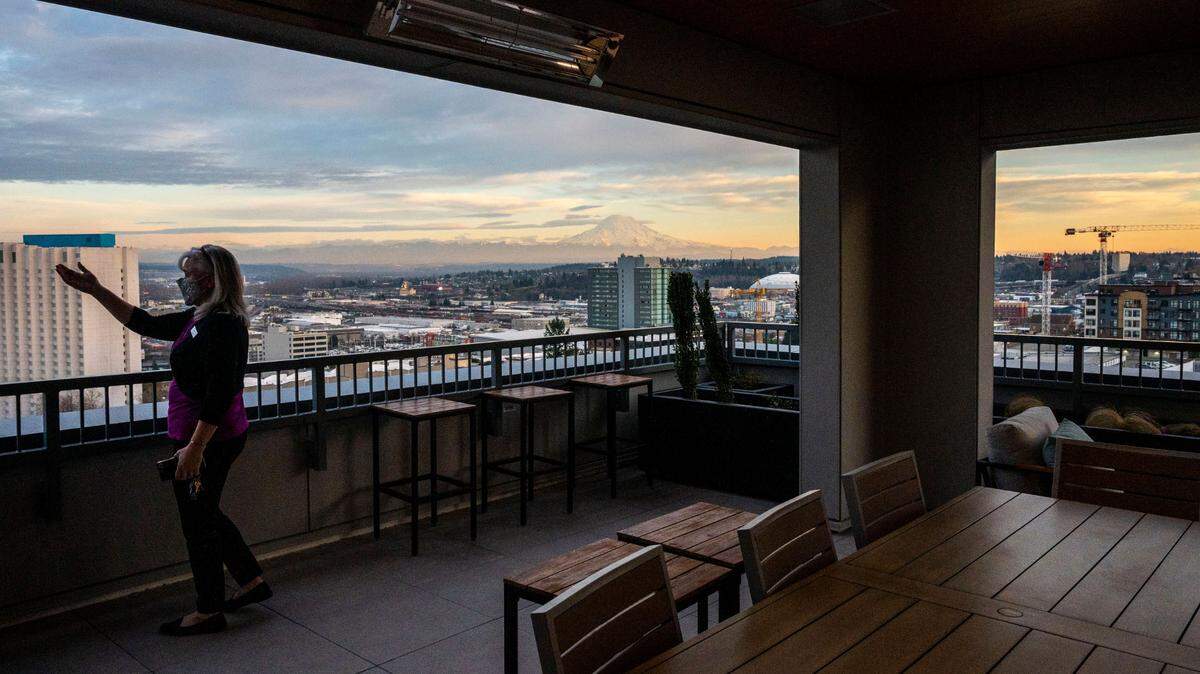
It’s not always easy to build apartments in Tacoma, despite heavy demand. Here’s why
Long-sought changes to Tacoma’s multifamily property tax exemption program for developers are on the way, just maybe not as quickly as some might like.
Most of the changes approved in December that were aimed at bringing relief to Tacoma’s rental rates are slated to take effect 90 days after passage — March 14.
The MFTE program has long been a target of critics. A 2019 state audit was inconclusive as to whether MFTEs, used by cities statewide, were actually working as intended.
Tacoma’s MFTE program received an overhaul last year from the Tacoma City Council after criticism the incentives had essentially turned into tax breaks for creating luxury units, with vastly more market-rate development pushing rents ever higher.
The program offers two versions. An eight-year version covers strictly market-rate unit creation, while the 12-year version sets aside at least 20 percent of units in each project at a rent-restricted, or “affordable,” rate.
Changes to the program approved last year also adopted use of a 20-year version, similar to the 12-year, that is tied to permanently affordable projects, with at least a quarter of those units built by or sold to a qualified nonprofit or local government to ensure permanent affordable housing.
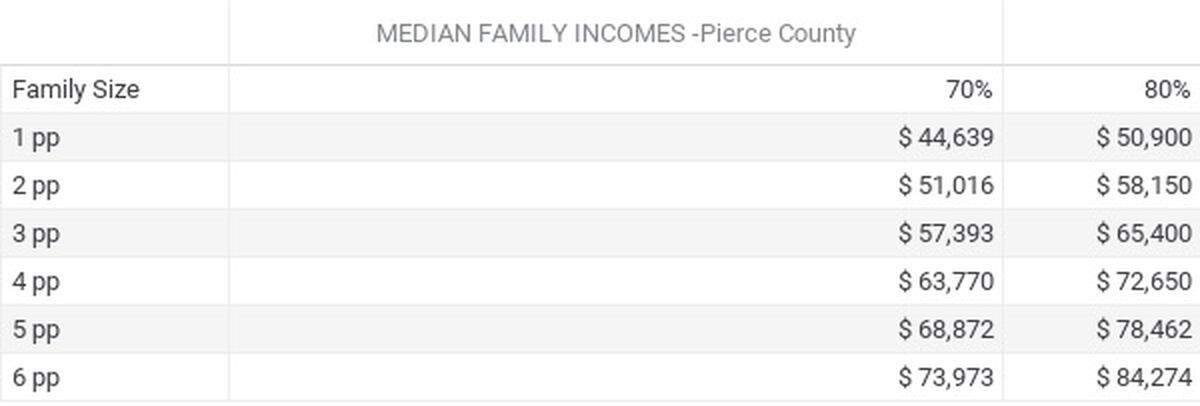
In the 12-year model, “affordable” has meant a rent-restricted rate set for renters with household incomes no greater than 80 percent of the area median income, based on federal Department of Housing and Urban Development data.
The MFTE changes approved by Tacoma’s City Council last year now apply 70 percent of the median family income adjusted for family size for Pierce County as reported by HUD for affordable housing units. That percentage is set to be revisited yearly.
The change was touted by those involved as delivering a significant win for those seeking MFTE reform, but projects already submitted or previously approved will retain the previous 80 percent threshold, with the new formula kicking in March 14 for projects received after that date.
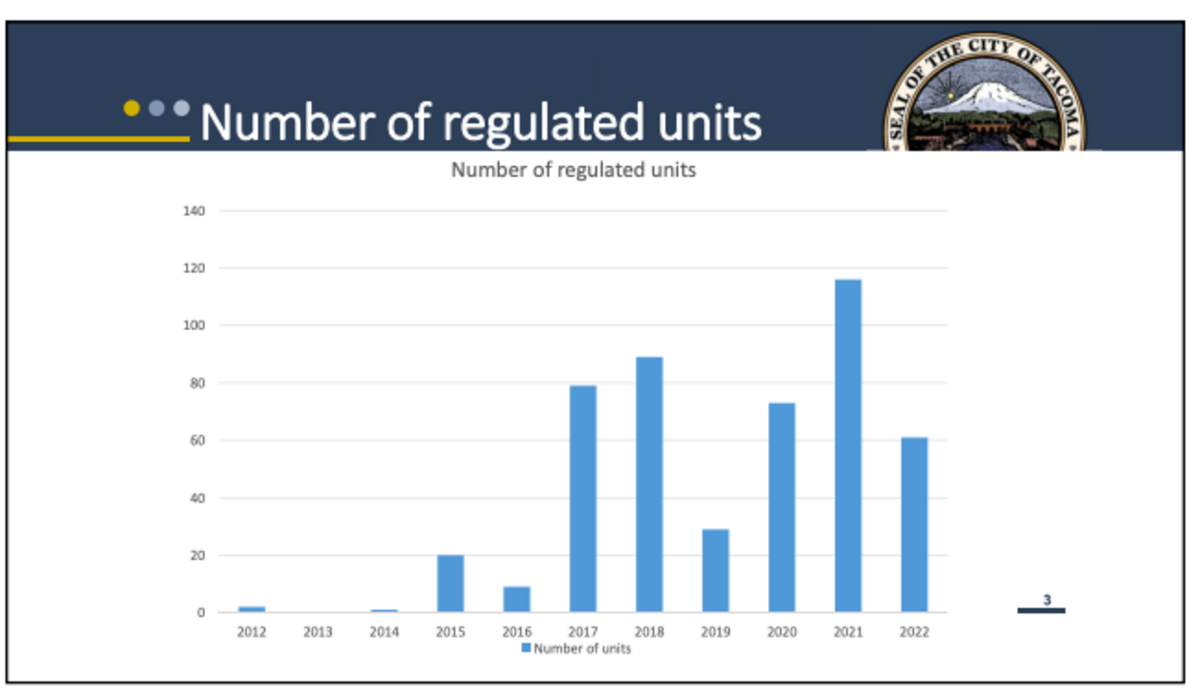
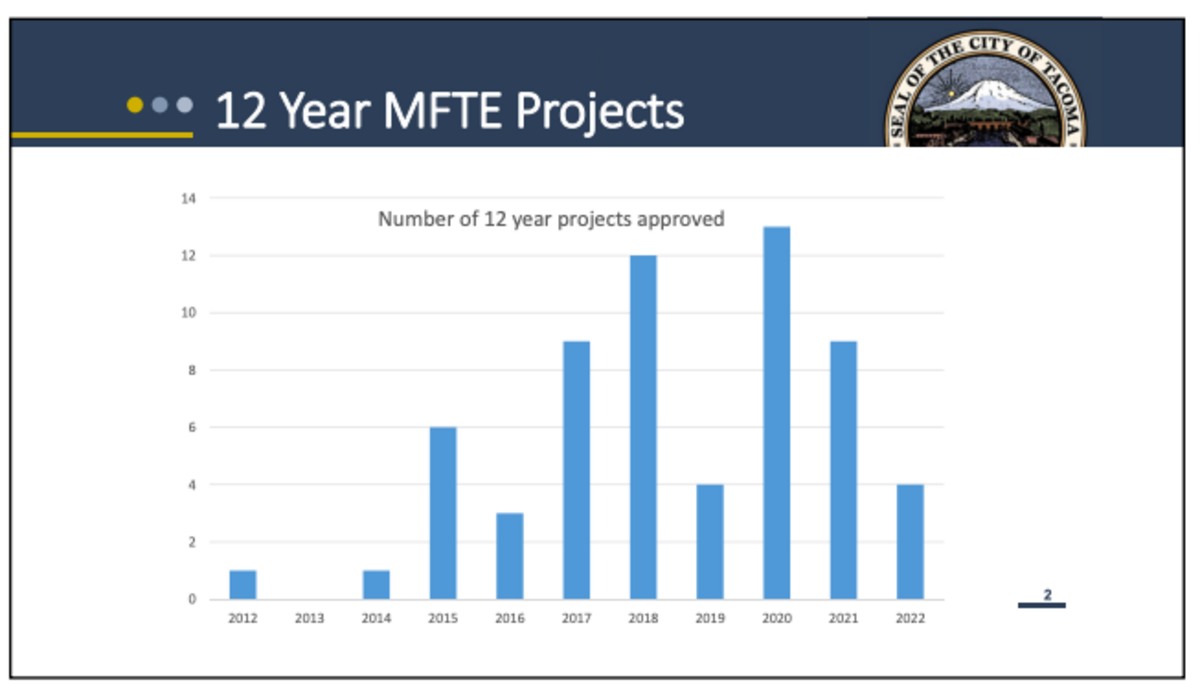
Debbie Bingham, project manager with the city’s Economic Development Services Department, told City Council members Feb. 1 that use of the 12-year had grown compared with earlier years, with “more than half of the projects that come through are 12-year projects.”
Other changes approved in December to the MFTE program also face delays, some beyond the March start date.
Expansion of the 12-year and 20-year MFTE to areas rezoned as “midscale” through the Home in Tacoma process will kick in once rezoning is complete.
Also, “the 12-year and 20-year MFTE ... shall not become available in the neighborhood commercial nodes until a comprehensive review and update of the design standards for projects which include residential development in those commercial areas is completed,” according to ordinance language.
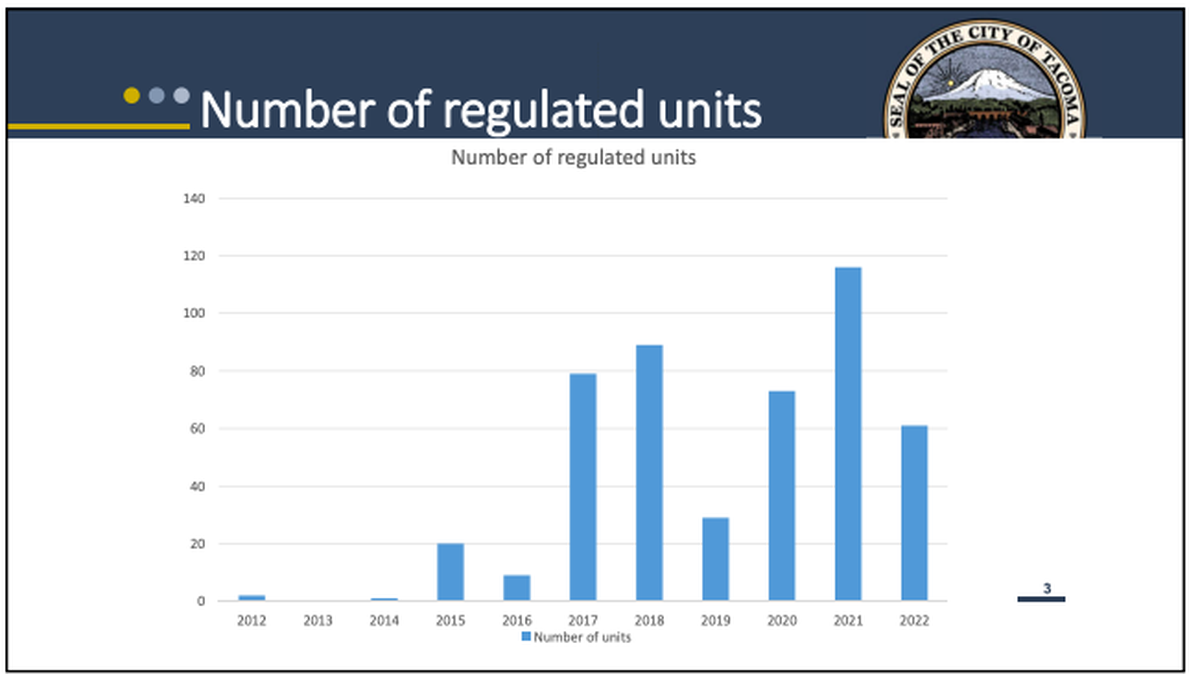
It’s the number of MFTE projects making their way to City Council before the changes and lower rates kick in that are adding up now, locking in the 80 percent rate instead of 70 percent for affordable units.
So far in 2022 the City Council has approved seven projects for MFTEs under the current formula: six received approval for the 12-year version and one switched from an already-approved 8-year to the 12-year version.
Those projects will create 71 new affordable units and 271 market rate through the MFTE program, based on a review of paperwork submitted for council agendas this year.
According to the city as of Feb. 16, there are 10 projects in the cue to take to council, likely before the March switch. Seven are 8-year projects and three are requesting the 12-year version with 87 affordable units.
All projects combined will produce 587 market-rate units.
Asked by Mayor Victoria Woodards at the Jan. 4 City Council meeting why the start date seemed delayed, Bingham said giving developers time to absorb any changes was standard practice.
“I don’t think that we’re necessarily … required but that’s just kind of standard practice on what we do,” she said.
“I just wanted to ask that question so everyone could hear the answer,” Woodards replied.
Bingham noted at the Jan. 4 session that applications would still be accepted before the March switch would go under the old rules. “So you could see quite a few that would be at 80 percent before the change comes into effect.”
Council member John Hines, who helped shepherd the MFTE changes, acknowledged at the meeting that in conversations with developers, “Many of these projects take a long time to come to fruition … a two- or three-year period that are in the pipeline,” and that the delay offered “some space” to project timelines.
At least one project has been approved this year that was already mostly constructed and requested the 12-year version at the 80 percent rate.
New apartments at 1624 E. 32nd St. were nearly constructed when the project came before council to get its 12-year exemption. Bingham at the council’s Jan. 25 session blamed COVID and paperwork lost in the shuffle for the late request.
“It does have an unusual circumstance that this project is mostly completed,” she told council members. “Construction began in 2020 … They believe that the architect had applied for the exemption for this project when in fact, they had not. All of their pro formas and financial assumptions were based on using the exemption. It was only when the project was nearing completion that they were looking for a lender for permanent financing that they realized the mistake.”
She added: “We’ve had kind of just an unwritten in-house policy, because it is supposed to be an incentive, that people should apply before they start building but … we have made exceptions in the past and this really did seem to be just something that got lost in the middle of COVID ... .”
The council allowed the project to get the 12-year version for its 65 market rate and 17 affordable units.
Megan Snow, media representative for the city, told The News Tribune that over the life of the MFTE program, “there have been other instances where the approval has come after construction has begun.”
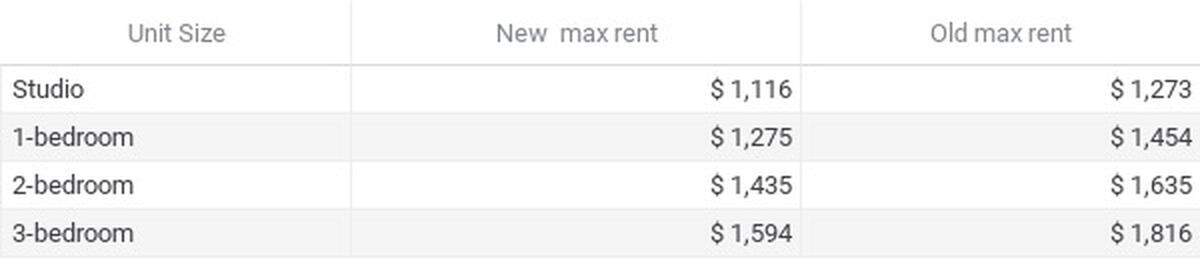
One final note: What’s “affordable” on paper given the city’s formula can sometimes look off compared to market rate, with the base rate for rent restricted affordable sometimes more expensive than market rate.
The affordable rent presented to council in the 32nd Street project for a one-bedroom, one bath, 650-square-foot apartment was listed at $1,454, compared with $1,450 for the same unit at market rate.
The difference? Utilities are included in the affordable version.
Correction: Changes included in Ordinance No. 28798 go into effect March 14. An incorrect start date was reported in a previous version of this article, based on information provided at the Jan. 4 City Council meeting.
This story was originally published February 23, 2022 at 5:00 AM.