It’s not always easy to build apartments in Tacoma, despite heavy demand. Here’s why
READ MORE
Inside Tacoma’s apartment boom
Thousands of units are in development around the city, but will it help bring down sky-high rent. This series explores the factors at play.
Expand All
Thousands of new apartments are on the way in Tacoma. Will they help bring down rents?
Here are list, maps of multifamily housing under construction or recently completed in Tacoma
Tacoma changed tax breaks for apartment developers. How will they help affordability?
It’s not always easy to build apartments in Tacoma, despite heavy demand. Here’s why
Tacoma has its hands full keeping multifamily developments on track to the finish line, and some notable projects offer examples of what it takes to get there.
Financing challenges, changing investors and changing property-tax exemptions midstream are just some of the things that can add time to a project. Recent projects have made their way into the public back-and-forth between the departments shepherding the developers through the process and elected officials faced with approving or denying requests.
SWITCHING MFTEs AND DEVELOPERS
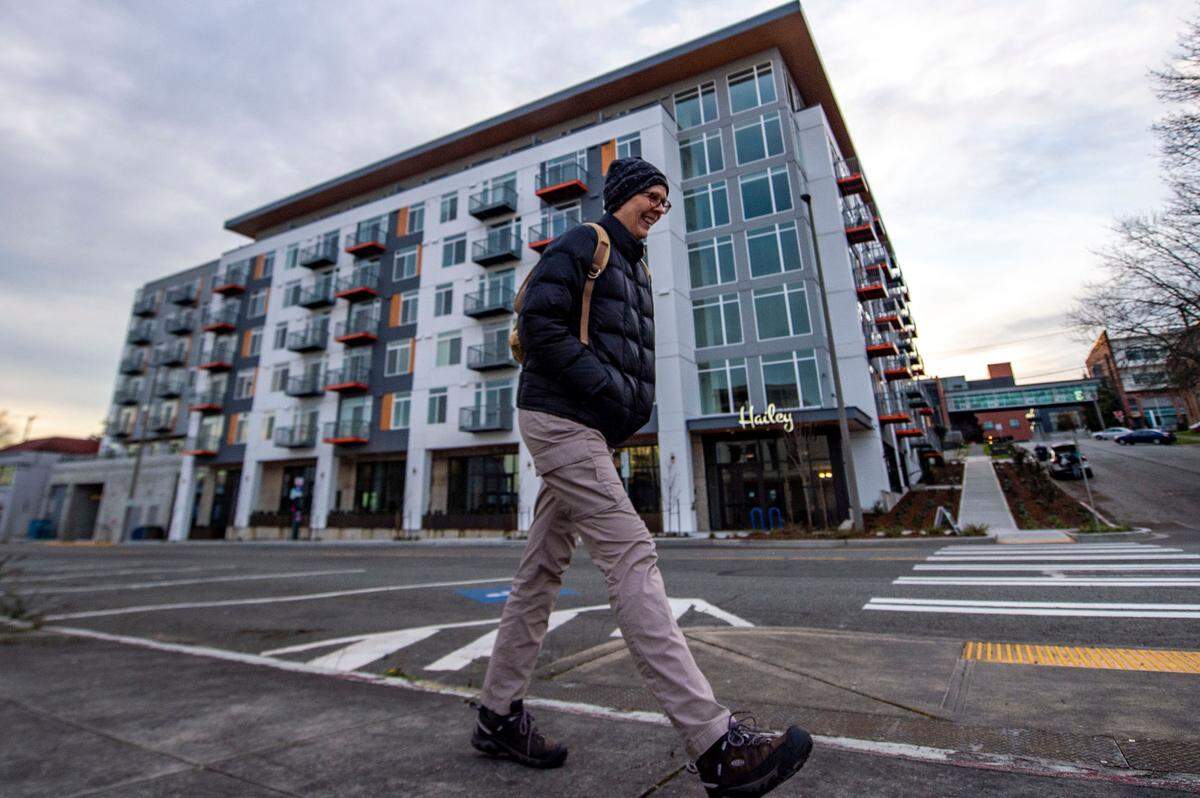
The Hailey Apartments, 1210 Tacoma Ave. S., last made headlines in 2019 when Vietnamese development company HQC USA LLC, sought to switch from a 12-year multifamily property-tax exemption to an 8-year version in its development agreement with the city. It sought the change after running into financing issues.
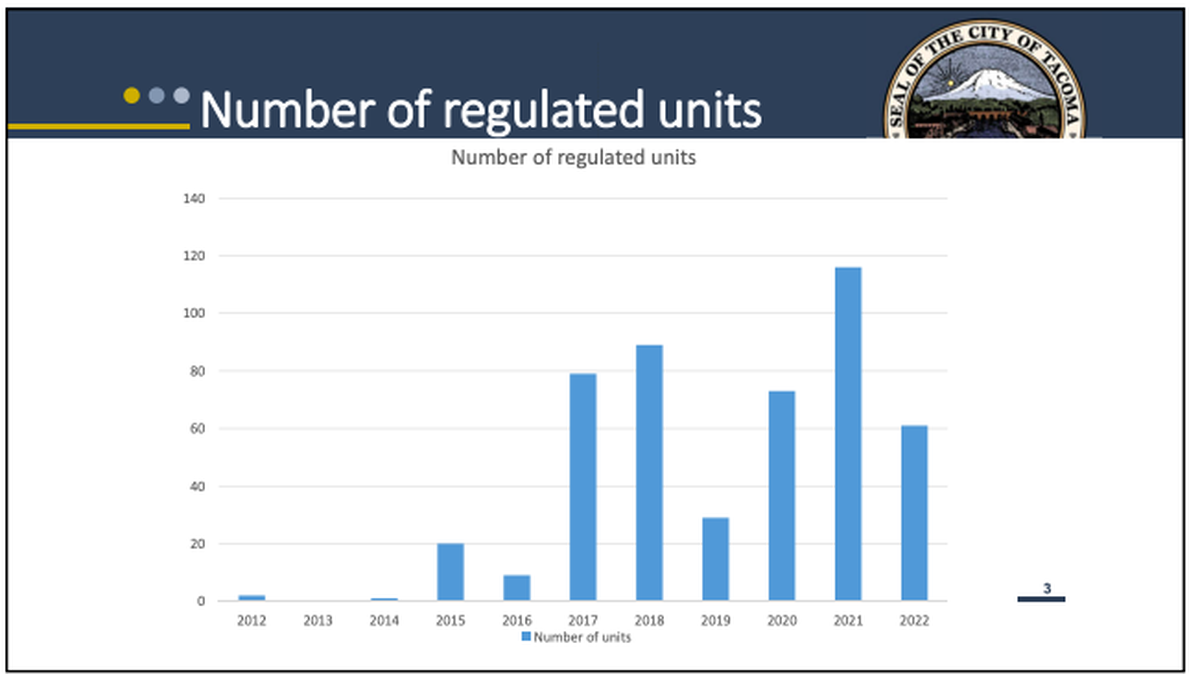
The city offers an 8-year MFTE to incentivize market-rate unit creation. The 12-year version is offered to developers who set aside 20 percent of units in each project at a rent-restricted, or “affordable,” rate.
The Hailey project launched in 2017 with officials enthusiastic that it would convert a city parking lot next to the downtown public library to much-needed housing with affordable units.
The move a few years later to the 8-year MFTE, all market rate, was made to qualify for a new construction loan and required City Council approval, a vote that was delayed after opposition from at least one council member.
“I think we have a duty and an obligation to make sure that we hold up the principles we talk about when we talk about affordable housing, particularly land that is going to be developed that was public at one point,” then-Council member Chris Beale said at the time of the MFTE switch to market rate. Beale voted against the amended agreement, which was ultimately approved after two rounds of council votes.
Progress still was slow-going.
Los-Angeles based Cypress Equity Investments took over the property in February 2020 as its first Tacoma development. The Hailey received its certificate of occupancy in October 2021. It has 186 market-rate units, ranging from $1,446 for a studio to just under $3,000 for a larger two-bedroom apartment, according to listings online.
Alla Sorochinsky, chief financial officer for Cypress Equity Investments, told The News Tribune in a phone interview Jan. 28 that the building was 20 percent leased and 18 percent occupied at that point.
“We’ve always been interested in the Pacific Northwest,” she said. “We were already in Portland. We had been looking to do projects in the Washington area. So when this came up as an opportunity to really learn about the Tacoma market and the project itself, it seemed like an interesting opportunity.
“At the time, we were already starting to look at what I’m going to call city center adjacent projects, as opposed to the infill projects that we were building in California in the Bay Area and other markets around the country.”
She said the investment company welcomes the opportunity for more work.
“We’ve had a great experience in Tacoma both dealing with the city and our construction partners, and also there’s been a really great response to our product. So we would love to do more projects there,” Sorochinsky said.
AMENDED AGREEMENTS WITH THE CITY
It’s not unusual for initial agreements with the city to be amended based on new market realities.
The Old City Hall project had to scale down its offerings last year from 40 micro-residential units (20 market rate and 20 affordable) to 19 micro-units (10 market rate and nine affordable at 60 percent AMI) because of building code restrictions, according to information provided by the city and developer in public meetings.
In 2021, Tacoma Town Center gained approval for an amended development agreement when its original developer, North America Asset Management Group, had to bring in new investors, Galena Equity Partners, based in Boise, to take over the project.
The project had stalled after NAAM was unable to generate sufficient financing including EB-5 investment.
Tacoma Town Center showed the limits in what the city could do, in this case a project whose 2015 land sale and contract terms were set ahead of the current skyrocketing real estate market.
Some on the council questioned the decisions made at the time to keep the project afloat with NAAM.
A statement from staff issued to answer council’s concerns at that time contended the city needed to remain focused on getting Town Center to completion.
“Rather than litigate the issue, incurring unknown costs and create investment uncertainty in Tacoma’s market, the City has remained focused on its core goal of pursuing completion of the project,” the statement said.
Staff added: “The rights the City retains under the Development Agreement are expressly and exclusively for the purpose of ensuring that NAAM as property owner completes the project in accordance with the development terms. ...”
In short, the city works “very hard not to exercise a right of rescission,” Jennifer Hines, assistant division manager with the city’s Real Property Services, said at the May 25 council study session where Town Center came under review. “Because the city of Tacoma wants a development, we want the project to move forward. If we were to rescind ... it almost starts the clock all over. We have to then go into our process of seeking out new development and going through all of the contracting process and agreement negotiations.”
Elly Walkowiak, assistant director for the city’s Community and Economic Development Department, told the Puget Sound Business Journal in January that construction is set to restart once permits are issued in March.
.jpeg "Image (2).jpeg")
FINDING THE RIGHT DEVELOPER
Trax, whose plans were initially reported in 2016 and was at one time projected to open in summer of 2020, just celebrated its groundbreaking in January this year.
Trax is now planned for completion in 2023. When finished, the 5-story building will include 115 units and street-level retail and 53 secure parking stalls. Each resident will receive an annual regional ORCA transportation pass for bus, train or ferry transit region wide.
The project was an early one touted as part of Tacoma’s transit-oriented development — high-density residential and commercial projects built near transit hubs and purposefully light on parking.
Pierce Transit and the city spent years seeking a developer for the site.
“The reason Pierce Transit owned the property was that it was used as a staging site when Tacoma Dome Station was built,” Rebecca Japhet, communications manager with Pierce Transit, told The News Tribune via email. “We also have a tie to it because this development is one of Pierce Transit’s first ‘ORCA for Multifamily’ accounts, where the developer has agreed to provide an ORCA card for building residents. We are promoting this concept with other developments in Pierce County as well.”
The city and Pierce Transit formed a partnership to seek developers for the site at 415 E. 25th St. in 2014.
Pat Beard, business development manager with the city’s Economic Development Services, described the process as follows:
“We subsequently issued (request for proposal) and selected a developer for a project. Ultimately that project proved to be unfeasible during an exclusive negotiating period so we re-issued a solicitation in 2016.
“DMG Capital Group was selected as the preferred developer for the project that, as described at the time, is essentially the same project that broke ground last month, called Trax.”
Beard noted the only real challenge of getting something off the ground was the market itself.
“If you remember, back in 2015 the multifamily market in Tacoma was not nearly as robust as it has become over the last five years,” Beard said. “So at that time, the interest we were getting was in more established housing areas of the city.”
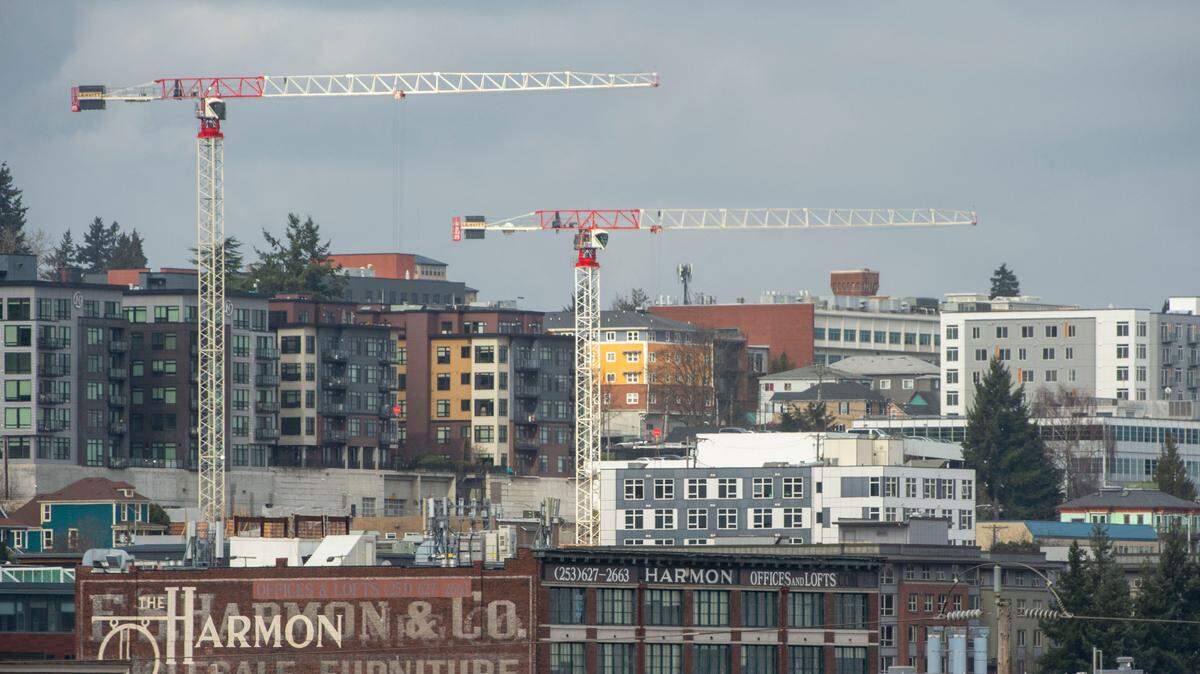
She added, “Over these last 7 years the multifamily market in Tacoma has taken off, with cranes throughout the downtown, the Tacoma Link extension nearing completion and UWT continuing to grow.”
Eugene Gershman is CEO of GIS International Group, which entered the project to develop Tacoma Trax about a year ago. In January, he spoke with The News Tribune.
He noted an indoor, 15,000-square-foot farmers market space with roll-up garage doors, long promoted with the project, might evolve into something else.
“The farmers market is still a possibility. However, we are exploring other opportunities to lease out retail space to just the individual tenants instead of a farmers market,” he said. “We’re still open to attracting a master lease tenant that will operate a farmer’s market.
“It’s been designed with a farmers market in mind. However, you know, the market will tell us who the best tenant is.”
GIS is developing the site in a 99-year ground lease with Safehold, which Gershman said his company used as a financing vehicle for the project.
The ground lease “allowed us to get this project funded by splitting up the grounds and the building,” he said. “It wasn’t always the plan. … There are multiple different ways to finance the project, and this was one of them. In the long term, the value is primarily from the operations of the project, not the land that it’s built on.
“When we sold the land, we received some cash for the building and then we supplemented that with a construction loan.”
Gershman was complimentary toward Tacoma’s development side. So far, Trax is their only project in the city.
“Just the overall attitude from the city has been very welcoming, and it was very pleasant for us to encounter that, and we would love to do more projects in Tacoma,” he said.
Are we running the risk of overbuilding? Sorochinsky didn’t think so.
“We’re just seeing such a huge demand for housing around the entire country, and specifically in markets where you are close enough to … jobs growth and cities like Seattle, but you’re a little bit outside of the city, you could get more for your money,” Sorochinsky said.
“People are moving into those markets. A lot of them are working remotely, or they’re working two days a week, three days a week in an office. So it makes it possible for them to choose markets that they couldn’t choose before where you have to be in an office five days a week.”
Kidder Mathews, in a new report released Feb. 17, also was optimistic about Tacoma’s growth, noting “we expect demographics and the quality of tenants in urban Tacoma to continue to attract an increasing number of out-of-market investors.”
This story was originally published February 23, 2022 at 5:00 AM.