City of Tacoma, Highway officials answer questions on Fishing Wars Memorial Bridge closure
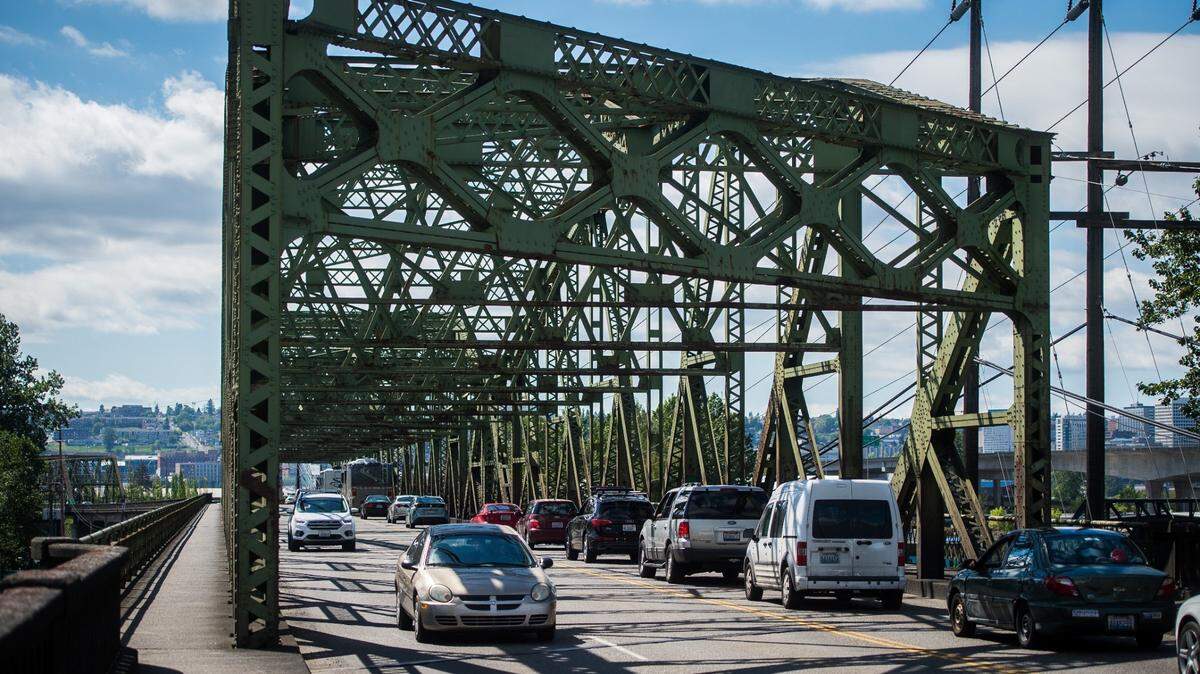
The Fishing Wars Memorial Bridge in Tacoma was closed on Friday, Oct. 22, after the Federal Highway Administration recommended its immediate closure to all traffic as a safety measure.
Two entire sections and one partial section of the bridge, formerly known as the Puyallup River Bridge, were replaced in 2019, according to the City of Tacoma. The bridge connects Tacoma to the city of Fife, connecting Puyallup Avenue to Pacific Highway.
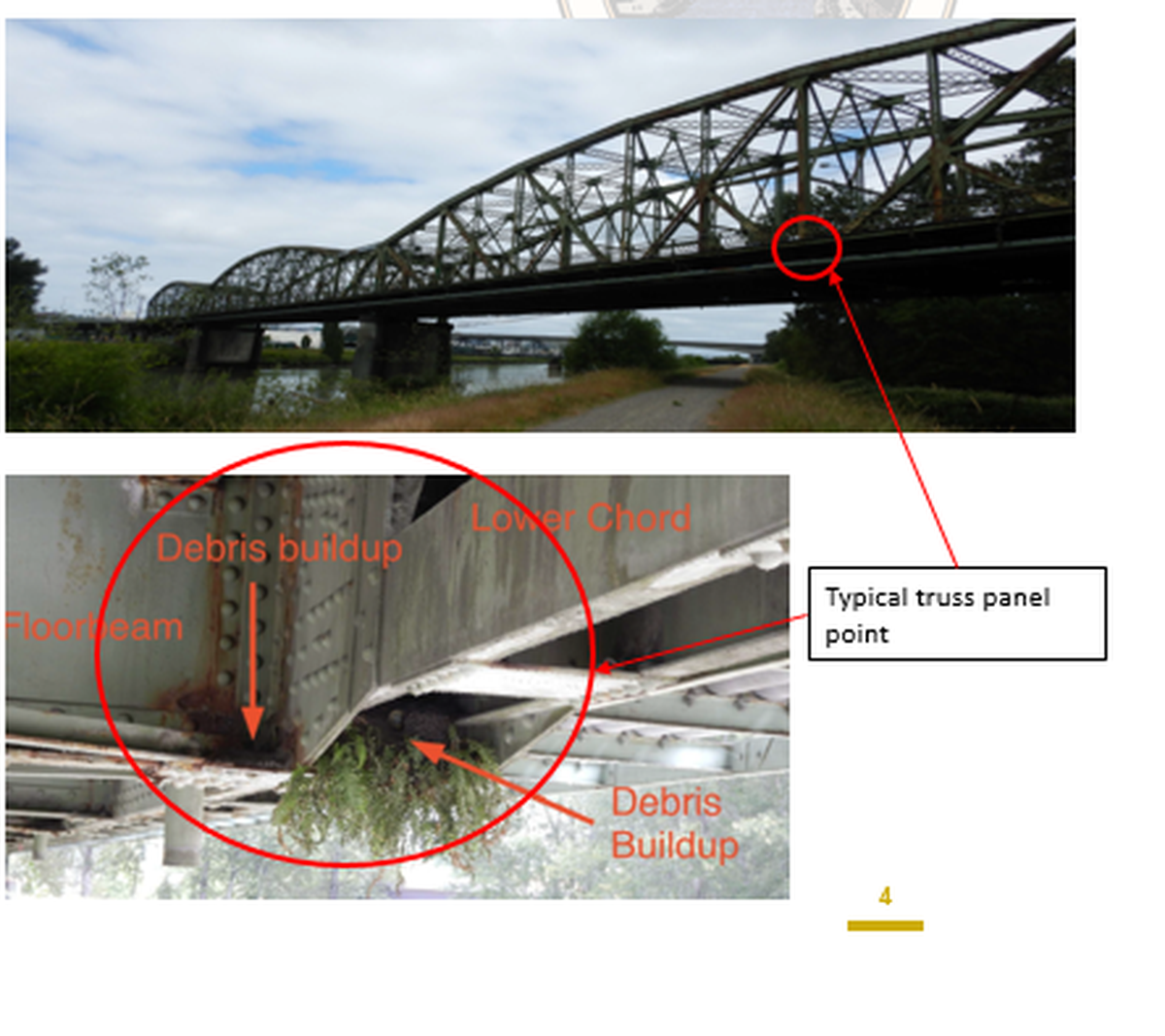
The Federal Highway Administration conducted a routine inspection of the Fishing Wars Memorial Bridge this past June but could not conduct a thorough inspection due to the build-up of debris such as soil and brake dust, among other things.
Due to the abundance of questions from readers after The News Tribune’s initial reporting of the bridge closure, we contacted FHWA and Steve Carstens, the project engineer at the Tacoma Public Works Department, to ask follow-up questions.
The FHWA provided The News Tribune with direct answers through an email, and Carstens’ responses are quoted from an interview. Some responses were taken directly from the City of Tacoma’s website.
Bridge inspections leading to closure
Q: Why was the closure so sudden? What did the FHWA find to be wrong with the bridge?
A (FHWA): FHWA recommended that the bridge be closed until a complete inspection can be conducted and documented in compliance with National Bridge Inspection Standards. Essentially, there was too much debris and buildup on parts of the bridge that prevented a complete inspection. The debris prevented the inspectors from documenting the current condition of the bridge, which must be considered by the engineers in calculating a load rating.
Q: Why does the bridge’s load rating need to be updated?
A (City of Tacoma): All bridges are required to have a complete load rating based on their current condition. The most recent load rating for this bridge, conducted in 2019, cannot be considered a complete load rating due to the unknown condition of the non-redundant steel tension members and connections. During a federal audit of our inspection in June 2023, it was noted certain panel points on the lower chord of the bridge were not visible during the inspection.
Q: What are non-redundant steel tension members and connections?
A (City of Tacoma): Imagine a bridge with two load-carrying beams. If one of the beams fails, the other beam can still carry the load and the bridge will not collapse. This is because the beams are redundant, meaning that there is more than one way to transfer the weight of the load. If a non-redundant steel tension member fails, the entire bridge or a portion of it may become severely compromised.
Q: Who was in charge of the inspection and creation of the load rating in 2019?
A (FHWA): Federal statute and regulation ultimately hold the State Department of Transportation responsible, but Washington state statutes, regulations, or policies may hold others responsible.
Q: How often are bridges generally inspected for an updated load rating? Does this increase as bridges get older?
A (FHWA): Highway bridges are generally inspected once every two years. That interval is reduced if the condition of the bridge deteriorates to a point that more frequent inspection is deemed necessary to ensure safety. A bridge’s load rating is updated whenever it is determined that the safe load capacity might change due to deterioration, damage, or defects found on the bridge; the structure or operation of the bridge has been altered; or if there is a change to the legal loads the bridge might carry.
Q: If the load rating completed in 2019 can’t be considered a complete load rating, why was it reopened in the first place?
A (FHWA): The 2019 load rating is not valid unless inspectors can determine that the conditions on the bridge did not change from those considered when the load rating was calculated in 2019. Since the inspectors could not access the connections/nodes of the lower chord, they could not make that determination.
Q: If the inspection was done in June, why did it take four months to close the bridge completely even after that inspection?
A (Carstens): We knew we were noncompliant — that’s the fed’s terminology — but we still had to wait to see what the official letter from the feds said.
Q: Why were all portions not replaced in 2019?
A (City of Tacoma): There was not sufficient funding to replace the entire bridge. The work completed in 2019 replaced two sections of the bridge, along with partial replacement of another section. These efforts were made possible through funding contributions from the Port of Tacoma, the City of Tacoma, the Washington State Department of Transportation, the Freight Mobility Strategic Investment Board, and federal grants from the Bridge Replacement Advisory Committee (BRAC) and Surface Transportation Program (STP). The work to replace the remaining segments was to be funded later, and the City has continued to pursue funding for this work.
Environmental impacts of the bridge, debris
Q: What about the debris impacted the inspection?
A (Carstens): It’s just a very complex area to try to view these things, and a requirement of the inspection standards is to get in there and inspect within a hand’s reach all the different bases, so if you have a flat plate, you have to see the top, the bottom, the sides that make up the box and things like that. And some of these areas are very challenging to get into. You have to kind of stick your head in there with a flashlight, and so when there’s debris built up, you can’t just take the debris out of the river because that would be an environmental issue. So that was the challenge, and they weren’t able to inspect it.
Q: What is the nature of the debris?
A (Carstens): It’s soil, brake dust, tire particulates, it’s just a particulate of the tire that, when it breaks down, it could be very detrimental to fish. You’ve got the lead paint chips that are coming off basically as it rusts and things like that; it naturally just kind of falls off. You also have bird guano, or bird poop; there are pigeon nests in there and stuff like that. Anything you can think of, I mean, it could be general solid objects that are just littered.
Q: How does this impact the environment?
A (Carstens): The Puyallup River into the Puyallup area is all tribal fishery brands, so they have certain treaty rights to catch fish, so anything that goes into there is a concern of theirs. They don’t want to have bad things affecting their fish that they basically eat, and all these items are just not good for the fish or the environment, especially the tire particles which are very lethal to the fish. They don’t want that in there at all.
Bridge future and project possibilities
Q: What must be done to reopen the bridge?
A: (City of Tacoma): The bridge must remain closed as a safety measure to all vehicular, bicycle, and pedestrian traffic until:
All non-redundant steel tension members and connections are cleaned of dirt and debris (The bridge must be fully encapsulated during the cleaning process to prevent sediment from entering the water and protect the environment.)
A complete inspection is conducted
The inspection results are analyzed
The load rating is updated (if required)
The Federal Highway Administration recommends the bridge to be reopened.
Q: Why will it cost $6-$7 million? Is there a breakdown of this estimate?
A (Carstens): They’ve got $3 million, a little bit of over that, just for containment or encapsulation itself. You’ve got a mobilization for the contractor’s actual cleaning that’s only about $300,000. Tested disposal is $200,000, traffic control at the time it was still open was $300,000 and then the spill prevention control plan is $10,000 in there.
So that gets us up to a little bit like $4.2 million. Then we’re going to add a contingency in there, which is about $600,000 or so. And then we have to have money for what they call construction, engineering, inspection staff, and things like that PSE, which is planned specs and estimates, in order to get it out to bid and then permitting and design as well.
Q: What does it mean to encapsulate the bridge, and why is this necessary?
A (Carstens): We kind of suspected that the tribal requirements were going to be what they call “full encapsulation of the structure.” Basically, you’re taking plastic, and you’re wrapping the entire bridge from top to bottom. That’s what they mean by full encapsulation.
Q: Why will it take 2-3 years to complete the cleaning and inspection?
A (Carstens): With the permitting times, we can’t predict the time of the agencies since they’re just like everybody else; they’re understaffed and overworked. It might take us about anywhere between three to six months to have a design that meets the requirements, but you have to still be smart when you’re doing these estimates and say I would give it six months because you never know what could happen. The permitting process could also be slow depending on how long the Puyallup Tribe takes to make a decision on whether or not the design is OK since other permitting agencies look to the tribe’s decision to make their own.
Q: The city has $300,000 available to allocate to the cleaning and inspection of the bridge. Will this be put to use right away, or how long will it take to start the cleanup process?
A (Carstens): As soon as that money is set aside for the project and we can spend it and charge things to it, then we’re off to the races, and we’re going to get right on it because that’s what they want. I’ve been in some of those meetings, and that’s what they’re dedicating themselves to do. The money would go toward the design and permitting, and that gets myself, the project manager and the consultant team going, and we’ll do our part.
This story was originally published November 3, 2023 at 10:07 AM.