Should granny flats be used as short-term rentals? This city wrestles with pros, cons
On Monday the Lakewood City Council will consider whether to allow short-term rentals in accessory dwelling units (ADUs), following a push from state legislators to create new permanent affordable housing earlier this year.
ADUs are small residential units or apartments — like a granny flat or mother-in-law apartment — located on a property that has a separate main single-family home, duplex or other residential unit. Short-term rentals are defined as units advertised as fewer than 30 days of occupancy.
With a need for more affordable housing in Lakewood, city staff and Planning Commission members are split on what steps the city should take. Lakewood planning and development staff said they are concerned that allowing short-term rentals could worsen the housing crisis, negatively impact neighbors and contribute to parking problems. Short-term rental ADUs could also increase property values and rental prices if more short-term rentals are introduced to the market, staff said.
In a 4-1 vote Oct. 4, the Planning Commission recommended to the council that ADUs be allowed to be converted to short-term rentals because they offer a return on property-owner investment and bring more housing to the market. Some members also argued the market could drive owners to switch to long-term rental or sales in the future.
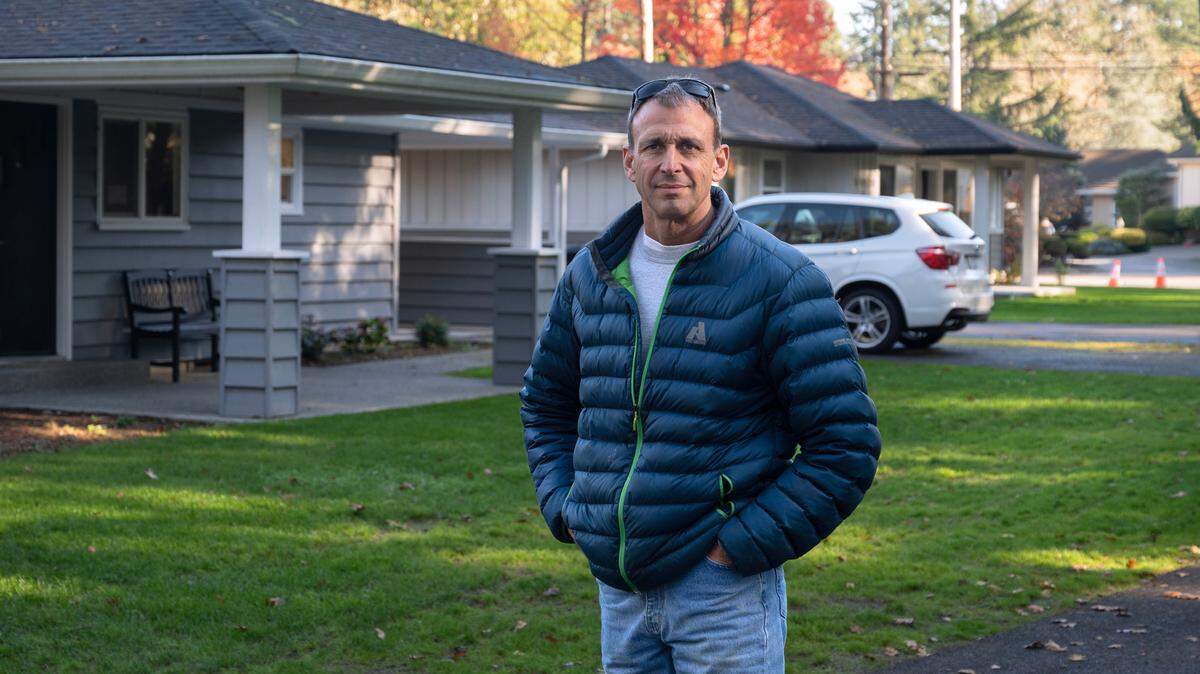
For short-term rental property owners like Dave and Glennis Durr, the downsides of operating an Airbnb and building an ADU on their property in Lakewood haven’t come to fruition. They don’t have issues with parking, are selective about their tenants and appreciate the additional income in semi-retirement. Both spoke in favor of allowing ADUs as short-term rentals at prior council meetings.
If passed by the council, new rules on short-term rentals and ADUs could go into effect Dec. 20.
Short-term rentals, ADUs becoming more popular
The prominence of ADUs has grown in Lakewood in recent years, as has the number of short-term rentals like Airbnbs.
Between April 2021 and Nov. 6, 2023, the number of short-term rentals in Lakewood increased from 71 to 136, with a 45% increase in the number of units within the last calendar year, according to data collected from the Lakewood Community and Economic Development Department. The median nightly rate of a short-term rental was $96, according to city documents.
“Enforcement of [short-term rental] regulations is a challenging assignment,” according to a request for council action submitted by planning staff. “The biggest issue is finding them.”
Discussions about potential short-term rental regulations (regardless if they are in an ADU or not) would be brought to the council for approval at a future date. Among the regulations being considered are defining a short term rental, requiring operators to have liability insurance, noise and nuisance rules and annual inspections.
Short-term rentals ‘practical’ for visitors
The Durrs own nine rental units in Lakewood, including one ADU. All the units, including the ADU, are long-term rentals, except one short-term rental they turned into an Airbnb three months ago.
“We elected to just try this and see, and it’s been pretty fun,” Dave Durr said, standing outside several rental units on his property Friday. “I don’t know the downside to short-term rentals. I haven’t experienced that.”
His wife Glennis Durr is in charge of running the Airbnb, talking to renters and cleaning the unit once visitors leave. She said they’ve had people stay nearly every week since they put it online. Some have come to visit family, attend a wedding or have a place to stay near Joint Base Lewis-McChord, she said.
Amenities like a full kitchen and living room, board games, wine glasses and items like a crib and baby gate are a draw for people who would prefer an Airbnb to a place like a hotel, Glennis Durr said. Airbnb allows her to vet who is interested in the listing, and with plenty of parking on their lot, Glennis said she doesn’t anticipate disruptions to her neighborhood.
“It’s more practical for visiting families,” Glennis said.
In terms of the ADU, “Frankly, it’s a bit of an investment to build something like this, so I don’t see it opening the door to a big density issue,” Dave said. “Construction costs are real high. The only savings here was we didn’t have to buy the land [because we own it]. It’s no more expensive than building a home.”
Parking, zoning issues remain
Tiffany Speir, Lakewood’s long-range and strategic planning manager, said many areas of the city where ADUs are allowed have historically been zoned for single-family homes, which is why planning and development staff brought up some concerns about ADUs operating as short-term rentals.
Speir said many of the areas have streets that aren’t wide enough to allow people to park on the street (which isn’t allowed in Lakewood anyway), and there’s also a restriction in state law that prevents a city from allowing parking for these new units within half a mile of a major transit stop.
“In Tillicum, a planned Sounder’s station isn’t even going to be built until 2045, but we are being told right now we have to start allowing this type of densification in the single-family areas and not require parking,” she said. “So the city is saying because of the road and transportation and parking concerns, as well as the fact that short-term rentals can be the source of frustration and difficulties for a jurisdiction that maybe doesn’t have the resources to deal with enforcement or tracking, how are these new people coming in — not to live in a neighborhood even, but to just be there for up to 30 days — going to be affecting quality of life for residents?”
Speir said the purpose of House bills 1110 and 1337 were to create new affordable housing.
“When you put instead short-term rentals in accessory dwelling units, that’s not what they’re being used for,” she said. “So we’re trying to stay with the reasoning behind the bill in the first place.”
In the future city staff would be looking at whether Lakewood wants to change its rule about street parking, and, if so, how existing and future roads would have to be designed to accommodate street parking, Speir said.
Lakewood mayor Jason Whalen said he understands both sides to the issue. Balancing property owners’ rights to develop their private property as well as concerns about parking and quality of life issues will be discussed more Monday, he said.
Although Lakewood isn’t necessarily a destination city with multiple Airbnbs, Whalen said, if short-term rentals are allowed for ADUs, “We should regulate them.”
“They should have a business license, because it’s a business. Maybe there’s lodging tax that should be levied. It certainly should be subject to inspection for health and safety purposes. … Maybe they should have ensured that they’ve got off-street parking to ensure that neighborhoods aren’t clogged with traffic,” he said. “Who knows, right? These are some of the things we’re probably going to discuss.”
Whalen said he knows it can be costly to build an ADU and ensure it meets municipal and county requirements for sewer and water.
“If we want any ADUs to be built, we have to be a little bit flexible on the owners’ ability to do them and maybe recover part of that investment,” he said. “Otherwise none of them will ever get built, or very few. So I’m torn there. But I also recognize we don’t want our neighborhoods disrupted by short-term party-hopping crazy people that are going to rent an ADU for two or three nights and be disruptive.”
The city does see ADUs as a viable housing option for many people, not only those looking for affordable rent, Whalen said. Many traveling medical professionals, military members or workers on contract terms could be good candidates to live in ADUs, he said.
“When it’s done right and it’s done well, it can be a very effective win-win,” Whalen said.