Tacoma City Council approves updates to street tree code that dates back nearly 100 years
The Tacoma City Council approved updates to the city code regarding street trees on Tuesday, Dec. 12. The City of Tacoma has worked to improve the tree canopy across the city, and the updates to the code would update regulations and policies related to pruning and removal of trees on public property.
The City of Tacoma recently partnered with the Tacoma Tree Foundation to launch a community tree program that focuses on increasing the urban tree canopy across the city through neighborhood-based planting projects and tree giveaways. Tacoma also approved an annual funding of $100,000 for this program.
The News Tribune previously reported that a tree canopy assessment conducted by Plan-It Geo in 2017, found that only 20% of Tacoma’s land area was covered by tree canopy in 2017 – the lowest percentage of any other community assessed in the Puget Sound region.
The city has also developed a management plan and has established a goal of increasing its tree canopy cover from 20% to 30% by 2023.
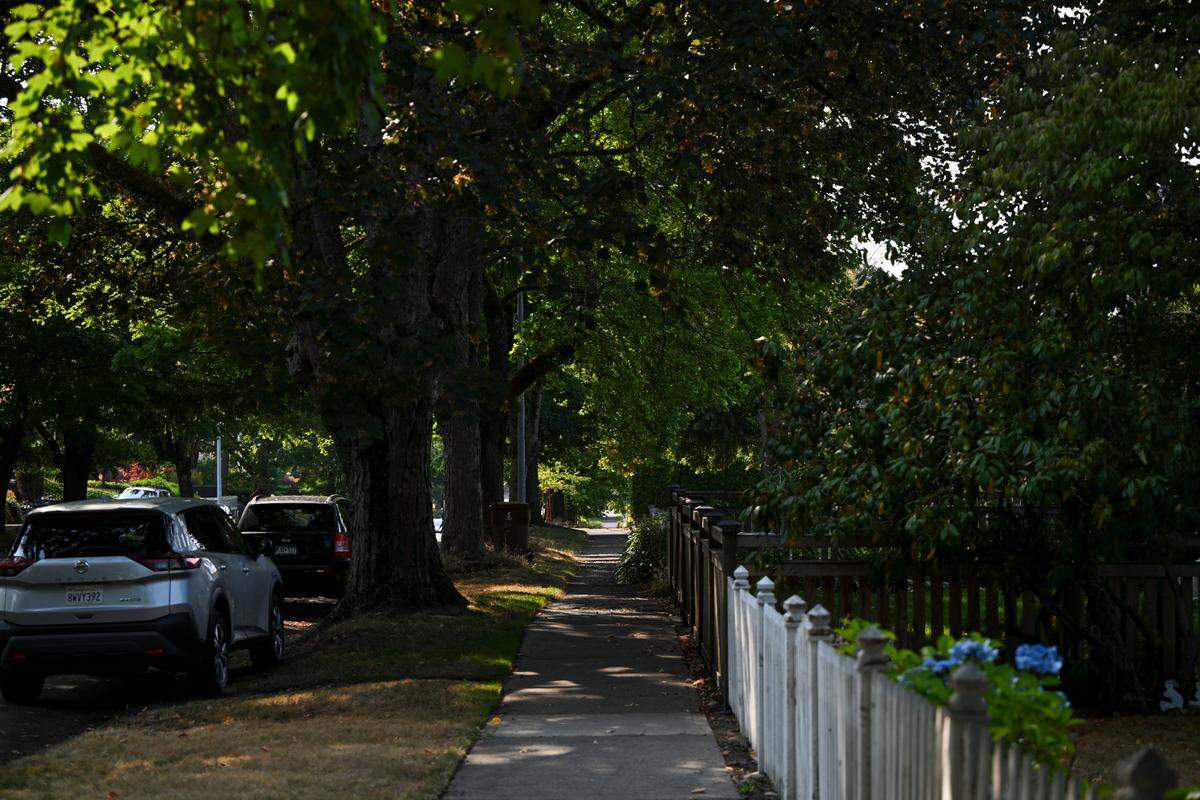
Is it legal to prune or remove street trees?
The City of Tacoma has relied on a city code that dates back to 1927 to decide what happens to street trees in modern day Tacoma.
The city code under title 9 says, “it is unlawful for any person, firm or corporation to, in any manner, remove, destroy, or cut any tree or shrub now or hereafter planted within the limits of any street or alley in the City of Tacoma without having first obtained a permit.”
The permit that is mentioned in the code is available to request at no cost through the city’s website. Permits to prune or remove a tree will only be granted if it is “dead, unsightly or a menace to the public or the public utilities,” according to the code.
Only an owner of the property that is adjacent to the tree can request a permit to prune or remove said tree.
The Tacoma City Council’s decision to approve updates to the code would update the requirements to obtain a permit and could impact environmental challenges that Tacoma’s low income communities face.
Updates to the Tacoma law regarding street trees
According to a press release from the City of Tacoma, the City Council approved making the following update to the municipal code:
Updated permit requirements and related regulations for pruning, removal and planting of street trees.
Updated policies and procedures for discretionary review of requests to prune trees on public property.
The establishment of a heritage tree program.
Provision for enforcement and imposition of monetary penalties for violations.
An updated appeals process to ensure consistency with other areas of the Tacoma Municipal Code.
Tacoma Deputy Mayor Kristina Walker stated in the press release that people living in underserved communities would benefit the most from updates to the city code.
“Trees provide shade, improve air quality, reduce flooding, and mitigate the urban heat island effect,” said Deputy Mayor Kristina Walker in the press release. “Those living in historically underserved communities stand to benefit the most from these updates. Improvements to Tacoma’s urban forest support the City’s Climate Action Plan by mitigating Tacoma’s carbon footprint and fighting against global warming.”
According to the 2017 tree canopy assessment, parts of central and south Tacoma, which is home to more diverse yet less wealthy communities, have less tree coverage and therefore suffer from urban heat island effect.
Urban heat island effect occurs in areas with fewer green spaces and more roads and parking lots, known as impervious surfaces, because these surfaces absorb and retain more heat. Tacoma’s low income neighborhoods have 19% more impervious surfaces compared to high income neighborhoods in the city, according to the Tacoma Urban Forestry.
According to TUF, higher opportunity neighborhoods have 15% more tree cover than lower opportunity neighborhoods, leaving low income households that lack the resources to escape warm temperatures, to deal with extreme heat.
A 2020 analysis conducted by Earth Economics, found that urban heat islands increase maximum temperatures by as much as 6.2 degrees Fahrenheit above the local baseline. Combined with regional climatic effects, neighborhoods in Central and South Tacoma may be as much as 14 degrees Fahrenheit hotter than neighborhoods in North Tacoma.
Trees not only provide shade during heat waves, but they also absorb water rainfall and emit the rainfall as vapor which can reduce high temperatures.
According to the the press release, updates to the city code could help improve tree cover in low income neighborhoods which would in turn positively impact the health of the individuals living in those communities.
Will this affect trees on private property?
The City Council’s decision to update the city code regarding street trees does not affect a tree’s fate if it is on private property.
According to the city’s website, “the City of Tacoma generally has no tree cutting ordinance that regulates the cutting of trees on private properties (pruning or removal).”
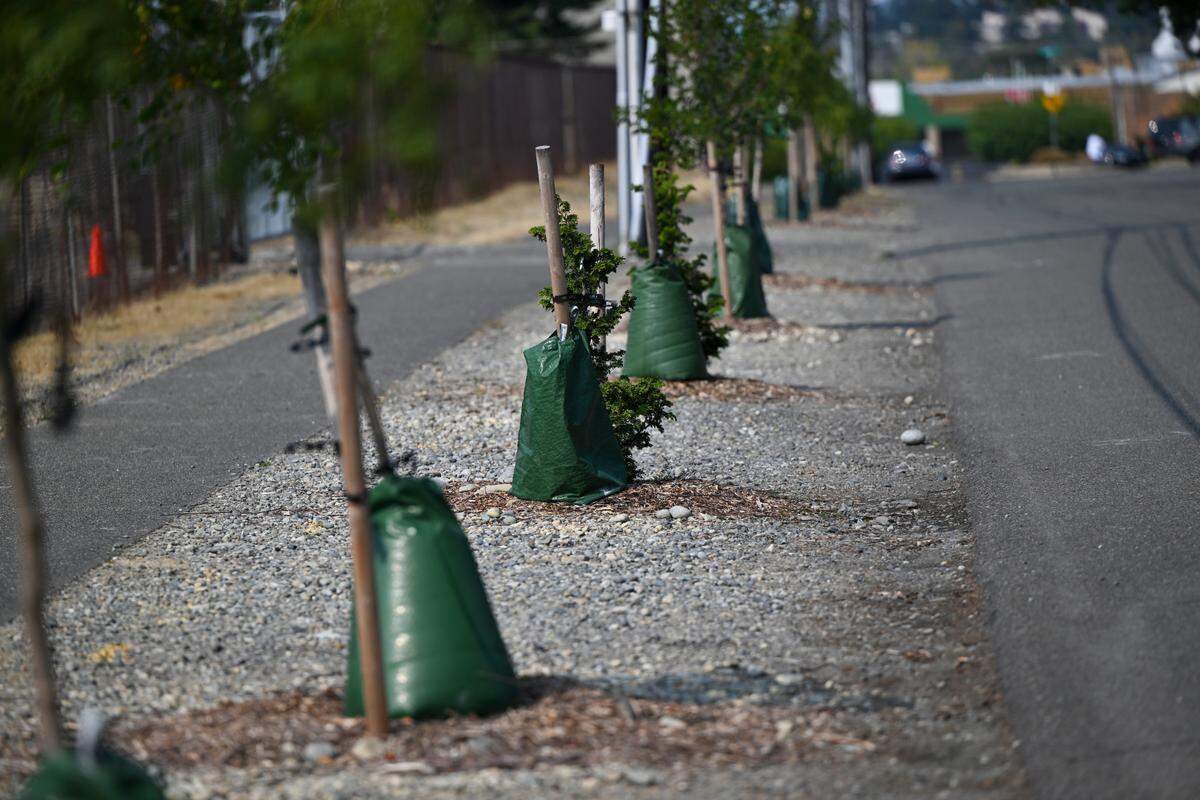
How can I plant trees in my community?
Grit City Trees
The City of Tacoma has an annual Grit City Trees program that provides residents with free trees to plant in the public right-of-way, compost, watering supplies, stakes and ties. This program serves areas designated as priority planting areas which are neighborhoods identified as “moderate,” to “low” to “very low” Opportunity on Tacoma’s Equity Index. To receive a free tree from this program, residents must first fill out an application.
Tree Coupon Program
The City also has a Tree Coupon Program that provides homeowners with a one-time $30 off per tree coupon. The coupon can be used for up to three trees at select local tree retailers.
Trees purchased using this coupon can be planted on residential properties or in right-of-way abutting the residential property.