Tacoma homeless village might get an extension, then become site for housing development
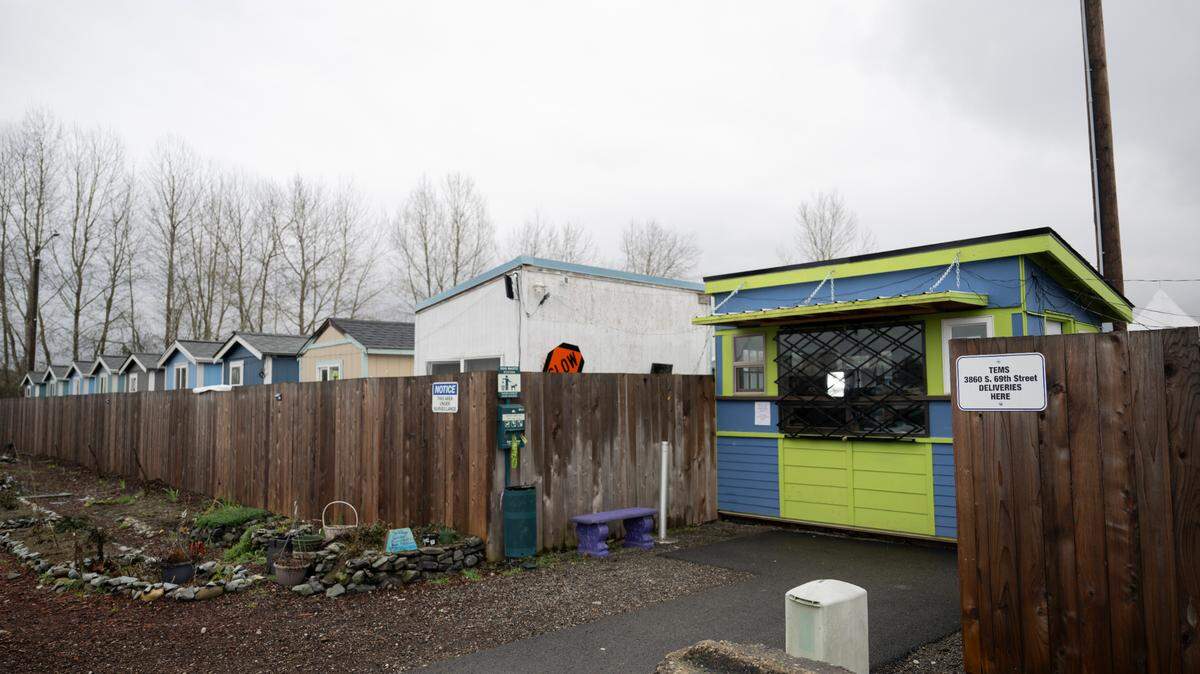
A South Tacoma Emergency Micro-Shelter for people experiencing homelessness might get a six-month lease extension from the city, officals say.
TEMS 4, 3860 S. 69th St., was slated to close Dec. 31, but city officials say talks are underway to finalize an extension of operations there through June. City spokesperson Maria Lee said there were many considerations for extending operations, including better weather and contractor availability for moving units and residents to another location, community input, and timing for the release of a request for proposal for future development at the site.
Operated by Seattle-based Low Income Housing Institute, TEMS 4 opened in October 2021 at East 60th Street and East McKinley Avenue and was later relocated and expanded by 20 units at South 69th Street and South Proctor Street on property owned by the city.
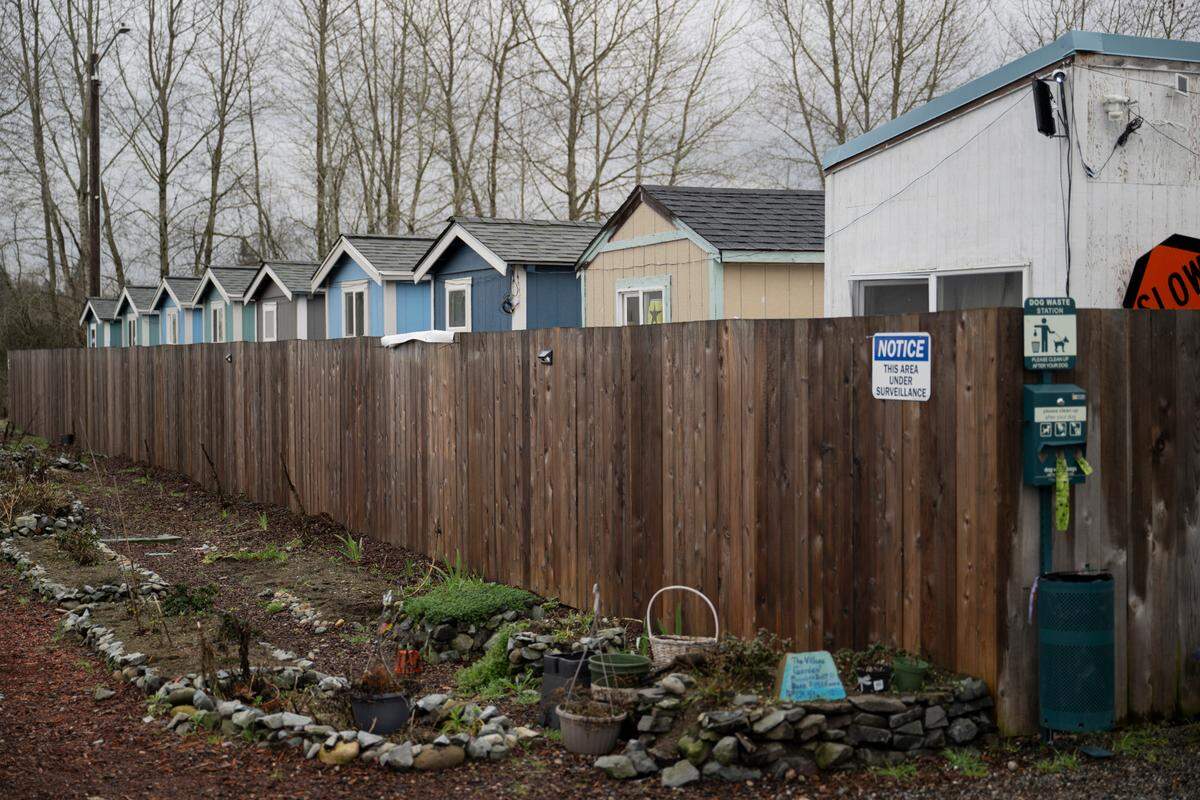
The site serves up to 85 people experiencing homelessness with 66 tiny home units and includes all adult households, including single adults, couples and adult families, Lee said in an email to The News Tribune. Referrals occur in coordination with LIHI onsite management and outreach teams like the Homeless Alternative Liaison team, she said. There is a communal kitchen, laundry, office space for case management, restrooms, showers and community space there, according to the city.
Since TEMS 4 opened the city has contracted $2,971,259 with LIHI for shelter services, operations and initial set-up, Lee said. The latest census at TEMS 4 as of Feb. 5 was 71 people, she said.
According to scope of work contracts laid out between the city and LIHI, fewer Tacoma residents were served and obtained permanent housing in 2021, 2022 and 2023 then were defined in the goals the city had for the site.
The city’s goals were to have 145 unique residents served at TEMS 4 in 2021, 150 residents served in 2022 and 150 unique residents served in 2023. In actuality, 135 people were served in 2021, 142 people were served in 2022 and 117 people were served in 2023, Lee said.
Tacoma also had goals for TEMS 4 to help 75% of residents obtain permanent housing in 2021 and 2022, and 40% of residents obtain permanent housing in 2023, Lee said. In reality, 23% of TEMS 4 residents obtained permanent housing in 2021, 28% obtained permanent housing in 2022 and 32% obtained permanent housing in 2023, according to the city.
In total 21 people at TEMS 4 found permanent housing in 2021, as did 20 in 2022 and 15 in 2023, Lee said.
In 2023 the city’s goal was to log 5,200 hours of case management at TEMS 4, but LIHI logged 3,968 hours of case management, Lee said. Case management goals were not set for 2021 and 2022 and tracking and reporting of case management hours were not a required output from LIHI in the 2021-2022 contract, Lee said.
LIHI, city says goals were unrealistic
In an email to the News Tribune Feb. 9, LIHI chief strategy officer Jon Grant said there were and continue to be challenges facing the community served at the site, which has impacted LIHI’s ability to reach its initial goals and help clients get back on their feet.
Grant said LIHI told funders early on that the goal of a 75% housing placement rate “was never attainable” and said that was later reflected in a change of contract in 2023 when the housing placement rate goal was lowered to 40%. Tacoma Homeless Strategy, Systems and Service manager Caleb Carbone told The News Tribune on Jan. 12 it’s typical for shelters in Tacoma to have a 30%-40% exit rate into permanent housing.
“The population the program serves is high acuity, which includes people with mental health and substance use disorders who often need more time to recover from the trauma of homelessness,” Grant said. “TEMS 4’s most recent numbers show us within that performance range common among our peer organizations. LIHI should be evaluated within the context of the broader performance of other providers.”
Grant said ongoing lack of affordable housing in the greater Tacoma area and recent rent increases, which averaged 22.1% in Pierce County between February 2021 and February 2022, also mean there are fewer affordable housing options for their clients.
In 2021 clients from the Tacoma Emergency Micro Shelter 2 site moved to TEMS 4, “which [was] a complex undertaking to relocate an entire community of clients and getting our staff and assets re-situated,” Grant said. In 2021 and 2022 during the early stages of the COVID-19 pandemic, economic lags also meant there were fewer opportunities for clients to gain employment and self sufficiency and “the repercussions on the economy still lasted well into 2023,” he said.
In 2023, Grant said, TEMS 4 saw a larger enrollment of high acuity people with complex mental health needs as compared to more couples in previous years.
“Further compounding the trend was that our clients in the post-pandemic era needed more support and services, so people stayed longer in the program, which reduced overall throughput and in turn reduced the number of people served,” he said.
Challenges with case management and social service job recruitment also meant TEMS 4 was short a case manager, Grant said. Since August, TEMS 4 has been fully staffed with two and a half full time case managers, he said.
Grant said many of the challenges facing TEMS 4 are mirrored at other shelter sites, especially with people who have a fixed income and are suffering from mental health barriers or substance-abuse disorders that have not been adequately addressed for years.
According to the city, the goals for TEMS 4 in 2021 and 2022 were established on trends LIHI and the city observed in pre-pandemic emergency shelter locations, “as well as the early momentum the provider was experiencing at that time.”
“However, in 2023 we recognized that the trends had changed significantly and adjusted the goals to accurately represent what we were seeing across the shelter system and to consider the population served at this site,” Lee said in an email to The News Tribune. “While we are seeing exits to housing trend upwards, we continue to evaluate the system, collaborate with all providers, meet with advocates and work with people who have lived experience to make sure we are providing the right resources to achieve successful outcomes.”
Once TEMS 4 closes, Lee said, LIHI will continue to support clients with housing plans, and anyone still residing on the site in June 2024 will be moved to another emergency shelter location. At that time TEMS 4 will be decommissioned, she said.
The city is working to release a request for proposal for the sale of the property to support the development of a housing project, Lee said. Tacoma is also finalizing a transition plan for TEMS 4 and intends to suspend new intakes in early spring, Lee said.