Point Ruston legal battles turn focus on developer’s son in debt-collection pursuits
READ MORE
Point Ruston Legal Imbroglio
Point Ruston goes from Superfund champion to legal quagmire for financial backers, EPA
Expand All
Litigation involving Point Ruston has taken a more personal turn for the founding developer’s son, whose own fortunes are becoming more at stake in at least two debt-collection cases involving the development.
Lawsuits pursuing unpaid debts in the past several years have generally been directed at the various limited liability corporations created in Point Ruston’s development.
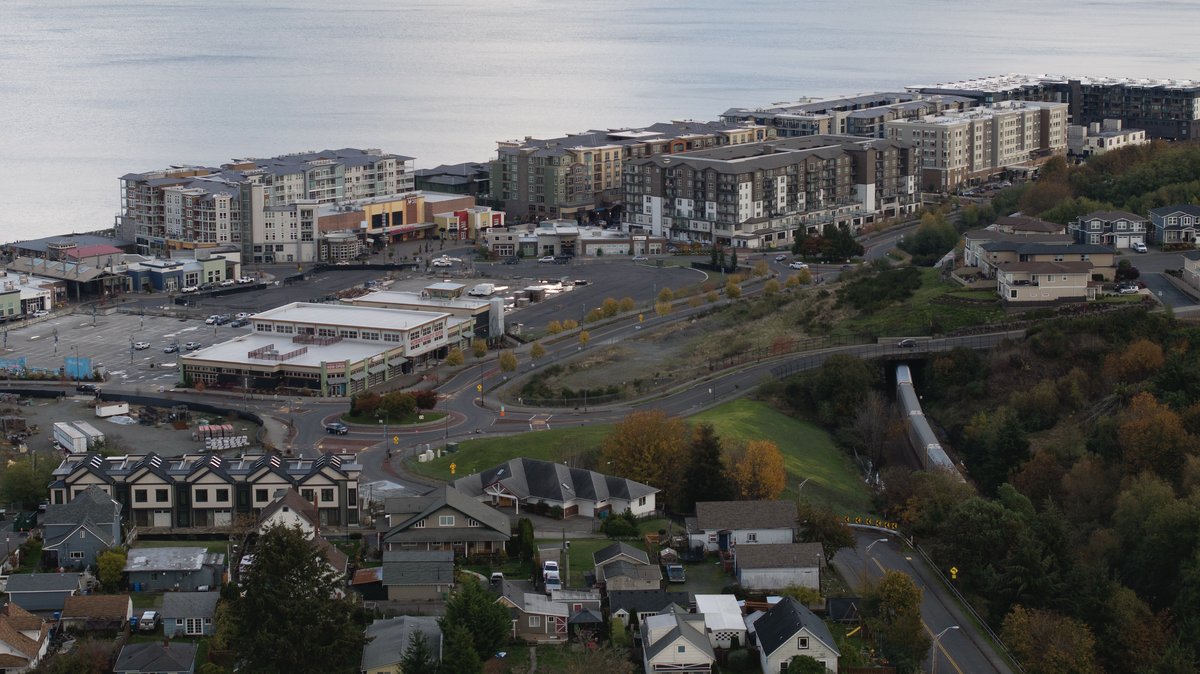
The upscale master-planned community, once a Superfund site, faces escalating debts from construction loans and other costs associated with its development, which have grown since the 2020 death of its original developer Michael Cohen.
On Jan. 29, an order was issued in Pierce County Superior Court to secure the Tacoma home owned by Michael Cohen’s son, Loren Cohen, and Loren’s wife, Holland Cohen, as part of a subcontractor’s civil action following a settlement agreement and arbitration.
The order “attaches” the couple’s Tacoma home to the case as a potential asset and was recorded by the Pierce County Assessor-Treasurer on Feb. 1. County records show the home has an assessed value of more than $2.3 million.
The case involves Active Construction of Tacoma, who is pursuing a remaining balance on a $1.25 million settlement agreement for work at Point Ruston.
Attorneys representing the company have contended Active is owed for work it completed in 2023. Attorney Jack Krona, who represents the Cohens, contended in filings that the work was not completed to satisfy terms reached in the agreement.
Even though the agreement involved Active and Point Ruston General Construction LLC, who subcontracted Active for the work, a personal guaranty of the payment terms was tied to the Cohens, according to court filings.
In seeking the prejudgment writ of attachment on real property, attorney William Brunnquell, who represented Active at the time of the filing entered Jan. 24 wrote, “ACI does not seek any seizure or sale of the Tacoma property as argued by the defendants.”
Instead, he wrote, the firm sought the action to “prevent the defendants from transferring the Tacoma property and putting it beyond the reach of creditors.”
Neither Krona nor Gregory Fox, a Seattle attorney now representing Active Construction, responded to questions from The News Tribune regarding next steps in the case.
Meanwhile, a separate lawsuit also is pursuing direct repayment from Cohen and other entities, this time in a California court.
TERRACOTTA CREDIT REIT
Investment-lender TerraCotta Credit REIT has an ongoing Point Ruston debt-collection case against several Point Ruston-affiliated LLCs making its way through Pierce County Superior Court. Its five cases were consolidated into one last year.
Seven Point Ruston parcels are tied to the receivership in the litigation, which started last spring.
“To date, because of the unpaid principal balance under the loans, accrued interest and fees, and attorneys’ fees, the outstanding amount due on the notes is more than $82 million,” attorney Daniel Hagen, representing TerraCotta, wrote in a Feb. 27, 2024 filing.
That’s up from more than $73 million TerraCotta said it was owed in filings last spring.
As the meter runs up on that debt, El Segundo, California-based TerraCotta is pursuing separate legal action in its home state, citing guarantees made on the loans.
In November 2023, TerraCotta sued Cohen along with three Point Ruston-affiliated LLCs and other unnamed defendants for misrepresentation and for breach of contract. The case involves the retail and land loans issued by TerraCotta between 2019 and 2021, according to the original filing, with each loan represented by a commercial guaranty, among other documents.
Multiple times, the California filing by TerraCotta contends that it “is entitled to collect all such liabilities directly” as guaranteed obligations.
In general, a guaranty on a loan is a signed agreement that guarantees the debt will be repaid to the lender by another party if the debtor defaults. In this case, TerraCotta cites the guarantees made on the loans are tied to Cohen or in combination with other entities.
Meanwhile, the receiver for the Point Ruston parcels, Resource Transition Consultants of Lynnwood, challenged the California action as a violation of terms overseeing the trustee sales. That challenge and planned trustee sales of four Point Ruston parcels scheduled for this month, were both continued on Friday in Pierce County Superior Court.
In a Pierce County filing Feb. 27, TerraCotta defended its dual track of legal pursuits in Washington and California, stating RTC’s challenge is a “fundamental misunderstanding” of the law. TerraCotta attorney Hagen wrote that the “One Action Rule” does not “prohibit simultaneous actions against third-party guarantors and property secured by a related deed of trust.”
Steven Bender, an associate dean and professor of law at Seattle University School of Law, told The News Tribune in a recent interview that guarantor agreements are “potentially different” when it comes to pursuing multiple lawsuits.
Generally, “Guarantors have fewer rights,” he explained. “In fact, guarantors are known in the law as fools with a pen,” he said. “Guarantors have far less protection under existing statutes, and a guaranty contract purports to waive all sorts of protections,” they would normally have.
Bender said that a signed guaranty usually locks in broad terms benefiting the lender to withstand most legal challenges.
“I have a chapter in my real estate treatise on guarantees that is full of hundreds, if not thousands of cases from around the country. I basically tell my students … just assume that pretty much everything the guarantor tries to defend with is going to fail, because the language in the guaranty is going to say ‘Nothing stops the lender.’”
Sorting out what protections do and don’t apply, however, could become “a very complicated thicket,” he added, regarding the Washington and California proceedings.
The total amount TerraCotta could recoup is yet to be determined. The case is now in U.S. District Court for the Central District of California Western Division in Los Angeles after the attorney representing the Point Ruston-affiliated LLC defendants filed a notice of removal. Attorneys are now set for a hearing this month, which could determine whether the case goes back to Superior Court in LA County or move to Pierce County, or will remain in federal court.
OTHER COURT ACTION
Two other cases involving Point Ruston are headed back to court March 4:
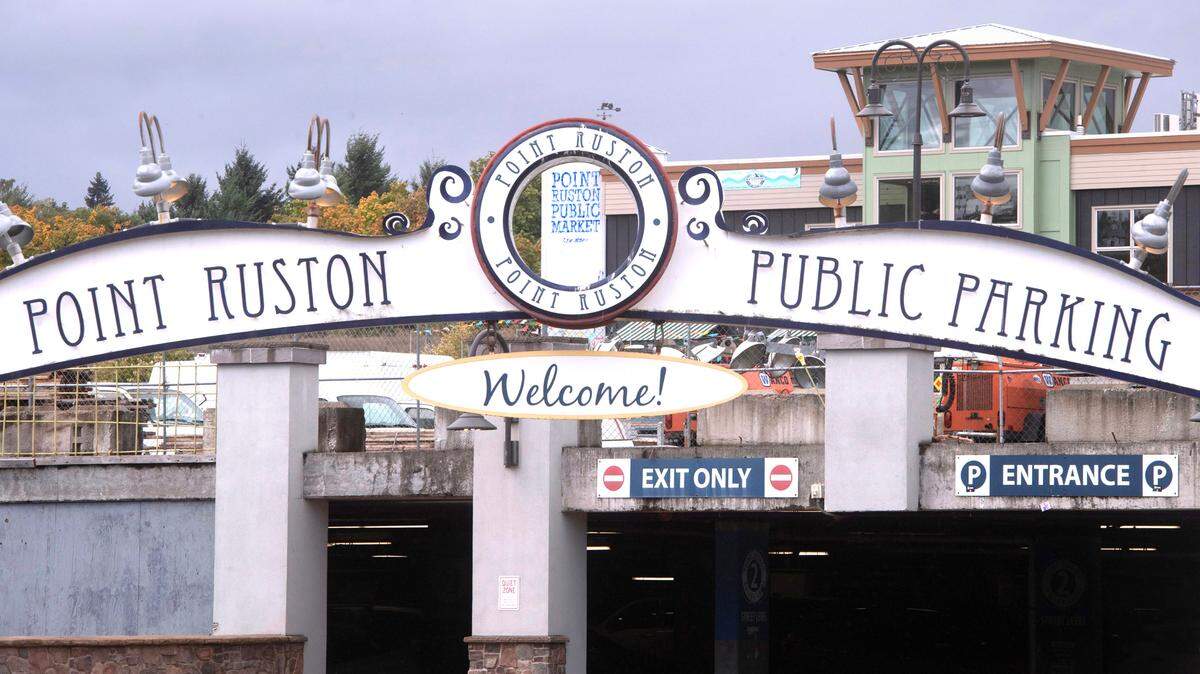
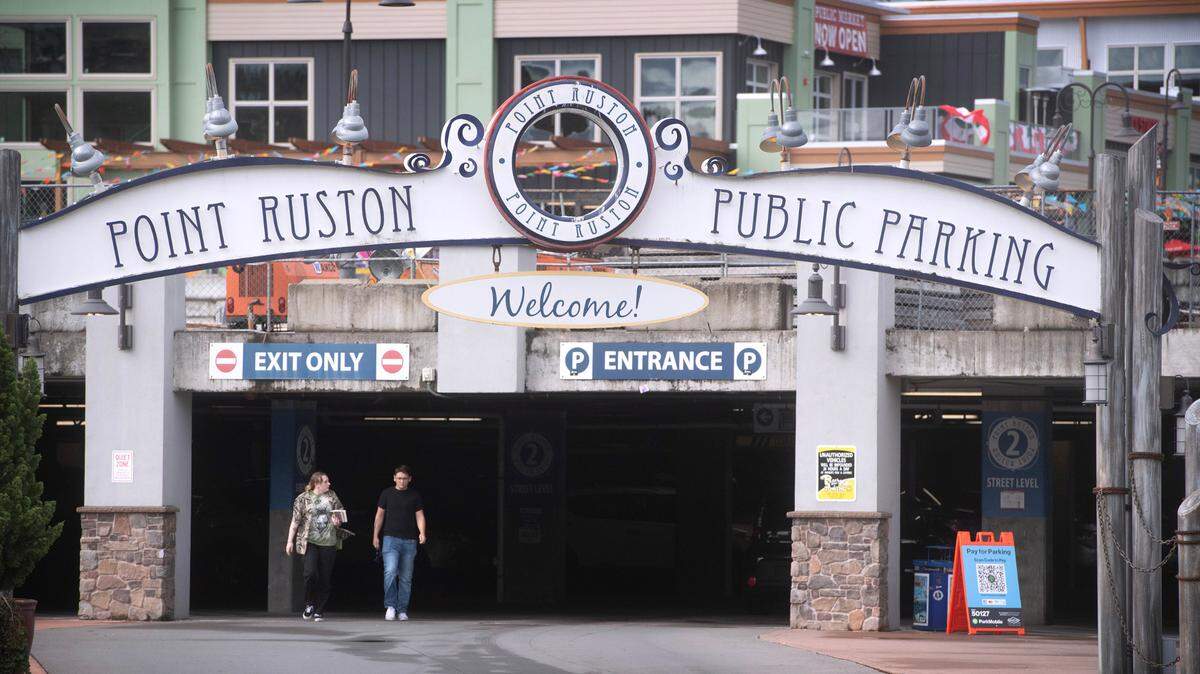
▪ AURC III: This lender-investor entity representing 132 foreign investors in Point Ruston is set to begin the second phase of its trial March 4 seeking repayment of what’s owed on its original $66 millon loan, with Point Ruston LLC the loan guarantor, according to AURC’s pretrial brief. The second phase is focused on the foreclosure of several parcels, including the parking garage, in its effort to collect on delinquent debt now estimated at more than $90 million. Krona wrote in a January pretrial brief that “Point Ruston LLC reserves all of its defenses that were disposed of by summary judgment for appeal.”
▪ PROA: The Point Ruston Owners Association, which counts Cohen as its sole director, has a March 4 court hearing, where arguments will be heard in King County Superior Court over whether to vacate the association’s recent general receivership action granted in King County. That action put a stay on legal activity, including a Feb. 12 Pierce County Superior Court hearing where a group of Point Ruston condo associations sought to appoint a custodial receiver for the association.
PROA’s recent receivership also further complicates the AURC III case, since it is a party because of its own ties to the site’s parking garage through recorded covenants governing the site.
This story was originally published March 4, 2024 at 5:30 AM.