Undercover Tacoma detective shot by 15-year-old fleeing stolen car speaks at sentencing
A 17-year-old boy who shot and seriously injured a veteran Tacoma Police Department detective last year while fleeing from a stolen car pleaded guilty Thursday and was sentenced to 15 years in state custody.
Justus Nassir Kent pleaded guilty to first-degree assault with a firearm for the Aug. 23, 2023 shooting of detective Jason Brooks in Tacoma’s South End.
Brooks was shot in the shoulder with a .38-caliber revolver at close enough range to permanently damage the detective’s hearing. Prosecutors said the lead bullet broke his shoulder blade. Its fragments continue to cause him daily pain and poison his body. Brooks has yet to return to duty.
The detective appeared in court Thursday afternoon with his wife and a fellow Tacoma police detective, telling Judge Joseph Evans that in his nightmares he still sees Kent’s eyes in the moment the teen pulled the trigger.
Brooks said one of the hardest parts of the post-traumatic stress he experiences is not understanding why Kent shot him.
“The car was in park, not moving when he ran up on me,” Brooks said. “His counsel claims he did not know I was a cop because I was in plain clothes. But to me that is even worse, that Kent was willing to execute an innocent citizen to avoid being caught in a stolen car.”
Later in the hearing, deputy prosecuting attorney Heather de Maine described the facts of the shooting. She said Kent and his cousin, who were both 15 at the time, were driving around Tacoma in a stolen car when officers noticed the vehicle spinning its tires in the middle of the road. Police followed and turned on their lights when the car nearly hit a woman. The teens then drove into an apartment complex near South Hosmer Street, Aero Apartments, and ditched the car.
Meanwhile Brooks was sitting in an unmarked Subaru in the apartments’ parking lot, wearing plain clothes with a ballistic vest that identified him as law enforcement. He was working undercover on a citywide emphasis mission focused on finding and recovering stolen vehicles.
De Maine said Brooks heard about the fleeing suspects over the radio and saw the two running nearby. She said the detective rolled down his passenger window and pursued them. Kent’s cousin climbed a fence to flee. The prosecutor said Kent had the same choice.
“Instead he chose to sprint at full speed toward detective Brooks, with his gun drawn and pointed at the detective,” de Maine said. “The detective pleaded with him not to shoot him, and Mr. Kent made the voluntary and intentional decision to shoot him at point-blank range through an open window.”
De Maine said that miraculously, Brooks had the wherewithal to lean forward at just the right time. She said it likely saved his life.
Police found Kent and his cousin later that afternoon hiding under the deck of a house on South 59th Street, according to court documents. The cousin pleaded guilty in November 2023 in juvenile court to unlawful possession of a stolen vehicle and obstructing a law enforcement officer.
Detective asks for max sentence
When Brooks was shot, it was the second incident in 12 hours where a Tacoma police officer was fired upon, and it prompted a statement from Mayor Victoria Woodards about Brooks and the “terrible disease of gun violence” that she said the community could not accept as inevitable, particularly when it involves children.
Woodards said the incident did not end in tragedy, a statement that Brooks decried in his speech to the court. He said she talked about youth violence as if the criminals were the victims and propelled a false narrative that created “this epidemic of crime.”
“Do not let this court fall in this political trap and degrade as the mayor herself degraded the Tacoma Police Department and all officers who protect our society,” Brooks said.
The detective told the judge he could right this wrong by imposing a fair sentence — the maximum allowed.
The standard sentencing range that Kent faced was about 13.5 to 16.33 years in state custody. Prosecutors recommended the high end. The defendant’s attorney, Matthew McGowan, asked that Kent be incarcerated until age 25 to stay in juvenile rehabilitation.
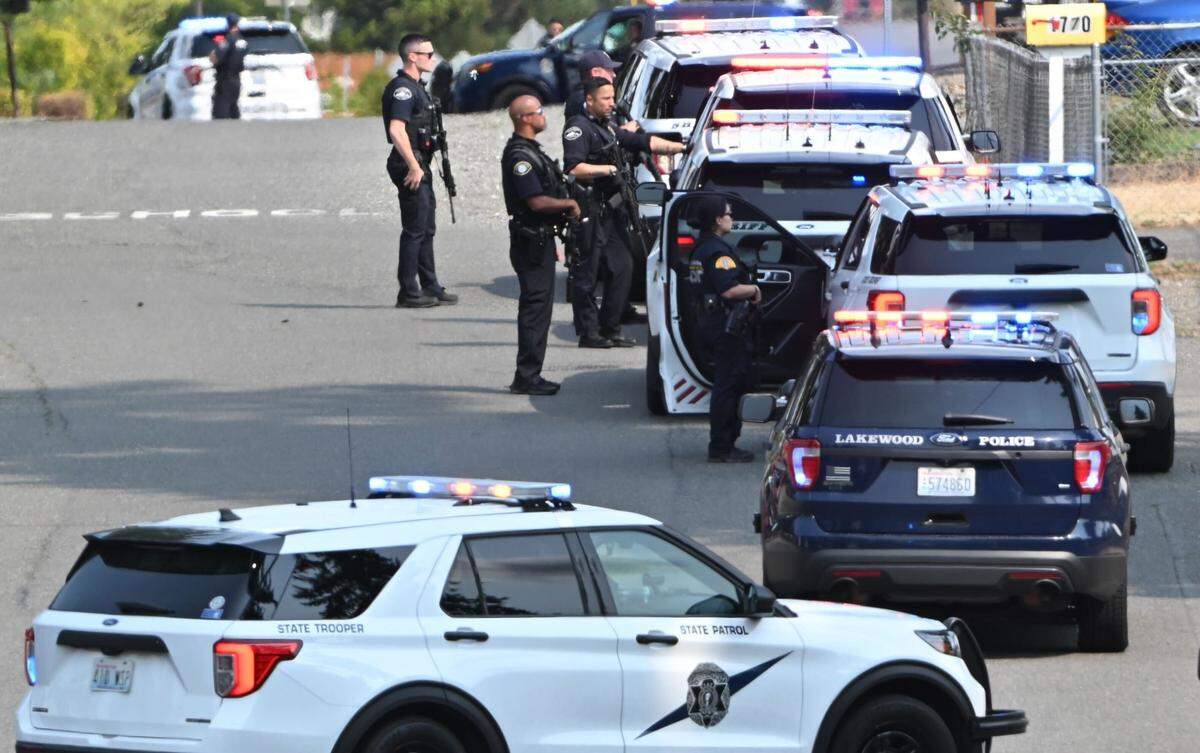
In Washington, young people sentenced for crimes committed before they are 18 go to juvenile rehabilitation in the custody of the Department of Children, Youth and Families until age 25 when they would transfer to the Department of Corrections.
Although Kent’s sentencing was heard in a courtroom of Remann Hall, Pierce County’s juvenile detention center, the defendant was prosecuted as an adult in Superior Court on the order of a judge.
That decision followed a days-long hearing in July, known as a “discretionary decline hearing” that functions as a sort of mini trial to decide whether the case should be transferred out of juvenile court. Prosecutors argued that Kent should be adjudicated in adult court so that if he were convicted, his punishment would be lengthy enough to ensure the community’s protection and Kent’s rehabilitation.
The hearing included 14 testifying witnesses, such as friends and family of Kent, Tacoma police officers and a forensic psychologist who evaluated Kent and diagnosed him with PTSD, ADHD and intellectual and learning disabilities. The doctor also concluded that Kent should remain in the juvenile justice system rather than be transferred to adult court.
Ultimately, Judge Matthew Thomas decided by a preponderance of evidence that transferring Kent’s case to adult court was in the best interest of the youth or the public.
“Have mercy on my son’s future.”
Before Kent’s punishment was handed down by Judge Evans, the court heard testimony from the teen’s mother and father.
Steven Kent said he’d been hearing a lot of talk in court dismissing some of the things his son has been through that were traumatic to him and his family. He said he wasn’t saying these things to justify what Kent had done. He told the court that his son’s first cousin was murdered in front of him, families’ houses were shot up several times and his cousins were shot in a car.
The father said his father was in prison, he spent time in prison, and now his son would, and he asked the court to consider that a harsh sentence wasn’t necessary for Kent to learn his lesson.
“I went to the penitentiary when I was 19 years old and I came out more of a criminal than I ever was,” Steven Kent said. “It did not help me.”
Steven Kent said he wanted to apologize to Brooks, his family and the Police Department. Whatever the judge’s decision, Kent said he knew his son’s life would be changed after he leaves.
“I just pray you have mercy on my son’s future,” Steven Kent said.
Kent’s mother, Kamali Dunning, then spoke. She said she wanted to apologize to everyone for what had happened, and she wanted to ask Evans for mercy and grace. She said everyone deserves a second chance.
McGowan, Kent’s defense attorney, then made his argument for a shorter sentence. He expounded on the trauma in his client’s life that Kent’s father had referred to, telling Evans the circumstances of his life created the fear that prompted Kent to arm himself with a handgun — which the attorney said he absolutely should not have had.
The defense attorney said Kent had been raised in some of the worst neighborhoods of Tacoma, where shootings, assaults and drive bys were not unusual. He said Kent was raised in relative poverty and without a father for some time, in a home where mental health issues were just beginning to be recognized.
“So was his life patterned on violence? Sure, maybe it was, but that’s because he couldn’t escape it,” McGowan said. “It was in his neighborhood. It was at his football games. His family’s houses literally shot up. A car burned outside of his aunt’s house. His best friend being harassed and eventually beaten severely by essentially pre-teen members of a rival gang at school.”
McGowan said Kent didn’t succumb to this the way others did. He didn’t join a gang or become a bully. The attorney said he was a star athlete who coaches described as having great humility. But instead of responding to violence with violence, McGowan said Kent became afraid.
“This is trauma. This is poverty,” McGowan said. “This is a community beset with violence, and this is a child who should not have had a weapon.”
Then it was Kent’s turn. He’d sat quietly throughout the hearing, wearing a black-and-gray collared shirt with his hair long and neat. He stood and said he wanted to take accountability for his actions and asked that the judge have mercy on him. Then he faced Brooks.
“Mr. Brooks, I’m sorry,” Kent said.
“Thank you,” Brooks responded.
“I hope you forgive me.”
“Maybe in time,” Brooks said.
Evans then told Brooks he was sorry for what had happened to him, and he told Kent that regardless of the sentence, he would one day get out and have an opportunity to rectify his mistakes. Evans launched into a legal analysis for his sentence, and he imposed it.
After court adjourned, Brooks told The News Tribune he had no comment on the sentence that Evans had imposed and deferred to a police spokesperson.
Outside Remann Hall, Deputy Chief Paul Junger said Brooks had given 30 years of his life to serving the citizens of Tacoma. He said it was “just horrible” to have to go through what Brooks has gone through. A number of police officers and sheriff’s deputies were in attendance outside the courtroom. Junger said it was important for them to show up to support Brooks.
“I feel that justice was served, but it’s not about how I feel, it’s about how Jason feels,” Junger said. “And I just spoke with detective Brooks. He’s happy with the outcome, so, it does show some accountability.”
“This will help healing on both sides. Both for the family and for our family as well,” he added.