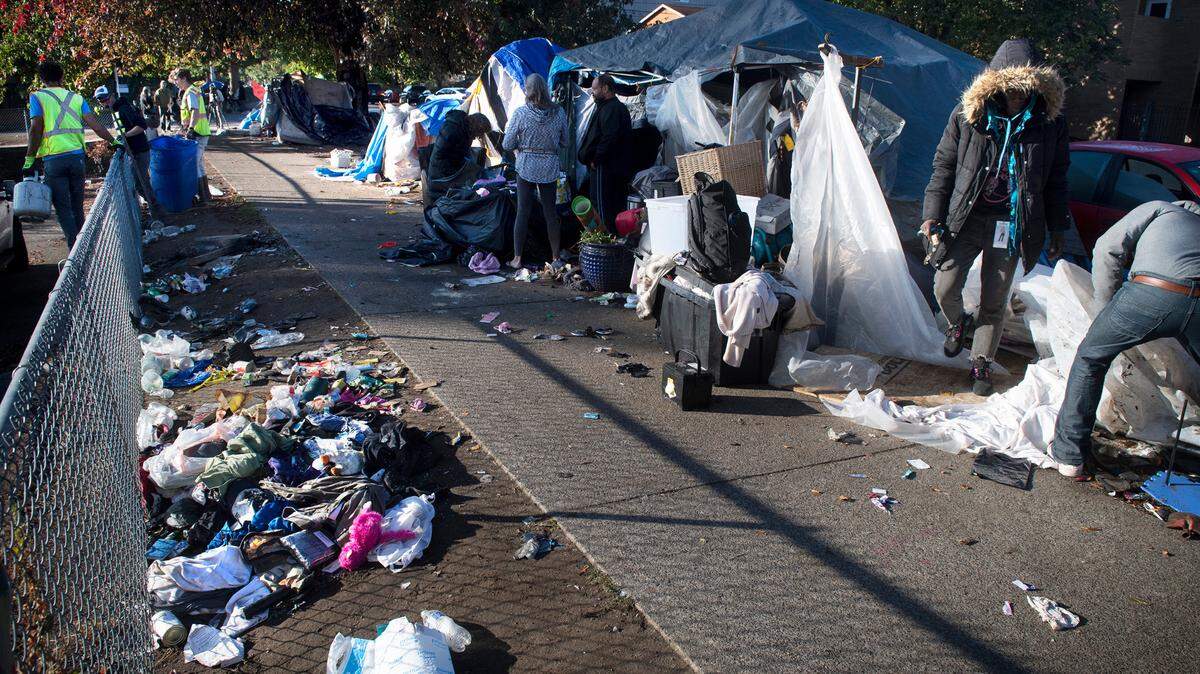
Tacoma has removed nearly 9 million pounds of debris from encampments since 2022
AI-generated summary reviewed by our newsroom.
- Tacoma cleared 8.6 million pounds of encampment debris since late 2022.
- HEAL team saw 60% of unhoused individuals express interest in services in 2025.
- City projects loss of 339 shelter beds by July due to a budget shortfall.
Since implementing an ordinance prohibiting camping in certain areas in 2022, the City of Tacoma has reportedly removed more than 8.6 million pounds of debris from homeless encampments.
According to the city, it has spent $4,535,136 to remove debris in accordance with the ordinance as of June 17.
A June 12 report from Acting City Manager Hyun Kim showed 832 encampment removals by the city since it implemented the camping ban ordinance in Fall of 2022.
In October 2022, the Tacoma City Council passed an ordinance that prohibits camping and the storage of personal belongings in a 10-block radius around temporary shelters and all public property within 200 feet of Tacoma’s rivers, waterways, creeks, streams and shorelines. Under the ordinance, violators face fines of up to $250 and up to 30 days in jail.
To date, the city reports that two citations or fines have been issued since the ordinance was passed.
To enforce the policy, the city uses both police and homeless-outreach staff, known as the HEAL team, who make contact with people living in encampments that have been reported to the city. Their job is to get folks living unhoused to accept offers of shelter and services that help them get off the streets.
The HEAL team responds to requests made through the city’s 3-1-1 system. The requests are categorized as requests for outreach, reports of someone living on public property in a vehicle, reports of illegal dumping on public property, and general requests for contact.
3-1-1 requests made related to those living unhoused in areas where the ordinance is not enforced were higher from March 1 to May 31 than they have ever been. More than 2,000 requests were made in these areas in March 1 to May 31, a little more than 1,700 were made three months prior to implementation of the ordinance.
While areas where the ordinance is not enforced have seen increased 3-1-1 reporting, areas where the ordinance is enforced have seen a general decrease in reports related to those living unhoused. From March 1 to May 31, there were 2,305 reports related to homeless activity in areas were encampments are prohibited. During the same months in 2024, the same areas recorded 2,833 reports.
Three-and-a-half months before the ordinance was implemented, 3,115 reports were made in areas where encampments are now prohibited.
According to stats from the city, the HEAL team has made 827 contacts with folks living unhoused through the first half of 2025 across all parts of town.
When offered services by the HEAL team, historically only about half of the individuals accept those services. That trend continued in the first quarter of 2025, with 54% of individuals expressing interest in the services offered.
From March 1 to May 31 of 2025, the HEAL team recorded the highest rate of interest in services since implementation of the ordinance with 65% of the 455 contacted individuals expressing interest in the services.
The HEAL team has recorded a 60% rate of interest in services this year, compared to only 37% percent last year.
“Our conclusion is that the HEAL Team has been able to build relationships within the unhoused community, with many people having eventually accepted these services and being placed into shelter,” the acting city manager’s report stated.
The percentage of individuals being placed into shelter was also the highest it has been since implementation of the ordinance, as 15% of people contacted have been placed into shelter through 2025, totaling 123 individuals.
Since implementation of the ordinance in late 2022, the city has placed 10% of contacted individuals into shelter, totaling 764 individuals.
This summer, the city is anticipated to lose a significant portion of its homeless shelter beds.
The City of Tacoma has been planning to close roughly 339 emergency shelter beds due to an anticipated funding shortfall. Heading into the beginning of 2025, the City of Tacoma requested $6 million annually over the next two years to maintain 307 shelter beds through June 2027.
On June 9, Maria Lee, a spokesperson for the City of Tacoma, told The News Tribune the city will be awarded $3 million to keep 140 shelter beds open through June 2026.
The city had about 1,099 shelter beds at the beginning of 2025. Lee said the city anticipates having 860 available shelter beds after standing down three shelters in July. Those shelters include Brotherhood RISE, Freedom Project and Forging Paths Community.
With Tacoma hosting what is about 80% of Pierce County’s shelter capacity, according to city officials, the loss of shelter could have county-wide implications.