Where in Tacoma will homeless camps be banned under amended ordinance?
AI-generated summary reviewed by our newsroom.
- Council to vote Oct. 14 on amendment expanding no-camping buffer zones citywide.
- Hines proposed the expansion; he is running for mayor and defends impacts.
- Advocates warn shelter capacity fell; Ibsen calls the ordinance reactive and inadequate.
This month, the Tacoma City Council will consider an amendment to an ordinance that prohibits public camping in certain parts of the city. The proposal will be heard during the City Council meeting on Oct. 14.
The current ordinance prohibits camping within a 10-block radius around temporary homeless shelters located in four zones within the city. The proposed amendment would establish no-camping buffer zones in nearly every neighborhood.
Advocates for those living homeless say the proposal comes at a time when shelter capacity is at its lowest in recent years and will leave the unhoused with nowhere to go.
“It’s going to make most of the city out-of-bounds for folks who are homeless,” said Rob Huff, spokesperson for the Tacoma Pierce County Coalition to End Homelessness, during an Oct. 10 meeting. “It will make it really hard for anyone who’s homeless to know whether they’re staying in a place where they’re going to immediately be hustled away, or if they’re going to be able to spend the night there without being harassed.”
City Council Member John Hines proposed the amendment. He says the proposal is less about addressing the root causes of the homelessness crisis and more about mitigating the impacts of encampments on the community.
Hines is currently campaigning to be the next mayor of Tacoma. He is running against Anders Ibsen, a former representative for City Council, District 1.
Ibsen previously told The News Tribune he thinks the city’s camping ordinance is “reactive” and does not do enough to address the root causes of homelessness.
“My concern is that it amounts to more of the same,” Ibsen told The News Tribune about Hines’ proposed amendment to the camping-ban ordinance.
In October 2022, the Tacoma City Council passed an ordinance that prohibits camping and the storage of personal belongings in a 10-block radius around temporary shelters and all public property within 200 feet of Tacoma’s rivers, waterways, creeks, streams and shorelines. Under the ordinance, violators face fines of up to $250 and up to 30 days in jail.
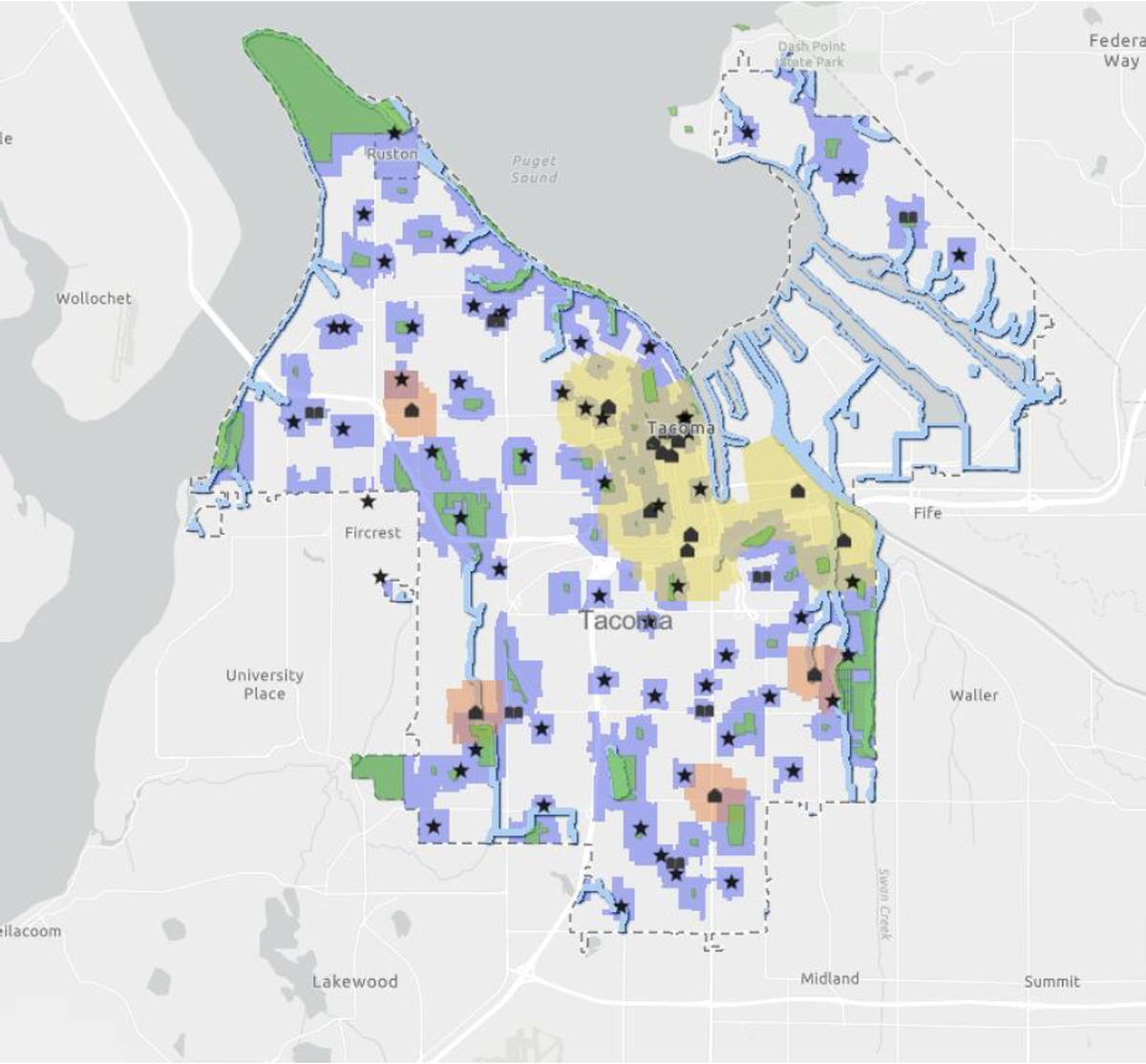
On Oct. 1, Hines proposed an amendment to the ordinance which would expand the camping ban to within 10 blocks of permanent shelters, temporary shelters and transitional housing as well as establish a five-block buffer zone around public schools, parks and libraries.
In an interview with The News Tribune, Hines said he proposed the expansion because of recent closures of temporary shelters, which have reduced the number of camping-prohibited spaces across the city.
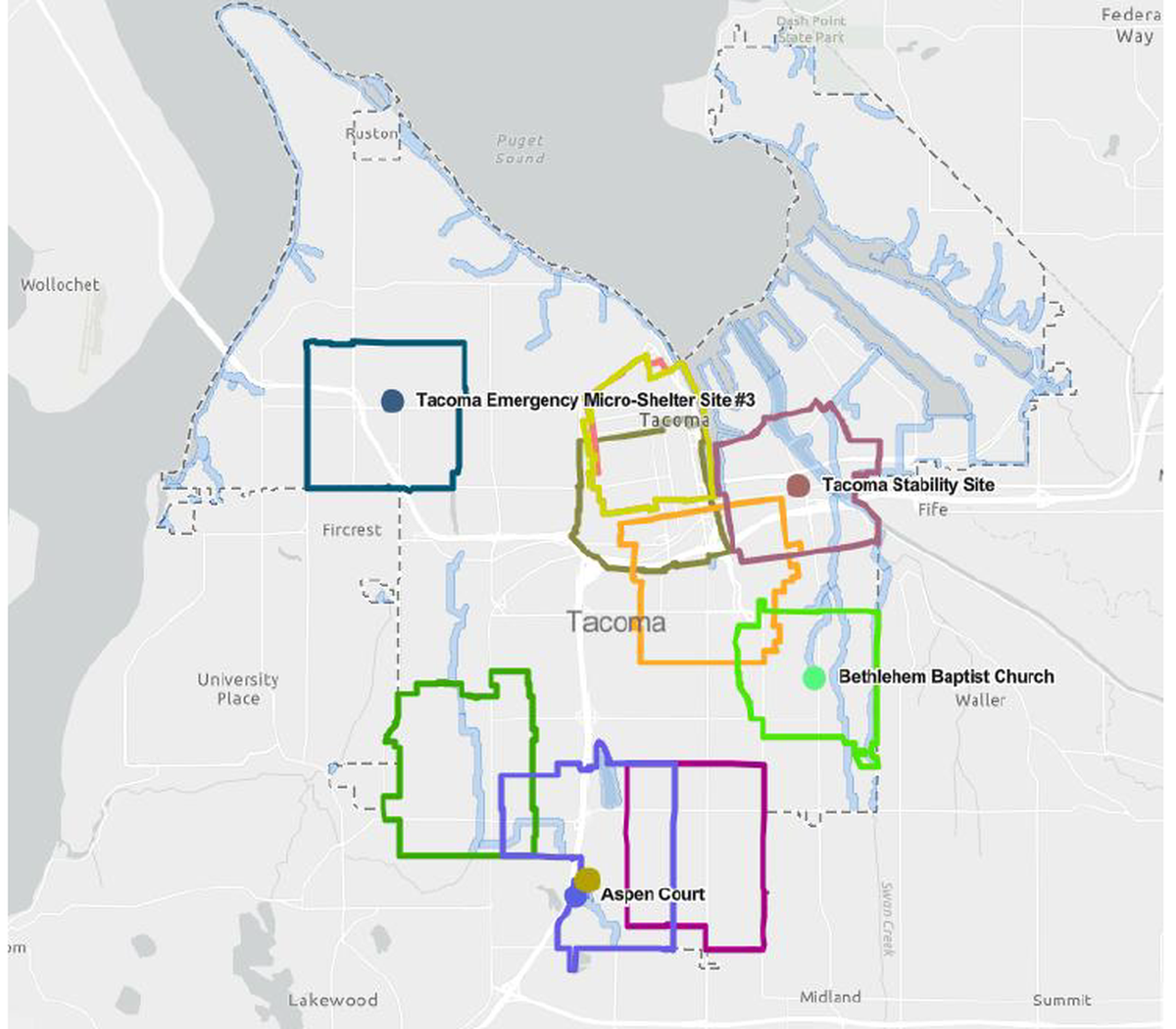
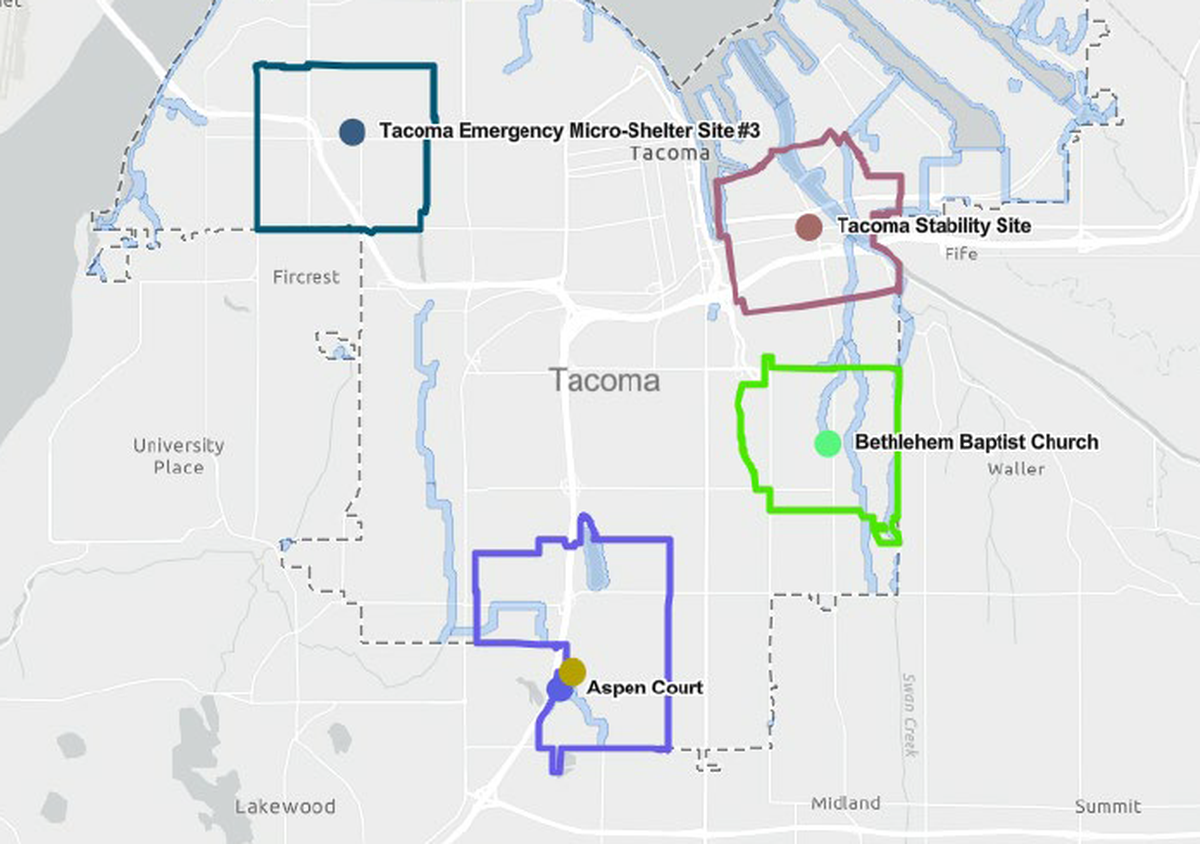
According to the proposal, the city lost five buffer zones from 2024 to 2025 — almost all of which shared overlapping areas in downtown, south and east Tacoma.
A News Tribune analysis of the public schools, parks and libraries across the city suggests that, if passed, the amendment would drastically increase the number of buffer zones where camping is prohibited.
In an interview with The News Tribune, Hines said some of the provisions of the amendment would be adjusted following feedback he received from other council members.
On Oct. 8 the proposal was amended to reduce the no-camping buffers around public schools, parks and libraries from 5 blocks to 2 blocks. Buffer zones surrounding shelters outside of the downtown core would be reduced from 10 blocks to 5 blocks.
The amendment would entirely prohibit encampments in the downtown area and the Hilltop neighborhood.
The proposal to increase the spaces in the city where the unhoused are not allowed to camp comes at a time where the number of shelter beds in Tacoma is at its lowest since the pandemic.
The city has 860 beds, according to a quarterly report from the city’s Neighborhood and Community Services Department. The city had about 1,099 shelter beds as of the beginning of 2025 before closing a handful of shelters due to funding shortfalls.
Homeless outreach workers in Tacoma have expressed concerns with the city’s encampment removals, as they claim the city does not offer enough alternatives for those living unhoused.
To enforce the ordinance, the city has used both police and homeless-outreach staff, known as the HEAL team. Members of the team make contact with people living in encampments. Their job is to get folks living unhoused to accept offers of shelter and services to help them get off the streets, what the city describes as a “services first” approach.
The city also has reported throwing away more than 9 million pounds of items and debris from encampments since the ordinance was passed at the end of 2022.
The city’s HEAL team has reported recent increases in the shelter-placement rate among those it contacts. So far, 15% of those contacted in 2025 have been placed in shelters — the highest rate since the ordinance was passed.
When asked how he reconciles proposing an expanded ban on camping while the city is experiencing a shelter shortage, Hines said the proposal is not about mitigating the homeless crisis and more about addressing the impact encampments have on the community.
“This is really about making sure those public spaces are open and accessible to the public,” Hines told The News Tribune. “It’s irrespective of our ability to solve the problem.”
He said the council and city officials will continue to talk about how to increase shelters and housing resources in the city, and he anticipates increased shelter options during the upcoming cold weather months.
When asked for details about additional shelter resources that would become active during inclement cold weather, city spokesperson Maria Lee, pointed The News Tribune to the city’s website.
The website mentions 20 beds for adults 18 and over at Nativity House at 702 South 14th Street, 20 beds for young adults ages 18-24 at Beacon Young Adult Shelter at 415 South 13th Street, 20 hotel vouchers made available through St. Vincent de Paul, and public libraries that are available for the public to stay warm during regular hours. Many of these shelter resources only become available when the temperature drops to 32 degrees or lower.
“It’s hard to balance these things,” Hines said. “But it lets the city off the hook to not have a policy like this.”
In the future, Hines said, he hopes the city will continue to have conversations with outreach workers who have been frustrated by the city’s approach in hopes of developing a better plan to mitigate the homelessness crisis together.
Dionne Jacobson is the outreach director at St. Vincent de Paul’s Community Resource Center. In an interview with The News Tribune, Jacobson said she fears this proposal will only make the work of homeless outreach teams more difficult.
“where can we tell people to go, because its not to shelters, we don’t have any,” she said.
Jacobson said the majority of Pierce County’s homeless shelter and services are located in Tacoma and the proposal would effectively force people out of Tacoma into areas where resources are not available.
“How do you expect us to do our jobs when we can’t find people,” she said.
Hines said his proposal is meant to start a conversation with his council colleagues about how the community can better mitigate the impacts encampments have on community safety.
“I can’t tell you how disingenuous that feels when there’s a rush to actually do the first reading and second reading of a bill,” Huff said during the Oct. 10 coalition meeting. “A conversation doesn’t start at gunpoint.”