Cat stuck in a tree in Pierce County? These guys will come and rescue it
AI-generated summary reviewed by our newsroom.
- Canopy Cat Rescue founders climb trees and retrieve stranded cats in Pierce County.
- Founders use arborist gear, slingshot lines and nets to rescue cats from tall trees.
- Team responds across Western Washington, fields donations and offers advise to owners.
For at least 48 hours, Mike and Alexis Lacheney could hear a small mewing sound coming from the branches of a tall, thin tree in their Bonney Lake backyard. Yeti, their 4-year-old indoor/outdoor cat, was stuck up there, likely hiding from a coyote and too scared to come down.
Within an hour Friday, Olympia resident Tom Otto had rescued the fearful feline, after slingshotting a line 110 feet into the tree and climbing 30 feet to greet Yeti and bring him down in a net. Arborists by trade, Otto and his brother-in-law Shaun Sears have rescued more than 800 cats each year from trees around Pierce County and beyond. The pair run a nonprofit called “Canopy Cat Rescue“ and aren’t paid to do the work (although they do accept donations online).
Otto said most cats they find in trees are hiding from coyotes, and the number of calls they get varies by the season in correlation with the coyote breeding season. Friday’s rescue marked the third call Otto had responded to in 2026.
Otto and Sears (who is based in Woodinville) will drive hours to help cats in need. Most of their calls are in the Puget Sound area, but they’ll drive as far as Bellingham and Vancouver, Washington. They’ve even fielded calls east of the Cascades.
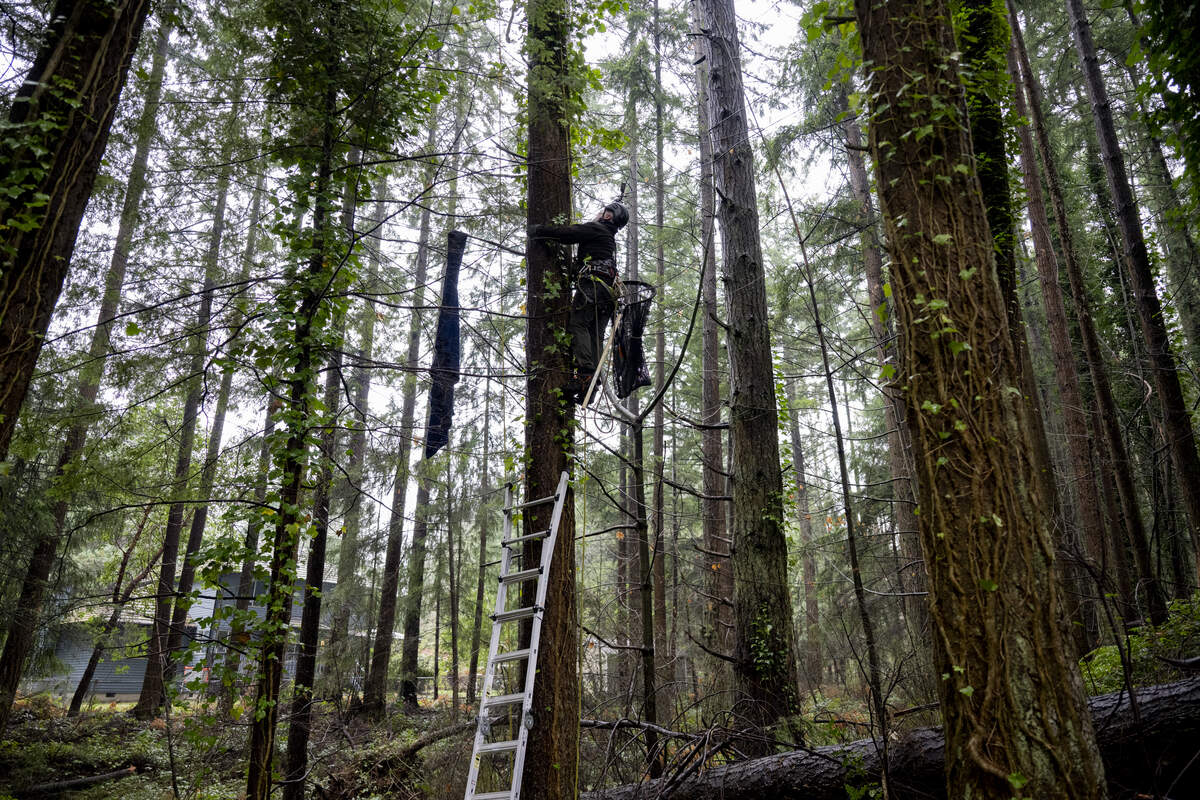
What does it take to rescue a cat from a tree?
It all depends on the cat’s temperament and its location in the tree, Otto said.
As you might expect, a cat rescue involves a lot of high emotions — from the feline and its owners. If a cat is meowing and friendly, it will usually let Otto approach it. If not, Otto has to take steps to ensure it doesn’t climb higher or try to jump. Otto calls to the cat by name and mimics how the owner talks to the cat. He’ll reassure the owners throughout the experience as well.
On average, a cat will spend three days in a tree before it’s rescued, and more than 60% of the time the cat will come down on its own, Otto said. Some people believe their cat is missing and don’t realize it’s in a tree, he said. Canopy Cat Rescue’s record for the longest time a cat was in a tree was 28 days, Otto said.
Based on their experience, cats who are in a tree for a few days typically are not in severe danger from exposure, Otto said. It can be safer to leave them in a tree for another day than risk them jumping because they could injure themselves by landing on something like a stump or a fence or a car, he said.
In a case like with Yeti on Friday, when the cat was up a thin tree with not many thick branches, Otto had to slingshot a 200-foot rope more than 100 feet into the air so it would hold his weight when he began climbing up the tree. He wore a helmet (with a GoPro camera— to post a video on the nonprofit’s Facebook page later) and carried a net to put the cat in when they descended.
Otto hasn’t used his bite-resistant gloves in years.
“What I found is that a cat that’s prone to biting you and stuff, they generally they’re not going to let you get close enough. It’s so rare to have a cat that is actually trying to attack us. It just doesn’t happen. Cats don’t do that unless they’re cornered,” he said. “The flight response definitely kicks in more than the fight response.”
Otto is called when cats typically climb 30 to 60 feet up a tree. Their highest rescue was about 185 feet in the air.
Coyotes are found everywhere in the United States, and Canopy Cat Rescue typically gets called in the urban-rural interface, or developed areas that are nearby a forest, golf course or ravine, Otto said.
“Coyotes in general, they’ll get anything they can,” Otto said. “Rats, big possums, raccoons, squirrels, other small animals. And cats, they’re on the menu.”
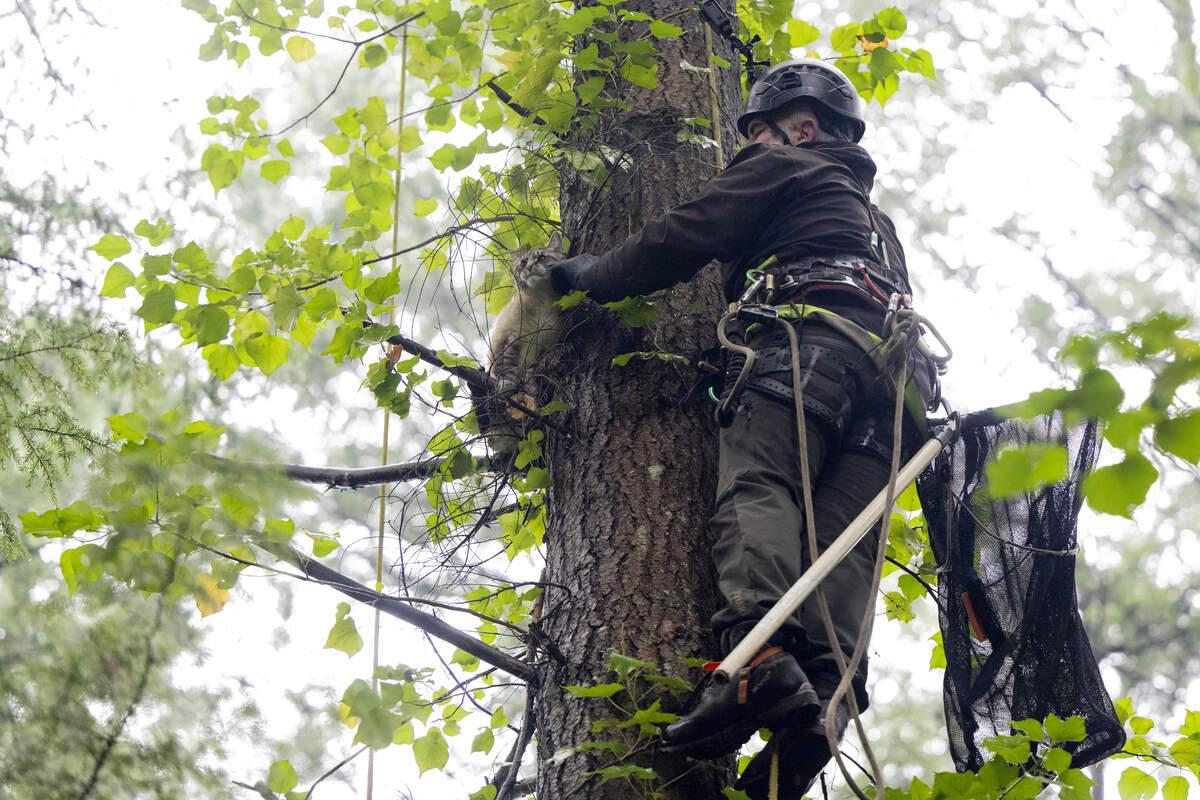
‘It’s a really great feeling’
New Year’s Eve was the second time Yeti had gotten himself stuck in a tree (the adventure cat was stuck in another tree last summer but managed to get down).
The Lacheneys will take Yeti camping with them and even paddle boarding (some of his adventures are captured on Alexis’s dog training company’s Instagram, @outdogsypack).
Mike tried to get Yeti down with a ladder the night of New Year’s Eve, despite coming home from working the night shift. The Lacheneys said it was so stressful knowing Yeti was outside, but there was nothing they could do. Watching Otto complete the rescue was “exhilarating,” Alexis said.
“He had all the tools, the slingshot, he knew what he was doing,” Mike said. “His demeanor is so calm that it really helps you.”
Otto said cat rescuing is his and Sears’ “life work” and “passion.”
When Otto used to have a full-time job, he would rescue cats in his free time, after work or on weekends. Sometimes donations don’t cover the cost of their expenses, but it’s more about being a resource for the community and helping people and their cats, he said.
“I love cats, and I love to get them out of a tree, and I really love to help hand them back to their owners. It’s a really great feeling,” Otto said. “When you see a cat that’s stuck in a tree for three or four days, and it may be soaking wet, and it’s looking at you, you can just tell it’s very grateful to see you. Petting them and holding them and snuggling them. Even before I put them in the net I’ll just hold them in the tree for a little bit. If I get some purrs out of the deal, that’s golden. And I can walk away feeling good about it.”
To contact Canopy Cat Rescue, call 1-877-721-MEOW (press 2 for Pierce County). Otto can also be reached at canopycatrescue@gmail.com.