Thurston, Pierce sheriffs say law unseating decertified sheriffs is an overreach
The sheriffs for Pierce and Thurston counties denounced a new law signed by Gov. Bob Ferguson on April 1 that sets higher standards for law enforcement leaders and removes sheriffs and police chiefs from office if they are decertified as a police officer.
Pierce County Sheriff Keith Swank and Thurston County Sheriff Derek Sanders described the law as an overreach by state government.
Before Ferguson signed Senate Bill 5974 into law on April 1 in Olympia, he said he agreed with a Tri-City Herald editorial that said the law would bolster public trust.
“Sheriffs and police chiefs should be held to the same standards as their own officers and deputies,” Ferguson said. “They should be certified and have law enforcement experience, pass a background check, and have a clean criminal history.”
In a phone call after the signing, Swank told The News Tribune that state lawmakers were not attacking any other elected offices in this way and that there needed to be federal intervention. He also said he was glad Ferguson signed the bill.
“This overreach of the government needs to be addressed,” Swank said. “I’m actually hoping that they, that the [Criminal Justice Training Commission] decertifies me, and then they try to remove me from office. I’m looking forward to that fight.”
The state’s Criminal Justice Training Commission, or CJTC, has the authority to suspend or revoke certifications for police and corrections officers who are accused of misconduct. Swank has 10 open certification cases as of April 1, none of which have moved on to the investigation stage of the process.
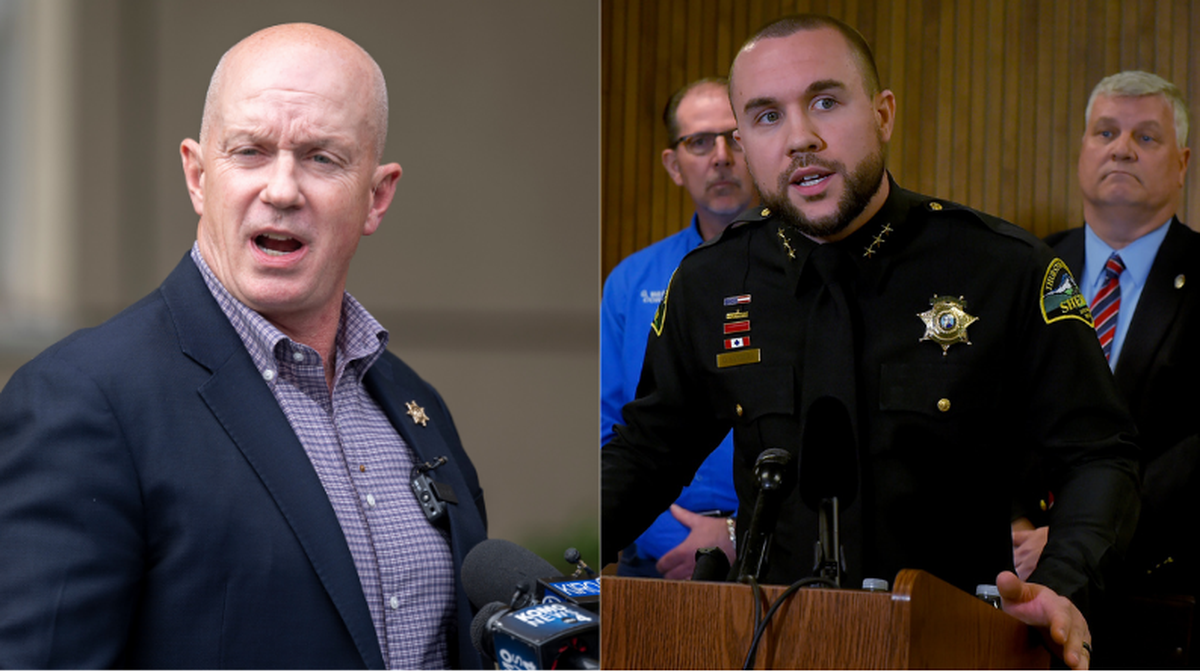
Sanders told The News Tribune in a phone call that he supported the parts of the law that create stricter requirements for individuals to hold the office of sheriff, police chief or town marshal.
He said he disagreed with Ferguson’s position that the law will improve public trust.
Sanders said the CJTC reports directly to the state, and that the government had “created a little kingdom” by charging the Washington State Patrol with conducting background investigations of candidates for those leadership positions in law enforcement, which he said means the State Patrol determines who appears on the ballot.
“I’m a huge proponent of, ‘Let’s do things that truly help build trust in our communities,’ and this isn’t one I’m going to sign on to,” Sanders said. “I’m going to call this one out. It’s not it. This is a time where we have a lot of tumultuous issues going on in our country, and it seems like the path to get us out of that is to offer more voter control and not less.”
What new law requires of law enforcement leaders
The final version of Senate Bill 5974 passed the state Legislature on March 11 along party lines, with Democratic senators supporting it and Republican senators opposing. Its primary sponsor was Sen. John Lovick, a Democrat and former state trooper who was sheriff of Snohomish County from 2007 to 2013.
The CJTC already had the authority to decertify sheriffs and police chiefs accused of misconduct, but state law previously did not address what would happen if those individuals lost their certification. Being decertified generally requires a complaint, an investigation of the allegations, a statement of charges, and, if requested, a hearing before a five-member panel presided over by an administrative law judge.
The stricter qualifications for sheriffs, police chiefs and town marshals require them to be a United States citizen who is at least 25 years old, has a high school diploma, at least five years of law-enforcement experience and no prior felony or gross misdemeanor convictions. They are also required to not have engaged in any misconduct that would require decertification. If they have served in the military they must have received at least an honorable discharge.
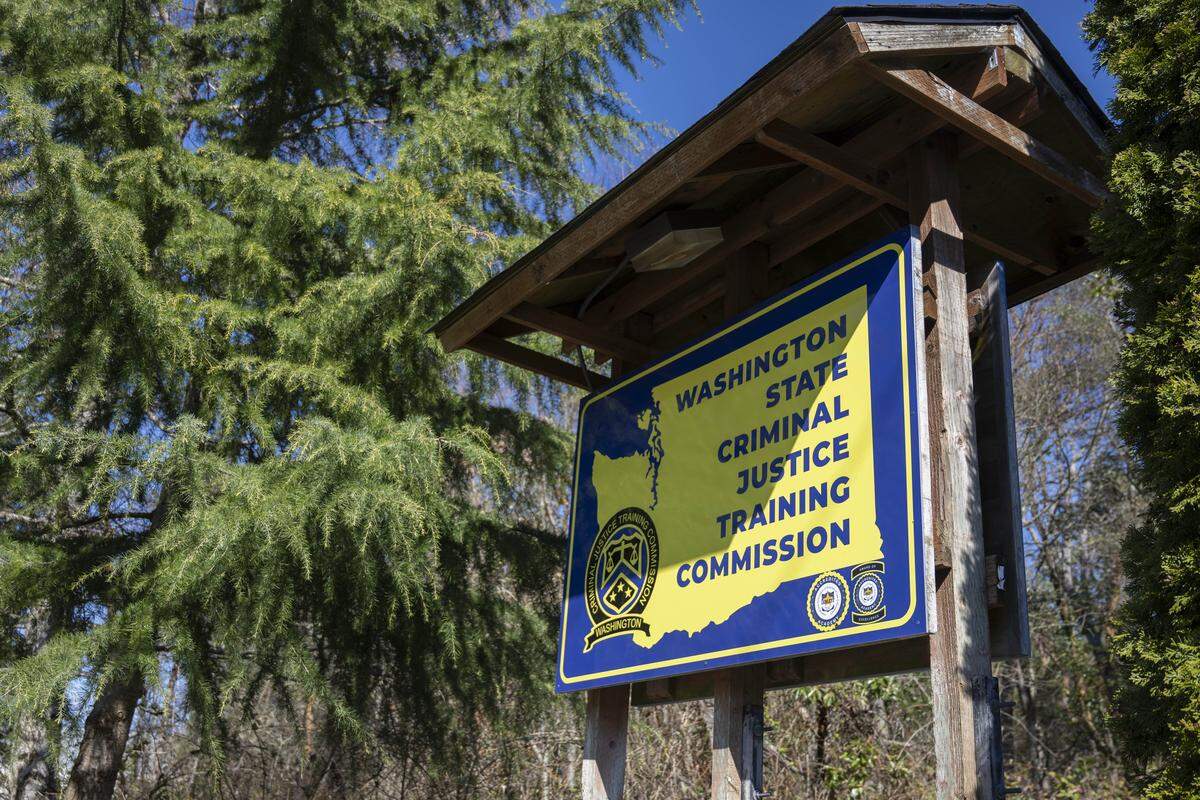
Previously, the only required qualification for sheriff prescribed by state law was that they obtain certification as a law enforcement officer from the state’s Criminal Justice Training Commission within 12 months of assuming office. The new law would shorten the amount of time sheriffs have to become certified to nine months, which was already required of police chiefs and town marshals.
As another condition, sheriffs, police chiefs and marshals must pass a background investigation. For police chiefs, sheriffs or town marshals seeking appointment, the check is done by the city, county or town appointing them. For candidates for elected sheriff, it is conducted by the Washington State Patrol, with costs incurred by the county the individual is seeking office in.
The background investigation for individuals seeking appointment as a police chief, sheriff or marshal includes a check of disciplinary records from previous law enforcement employers, an inquiry into whether the person has affiliations with extremist organizations, a review of their social-media accounts, a psychological exam and a polygraph assessment. For candidates for elected sheriff, the background investigation will verify that they meet all eligibility requirements.
The law also limits what types of roles law enforcement volunteers and youth cadets can perform, restricting them from making arrests, using force, engaging in pursuits, carrying firearms or using dogs to apprehend people if they are not certified law enforcement.
Sheriffs say law targets certain leaders
Washington sheriffs largely have opposed changes to the law that remove them from office if they are decertified, and some critics see the bill as targeting Swank, whose public speech and actions have led to multiple investigations against him.
Lovick has said that fears that sheriffs will be decertified based on their political beliefs are misplaced, according to KUOW.
State law requires the CJTC to revoke the certification of law enforcement officers who engage in serious misconduct. The CJTC “may” suspend or revoke certification or require remedial training when an officer makes statements involve prejudice or discrimination against a person based on a number of protected statuses, including race, religion, immigration status, disability, gender, gender identity, age, sexual orientation or military status.
Sanders told The News Tribune he thinks pieces of the new legislation targeted Swank. He expressed concern that in the future lawmakers will “shift the goal posts” to get sheriffs they don’t like removed from office.
“I’ve talked with the makers of this group, and they could not promise me that this was the end of this bill,” Sanders said. “It’s going to keep going. It’s going to keep going until they can eventually shift the goal posts. And my belief is that the ulterior motive is to get rid of elected sheriffs in Washington.”
Swank said it was “funny” that the complaints filed against him with the CJTC were all related to his speech, and that he thought it would be great to see if this law is constitutional. Sanders similarly said that he didn’t think the law would stand up to the scrutiny of the Washington Supreme Court.
“I’m looking forward to seeing that my speech can be used against me to remove me from office,” Swank said. “I’m looking forward to that fight to come to that. Yeah, I am. This needs to be settled.”
Almost all of Swank’s certification cases are related to allegations of discrimination, ethics and professionalism for his public speech, including on his X account and for his defiant testimony in Olympia opposing Senate Bill 5974, according to public records reviewed by The News Tribune.
One of the cases contains an allegation of dishonesty for Swank allegedly altering public records. During litigation over whether a private attorney, Joan Mell, could represent Swank in an official capacity, a King County judge said it appeared that Swank had altered texts with Mell to remove potentially offensive remarks, before he handed the texts over to a public records officer.
This story was originally published April 1, 2026 at 12:12 PM.