What’s that plane over Lakewood? Here’s what WSDA is spraying — and why

AI-generated summary reviewed by our newsroom.
- WSDA is aerially treating 498 acres in Lakewood to eradicate spongy moth caterpillars.
- Sites will each be treated three times about 3–14 days apart, weather permitting.
- Residents are advised to stay indoors during spraying and wash outdoor items with soap.
Residents in Lakewood might see a plane spraying chemicals today.
According to a news release from the Washington State Department of Agriculture, it’s a treatment to eradicate spongy moth caterpillars, which are an invasive species.
WSDA will treat 498 acres in the Lakewood area, the release said, as well as 333 in King County near Lake Youngs.
“The sites will each be treated three times, with applications approximately 3 – 14 days apart. WSDA expects to complete all applications in May,” the release said.
Daniel Schafer, spokesperson for WSDA, told The News Tribune in an email that the treatments are weather-dependent, meaning they aren’t scheduled for specific dates or times. He said the next tentatively scheduled treatment session is May 11.
According to the release, the chemical from the planes is bacillus thuringiensis kurstaki, or Btk. The chemical is only toxic to caterpillars.
Karla Salp, spokesperson for WSDA, previously told The News Tribune the chemical works against the caterpillars by containing a chemical they can’t digest. When the caterpillar eats a leaf with Btk on it, they die.
“People who wish to minimize their exposure to the spray can remain indoors with doors and windows closed during spraying and for 30 minutes after the treatment ends. Let the spray dry before allowing children to play outside, wash with soap and water if you do have skin contact with the spray and rinse your eyes with water if eye contact occurs,” the release said. “Btk is sticky. Residents in the treatment areas may choose to cover cars parked outside and bring in toys, lawn chairs, or other outdoor items to protect them from the spray. However, Btk can be cleaned off outdoor articles with soap and water.”
Why are they targeting spongy moths?
The News Tribune previously reported on WSDA’s efforts to eradicate the caterpillars, which eat over 300 types of trees and shrubs. If not kept in check, the insects can eat all the leaves of a forest in just a few months.
Salp previously told The News Tribune some people can get a rash if they make contact with the caterpillars. The caterpillars also can cause car accidents inadvertently when their droppings fall from the trees and make roads slippery.
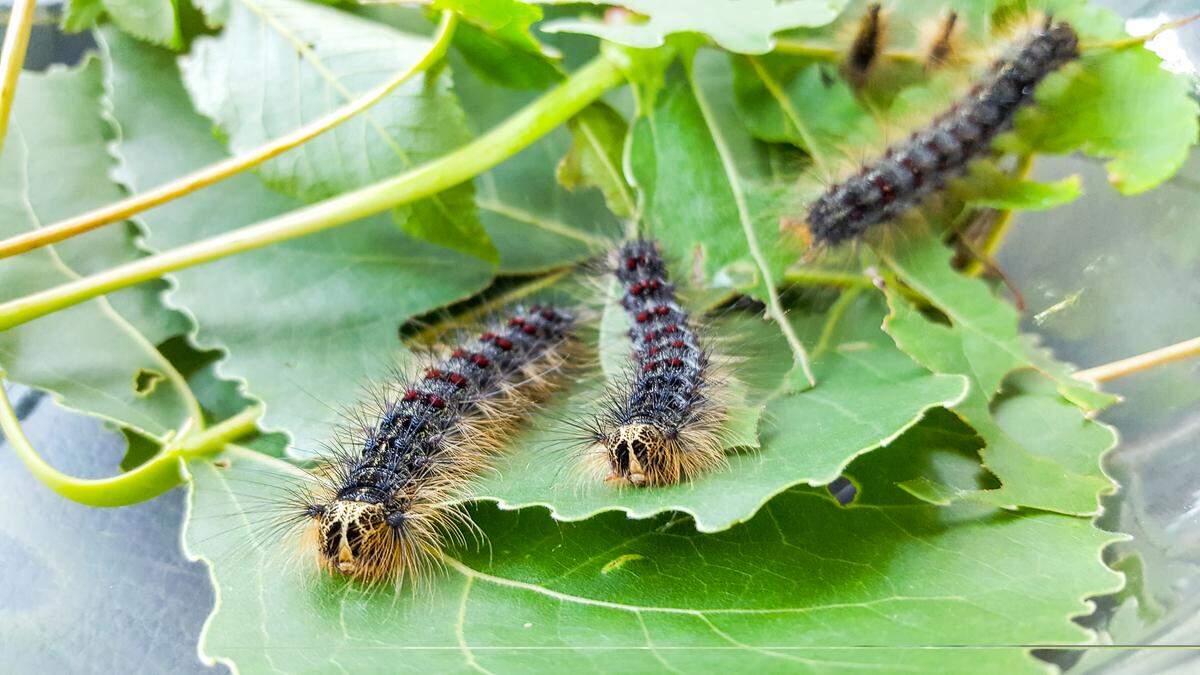
“They have the potential to do widespread damage,” Salp said. “And if that only happens one year, most trees — if they don’t have other stressors — can be resilient and re-leaf. But when you have multiple years of that in a row, like you would in an outbreak, that can actually kill trees.”
Salp said WSDA had previously found about 10 moths in Lakewood in 2024, and five in 2025. She said the agency’s mission is to find no moths in Washington state.
Spongy moths originate from Europe and Asia, Salp previously told The News Tribune, and have a stronger presence on the East Coast – but they are still migrating to the West Coast through vehicles, bicycle tires or outdoor furniture.
How do I know if I am in the treatment zone?
According to a map from WSDA, the treatment will apply to just under a mile in Lakewood, with Dower Elementary School – located at 7817 John Dower Road W – near the center. Residents can also enter their address into a separate map to find if their homes are included in the targeted area.
To receive alerts, text 1-800-443-6684 with the message “JOIN PIERCETEXT” or “JOIN PIERCE CALL” to get texts or phone calls.
Residents can contact WSDA at that phone number or at pest@agr.wa.gov.