Major Pierce County bridge closure reshapes leadership in town by Mount Rainier
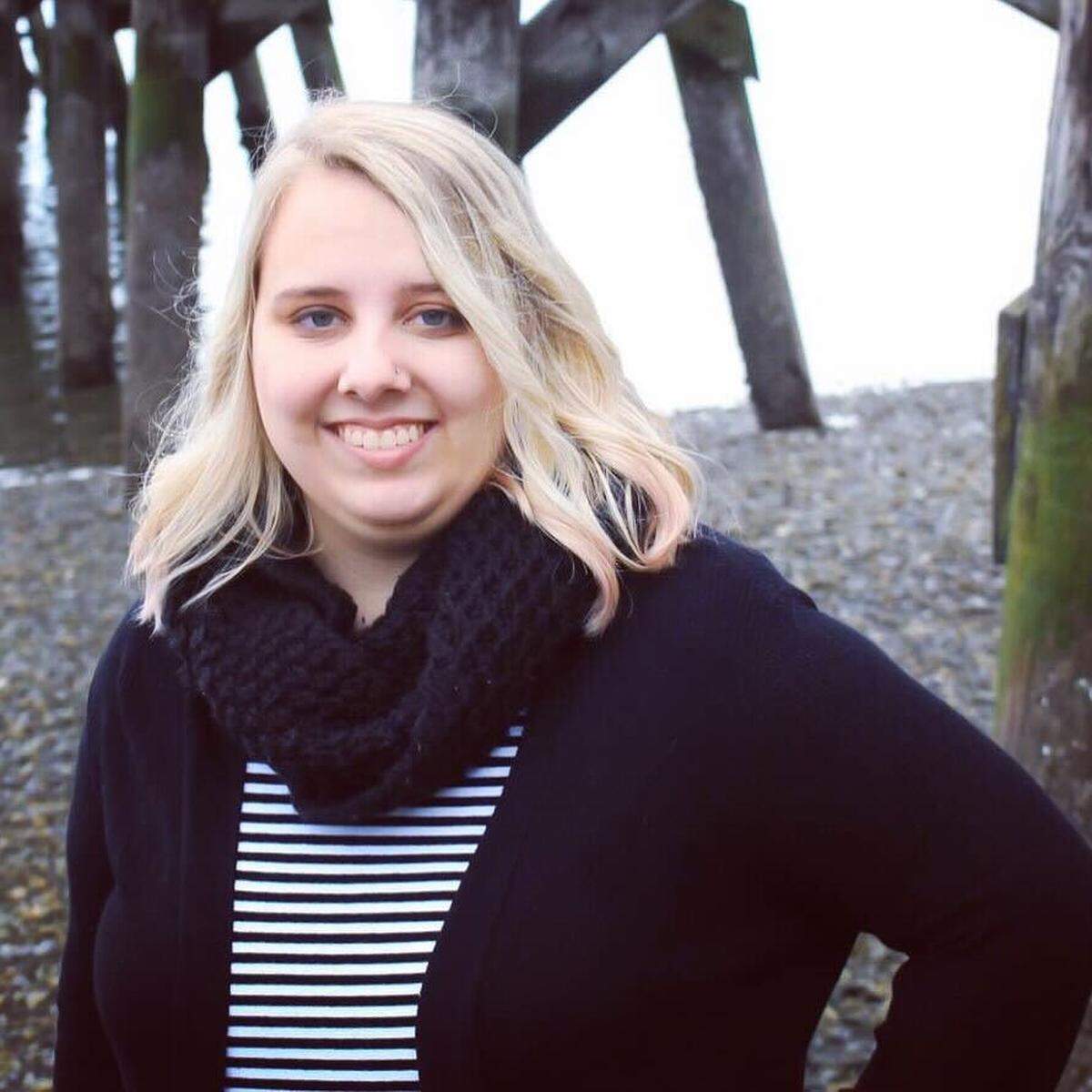
The ongoing infrastructure crisis in the Carbon Canyon has prompted a shift in leadership in nearby Wilkeson, where Mayor Jayme Peloli resigned on Thursday.
Peloli drew regional attention for challenging state transportation officials over the maintenance of the now-closed Fairfax Bridge. She will remain with the town as a government-relations consultant, leading advocacy and strategic partnerships for the corridor.
Her resignation was effective June 11, she wrote, with her first day in her government-relations role starting on June 12.
“Over the last year, it became clear that the work ahead for Wilkeson and Carbon Canyon requires dedicated focus on infrastructure, transportation, mobility, access, and long-term resiliency,” Peloli wrote in a Facebook post Thursday. “Together, we recognized that my time could have the greatest impact in a role centered on advocacy, coordination, and advancing critical projects already underway.”
The Washington State Department of Transportation (WSDOT) shut down the state Route 165 Carbon River Fairfax Bridge on April 22, 2025. The 103-year-old bridge was the only way to access key areas of Mount Rainier National Park by car, including Mowich Lake, Tolmie Peak and Spray Park.
Wilkeson, which has about 500 people, has struggled to survive in the aftermath. Businesses are unsure of their financial future and residents in the Carbon Canyon are grappling with isolation from living on the other side of the closed bridge.
Since then, Peloli — who was elected mayor in November 2025 and has been mayor since January — has been a leading voice in asking the state to build a new bridge and restore access to the Carbon Canyon. During the 2026 legislative session, she urged lawmakers to pass two bills that would have declared the bridge closure a state of emergency. She also spearheaded the purchase of 139 acres of land for the town, which it plans to turn into a park with campsites and trails as a new way to lure tourists to the area.
In an interview with The News Tribune on Friday, Peloli said the five-member town council had appointed a council member, Travis Waldher, to become the new mayor. That leaves a council vacancy open.
“We are seeking letters of interest from interested people to fill this vacant seat. You must reside within Wilkeson Municipal Limits and submit your letter of interest by 5pm on June 30th to be considered,” the town wrote in a Facebook post on Friday. “Council intends to appoint the new council member on July 8th and this appointment will end in November 2027 when the general election is certified.”
The News Tribune reached out to Wilkeson Town Hall on Friday for a statement on Peloli’s departure but did not receive an immediate response.
“It’s emotional for me for sure, and it was not a light decision that was made,” Peloli said. “We recognized, as an administration, that the work in the Canyon just couldn’t wait.”
How did this decision come to be?
Peloli said she and the council have been discussing her future in the town for the past month and a half.
“As an elected official … you are only able to take on a special project as mayor for up to $36,000 a year, and that’s not a living wage,” Peloli said. “Those numbers haven’t changed since the ‘60s. We made calls to the Governor’s Office, ‘With an infrastructure emergency, is there some way around this to support an unpaid mayor with an issue bigger than anyone in the state?’”
She said the Governor’s Office didn’t get back to her before the town decided the direction to go.
“For context, the Mayor position in Wilkeson currently receives $60 per meeting,” Peloli wrote in a follow-up message to The News Tribune. “Historic compensation thresholds established under state law have remained largely unchanged over time despite inflation, expanded administrative responsibilities, and the increasingly technical nature of public sector project delivery.”
Peloli recused herself from the end of the May 27 meeting, she said, as well as during a special study session on June 8 and a regular meeting on June 10, where the town reviewed three candidates for consultants. Since Peloli was one of the candidates, she left to avoid a conflict of interest.
Then, the council told her she was at a crossroads: Stay mayor, or devote 100% of her time and energy towards her advocacy work.
“They met, and their decision was I either stay in as mayor and make the $36,000 and that’s all I make to make this a full-time position, or I step down and give the attention it needs to this project,” Peloli said. “I’m still the front of the line for advocacy for the bridge and getting that built as soon as possible. … I’m not signing checks, and I’m not running council meetings anymore, but I’m very, very involved.”
Peloli won’t get paid for the government-relations work, she told The News Tribune, because it’s volunteer.
“We got $2.5 million from the transportation budget. I went and fought for that. We were rewarded that. Then, all of that work we were being rewarded for is what I was doing for free last year,” Peloli said. “So, to remove myself from the process, I work with a different consultant, and he was the one that applied for the RFQ [Request for Quotation]. We were very transparent that I was going to run the project through him. My consulting company is working for a different consulting company that applied for the RFQ, the government relations work is separate.”
Peloli also said she and the council made the decision to create a “very healthy separation” between governance and advocacy.
What has Peloli’s advocacy work looked like?
On Oct. 29, 2025, Peloli — who was a town council member at the time — posted on social media that WSDOT repeatedly neglected to make critical repairs to the bridge.
“The Fairfax Bridge is not just a failure of steel, it’s a failure of policy,” Peloli wrote in the post. “... For nearly two decades, state agencies documented the ongoing structural deterioration of the Fairfax Bridge — corrosion, section loss, failed coatings, and repeated warnings of an imminent need for rehabilitation. Despite these findings, no preservation funding was ever allocated.”
The bridge, which opened in 1921, had steel supports that were deteriorating. In a July 2024 blog post, WSDOT said the bridge had not been painted since 1988.
Maintenance reports obtained by The News Tribune show that rust was a concern as far back as 2008. Reports in 2009, 2010, 2011, 2013, 2015, 2020, 2022 and 2024 brought up rust and section loss. In a statement to The News Tribune in December, WSDOT said it didn’t make repairs to the bridge because of a lack of funding and because the bridge was competing with hundreds of other aging bridges across the state.
In December, Peloli called for the Washington State Auditor’s Office (WSAO) to investigate WSDOT’s lack of repairs to the bridge, saying it showed a deep-rooted issue with maintaining rural bridges.
WSAO confirmed to The News Tribune in December it would “consider the issue for review in [its] next accountability audit” for WSDOT, but the work wouldn’t start for about a year.
Earlier this year, Peloli spent significant time in Olympia, urging lawmakers to pass bills in the House and Senate that would have declared the bridge closure a state of emergency. Because the bridge closure was the result of aging infrastructure and not a sudden incident like a crash or natural disaster, the governor cannot declare it a state of emergency, which would expedite the process of building a new bridge.
The bills ultimately did not pass.
Peloli previously told The News Tribune she also asked the transportation committee for a $12 million package, with some of that going to keep local businesses afloat. Instead, lawmakers allocated $2.5 million over two fiscal years, which she said will go towards Fairfax residents. Funds have helped with secondary egress, which establishes emergency procedures for evacuating during events like mudslides, and upgraded the gates on the dirt road between Fairfax and Wilkeson.
Through her business, the Wilkeson Historical District, Peloli has also spearheaded the Wilkeson’s Way Forward initiative, which raised funds for the town to purchase 139 acres of land between Coke Oven Park and the Fairfax Bridge. It cost $950,000 to buy the land, with $857,250 coming from a grant from the Pierce County Council.
At a fundraising dinner in April, Peloli said they raised enough money to close the gap and finalize the sale.
“We made it, it’s time to close,” Peloli told The News Tribune in an interview on April 24. “I’d like to sit and enjoy it, but we have so many things to do. We took a couple days to really let it sink in, and now we’re moving forward.”
Where does the bridge stand now?
In January, WSDOT said it would take about two years to complete the next step in addressing the closure.
Steve Roark, region administrator for WSDOT, said in a January hearing that WSDOT is in the first of a three-phase process:
- Phase 1, 12-18 months: Geotechnical investigations and surveying; early-NEPA environmental review, determining a bridge type, size and location
- Phase 2, 18-24 months: NEPA environmental assessment, design/engineering and permitting
- Phase 3, 24+ months: Construction of a new bridge and demolition of the existing bridge
Shortly after the closure, WSDOT wrapped up a $1.5 million planning study where it considered seven options for the future. In August, it narrowed the options down to two:
- Building a bridge replacement north of the bridge’s existing location.
- Tearing down the existing bridge and not building a new one.
WSDOT said it is moving the two options from the planning study into the design and environmental review phase.
Peloli previously told The News Tribune that in the transportation budget, legislators gave WSDOT $12 million to conduct an environmental study — which is the first step in deciding how to move forward. Legislators also directed WSDOT to provide them with a timeline and budget for rebuilding the bridge before the start of the next legislative session, which will commence on Jan. 11, 2027.
In a Facebook post on Wednesday, the day before she resigned, Peloli announced WSDOT is applying for the Federal Bridge Investment Program, which bring about $100 million in federal funds towards a new bridge.
“We’re really happy with that step,” Peloli said in her interview with The News Tribune. “‘No build’ is still on the table, so that’s a huge positive step, it’s one of the biggest ones we’ve had in the past year, [with WSDOT] saying, ‘Yes, we want to build, let’s apply for this.’”
Peloli looks to the future
Peloli said she will pour most of her energy into ensuring the bridge is rebuilt, but she also wants to lean into coordination advocacy — or, in her words, ensuring that towns like Wilkeson have a seat at the decision-making table.
“WSDOT has a list of bridges that need to be replaced, and in many rural areas, they don’t have a Jayme, and they don’t have a clerk, Marie [Wellock], that’s spending 24 hours a day fighting to get relief when the state is neglectful,” Peloli said. “What I really want to change is this happening again, where a small city has to take on such a large issue without the infrastructure and support to carry them. What we faced was catastrophic for our size.”
She said that while her title has changed, her dedication to Wilkeson has not.
“This position was never just a position — Wilkeson is home for me, my family has deep roots here. It has been one of the greatest honors of my life to be the face of, officially, the town,” Peloli said. “This is less about stepping away and more about stepping in the role where I can create the greatest impact. I am emotionally invested, obviously, I’m proud of what we’ve accomplished. I’m so proud of the council and grateful for the trust that people placed in me.”
This story was originally published June 13, 2026 at 5:00 AM.