Tacoma school nixed Native student’s sacred blanket. Discrimination or mistake?
AI-generated summary reviewed by our newsroom.
- A Native student sought to wear tribal regalia during high school graduation in Tacoma.
- Gracie Ray was prevented by Lincoln High in 2024. The district called it a mistake.
- Ray sued for discrimination. Tacoma Public Schools settled the lawsuit.
Tacoma Public Schools has agreed to pay “a large number” to settle allegations that it violated state law and discriminated against an Indigenous student when it prohibited her from wearing tribal regalia during a high school graduation ceremony in 2024, according to the student’s legal counsel.
Gracie Belle Ray, who is a member of the Central Council of the Tlingit and Haida Tribes of Alaska, sued the school district six months after she was told by Lincoln High School that she couldn’t wear a sacred button blanket to receive her diploma.
If she wore the red-and-black blanket gifted to her by the Nisqually Tribe, she wouldn’t have been able to join classmates in the graduation ceremony, including students who wore their own culturally significant grass skirts, leis, sashes and stoles, according to the lawsuit filed in December 2024.
In a court filing last year, the school district’s legal counsel attributed the incident to “misunderstandings and miscommunications.”
Lincoln High’s principal had not been aware or told of the wardrobe’s cultural significance, according to the filing, which also claimed that Ray was not in compliance with school instructions requiring students to wear a graduation gown, even with any tribal regalia.
Seth Rosenberg, one of two attorneys who represented Ray, disputed that ignorance was to blame, saying that Principal Karl Hoseth had indeed been aware of the blanket’s significance.
“It’s one of those incidents that it’s hard to see how there was a misunderstanding about it,” Rosenberg said in an interview on June 16.
In a statement, Tacoma Public Schools spokesperson Kathryn McCarthy told The News Tribune that the district is committed to ensuring all students feel supported, respected and celebrated during graduation ceremonies, including when choosing to wear tribal regalia.
“After an internal review, we have taken several steps to strengthen awareness and support regarding the wearing of tribal regalia at graduation ceremonies,” McCarthy said on June 16. “TPS has implemented annual staff training and additional training for school administrators, updated guidance and resources available to staff, and members of our Indian Education team now attend graduation ceremonies to support students and families.”
Tacoma Public Schools declined to reveal the financial terms of the settlement “out of respect for the (Ray) family,” McCarthy said. Rosenberg called the figure “a large number” but also declined to disclose it, saying it would be awkward for his client and he hadn’t talked to her about revealing it. Court records do not provide the terms of the case’s resolution.
TPS uses taxpayer dollars to pay into a risk pool that spreads out legal expenses incurred by contributing members, including most school districts in Pierce County, The News Tribune previously reported. Districts generally pay no legal damages up front. But financial impacts are felt through what all members must pay for coverage since premiums can increase as claim payouts do.
The News Tribune filed a public records request on June 16 for all settlement-related documents.
The lawsuit, filed in Pierce County Superior Court, was dismissed June 8 after attorneys for both parties declared reaching a settlement in early May.
In a court-filed response to the complaint shortly after it was lodged, the school district denied allegations of discrimination and negligence while asserting that Hoseth had made “a mistake.”
The Right to Tribal Regalia Act, signed by former Gov. Jay Inslee in 2020, forbids school districts and public schools from prohibiting student members of a federally recognized tribe from donning such objects of Native American cultural significance along with or attached to a gown at graduation ceremonies or related school events.
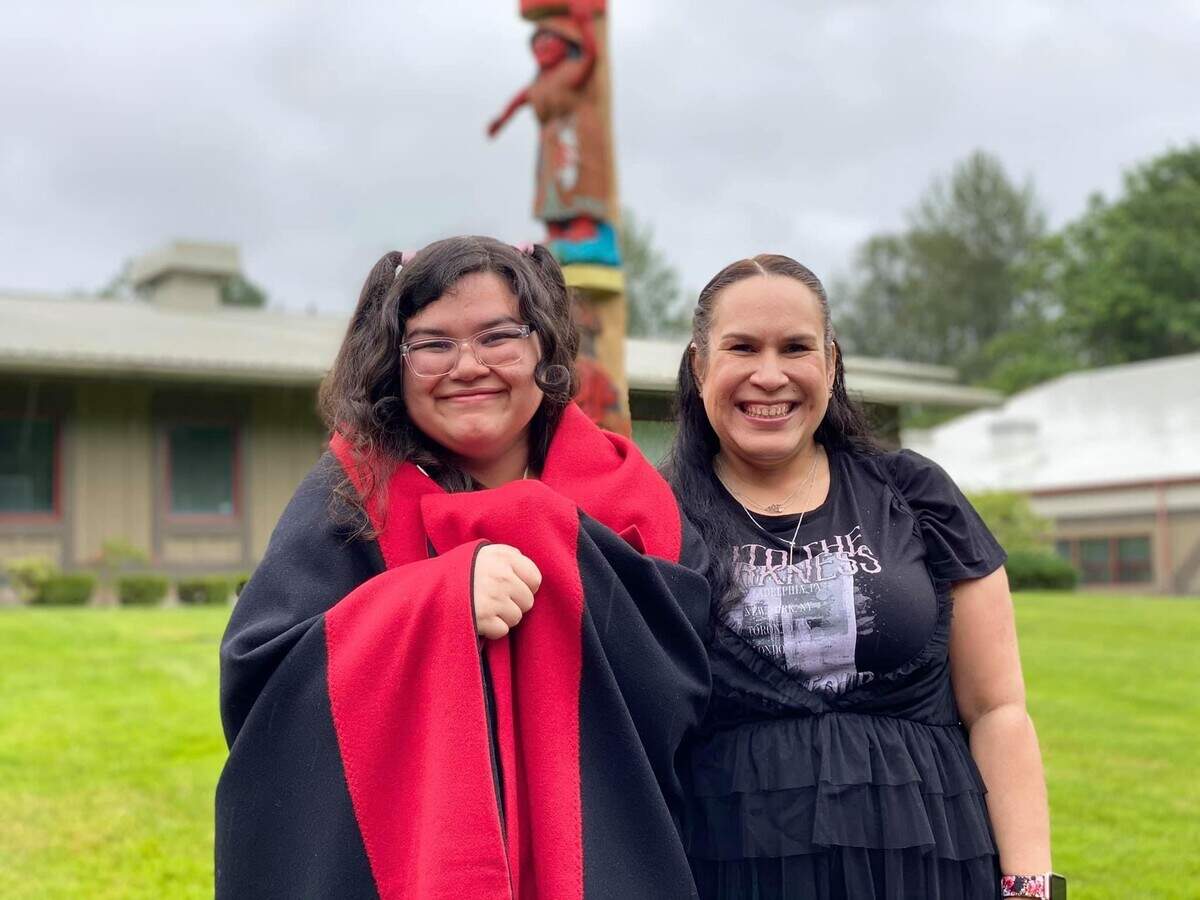
According to the district, Hoseth told Ray that she wouldn’t be able to wear what he had identified as a cape unaccompanied by or attached to a graduation gown. Hoseth was not familiar with sacred button blankets and was not told that Ray’s “cape” was in fact tribal regalia, the district said. TPS denied that Hoseth had instructed a staff member to confiscate it.
“The Defendant admits the action of Principal Hoseth was a mistake,” the district wrote in its court-filed response to the lawsuit. “However, Principal Hoseth’s mistake was due to a lack of knowledge, awareness, and information and not discriminatory motive or animus.”
TPS also noted that students who wore a grass skirt and lei during the graduation were not authorized to do so by school staff, but some students were permitted to wear sashes or stoles related to their participation in interscholastic or extracurricular activities.
In a written apology, district officials expressed regret to Ray, according to TPS’ court-filed response to the complaint.
Rosenberg said that graduating with the regalia had meant a lot to Ray, calling it “hugely upsetting” to her to not be allowed to do it.
“You can never give her that moment back,” he said.
Attorney Joseph Gehrke, who also represented Ray, told The News Tribune that the settlement provided incentive for school districts everywhere to ensure that all students are given the right to wear tribal regalia and express their identity during graduation.
“The school district was aware (of the cultural significance of Ray’s blanket) but didn’t do enough to make sure that all of their employees…were going to comply with the law,” Gehrke said in an interview on June 16.
As a result, Ray was unable to properly celebrate one of the biggest accomplishments of her life, according to Gehrke.
“The button blanket was a sacred piece of regalia because it is a living connection to my ancestors,” Ray said in a court filing last year. “I was delighted and overwhelmed at the gift because it would allow me to spiritually acknowledge and celebrate who could walk with me in accepting my diploma.”