Scenic train near Mount Rainier to expand its line for first time in decades
AI-generated summary reviewed by our newsroom.
- Mt. Rainier Scenic Railroad has been a Rainier tourist destination for nearly 40 years.
- Nonprofit owner seeks $28M grant to restore commercial train service, expand routes.
- Logging camps phased out in 1950s and 1960s.
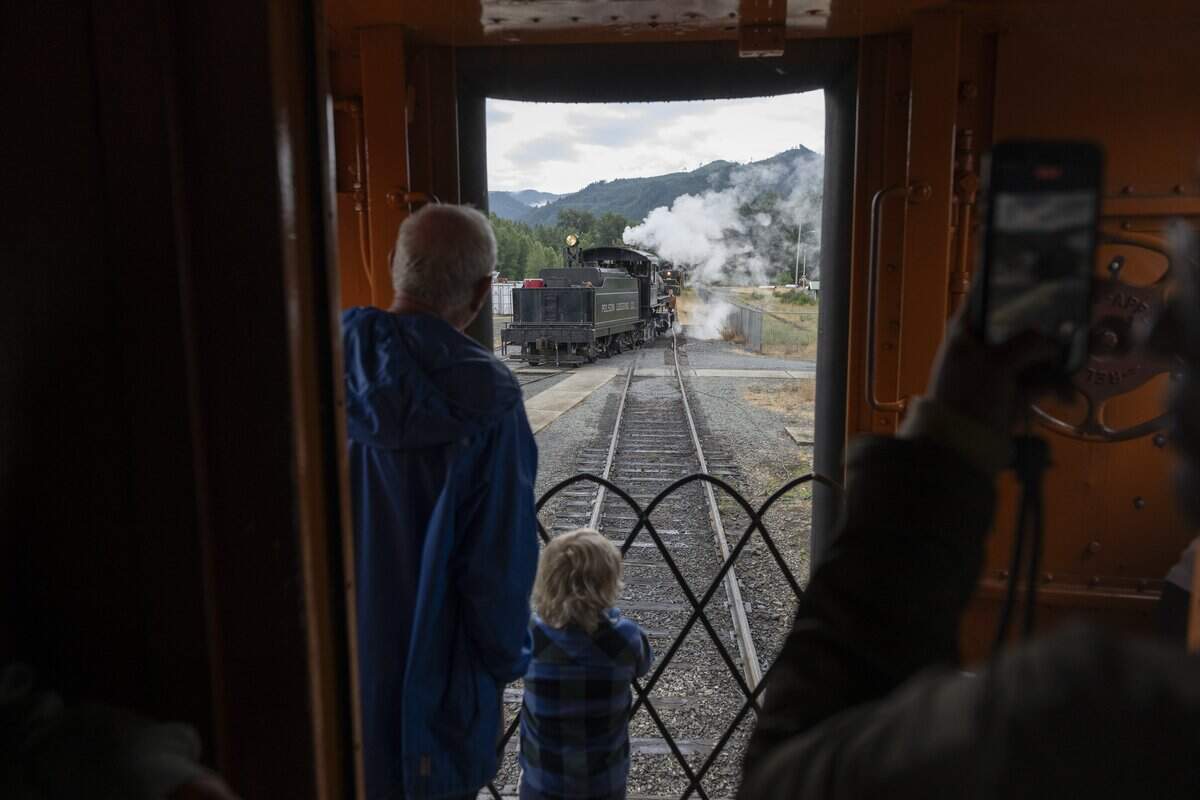
The whistle rang loud and low through the forests near Elbe on Thursday afternoon as the train chugged along the Nisqually River, belching clouds of white steam along the tracks.
Although the Mt. Rainier Scenic Railroad has run along a historic track near the base of Mount Rainier for nearly 40 years, the 104-year-old steam engine will soon be venturing north of its regular route for the first time in decades. Pending federal approval of a $28 million grant, the nonprofit that runs the railroad plans to restore commercial freight traffic to the track, as it once did more than 100 years ago.
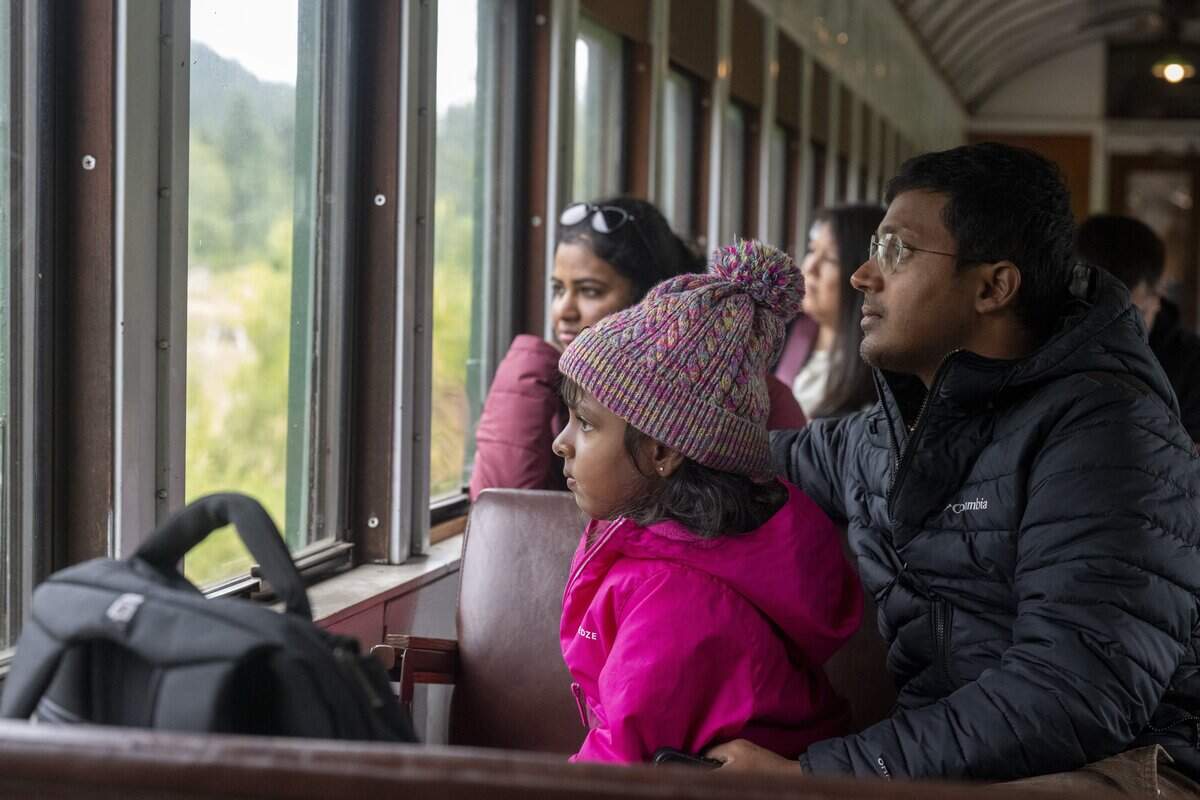
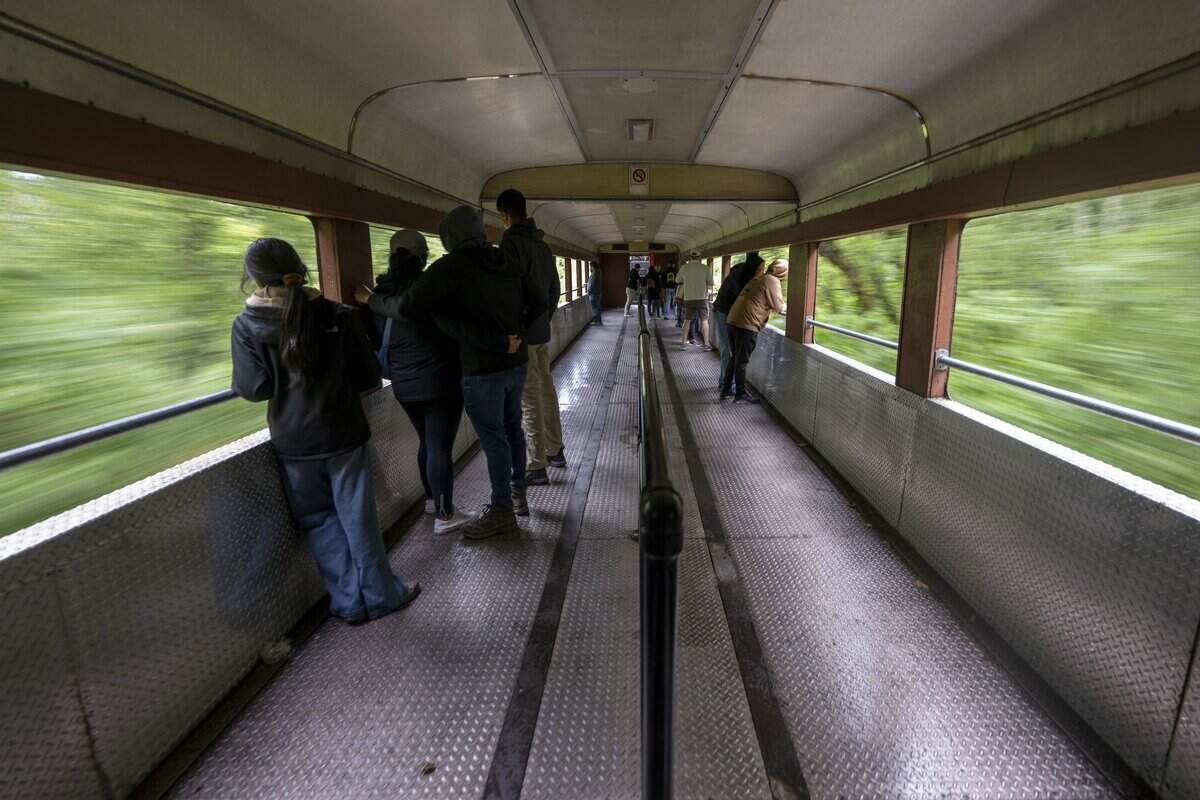
The News Tribune went aboard the Polson No. 70 steam engine Thursday, joining dozens of families on the 75-minute ride on the Tacoma Eastern Railway. Conductor Jackson Roulst said 76,000 people rode the train last year, from 36 different countries.
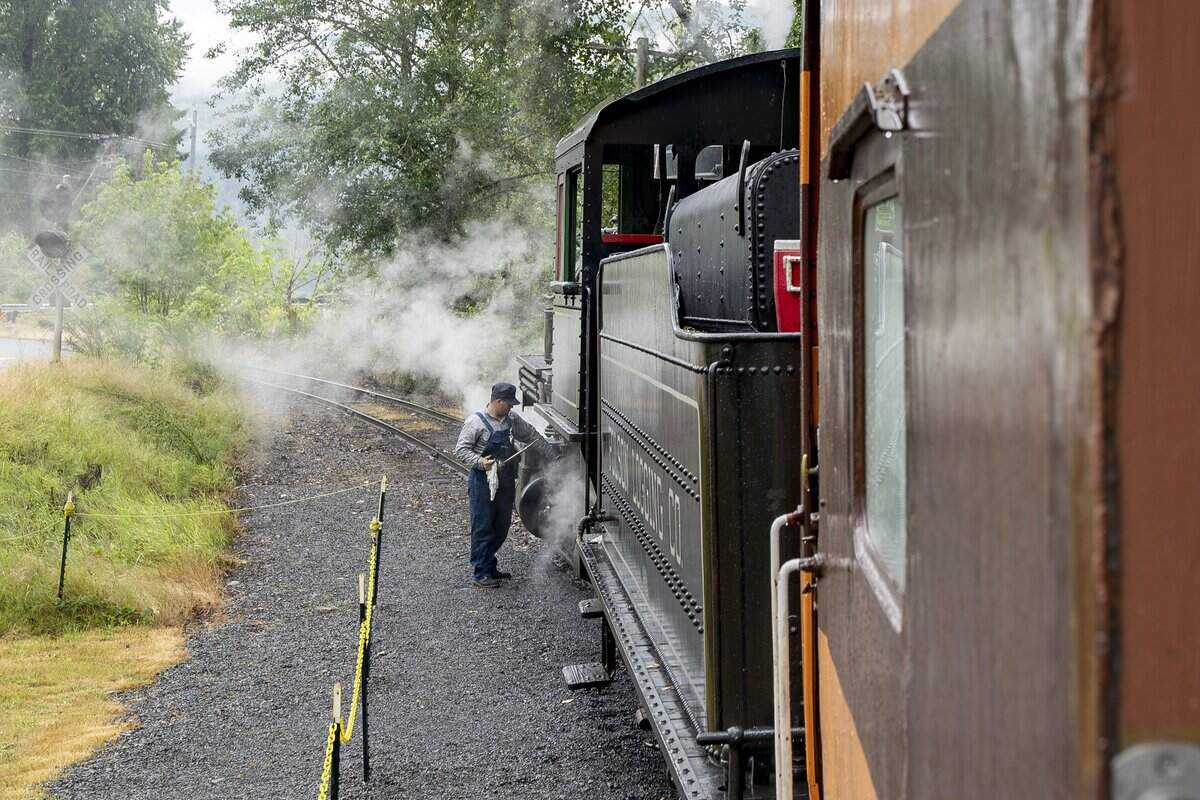
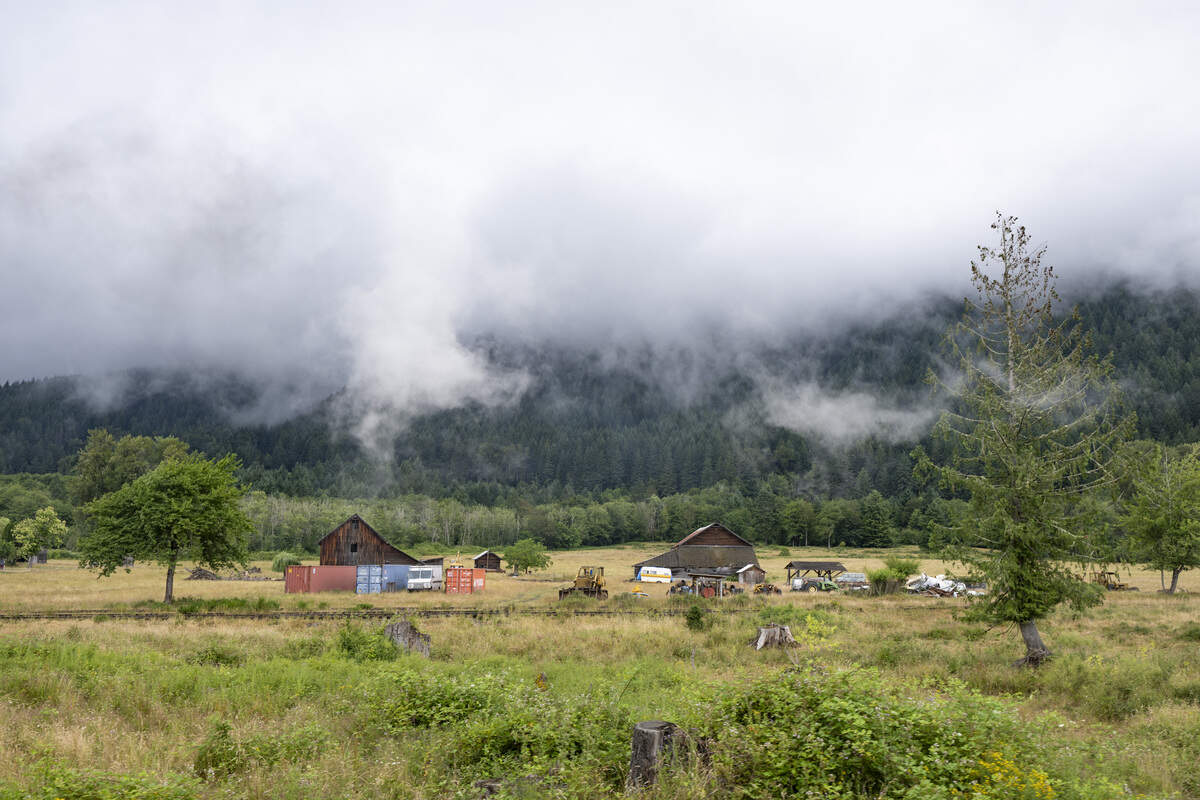
These days Polson No. 70 runs on recycled motor oil. It transported lumber from Elbe to the big sawmills of Tacoma from the early 1900s until the mid-1960s, in addition to passengers from Ashford to Mount Rainier National Park, Roulst said. Many of the trees visible from the train’s windows are third generation — meaning they’ve been cut down and replanted three or four times in some cases, he said.
It’s been about 30 years since the train carried lumber, but the nonprofit that owns the Mt. Rainier Scenic Railroad (the Western Forest Industry Museum) hopes to change that.
Roulst said there are lumber mills in Morton “very interested” in moving logs by rail instead of semi trucks. Western Forest Industry Museum executive director Bethan Maher said the nonprofit just submitted an application for a $28 million federal grant that would restore commercial freight service to the line. Last year a major arson destroyed one of its trestles (a wooden railroad bridge) in Lewis County, and $10 million of the grant would repair it, Maher said. The nonprofit expects to learn if it received the grant this fall, she said.
“The goal is to keep building track to extend our tourist train service but also to service the mills and start hauling dimensional lumber again, the profits of which would be reinvested in our nonprofit and our museum operations,” Maher said.
If the grant doesn’t come through, Maher said they will try again, and it may take longer to reach their goal.
Logging, racism and revitalization
A big reason tourists ride the scenic railroad is not only to enjoy the natural beauty but to learn the history of the area. The passenger cars were built in 1925, and the route travels along the Nisqually River, Roundtop Creek and Mineral Creek. On clear days passengers can see Mount Rainier.
Prior to colonization, the Nisqually were the first people living in the foothills of Mount Rainier and along the Nisqually River. Surveys for the Northern Pacific Railroad in 1867 indicated their presence in Elbe. Despite the establishment of the Nisqually Indian Reservation after the Indian War of 1855-1856, many Nisqually people would not relocate and remained in their mountain villages, per the nonprofit’s website.
Construction on the Tacoma Eastern Railway began in the 1890s as settlers and aggressive developers seeking their fortune expanded west, motivated by the pursuit of lumber. As logging pushed deeper into the forest, companies needed large crews and often turned to immigrant labor to fill the ranks. Life on the early railroad was largely transient, and whole logging camps would be moved via rail as they cleared the forests, Maher said. Working conditions gradually improved over time with the rise of unions. As conditions improved, more loggers brought their families, and mill towns became more permanent settlements, Maher said.
Most railroads on the West Coast were built by Chinese immigrants, but a third of the railroad workers in the Elbe area were of Japanese descent, following the passage of the discriminatory Chinese Exclusion Act of 1882, a federal law that explicitly banned Chinese immigration and denied Chinese residents already in the U.S. the ability to become citizens, Maher said.
Many loggers of Japanese descent were recruited to come and work for the Eatonville Lumber Company as early as 1910, and they brought their wives and children to live in nearby “Japan Town.” After the attack on Pearl Harbor in 1941 and the passage of Executive Order 9066 (a federal order stating that those of Japanese descent, even those born in the U.S. must report to internment camps), Japan Town was destroyed. Japanese residents were rounded up and sent to “Camp Harmony,” the site of the current Puyallup Fairgrounds. Many did not return as a result of anti-Japanese racism, as reported by the Eatonville Dispatch in 2008.
Other immigrants working on the railway included political refugees from Eastern Europe, Scandinavia and Sweden, Maher said.
Of the 33-mile Tacoma Eastern Railway, only 13 miles is usable today, a result of neglected maintenance, Maher said. Logging camps phased out in the 1950s as technology and transportation advanced, including the construction of the interstate highway system in the 1960s. The last known logging camp in the region closed around 1967, according to the narration played on the train.
The Mount Rainier Scenic Railroad nonprofit was founded in 1980 as a project of Tom Murray Jr. of Murray Pacific, one of the largest lumber companies in the Pacific Northwest, Maher said. With the help of volunteers, the goal was to preserve historic steam locomotives and logging equipment and grew to offer scenic excursions along the line. A small museum was created in Mineral that featured logging equipment.
Ownership and management transferred to the for-profit company American Heritage Railways in 2015, which shut down operations in 2020 due to the COVID-19 pandemic and other operational difficulties, Maher said.
In 2022 American Heritage Railways transferred all assets to the original founding nonprofit, Western Forest Industries Museum, after Eatonville’s former mayor, Dave Baublits, and local business owners spearheaded a return of the popular train. Scenic trains began running again in 2023 and the Mineral museum has yet to reopen.
Donations to support that work are accepted online.