How long will drivers pay tolls on the Tacoma Narrows Bridge? The year has changed
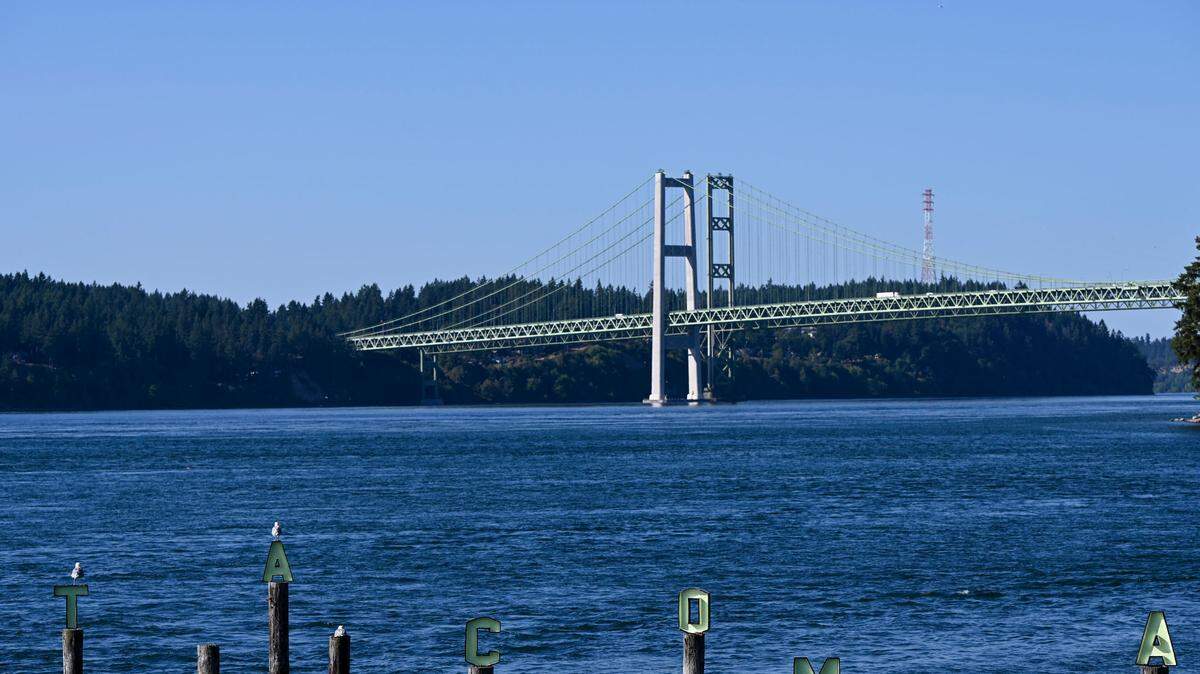
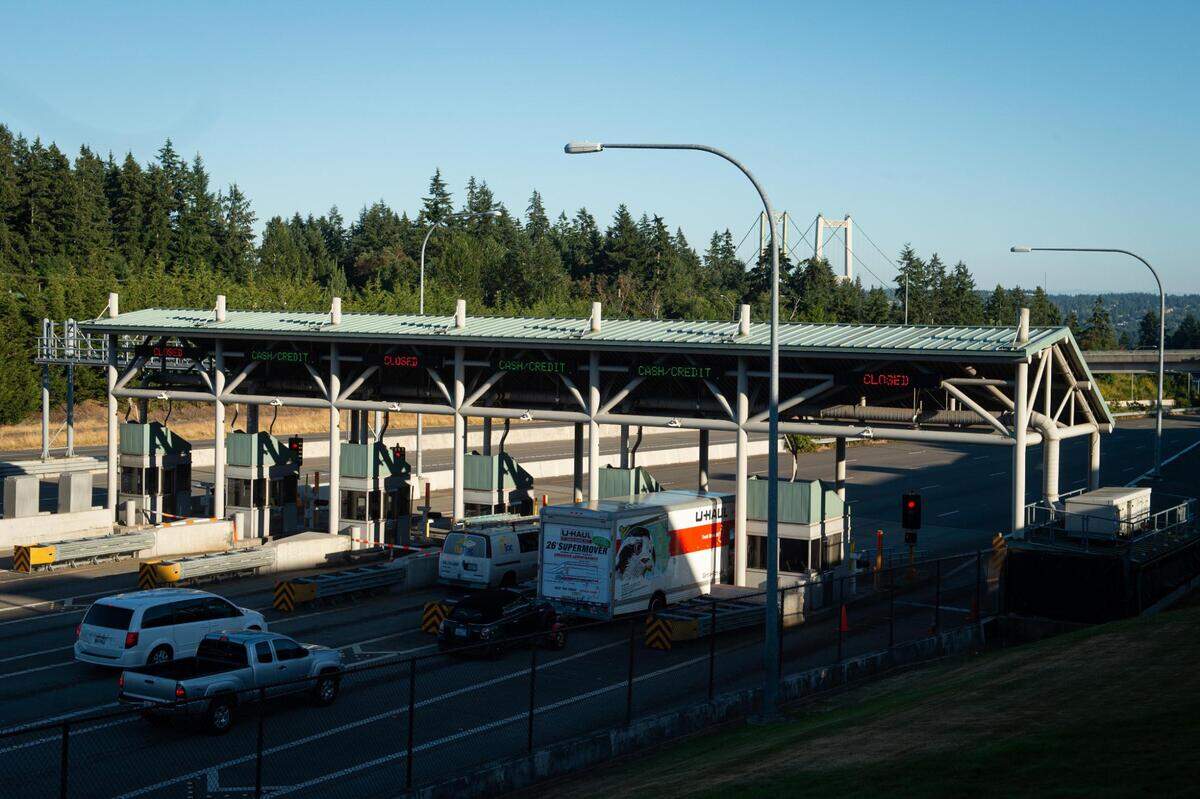
Drivers will need to pay tolls to cross the Narrows Bridge for longer than expected.
This was announced at the Jan. 17 Washington State Transportation Commission meeting.
At the meeting Aaron Halbert, a financial analyst for the commission, gave an update on loan debt to pay off the Tacoma Narrows Bridge. The Transportation Committee is required to give an update on the loans for the Tacoma Narrows Bridge every year.
Per state law drivers need to pay tolls until the loans are paid off.
Last year drivers were told they’d need to pay tolls through fiscal year 2032.
Now, because of some increases in certain costs and fees, drivers will need to pay tolls into the fiscal year of 2033, Halbert said at the WSTC meeting.
The Gateway met with Halbert and Carl See, the deputy director of the commission, via Zoom on Feb. 29.
In that discussion, Halbert told the Gateway the exact last month drivers will have to pay tolls in is unknown.
In addition he said they anticipate it will likely not be a full extra year of paying tolls, but closer to six months.
How did we get here and what’s left to pay off?
The bridge has gone through three different builds. The original built in 1940 collapsed shortly after. A rebuild in 1950 restored the bridge, then an expansion added new eastbound lanes parallel to the existing bridge in 2007.
Bonds were issued to fund construction of the eastbound lanes.
Right now drivers are paying tolls that go toward the operation and maintenance costs, as well as paying back the bonds that were initially sold for the construction of the 2007 eastbound lanes, Halbert told the Gateway.
When asked how much in bonds is left to pay off, Halbert said about $586.3 million. The commission projects the bonds to be fully paid off in fiscal year 2030, he told the Gateway.
Once the bonds are paid back, then toll revenues will go toward deferred sales tax.
“Over time they have deferred all the sales tax for the construction of the bridge to after debt services are completely paid off,” See told the Gateway.
There is $57.6 million left in deferred sales tax to pay off that goes to state and local sales taxes for the labor and material costs of the bridge, Halbert told the Gateway.
He said the deferred sales tax is projected to be fully paid off in fiscal year 2031.
After the bonds and deferred sales tax are completely paid off, toll revenues will go toward loans from the state.
“These loans get paid off after those other commitments,” See said.
Back in 2018, the state set an intent to provide the TNB account with “$85 million in loans,” that would be paid to the account “between fiscal year 2020 until fiscal year 2030,” Halbert said at the WSTC meeting.
The state increased the toll by 25 cents in October 2021, The News Tribune previously reported.
Previously the commission predicted toll revenues would have everything paid off in fiscal year 2032. Now, they predict drivers will have to pay tolls into fiscal year 2033 to finish paying off the $85 million in loans from the state.
In 2022, the TNB account got more money from the state to lower toll rates.
The Legislature gave “$130 million in general fund transfers” to the account “between fiscal year 2023 to fiscal year 2032,” Halbert said at the WSTC meeting.
The 75-cent decrease in toll rates took effect in October of 2022, the Gateway previously reported.
Because the $130 million came from general fund transfers, rather than being a loan, it does not need to be repaid, Halbert said at the WSTC meeting.
What’s contributing to a longer pay schedule?
“When we look at the long term, through the full term of the debt service in fiscal year 2030, total loan needs are estimated to be about $94.3 million,” Halbert said at the meeting.
He said that is $7.4 million more than what the commission estimated needing in last year’s update.
“It now exceeds that intended loan cap of $85 million by about $9.3 million” he said at this year’s WSTC meeting.
Halbert said $2.3 million of it is increased insurance costs.
The rest is tied to WSDOT’s new back office system. $5.1 million of it is from increases in “credit card and bank fees,” $3.8 million is from an increase in “printing and postage costs,” and $2.9 million of it is for increases in “civil penalty adjudication costs,” according to Halbert’s report.
The back office system is a new tolling system that launched in 2021.
It included “the Good To Go! website (mygoodtogo.com) and the customer service center, and handles the transactions for all toll roads,” Christopher Foster, communications manager for WSDOT’s Toll Division told the Gateway via email March 5.
This was the first update to the tolling system since the system launched in 2011.
“During that time, both technology in the industry and our customers’ needs changed drastically,” Foster said.
Halbert added that the commission predicts about a “$6 million increase in revenues and fees,” that will offset some of the above mentioned loan needs.
He attributed that predicted increase in revenues and fees to “increases in civil penalty revenues due to the resumed escalation of unpaid toll bills,” following the launch of WSDOT’s new tolling system.
Does tolling entirely end in 2033?
Halbert got a question at the end of his presentation that asked, once the loans are paid off, will that be the end of tolling for the Tacoma Narrows Bridge?
Halbert and See said in the WSTC meeting that under current law that’s what would happen.
But, there will still be “operation and maintenance” costs for the bridge that need to be paid for.
Whether that’s through tolling or through other funding plans, the commission does not know what that will be at this time, Halbert told the Gateway.
Halbert added: “The Legislature could choose to amend this language to require tolling continue to fund the ongoing operations and maintenance costs of the facility, as well as potential future corridor improvements, however this is purely speculative at this time.”
This story was originally published March 11, 2024 at 5:15 AM.