Another sales tax increase in Gig Harbor? Here’s why the City Council is considering it
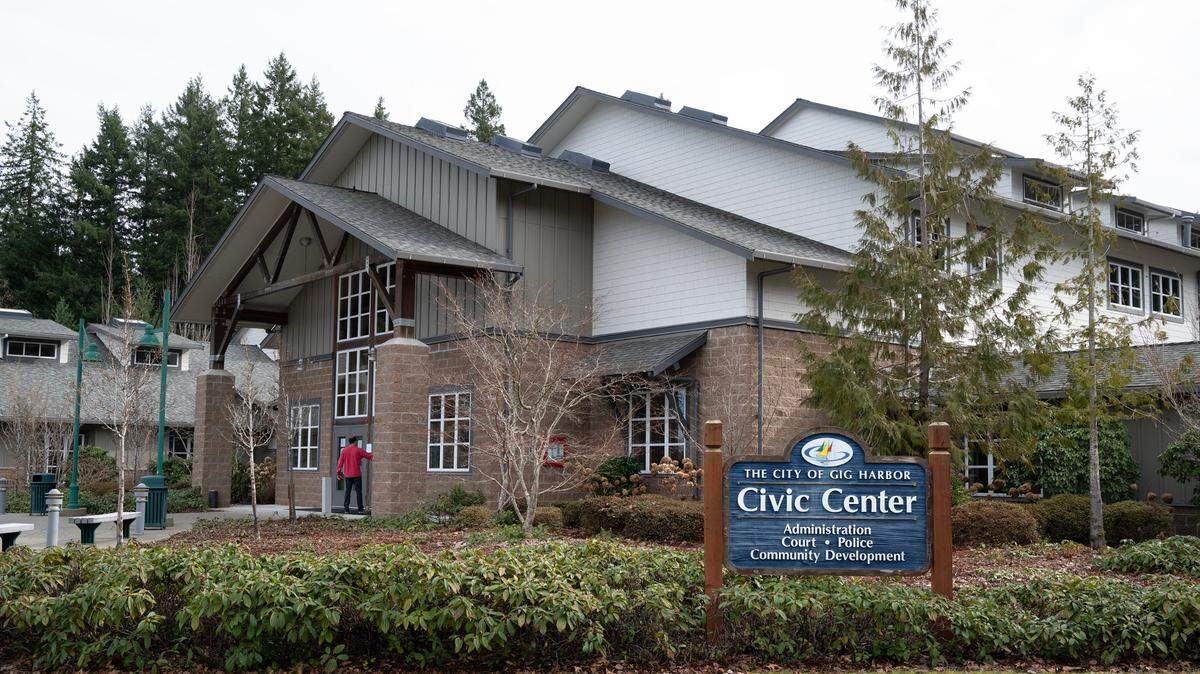
Sales taxes in Gig Harbor might increase again next year.
The 0.1% sales tax increase — or 1/10 of a penny, which equates to 10 cents more on every $100 purchase — under consideration by City Council would bring in about $1 million for street maintenance, which the city says is underfunded.
If approved at the council’s Sept. 23 meeting, that would bring the total sales tax in Gig Harbor to 9.1% in 2025 after voters passed a different 0.1% sales tax increase in the Aug. 6 primary to fund police and public safety services.
It would become effective Jan. 1, 2025 and expire in 10 years. The proposed tax increase doesn’t require a public vote, per Washington state law: 0.1% of the total 0.3% sales tax that local governments can impose may be enacted by a majority vote of the governing board, according to the Municipal Research and Services Center.
That makes it different from other measures Gig Harbor voters saw on their ballots earlier this year, like the public safety sales tax and a levy lid lift proposal that failed in April.
What maintenance would the revenue pay for?
The proposed tax increase would be applied to the existing Transportation Benefit District established by the city in 2018 and would be used to fund street maintenance.
Gig Harbor City Administrator Katrina Knutson told The News Tribune on Friday that the city is supposed to perform pavement maintenance every year but has done so less than half the time over the last decade.
“When roads are not properly maintained, you start to see things like potholes or uneven surfaces that can lead to unfortunate incidents such as car damage,” Knutson said.
The city doesn’t have a direct source of revenue for street maintenance, according to the city’s Aug. 23 Gig-a-Byte newsletter.
“Delayed road maintenance leads to a decrease in public safety, higher insurance claims/costs, and higher material and labor costs,” the newsletter said.
The city estimates $2.5 million is needed each year for proper road maintenance. That is based on the number of roads Gig Harbor has and the cost of materials, according to Knutson.
Because the city has deferred road maintenance for much of the last 10 years, there’s a backlog of high-priority projects it hasn’t gotten to. Knutson estimated the cost to complete those projects is $6.5 million, based on road surveys done by the city’s engineers. For the city’s next two-year budget cycle, the following streets require pavement maintenance and ADA improvements:
- Harborview Drive, from Pioneer Way to Stinson Avenue
- 38th Avenue, from city limits to 41st Street
- Soundview Drive, from Hollycroft Street to Magnolia Lane
- Point Fosdick Drive, at Briarwood Lane
- Stinson Avenue, from Pioneer Way to Grandview Street
- Borgen Boulevard, from Peacock Hill Avenue to Burnham Drive
Every two years, there will be additional roads that need to be analyzed, according to Knutson.
The city is working on a system to allow the public to see how the pavement is being ranked and scored by the engineers who survey the city’s roads and their structural integrity. It should be available sometime next year, she said.
Is this tax separate from existing Transportation Benefit District tax?
Voters passed a 0.2% sales tax to fund Gig Harbor’s Transportation Benefit District in 2019, but the use of the revenue is restricted to funding capital improvements. That includes projects like building new roads and realigning roads. It can’t go toward sidewalk or Americans with Disabilities Act (ADA)-related improvements, according to Knutson.
The new ordinance would remove that restriction for Transportation Benefit District funds and introduce the additional 0.1% sales tax dedicated solely to road maintenance and operations costs.
According to an agenda bill from the Aug. 15 study session, the city is recommending that $750,000 of the $1 million revenue generated from the 0.1% sales tax each year go into an “Annual Pavement Maintenance Fund,” and that the remaining $250,000 go toward “street operations staff and their regular work in support of full street operations (patching, street lights, curbs, gutters, street sweeping, street striping, signage, etc).”
Currently, the city transfers general fund revenue to its Street Operating Fund, which pays for operation and maintenance costs not covered by the 0.2% Transportation Benefit District tax, according to the agenda bill.
Transportation Benefit District funds can collect for a few years before being spent. According to the agenda bill, over $6 million in TBD funds are earmarked for upcoming capital projects.
Knutson said that most road projects are in the tens of millions, and the city needs to save up for a few years to spend that amount on large projects.
How will this factor into the city’s budget?
The nearly $1 million in annual revenue from the proposed sales tax increase won’t be enough to pay for the city’s necessary road maintenance. The city also is considering a business-and-occupation (B&O) tax to help fill that gap as well as pay for other general city services, according to Knutson.
The council will make a decision on the B&O tax before the end of the year, she said. The amount of the tax hasn’t been set, pending council consideration. Revenue from the B&O tax would go toward the city’s general fund, out of which money could be drawn for road maintenance.
Knutson said that the city listened to residents who expressed concern about their property taxes increasing and rejected the proposed levy lid lift earlier this year. The city is looking at the Transportation Benefit District as another “component of funding to ensure financial sustainability of the city long-term without raising property taxes,” she said.
The News Tribune previously reported that the city was anticipating a budget deficit to the tune of $2-3 million a year starting in 2026 and was taking preventative measures. The city saved $100,000 a year by eliminating its federal lobbyist and $1.5 million in the 2023-2024 biennium by freezing nine general fund positions. It also deferred several projects and made several internal processes more efficient.
The deficit is due to several factors including a drop in revenue from permits and development costs and rising costs to accommodate Gig Harbor’s growing population, The News Tribune reported.
The public safety sales tax passed in August will help address staffing shortages in the Gig Harbor Police Department, Police Chief Kelly Busey previously told The News Tribune. The department had 23 positions filled at the time and wanted to get the number up to 26, but intended “to take a broad view of the city’s resources after Aug. 6,” The News Tribune reported.
Busey told The News Tribune on Aug. 22 that the department now has two officers in training and one in the background phase, and plans to add an administrative lieutenant soon.
This story was originally published September 8, 2024 at 5:30 AM.