This Pierce Co. city has only approved 5 ADUs since 2007. Soon they’ll be easier to build
What if your house could expand and shrink to accommodate your family size and life stage, as needed?
Gig Harbor-based architect Marlene Druker presents “The Incredible Expanding and Shrinking House.” Getting married, having kids or becoming an empty-nester? It’s no problem for this house plan, she says, with a few tweaks here and there — like turning the garage into another bedroom, or renting out the upper level when the kids move out.
It isn’t just a thought experiment, which Druker wrote about in Gig Harbor Now last year. There are real-life examples, like Julie Tappero’s home in unincorporated Pierce County, near Gig Harbor. Tappero converted her basement into a one-bedroom apartment in 2010 to provide her daughter a separate space to live when she graduated college, she told The News Tribune via email. After her daughter moved out, she began to rent out the space.
Officially, such living spaces are called “accessory dwelling units” or ADUs, as long as they have a full kitchen and meet other requirements that vary by jurisdiction. They’re sometimes called “mother-in-law apartments” or “granny flats” because people often use them to house extended family, according to the Municipal Research and Services Center (MRSC). ADUs can exist within a home, such as an attic or basement; be attached to the home, such as an adjacent apartment with its own entrance; or be detached from the home entirely as a separate structure on the same piece of property.
ADUs can be more affordable to own or rent than a single-family home because of their smaller size. They aren’t common in Gig Harbor, and can be expensive and time-consuming to build due to current city regulations, city staff and residents say.
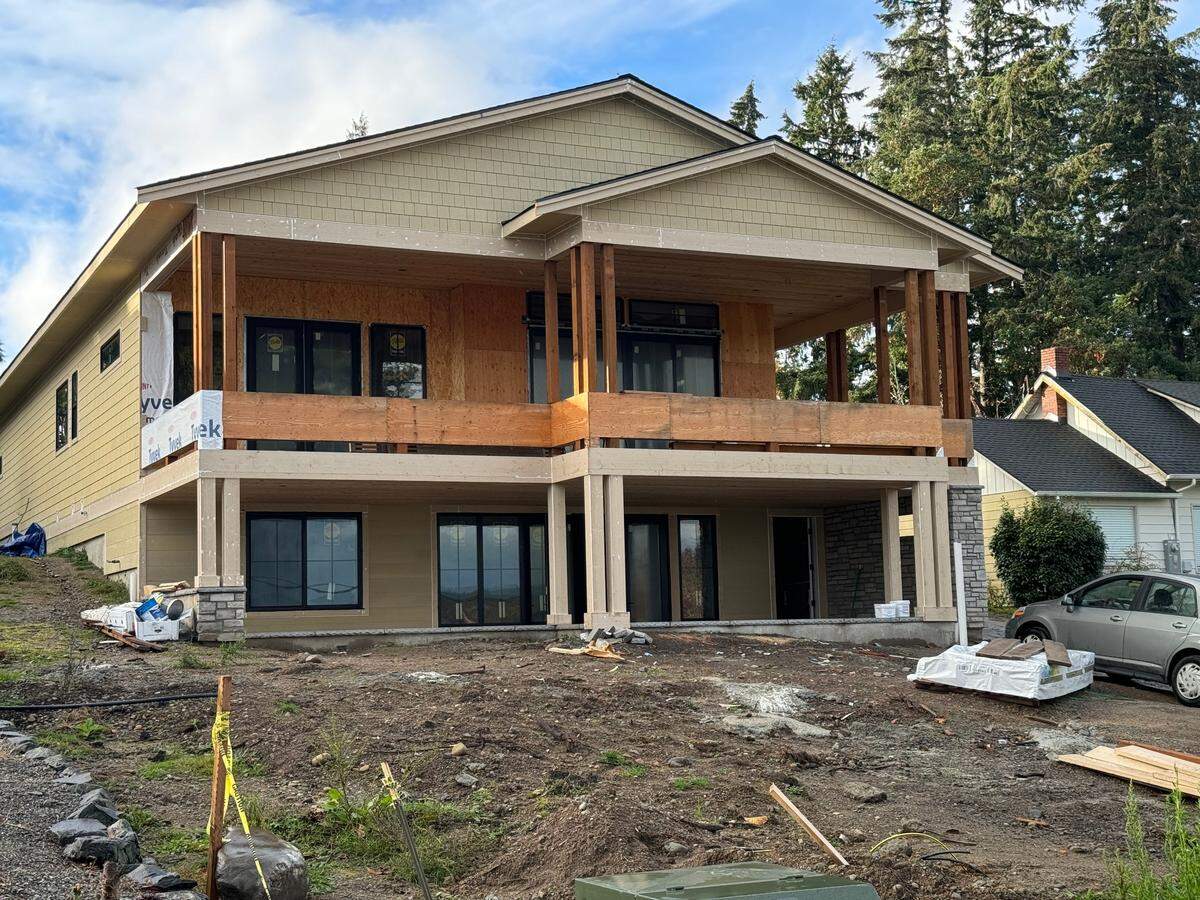
A recent state law could change that. House Bill 1337 requires counties and cities in Washington state, including Gig Harbor, to allow at least two accessory dwelling units (ADUs) on all lots zoned for single-family houses, as well as lower other barriers to building ADUs.
With the passage of House Bill 1337 last year, cities and counties must be in compliance with the new ADU rules six months after their jurisdiction’s next periodic comprehensive plan update. Gig Harbor’s update is scheduled for this year. The Comprehensive Plan serves as a guide for a city’s growth and development for the next 20 years and must be updated every 10, per state law.
The Gig Harbor City Council will discuss a draft of Municipal Code amendments related to ADUs at their special meeting at 3 p.m. today, Nov. 21, though they won’t make a decision on whether to adopt the changes until next year, according to Gig Harbor senior planner Jeremy Hammar. Members of the public can attend the session via Zoom or in-person at the Gig Harbor Civic Center, 3510 Grandview St., but they cannot comment.
There will also be a public hearing about proposed updates to Gig Harbor’s Comprehensive Plan at 5:30 p.m. that day at the Gig Harbor Civic Center, according to the city website.
ADUs in Gig Harbor
For now, the journey to build an ADU in Gig Harbor can be a long one.
The city’s municipal code defines accessory apartments, another term for ADUs, as “a residential unit of up to 600 square feet with a functional kitchen, bath, and outside entrance attached to or on the same parcel as a single-family residence in a residential zone.”
It also requires the owner to live on-site in either the ADU or the main home, and prohibits the owner from selling the ADU separately from the main house.
Current zoning codes restrict where ADUs can be built. Most of the city’s residential zones are R-1, which means you can build single-family houses there but not other kinds of denser housing, like duplexes or fourplexes, according to the Gig Harbor Municipal Code. In these zones, ADUs require “conditional use permits,” which means they have to meet certain criteria reviewed by the hearing examiner.
It took Robert Wiles, a long-time Gig Harbor resident whose family has lived in the Millville neighborhood for five generations, about two and a half years to complete his ADU. He got his conditional use permit approved in January of 2020 and completed the project in June of 2022.
The reason he wanted an ADU was to house his mother, who is now 76 years old. His grandfather left the house to his mother when he passed, but it was getting too big for her to maintain on her own. So Wiles and his wife offered to live in the house and build her an ADU next to it.
“It’s just a perfect little place for her,” Wiles said. “. . . it’s still on the property so she didn’t have to go anywhere, she can still have her friends over.”
He recalled the city’s permitting process was confusing and felt scattered across different divisions. “A good, trustworthy point of contact” would have made navigating the policies and technical jargon around ADUs easier, Wiles said.
Druker, the Gig Harbor architect, said the city’s permitting requirements and high impact fees deter many people from building ADUs.
“If it’s a conditional use where you’re going to have to submit plans and have a hearing, it adds enough uncertainty that a lot of people just walk away,” Druker said.
Jeremy Hammar, the city’s senior planner working on the draft ADU ordinance the City Council will discuss at the Nov. 21 special meeting, said that the conditional use permit process is “a lot more extensive” than a simple administrative approval. Scheduling a hearing with the hearing examiner can take a few weeks, and the review process involves writing a “full staff report” with findings, conclusions and analysis instead of a simple decision document, he said.
Since 2007 to September of 2024, Hammar said the city has only received eight applications — one of which remains incomplete — for a conditional use permit for an ADU. Out of those eight, the city approved five.
Changes coming to ADUs in Gig Harbor
House Bill 1337 removes several of these deterrents, requiring that cities and counties fully planning for growth and development under the Growth Management Act must:
- not assess impact fees for the ADU greater than 50 percent of the impact fees charged for the principal (non-ADU) unit
- not require the property owner to live on-site
- allow at least two ADUs on all lots that allow for single-family homes within an Urban Growth Area (UGA), which is the area designated to accommodate counties’ and cities’ expansion
- not require a maximum ADU gross floor area of less than 1,000 square feet
- allow people to turn existing structures such as detached garages into ADUs
The city is preparing to amend their municipal code to reflect these changes. Senior planner Jeremy Hammar told The News Tribune that if the amendments are adopted, ADUs will be permitted in all but two zones, which wouldn’t normally have homes anyway: the Public-Institutional District, which includes schools and parks, and the Employment District, which is similar to an industrial zone.
According to city zoning based on ordinances current as of Feb. 12, 2024, the Public-Institutional Zone includes the Gig Harbor Civic Center downtown and five Peninsula School District schools: Discovery and Pioneer Elementary schools, Harbor Ridge Middle School and Gig Harbor and Henderson Bay High Schools. It also includes two smaller parcels of land in north Gig Harbor.
The Employment District zone is concentrated in a chunk of land along Bujacich Road by state Route 16, according to the zoning map. That parcel includes a few company warehouses, athletics facilities and an electronic waste recycling center. The zone also includes a business park just across the highway and a few other small parcels to the north.
The full draft of the amendments is available in the agenda packet for the Nov. 21 City Council special meeting.
While the city isn’t required to make any changes to their ADU regulations before June 30, 2025, the state law will take over if they don’t comply by then, according to Robin Bolster-Grant, Gig Harbor’s principal planner. She expects the city to “get something on the books” in January or February at the latest, she said.
The draft amendments are similar to the state law, but the city is able to maintain some local control over how they handle ADUs. Gig Harbor Interim Community Development Director Jeff Wilson told The News Tribune that these points of local control include requiring that ADUs be at least the same distance away from adjoining property lines and the street as the main unit and protecting areas designated as environmentally “critical areas” from ADU development.
The city can also require that ADUs conform to existing design standards in a given community. For example, an ADU in the historic district of Gig Harbor has to obey the same color rules as other homes there: subtle earth tones such as “white, soft sands, grays, light pastels and deep, rich clay colors” for the exterior walls, and no bright or primary colors for the trim, according to the Municipal Code.
ADUs and rentals
Bolster-Grant said the City Council will be able to decide whether to restrict ADUs from being used as short-term rentals. Turning an ADU into a short-term rental cuts it off from providing affordable long-term housing, she said.
Affordable housing is a critical need in Gig Harbor, according to their Comprehensive Plan.
Gig Harbor resident and former short-term rental owner Paul Kadzik thinks that encouraging more ADUs in Gig Harbor is a good thing. He used to rent out an apartment above his garage on Harborview Drive as an Airbnb, The News Tribune reported, though he has since sold that house and downsized to better fit his and his wife’s stage of life.
‘’I’m in favor of ADUs,” he told The News Tribune via phone Nov. 19. “I think that’s a good use of the property. I think it’s good for the owners, and to a certain extent short-term rentals are great, too, but you can’t have every property that has an ADU be a short-term rental.”
Carolyn Allen, a current short-term rental owner and co-founder of the Gig Harbor Short-Term Rental Alliance, said she believes ADUs still have a role to play as short-term rentals. Short-term rentals aren’t just for vacationers, she said. Sometimes people need a place to stay temporarily while changing jobs, going through a divorce or waiting for a new house to be finished.
With property taxes climbing, short-term rentals can also provide much-needed income for residents who want to age in place and hold onto their homes, she said.
“We get accused of scooping up the affordable housing,” Allen said. “We’re actually just people that want to hold onto our homes that we love.”
Renting out an ADU as long-term affordable housing is possible. Julie Tappero, the unincorporated Pierce County resident in the Gig Harbor area who converted her basement into a one-bedroom apartment, said her current tenant Nancy Soles moved in about six years ago. Tappero has only raised her rent once since then, by 3 percent. Unincorporated Pierce County is subject to the rules for ADUs in the Pierce County Code, which currently allow one ADU per lot in all zones with single-family homes and a larger maximum square footage than Gig Harbor’s code.
“When Covid occurred, we were all stuck at home together, and we started to look out for each other,” Tappero wrote.
When Soles had surgery, Tappero opened the door between their home and her apartment so she could hear if she needed anything, and they later agreed to leave the door open. Soles’ cat, Sochi, made the entire building his own and ran up and down the stairs between the two parts of the house.
The arrangement suits them well.
“Nancy is a very active independent senior, but there have been many times that I have shopped for her, picked up her prescriptions, taken her to surgery and doctor appointments, checked on her when she’s ill, etc. On the flip side, when we travel, we know that our home is watched over and cared for,” Tappero told The News Tribune.