Changes ahead for one of Gig Harbor’s only affordable housing developments
AI-generated summary reviewed by our newsroom.
- Developer said they have renovation plans and are actively working on subsidy paperwork.
- Norwegian Wood is required to continue providing low-income rents for decades.
- Federal agency is working with owner to complete required paperwork.
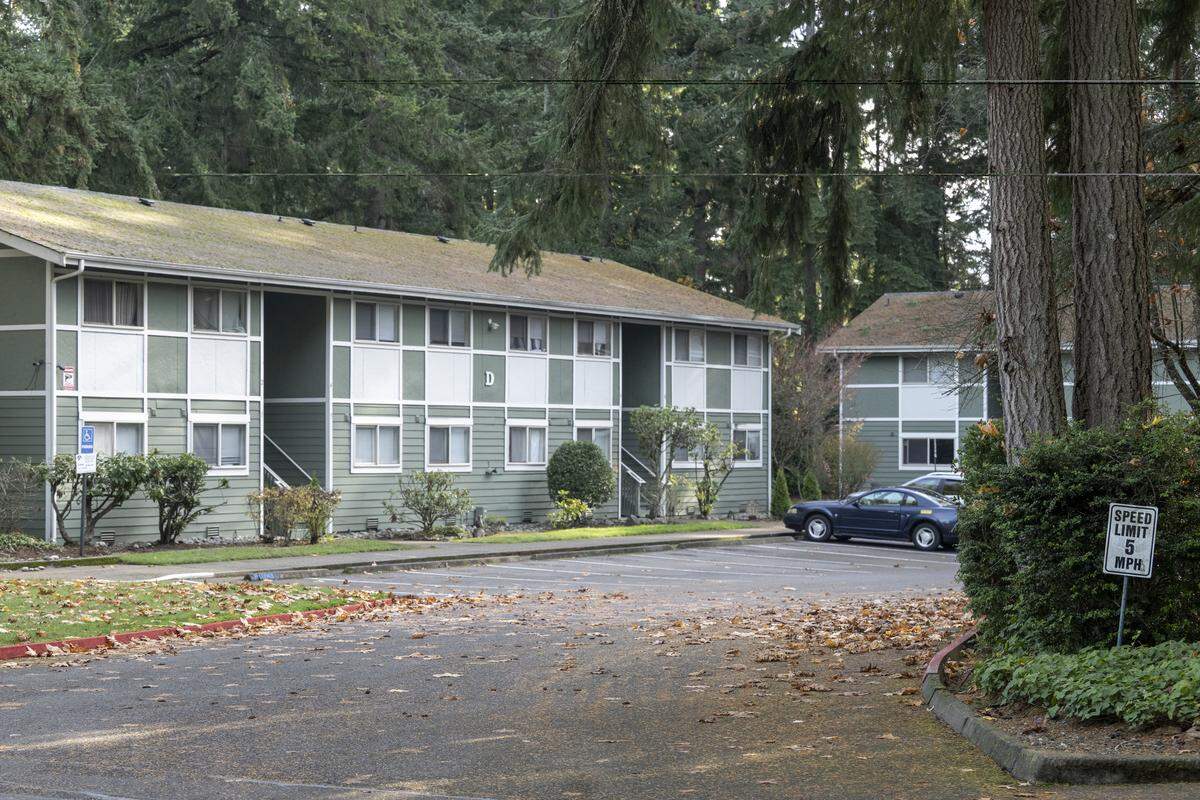
Changes are ahead for one of the only affordable housing developments in Gig Harbor, according to the company behind the project.
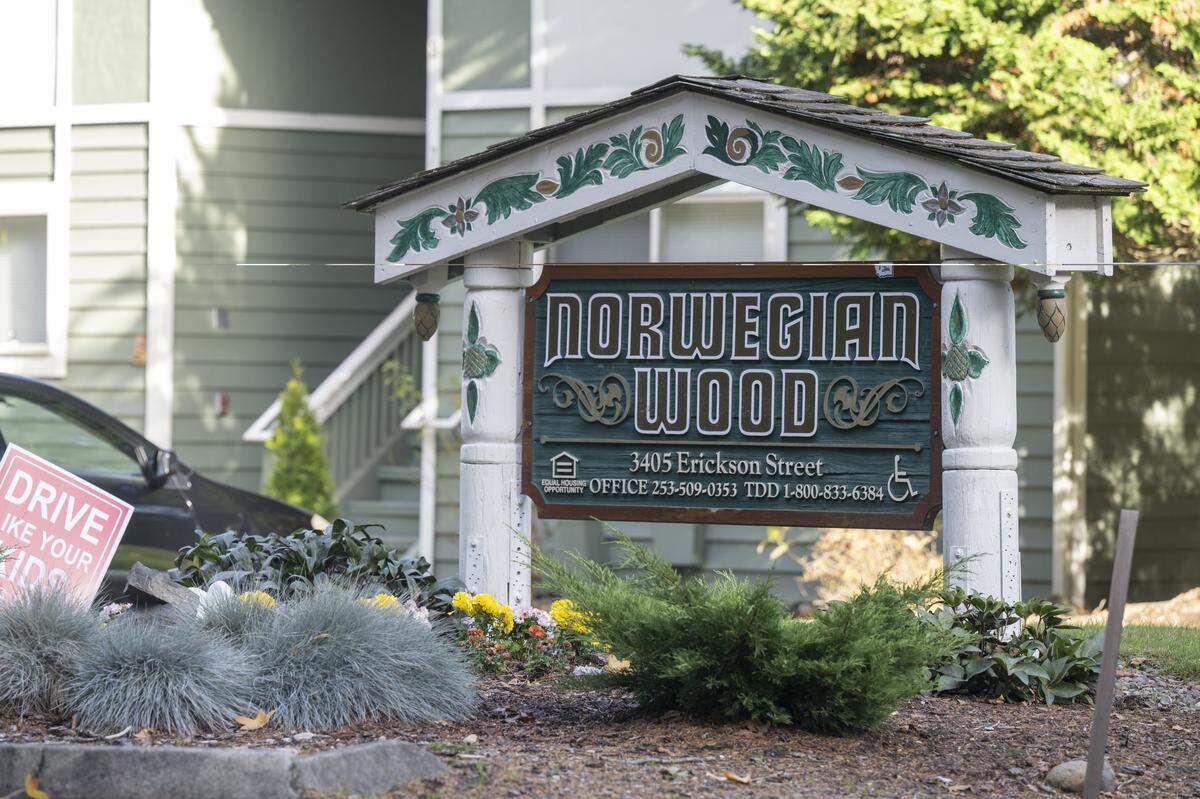
The Gateway reached out to the owner of Norwegian Wood, an apartment complex at 3405 Erickson St., after a resident and affordable housing advocate recently told The Gateway that they were worried that their apartment hasn’t finished paperwork required to remain in compliance with a federal subsidy program.
The affordable housing developer overseeing the property, meanwhile, told The News Tribune that the apartment is actively working on the paperwork, that they have no plans to remove the apartment from affordable housing programs, and that they have plans to renovate the units.
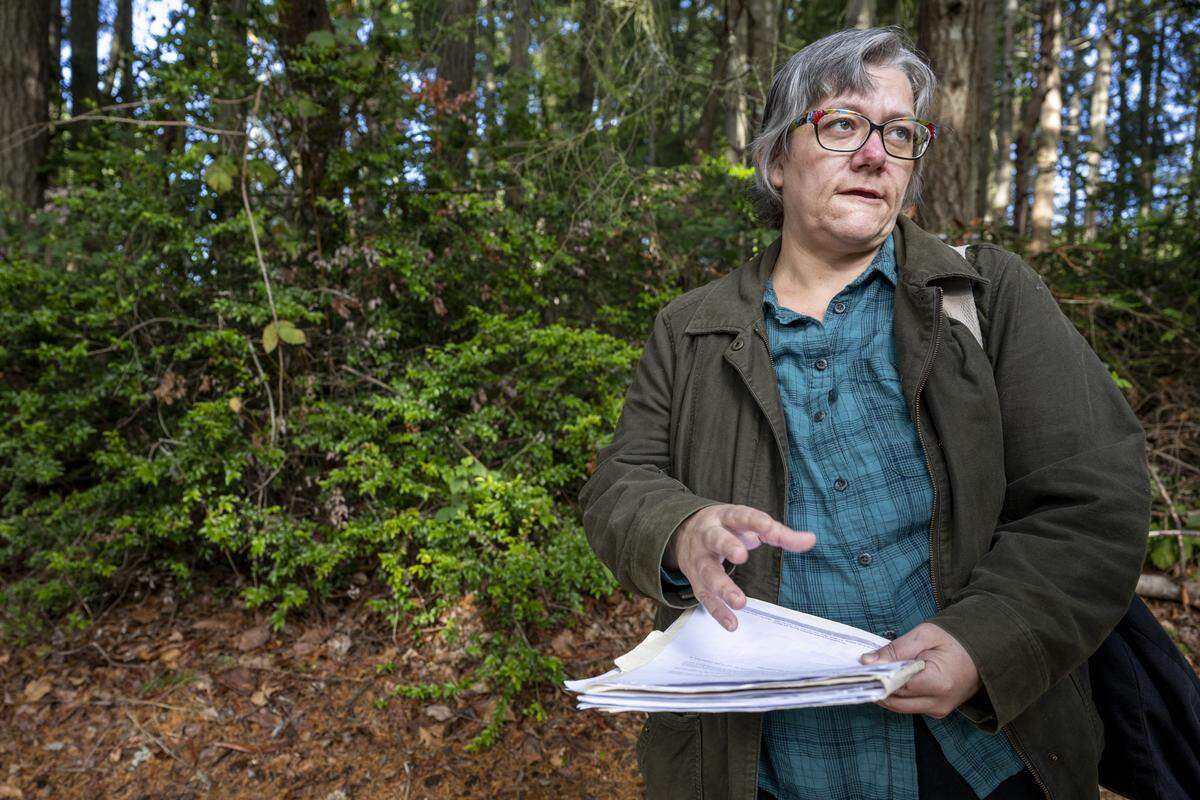
Jay Worley, 41, has lived at Norwegian Wood since 2014. Worley, who uses the pronouns they/them, told The News Tribune that the apartment management hasn’t completed the annual certifications required to ensure that residents living at Norwegian Wood are still eligible to remain there, based on their income. Worley worried that the apartment will lose its federal subsidy if it fails to complete the certifications, though the property is legally bound through multiple agreements to remain affordable for decades.
Shelter Resources, Inc., an affordable housing developer based in Bellevue, is listed in Washington Secretary of State records as the governor for the limited partnership that owns Norwegian Wood. Shelter Resources, Inc. recently consolidated with its southeast U.S. affiliate, Blue Ridge Atlantic Development, to form Blue Ridge Cascade, according to the Blue Ridge Cascade site.
SRI founder Len Brannen told The News Tribune in a phone call this month that SRI has no plans of removing Norwegian Wood from affordable housing programs, but rather the “opposite,” he said.
“In fact, what we’re going to be doing is a renovation of this project hopefully within the next year or two, probably in the next year, which will enhance the apartments considerably,” he said. “And so we’re working on that financing as we speak, and part of that will be extending the affordability period.”
He also forwarded a statement from the property’s Asset Management Department via email.
“Management continues to process all tenant certifications in accordance with USDA Rural Development requirements,” the statement read. “While they strive to submit certifications as quickly as possible, timing can be affected by several factors, including resident cooperation, needed corrections, USDA system issues, and delays related to the recent federal government shutdown. These circumstances can occasionally cause certifications to appear late even when management is actively working on them.
“Norwegian Wood is part of a multi‑site portfolio with efforts underway to coordinate long‑term funding needed to affect renovation improvements & preserve these communities as affordable housing for the long term (50+ years). There is no plan or intention to remove the property from the affordable housing programs. On the contrary, the goal is to secure resources that will ensure the property remains affordable and can be revitalized for the continuing benefit of current and future residents.”
Norwegian Wood has 40 units and caters to “extremely low income (tenants) first,” charging rent at 30% of an eligible tenant’s income, according to aptfinder.org.
In Gig Harbor, where RentCafe.com reports the average rent for a one-bedroom apartment is over $1,800, Norwegian Wood is one of the city’s few options for low-income renters. Norwegian Wood is the only rental property in Gig Harbor subsidized through the U.S. Department of Agriculture’s Rural Development program, receiving subsidies for 37 of 40 total units, according to the program website.
Colvos Terrace Apartments, at 2601 Hollycroft St., has 27 units and houses adults aged 62 and older who earn up to 50% of area median income (AMI), per an overview of affordable and transitional housing projects owned by the nonprofit Multi-Service Center.
The News Tribune reported that Fira Apartments was once a subsidized apartment complex called Laurelwood, housing low-income residents as well as older adults and residents with disabilities. The property owner at the time, Shelter Resources, Inc., paid off the federal loan they’d received from the U.S. Department of Agriculture’s Rural Housing Service and negotiated a sale of the property in 2018 to a private owner who wasn’t required to keep rents low, The News Tribune reported in 2018. Department of Revenue tax records show that the private buyer, an LLC, sold the property to another LLC in 2021.
Worley serves on the advisory board for the South Sound Housing Affordability Partners (SSHA3P) and has been vocal about the need for more affordable housing in Gig Harbor and Pierce County. They stressed that their statements to The News Tribune are their own opinion and do not represent SSHA3P or any other organization they’re affiliated with.
Concern about annual certifications for low-income residents
Worley said it seemed like the apartment management wasn’t making steady progress on paperwork necessary to receive financial assistance from the U.S. Department of Agriculture’s Rural Development Program. Norwegian Wood is one of many properties that receive payments from the USDA to keep rents low for certified low-income tenants.
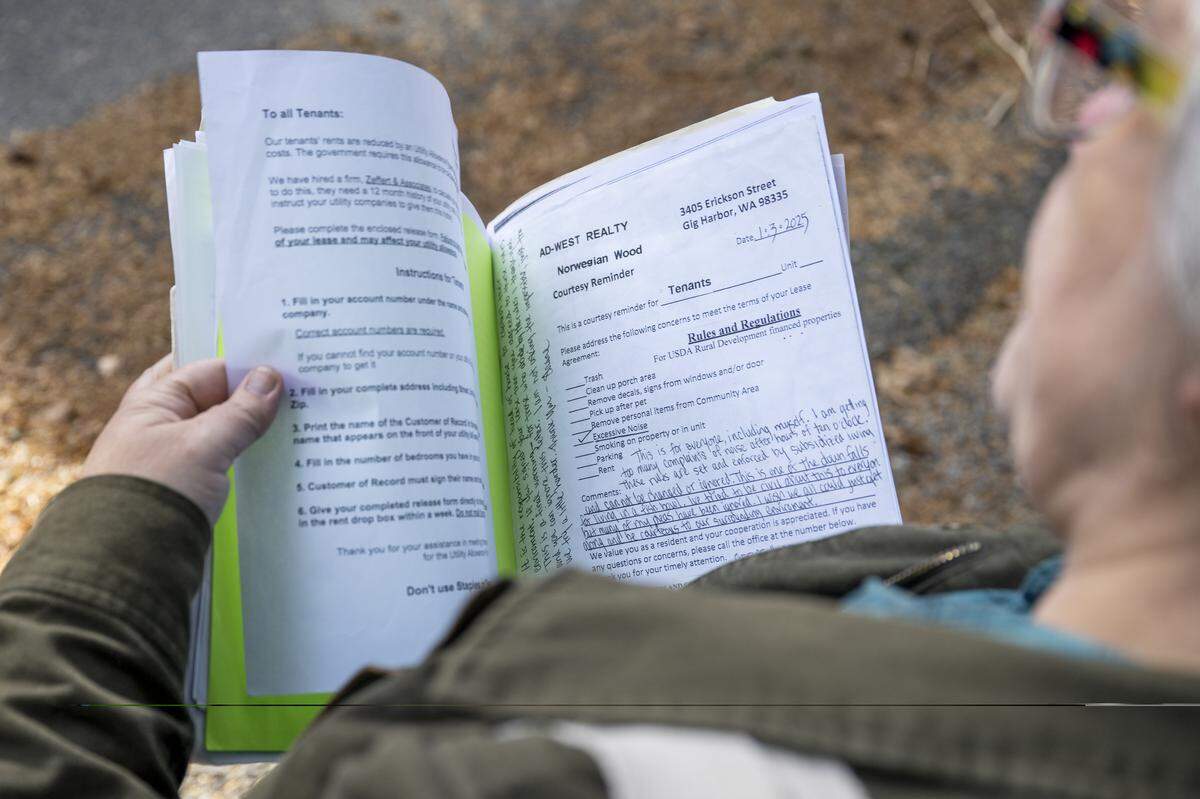
“ ... the paperwork wasn’t right, and from the paperwork not being right, we moved into having issues getting a hold of the management, and then our certification didn’t come back,” Worley said. “And so I started talking to other tenants, and found out that none of the certifications for most of the tenants had been done yet.”
Around July, Worley reached out to the USDA office. A USDA representative confirmed that none of the certifications had been completed, Worley said.
The News Tribune reached out to the USDA Rural Development Program to ask if Norwegian Wood has failed to complete the required certifications, if any deadlines are in place and what the consequences are for failing to meet the requirement. USDA Rural Development spokesperson Amee Andreason confirmed via email Dec. 1 that owners of USDA-financed Rural Rental Housing projects must work with tenants on certifications to verify tenants’ incomes.
“The certification process is ongoing,” Andreason wrote. “USDA is aware of the concerns and is collaboratively working with the borrower on a corrective plan to meet program compliance.”
The News Tribune followed up Dec. 8 to ask more specifics about the corrective plan, the deadline for making the required corrections, the company involved and the frequency of non-compliance issues for USDA-financed rural rental housing projects. The department sent a response Dec. 11 stating: “USDA Rural Development does not publish project-level data regarding certification non-compliance, nor does it release information about individual applicants or borrowers due to privacy requirements. Therefore, Rural Development is unable to provide public statistics on how frequently certification issues occur or what percentage of properties may require correction.”
Washington State Housing Finance Commission spokesperson Margret Graham told The News Tribune via email that Norwegian Wood submitted certifications required to comply with a federal tax credit program overseen by the commission on-time for 2024. She noted that USDA Rural Development “may require certifications on a different schedule.”
Norwegian Wood legally obligated to remain affordable
Norwegian Wood must remain affordable for several decades, under existing agreements with multiple agencies.
The property participates in several affordable housing programs. Besides the U.S. Department of Agriculture’s Rural Development Program, Norwegian Wood also receives public funding through the Low-Income Housing Tax Credit Program and the Washington State Housing Trust Fund, according to Graham. Jason Gauthier, manager for South Sound Housing Affordability Partners, told The News Tribune in a phone call that Norwegian Wood is legally bound to remain affordable for some 40 years. He forwarded a copy of an October 2003 regulatory agreement confirming that timeline under the state Housing Finance Commission.

Gauthier also forwarded an email thread showing city, county and state representatives confirming Norwegian Wood’s affordability requirements. According to Washington State Department of Commerce staff included in the exchange, the property must remain in the USDA Rural Development portfolio until at least 2033, and isn’t scheduled to pay off the federal Section 515 loan used to finance the property until 2042.
Further, “Commerce has a covenant in place (expires 12/31/2044) that reflects a total of 39 low income units restricted; 29 units at 50% AMI and 10 units at 60% AMI,” a staff person wrote.
This story was originally published December 22, 2025 at 5:30 AM.