Where is traffic worst in the Gig Harbor area? Here's what locals, officials say
AI-generated summary reviewed by our newsroom.
- The census subdivision including Gig Harbor grew about 25% from 2010 to 2024.
- The city maintains a six-year Transportation Improvement Program that is updated annually.
- Residents and officials identified intersections pushing the limits of their capacity.
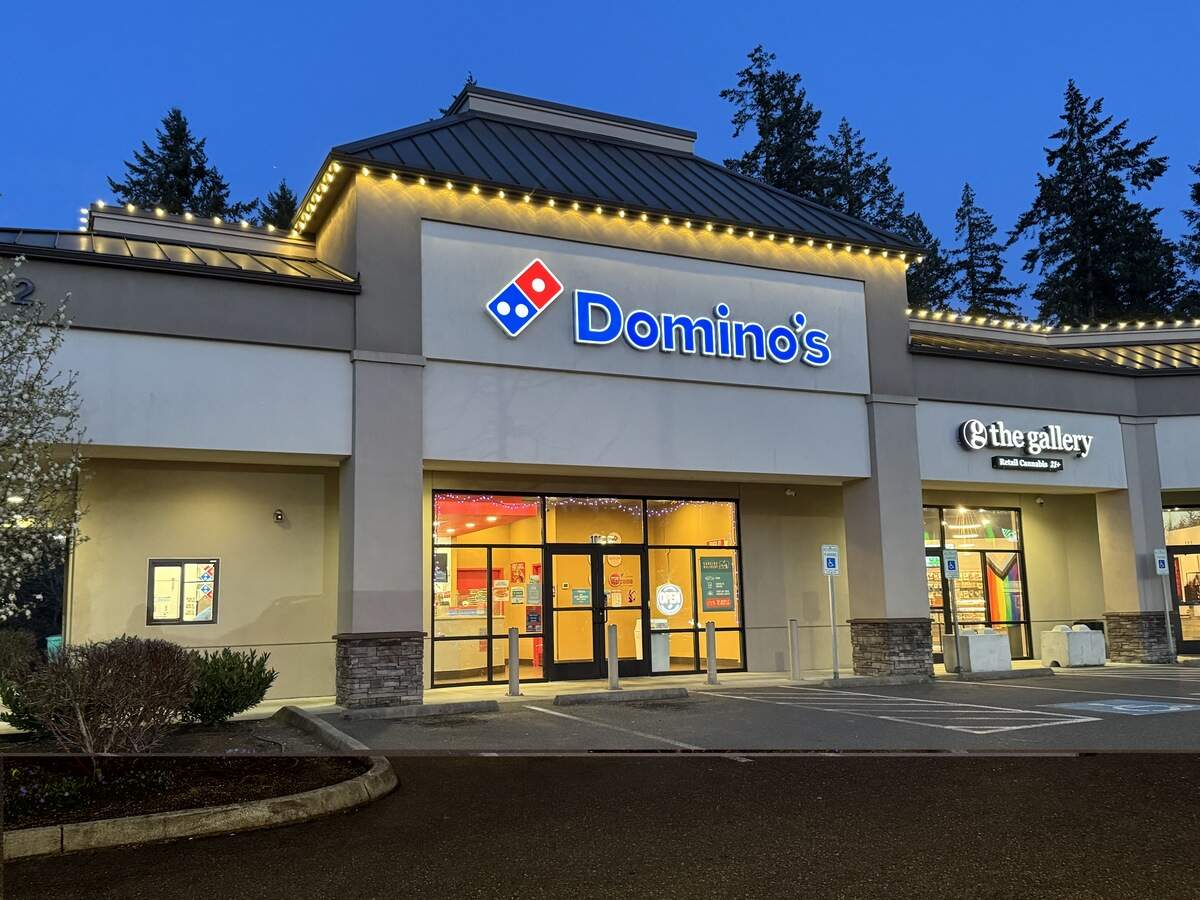
Steven Gaube doesn’t like to talk about the COVID-19 pandemic much. It was a hard time, the 42-year-old supervisor of Domino’s Pizza locations in the Gig Harbor area said — but it was a “beautiful” time for pizza deliveries.
With so few people on the road, a pizza could get to your house in 15 minutes flat, he estimates. Now, drivers are still getting pizzas to north Gig Harbor in under 30 minutes, but the uptick in traffic has taken a toll.
“I would say, there’s bad days where it was adding 15, 20 minutes onto deliveries last year,” he said.
That doesn’t mean pizzas are arriving cold, Gaube adds. He spoke proudly about how their family-owned operation holds its own against competitor delivery services like Uber Eats and DoorDash. They’ve made adjustments like hiring more drivers to work Fridays and sending drivers out with multiple orders so they can combine trips.
Still, the traffic is the primary reason they’re seeking to open another restaurant in Gig Harbor North, he said. Having one location in Uptown Gig Harbor and one on the Key Peninsula simply isn’t enough to meet the demand.
The timing of orders also doesn’t help.
“What we really see is it’s the worst time of the day for us,” Gaube said. “When people want a pizza, it’s usually they’re ordering pizza because they’re stuck in traffic, and their kids are at home waiting for food. So they’re stuck in traffic, but we’re also stuck in traffic, too.”
How does the city plan roads for future growth?
Gaube is one of many residents in Gig Harbor and the Key Peninsula who’s noticed how the area has grown.
The population of the census subdivision that includes the city of Gig Harbor and surrounding areas swelled about 25% from 2010 to 2024, from about 45,000 to 56,000 people, according to U.S. Census data. The Tacoma area grew by about 12% over the same period, from about 427,000 to 480,000 people.
Gig Harbor City Engineer Aaron Hulst, who studies traffic patterns in the city, explained in an interview March 27 that the city maintains what’s called a TIP, or Transportation Improvement Program, which lists all traffic improvements the city is planning for the next six years. It’s updated annually, and is based on what’s known as “transportation concurrency” — a state requirement that local jurisdictions ensure their roadways can accommodate future demand.
Transportation concurrency is important when private developers apply for permits with the city, according to Hulst. The Gig Harbor municipal code says that developers have to pay for a city traffic report if their proposed development or redevelopment is expected to push the number of trips in an intersection or roadway above a certain level.
That means the city can’t approve permits for a private development without taking a look at how much traffic that development will generate. Hulst explained that the city runs a new snapshot of their concurrency model each time a developer gets to that point in the application process.
He also highlighted several intersections in Gig Harbor that are already pushing the limits of their capacity. A comprehensive list, complete with delay times and other data, is included in the city’s “Connect the Gig” Transportation Plan.
Where do drivers get held up the most?
The News Tribune reviewed Hulst’s list and gathered input from residents via social media and phone interviews to create a list of the worst choke points in the greater Gig Harbor area. The following list, not meant to be comprehensive, identifies some of the top responses.
Point Fosdick and Olympic Drive
With its proximity to retail, grocery stores, restaurants and other services, this four-way intersection came up again and again in conversations with Gig Harbor-area residents.
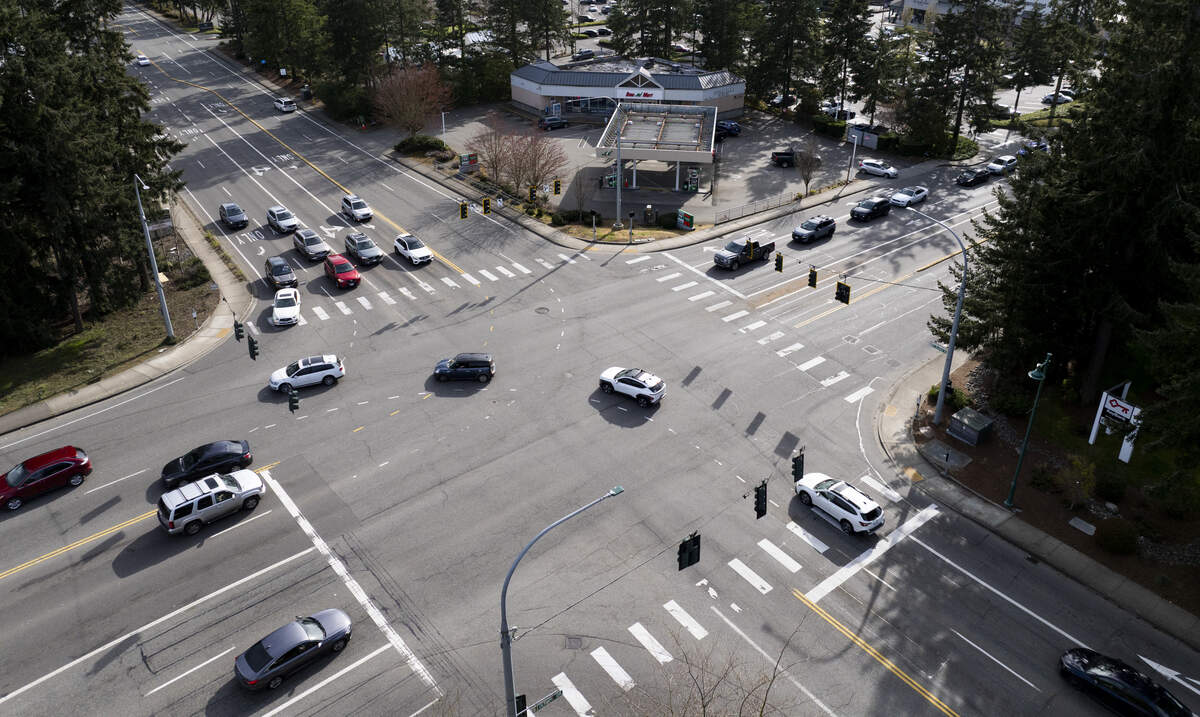
Kevin Boldt, 70, has noticed a difference in his 36 years of living just outside city limits.
“36 years ago, the intersection of Point Fosdick and Olympic wasn’t anything compared to what it is now,” Boldt said in a March 25 interview. “We didn’t have Gig Harbor North 36 years ago.”
He’s learned to live with the increased traffic, taking alternate routes and avoiding the intersection depending on the time of day. Boldt guessed that it gets the busiest around 7 to 9 a.m. in the mornings and 3:30 to 5:30 p.m. in the afternoons.
The number of cars driving through the intersection during rush hour more than tripled in the decade following the opening of the Uptown shopping center, The News Tribune reported in 2014.
City Engineer Hulst agreed that the Point Fosdick Drive and Olympic Drive intersection is a “big one” when asked about the top areas of congestion in the city. Officials categorize that spot as Level of Service (LOS) D, based on a tiered system that classifies intersections by the average delay a driver experiences going through the intersection.
LOS A means that a driver passes through the intersection with less than 10 seconds of delay, according to the city’s transportation plan. By LOS C, the delays increase up to 35 seconds per vehicle at intersections controlled by a stoplight or roundabout. At LOS D, “your typical driver ... starts to get some level of irritation,” but not to the point of LOS E or F, Hulst said.
A stoplight- or roundabout-controlled intersection categorized as LOS F has drivers waiting an average of more than 80 seconds per vehicle. In Gig Harbor, most intersections must be at a LOS D or better, per the city’s transportation plan, though several intersections in the downtown area are allowed to operate at lower levels of service.
Some relief may be on the way, as the city plans a TIP project for the Point Fosdick intersection. A right turn lane extension on Olympic Drive would increase the length of the turn lane by about 225 feet, moving eastbound toward Point Fosdick Drive, and help shorten the queue in the other lanes going through the intersection. The city’s 2025-2026 biennial budget proposes setting aside $400,000 for the project in 2027, and the city began design and permitting for the project in the 2023-2024 biennium.
With the addition of businesses like Ivar’s, which opened April 3 in the Uptown shopping center, and possibly Chick-fil-A on Olympic Drive, the area isn’t getting any less crowded. The city recently granted Chick-fil-A a final extension on their permit application through July 13, after the fast food chain submitted applications for a drive-through location at 5115 Olympic Dr.
Borgen Boulevard roundabout
This large traffic circle off of state Route 16 connects Borgen Boulevard, Burnham Drive and Canterwood Boulevard. During the afternoon to evening rush hour, cars can start backing up, particularly on Borgen Boulevard toward Target, said Hulst.
The city’s transportation plan notes that the intersection as a whole operates at LOS C, but the Borgen Boulevard approach to the roundabout drops to LOS F during peak traffic times and can lead to “significant queuing” up that road. Hulst said the intersection as a whole is expected to drop to LOS D by 2029, taking into account projected growth in the city and region.
Congestion on state Route 16 can also spill onto local roads leading into Gig Harbor. The city’s transportation plan notes that the city lacks north-south connections via local roads, forcing many drivers to use the highway to get from one part of the city to another.
Because the roundabout connects to state Route 16, the city will need to coordinate with WSDOT to make any long-range improvements to the intersection, per the city’s transportation plan.
Wollochet Drive interchange with SR 16
The short, sharply-curving on-ramps from Wollochet Drive can throw another wrench into the already-congested highway.
“It’s incredibly short,” said Seth Fritsch, a 20-year-old Key Peninsula resident, about the on-ramp to westbound state Route 16. “ ... it causes people to brake and we’ll just clog up 16 all the way back to the bridge.”
In 2018, the Washington State Department of Transportation completed an in-depth study of traffic on the highway, which is a heavily-used commuter route running through Tacoma, Gig Harbor, Port Orchard and Bremerton. Funded through a 2015 transportation package called “Connecting Washington,” the study cost $2.4 million and produced a number of short-, mid- and long-term recommendations for improving highway congestion.
WSDOT spokesperson Mark Krulish identified a city project that will address one of the study’s recommendations for the ramp terminals around Wollochet Drive. The city of Gig Harbor received $1.68 million in state funding to add two turn lanes at the interchange: one coming off the eastbound off-ramp and one leading to the westbound on-ramp, The News Tribune reported. The project will cost a total of $3.45 million, according to the Gig Harbor capital improvement projects website.
SR 16 exit to Purdy Drive Northwest
Many residents mentioned the Purdy exit in comments on The News Tribune’s Facebook posts. The westbound off-ramp leads to Purdy Drive Northwest (state Route 302) and often experiences backups extending toward the Purdy Bridge.
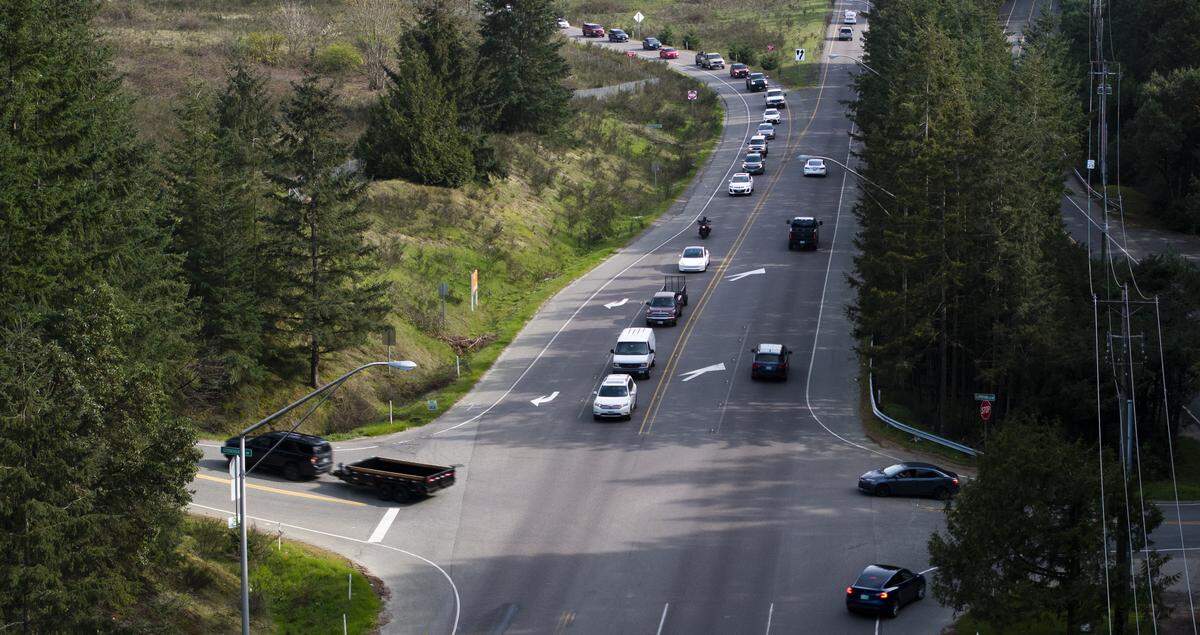
Deborah Harper, a 66-year-old resident whose family has lived on the Key Peninsula since 1945, commuted to Seattle for a few years before retiring from the University of Washington.
“Getting out on the road to the Key, you have to go over the Purdy Bridge and that starts backing up on a Friday up onto highway 16,” she said. “It can be bad ... you have hundreds of cars trying to get over the bridge.”
Some residents noted that drivers seem to have trouble letting other vehicles “zipper merge” on the ramp. From 2 to 7 p.m. Monday through Friday, drivers are allowed to use the shoulder to merge into the single lane off-ramp to Purdy Drive Northwest.
“I’m waiting at least 15, 10 to 15 minutes, and that depends on if somebody lets me over, because people don’t,” said Jason Curette, a Key Peninsula resident who commutes to west Seattle for work. “They have no clue on how to drive the zipper.”
A zipper merge is a technique where drivers in an adjacent lane wait to merge until closer to the point where the lanes combine. This helps drivers maximize available road space and reduces congestion.
At a Pierce County council meeting on the Key Peninsula April 2, a WSDOT administrator spoke to the congestion in the area by the Purdy Bridge. The bridge needs to be replaced and the intersection next to it “could benefit from a roundabout,” but both of those are unfunded needs, said Steve Roark, Regional Administrator for the Olympic Region, at the meeting. He also said that the department is considering ways to reduce drivers’ speeds going back toward state Route 16.
“I get a lot of emails about speeds going south towards SR 16,” he said. “We are contemplating speed adjustments out there and actually reducing it down to one lane, to get the speeds down a little bit, maybe repurposing some of the roadway out there for multimodal use.”