Developer plans Puyallup apartment complex. 42 families forced to move to make room
Armando Aragon and his family moved into a home about six and a half years ago that they renovated to meet the needs of his son, Brian.
Brian, 28, was seriously injured in a car accident seven years ago, which severely limited his mobility.
“I had to remodel the whole mobile home, especially in particular one bathroom because to bathe my son we have to bathe him in a special wheelchair,” Aragon said through an interpreter. “Also, we had to enlarge the living room.”
His entire Puyallup neighborhood must leave by October. If they don’t move their homes, they’ll be demolished. Families poured thousands of dollars into renovating homes they now face abandoning.
They don’t have many options.
The residents of Meridian Mobile Estates own their homes but not the land. A developer has plans to get rid of the mobile home park at 202 27th Ave. SE and build apartments there.
City leaders said the situation illustrates the difficulty of addressing the region’s housing crisis.
“I don’t like the displacement, but I do support the redevelopment to increase the inventory of affordable housing. There’s a good side and bad side,” Puyallup Deputy Mayor Ned Witting said. “I would change it if I could, but it’s got a silver lining.”
The mobile home park initially housed 42 families, some of whom have already moved.
There were 31 families still living there as of Aug. 1, city spokesperson Eric Johnson said via email. About six mobile homes will move to another park and 19 mobile homes will get demolished. It’s not clear what will happen to the others.
“We’re trying to find somewhere to move to,” Aragon said recently. “We’re hoping that we have enough time to look for something and not get to the deadline not having … nowhere else to go.
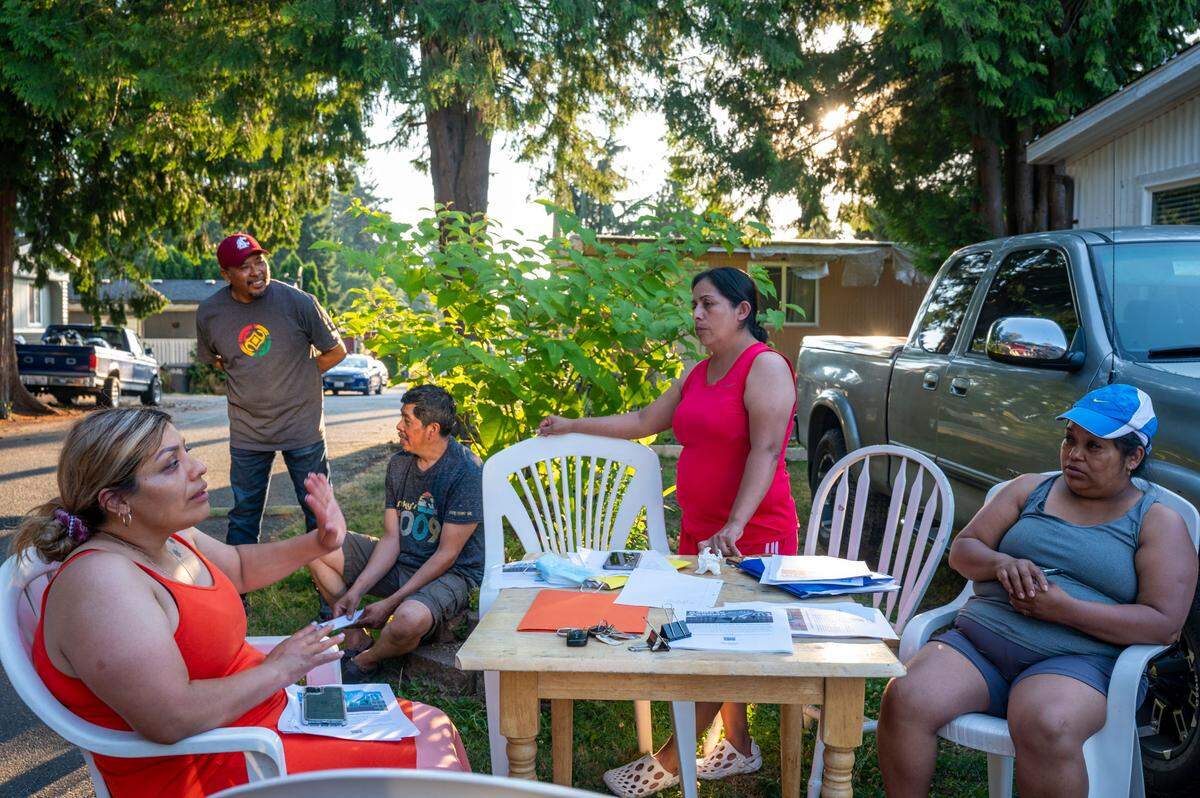
Economic Development manager Meredith Neal said during a May 24 City Council meeting about 75 percent of the families requested Spanish interpreter services. About five homes have residents with health issues or physical disabilities who have specific housing needs.
“Mobile home parks are closing at a fairly rapid rate right now in the region for a number of different reasons, including septic issues (and) redevelopment,” Neal said during the meeting. “Finding available spaces to move into is proving to be fairly challenging.”
Timberlane Partners, the owner of the mobile home park, plans to build roughly 230 apartments on the property. Public records show Timberlane purchased the land from Bradley Heights LLC, the previous owner, for $6.5 million in December.
Timberlane Partners has built apartments in Sumner, Lakewood and Seattle. The developer is also behind the East Sumner Apartment project that has yet to break ground.
The Puyallup development will have three to four stories, with parking spots and a recreation building. The company expects to start construction next year and finish in 2025. They haven’t said what they plan to charge for rent. An assistant planner for the city of Sumner told The News Tribune in May that the company expressed some interest in making 20 percent of the units for the East Sumner Apartment project affordable housing.
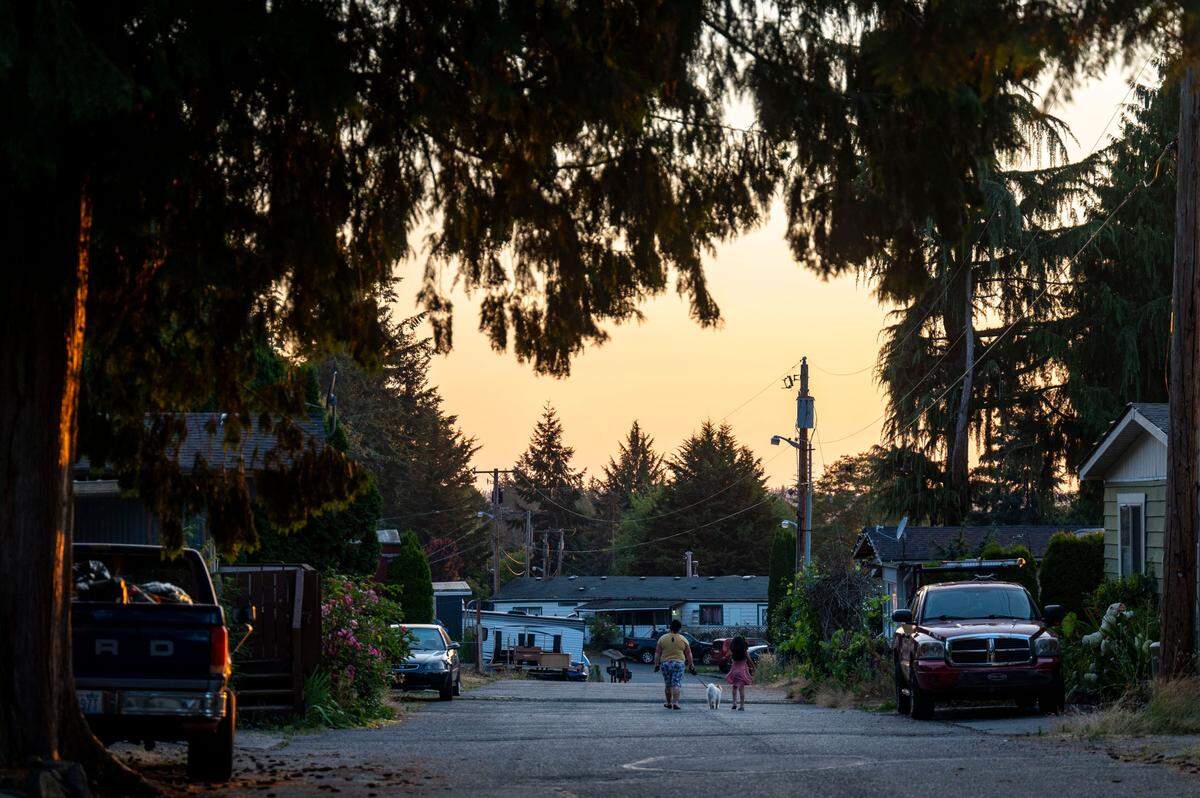
Residents of Meridian Estates have attended and spoken at Puyallup City Council meetings this year.
“I feel it’s unfair to close the park because we have children, elderly, disabled and retired people,” Saraim Nieto, a mobile home park resident, said during an April 5 City Council meeting. “We have been dealing with so much … emotional distress thinking about where we are going to live after we are kicked out.”
They first received a letter in June 2020, saying that the park was closing and that they had to find another place to live.
The state Attorney General’s Office told the developer at the time to rescind the notice because it violated Washington state’s eviction moratorium that was in place then during the pandemic, The News Tribune reported. The residents got a new closure notice in September 2021, saying that they had a year to relocate and find other housing.
Who lives at Meridian Estates?
Aragon’s family was living in an apartment in Auburn, paying about $900 per month in rent when Brian was injured in 2015. He received care at a rehab clinic in Puyallup, and his family moved to Meridian Estates and renovated their home to care for him.
The mobile home cost about $15,000, and they pay $710 a month to rent the land. Aragon estimates they’ve made about $65,000 in improvements to the home, installing an ADA ramp at both entrances, among other things. For example, they replaced the roof with metal as opposed to shingles, thinking it would last many years. The family had hoped to stay as long as they could.
Aragon has been searching for a home to share with his daughter and grandchildren, who also live at Meridian Estates, but they’d need time to modify the house for Brian, Aragon said.
“We’re going to have to take our son to a clinic because we’re going to have to move into a hotel,” Aragon’s wife, Maria Gonzalez, said. “He can’t live at the hotel.”

Nieto and her family moved to the mobile home park about three years ago. The plan was to live there long enough to save money for her son’s college education. They previously lived in an apartment in Fife, paying about $1,400 per month in rent.
Living at the mobile home park brought their rent down to $700 per month, Nieto said.
Records from the Pierce County Assessor-Treasurer’s office show the family paid $19,000 for the home and that it’s valued at $24,100. Nieto said that doesn’t account for the many renovations they’ve done inside. They added more windows, improved the floors and bought a washer and dryer. She said when their property was assessed, they were told the home is now worth more than $100,000.
Resident Rick Alvord told The News Tribune last year that he wasn’t notified that the neighborhood was for sale. Other residents, including Gonzalez, Nieto and Martin Martinez, said the same.
State law requires land owners to notify residents, the state and local government when a mobile home community is up for sale.
Brooke Brooling, program manager for the state Department of Commerce Relocation Assistance Coordination Program, sent The News Tribune copies of two notice of sale documents from Meridian Estates: one for December 2019 and December 2021. The 2019 notice included a letter specifically for residents, notifying them of the sale. The 2021 notice did not.
The state doesn’t know if the residents received the second notice of the sale, Brooling wrote in an email. The 2019 notice was when Bradley Heights LLC purchased the land. The 2021 notice was when Timberlane Partners purchased it.
Asked what happens if a resident isn’t notified that their mobile home community is up for sale, Brooling said: “If the residents felt that due process was not followed, they would need to contact the AG’s office.”

Martinez and his family have lived at the mobile home park for about 11 years. He’s made various improvements and had plans to renovate their kitchen, but those plans came to a halt when he realized the owner had other plans for the neighborhood.
Martinez said although they’ve found a few potential places to live, one of the issues they keep running into involves their pets. They own a 60-pound dog that some landlords won’t accept, he said.
Families also say the housing options they’re finding are expensive.
As of August 2022, the median rent in Puyallup is $1,801 for a two-bedroom apartment and $1,474 for a one-bedroom, according to Apartment List.
As of July 2022, Pierce County’s median closed sale price for single-family homes is $575,000, The News Tribune reported.
“If we find a place then we will leave, but if we don’t find a place then we don’t know what will happen. We haven’t found a place yet,” Martinez’s wife, Cristina Nieto, who is Saraim Nieto’s sister, said through an interpreter.
What’s being done for the families?
Neal, the city’s economic development manager, said during the May 24 council meeting that the developer is giving $5,000 to each household when they move out. The City Council decided to match that, meaning residents may be eligible for $10,000 altogether.
Saraim Nieto said the city, state and developer are not doing enough for the residents. Her family and others should be compensated for the full price of their homes, she said.
Martinez also argued the land owner could have offered more.
Aragon said the same.
“The offer that they’ve made is completely unfair,” he said.
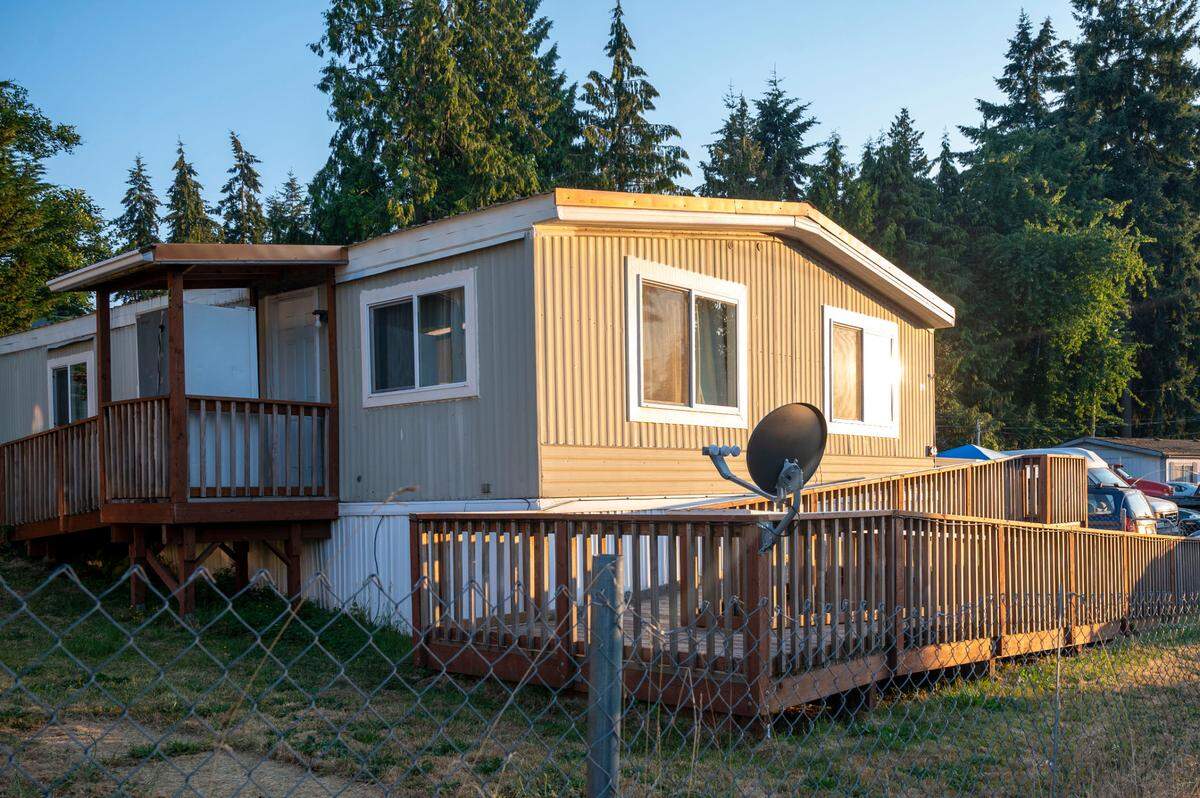
Aragon also said: “If they really wanted to help they would come up with laws that are congruent with the cost of living these days.”
$10,000 would cover the cost of a median-priced two-bedroom apartment for several months in Puyallup. The first and last month’s rent would be about $3,600, and the remaining $6,400 would pay for about three months’ rent. That doesn’t account for moving expenses or a security deposit.
In addition to the $5,000, Timberlane Partners is also offering to give residents what they would have paid in rent if they relocate before October, development manager Jorden Mellergaard wrote in an email.
For instance, if someone’s rent is $900 and they move out three months early, they’d get $2,700.
About a third of the 42 families have taken advantage of that so far, Mellergaard wrote.
The developer also hired a Spanish-speaking relocation specialist to assist residents.
Timberlane Partners’ relocation office had about 150 one-on-one meetings with residents in addition to phone calls, texts and emails, he said.
The city hired two Spanish-speaking case managers earlier this year to help, said Johnson, the city spokesperson. Their job is to work with residents to come up with a housing plan.
The case managers and relocation specialist have a trailer at the mobile home park and hold office hours for residents. Sometimes they also go door-to-door, Johnson said.
The case managers have helped 11 families transition out of the mobile home park and into other housing, Johnson wrote in an email.
“There’s a lot of folks that live in that area that are primarily low-income, and we want to make sure that those folks can get access to other houses,” Johnson said.
Cities do not usually get involved with privately initiated property sales, Johnson said. They hired case managers, Johnson said, because city officials recognize the mobile home park residents are “at risk of becoming homeless.”
Although residents have different financial resources to help them, one issue is that they aren’t receiving a lot of funds upfront. Neal said during the May 24 meeting that some residents are struggling to fill the gap in putting down a first and last month’s deposit. That’s why the City Council decided to offer each household $5,000.
“We need to help these people,” council member John Palmer said at the meeting. “I wish the developer could help a little more.”
As of Aug. 3, the city had distributed $180,000 total to 36 families.
Families needed to fill out an application before receiving money from the city. They also had to “demonstrate” a need for the money and that they have been “disproportionately impacted” by the closure, Johnson wrote.
Applicants must agree to use the money to move their mobile home, place a down payment for a new home, or to use it for “other reasonable relocation expenses,” Johnson wrote.
He said Pierce County is considering following the city’s grant program as a model for future mobile home redevelopment projects.
The Pierce County Housing Authority also recently opened their Section 8 housing voucher program for people living in mobile home parks that will soon close, Neal said during the May 24 meeting.
“The vouchers help offset rent, both for a rental house or an apartment, but they can also be used to pay for the mobile home park space leases for anybody who’s able to move their mobile home,” Neal said at the meeting.
Only three families applied for the vouchers and only two qualified, Johnson wrote.

Maria Gonzalez said via text that she didn’t know about the vouchers until The News Tribune asked her about the program Aug. 2.
Johnson said the case managers told families about the relocation assistance programs available, and that it’s the residents’ responsibility to apply for them.
Can families move their mobile homes?
A mobile home can be moved or demolished depending on its condition, Johnson said. It also depends what renovations have been done. Each home at Meridian Estates is different.
Some residents considered moving their mobile homes to another park, including Saraim Nieto and Martinez. Neither family has been able to. Nieto said other parks are full. Martinez said his home is too old to move.
“Sometimes the home is too old to be moved,” said Brooling, the program manager of the Department of Commerce Relocation Assistance Coordination Program. “Sometimes if there’s been a lot of remodeling or something done on the inside, then it just structurally can’t be moved.”
The Department of Commerce relocation assistance program is meant to help those who own mobile homes in communities that will soon close, Brooling said.
In the past four years, 338 families have been displaced due to mobile home park closures throughout Washington state, according to the Department of Commerce website. This year, seven mobile home communities are scheduled to close, including Meridian Estates.
Brooling wrote in an email that the relocation assistance program was established through legislation that passed in 1989 to help those who own mobile homes transition out of those communities when they close.
When residents receive a notice of closure, the program also gets a copy. That’s what triggered the program to reach out to the residents of Meridian Estates.
Owning and not renting a mobile home is one of the requirements to receive cash assistance from the state, Brooling said. Another is that they must have an income at or below 80 percent of the area median income the year the notice was issued.
For a household of four that was $72,650 in 2021.
A majority of the families at Meridian Estates are considered low-income, Johnson wrote in an email.
A single-section mobile home can receive up to $11,000 through the state program. A multi-section mobile home can receive up to $17,000. Multi-section homes look like two single-section homes or “single wides” that are placed together.
Residents can use the money to move their homes or to find other housing.
The cost to relocate a mobile home varies depending on where a family lives and where they are moving to, Brooling said. It also varies by city or county and the permits that need to be filed.
“What I’m hearing from them is that the cost to move a home exceeds what our program provides in the way of cash assistance,” Brooling said about the price to move a mobile home in Washington.
The News Tribune asked a local company for a ballpark cost to move a mobile home. The owner said it would cost roughly $12,000 to $16,000 to move a multi-section mobile home and between $6,000 to $8,000 for a single-section mobile home. The cost really depends how far the home is going and what type of surface it’s on, he said.
Applications for the state program were sent to all 42 homes at Meridian Estates around the time the closure notice was issued.
As of Aug. 3, the state had received 35 applications. Of those 35 applications, 26 were eligible for assistance. Five were still pending and four did not meet the eligibility criteria, Brooling wrote in an email.
Does Pierce County need more mobile home parks?
There are 63,767 spaces in mobile home communities in the state and 5,631 vacancies, according to state data on registered manufactured/mobile home communities. Only seven vacancies are within Puyallup city limits.
There are 151 mobile home parks in Pierce County and 38 of them are in Puyallup, both in the city limits and in the greater Puyallup area, Brooling said.
The loss of mobile home parks is analogous to the loss of affordable housing across the country, said Zachary Wood, assistant professor for the Institute of Public Service at Seattle University. He researches housing policy and community development, he said, and for more than 10 years worked on housing and homelessness policy for nonprofits.
“When we’re in sort of a fully privatized, highly pressurized housing market … whoever has more money has access to whatever properties they’re looking for,” Wood said.
Wood said developers typically have access to funding structures to advance their projects that the average resident doesn’t. There’s no “slowdown” to this type of development as new residents continue to flood into the state, and the demand for housing increases, he said.
Low-income families, especially those that rent, are at risk and often have the fewest alternatives when it comes to housing, Wood said, and in many circumstances, they are the ones who get displaced.
In situations such as Meridian Estates, city and state officials are stuck in a “teetering place” — perceiving new development as something that is “good” and balancing that with the fact that people will be displaced from their homes, Wood said.
Many support the redevelopment of low-income housing such as mobile home parks because they believe something better will be built on that property, Wood said.
“It is much easier from a public policy standpoint to allow them to be redeveloped and … compartmentalize what the results are going to be with that, which is always going to be the displacement of people,” Wood said.
Wood said he is not sure if building more mobile home parks is the solution, but he thinks it could be part of the answer to the region’s housing crisis. Public officials should begin thinking about when they should intervene in situations like Meridian Estates, he said.
Cities and states could also consider increasing relocation assistance for these situations, Wood said. Designating a piece of public land for housing is also a possibility, he said.
“All of the pressure we have put on displacement and relocation is on those who are already at risk and already marginalized,” Wood said. “If we want to take an equity approach … what we really need to think about is the idea of housing as a human right.”
Puyallup zoning maps show the Meridian Estates property was already designated for multifamily housing.
The News Tribune asked all seven members of the Puyallup City Council if they support the development planned for the site. Two responded.
Council member Palmer told The News Tribune what’s happening at Meridian Estates is “a difficult situation.”
Asked if he supports the development, Palmer said he couldn’t say. He said he recognizes the pros and cons.
“Any development we have is needed for the housing crisis,” Palmer said, “but in this situation, that’s coming at a cost for these individual families.”
Deputy Mayor Witting said on one side of the coin it’s unfortunate that 42 families will be displaced but on the flip side, there are multiple resources being offered to them.
Witting said he doesn’t “applaud” displacing families. The best option would be to increase housing without displacing people, he said.
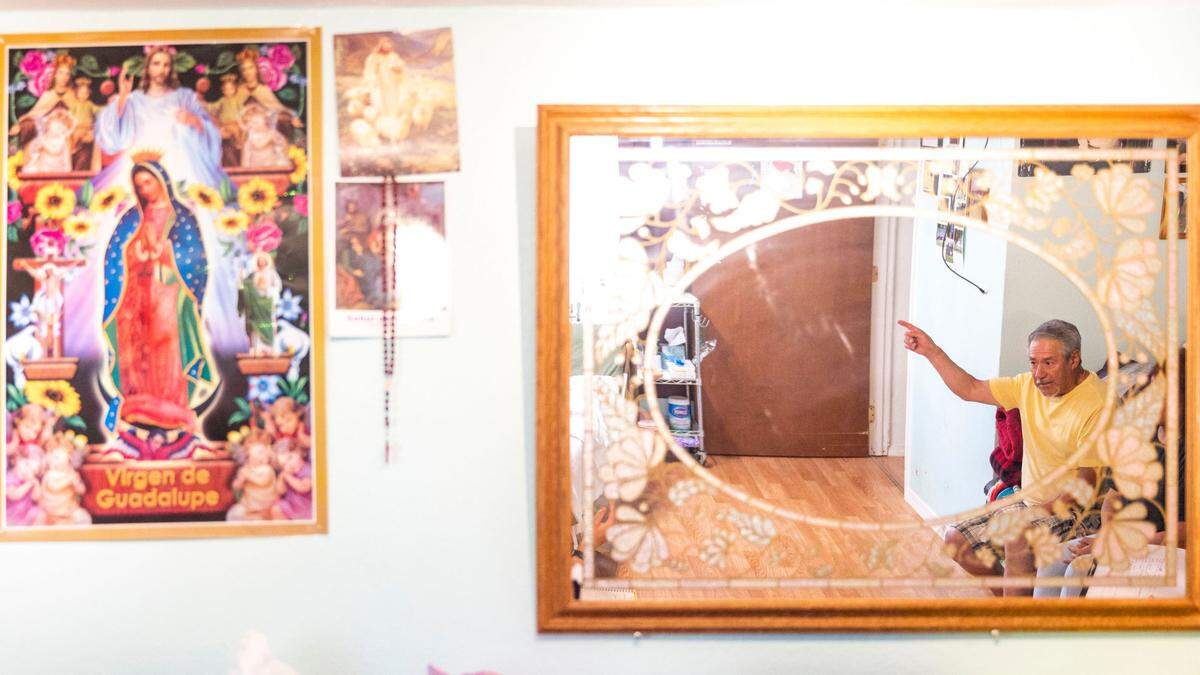
What’s going to happen between now and October?
When asked what will happen if residents cannot find a place or refuse to move by October, Brooling wrote: “That is a legal issue that will have to be addressed by the residents who do not move and the attorney representing the community owner.”
Johnson, the city spokesperson, said: “I know that they’re going to be scheduling demolishment of some of the trailers that have been vacated. The property owner will begin eviction proceedings. That’s going to be up to the property owner how they want to proceed with that.”
When Saraim Nieto spoke to The News Tribune recently, she and her family did not have a plan. She had hoped the property owner would push the October deadline.
“I have no intention of leaving until they pay for my house,” she said. “I’m not moving out of here until they pay for it.”
Nieto said she wished the developer, city or state would fully compensate her for her home.
“We feel sad about what’s happening here in the park. We really had a dream that we would live here a lot longer than we have,” Nieto’s husband, Jorge Calderon, said through an interpreter. “We don’t know where we’re gonna go. We don’t have anywhere to live.”
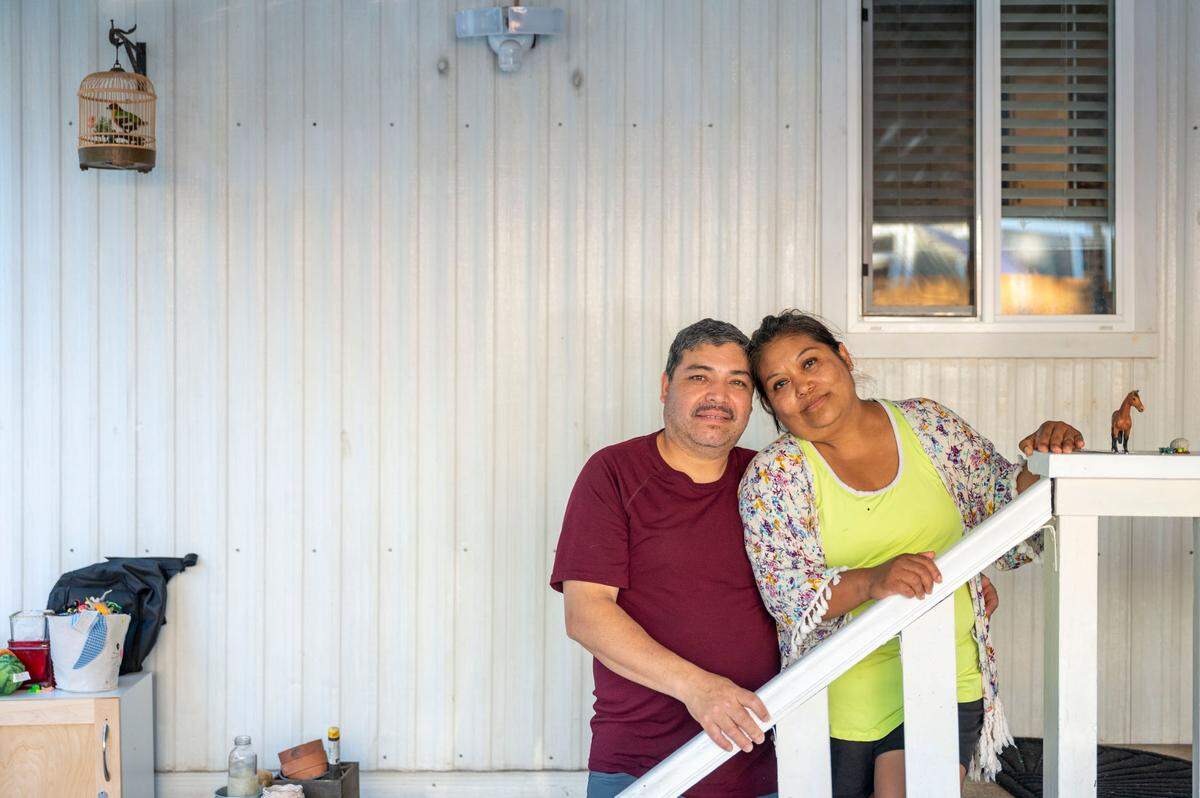
Asked how much it would cost the developer to purchase all the mobile homes on the property, Mellergaard with Timberlane Partners wrote: “That is a tough one to answer because we are not in the business of purchasing mobile homes.”
A group of Pierce County activists, Home in Tacoma for All, has plans to explore legal options as well as work with city, county and state officials to get residents to stay or get them reimbursed for the full value of their homes, volunteer Enrie Marusya said.
“There’s a few folks that we are talking to try to get something going, but it’s been a little bit tough,” Marusya said. “There’s a lot of demand for legal services around housing right now. It’s been kind of hard to get that together.”
Home in Tacoma for All is a volunteer-run group that “believes that everyone has the right to sustainable and affordable housing,” Marusya said.
The group and some residents plan to attend the Aug. 23 Puyallup City Council meeting and hold a rally at Pioneer Park beforehand. The hope for the rally is to raise awareness of what’s happening at Meridian Estates, Marusya said.
They also created an online petition asking that the development be stopped or that the residents be fully reimbursed for their homes. It had more than 304 signatures as of Aug. 12.
Getting ready to leave
Aragon said he likes living at the mobile home park because it’s centrally located in town. It’s within walking distance of stores such as Walmart and Home Depot. The South Hill Mall and Bradley Lake Park are nearby.
“We don’t go very often, but every now and then we … take Brian out around the neighborhood because he needs to socialize and not just be at home,” Aragon said through an interpreter.

Aragon also likes the greenery in the area, and he’s concerned about the trees that will be cut when the mobile home park closes.
“I lived in Mexico City, and it’s a city that’s full of cement. The sun bounces off the cement and makes it hot. We have all these green areas … that make it more comfortable to live in, but the authorities don’t seem to care,” Aragon said through an interpreter.
Calderon said he also likes having easy access to the freeway. Having medical facilities nearby is also convenient, he said.
Martinez likes that his home is more spacious than living in an apartment, and he doesn’t want to leave the city. He’s invested in Puyallup, where his 13-year-old daughter goes to school and plays soccer, among other activities.
He and his family are comfortable inside and outside their home, he said.
“The neighbors respect your home and your things,” his wife, Cristina Nieto said through an interpreter. “They also respect your privacy.”
Martinez said although not everyone at the mobile home park knows each other, he feels as if everyone is family. Most residents have known each other for over five years, he said.
“We all see each other,” Martinez said. “We all look out for each other.”
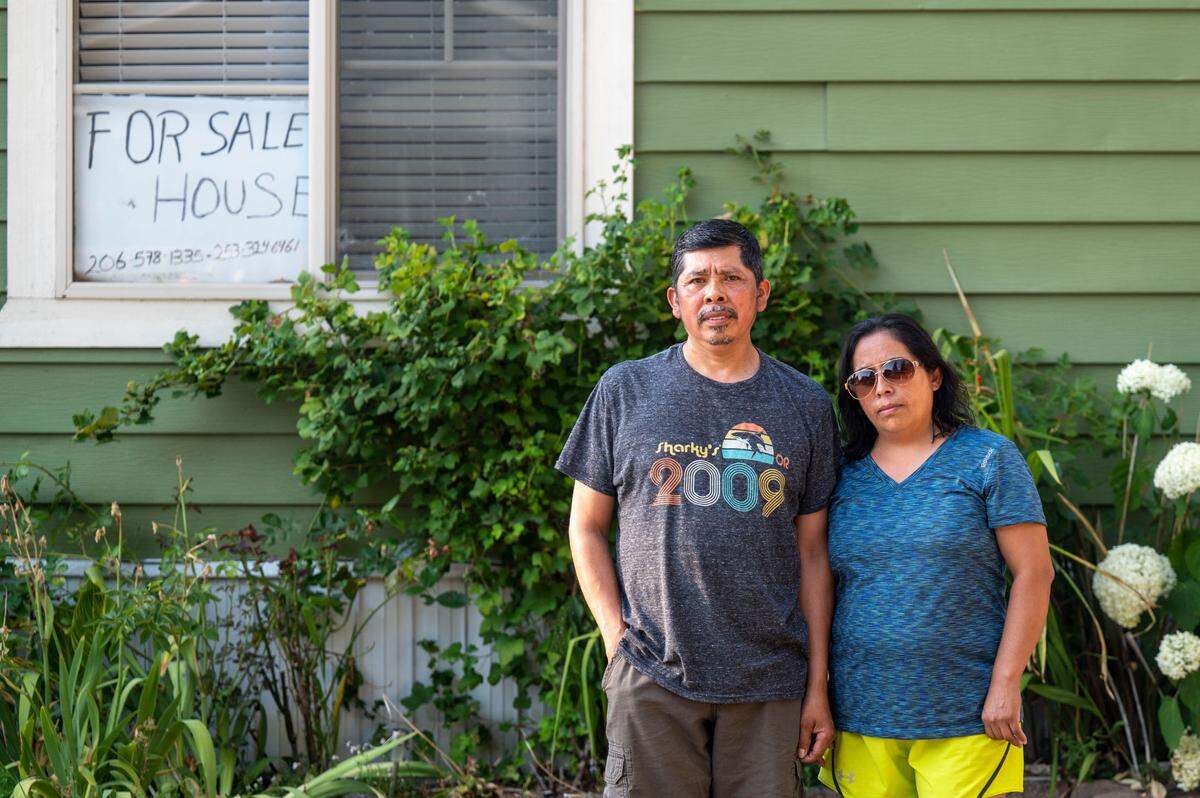
Now, some homes at Meridian Estates sit empty. Others have “for sale” signs in the windows, from owners still living there who hope to somehow find someone to buy their mobile home and move it by the deadline.
Boxes filled with belongings are piled on porches and in yards as the community starts to pack.
This story was originally published August 15, 2022 at 5:00 AM.