Has COVID contributed to Tacoma crime wave? Some point to fewer jail bookings and say yes
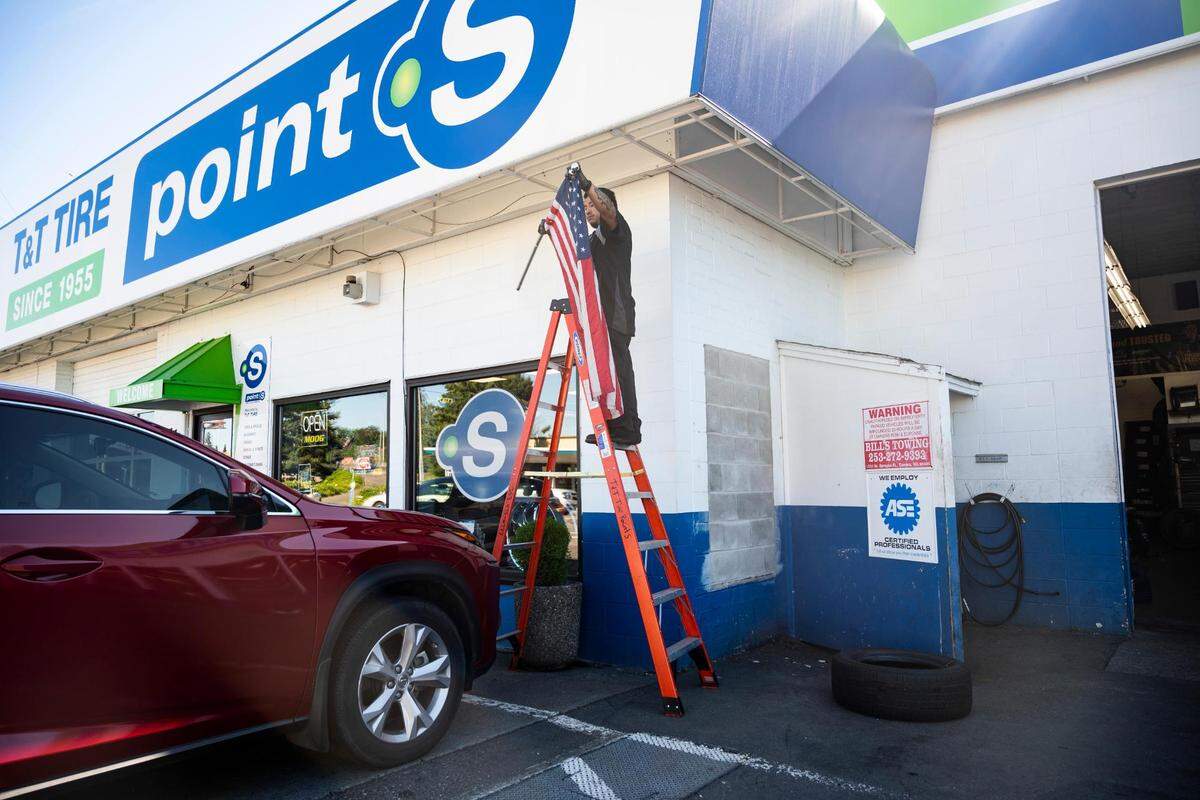
Several bay windows at Ed Tuck’s family automotive services shop in South Tacoma were shot out in late June with what Tuck believed to be a pellet or BB gun.
Around the same period, someone caused “a hell of a lot of damage” when, according to Tuck, they cut a hole in the fence of an adjacent storage company to gain access to his establishment, T & T Tire Point S, and ripped through the metal building and into a support stud. He said he did not believe anything was stolen, unlike in mid-February, when he received the unwelcome call that 16 sets of customer, employee or company vehicle keys, two vehicles and a gun had been swiped, along with roughly $450 in cash.
“This is not only an inconvenience,” he said, referring to the rash of criminal activity. “It’s affecting the bottom line to our business.”
It is a plight that officials and other business owners say they know all too well.
Property crimes, which include offenses such as burglary and motor vehicle theft, have risen during the pandemic in Tacoma and unincorporated Pierce County, including University Place and Edgewood, according to a News Tribune analysis of law enforcement data. They went up 20.7 percent in the county between 2019 and 2021, and increased 7.4 percent in Tacoma over roughly the same period.
Law enforcement and government officials point to multiple reasons for the uptick, including increased desperation fueled by the pandemic, difficulties in recruiting and retaining police officers who they say feel underappreciated, and state criminal justice reforms that changed how law enforcement can respond to certain calls.
Officials say there is another factor to consider: Most people arrested for property and other lower-level crimes have not been booked into the Pierce County Jail during the pandemic.
Jail protocols have limited pre-trial holds largely to violent offenses to try to avoid spreading COVID-19 into the facility. As a result, those arrested for lesser crimes have been getting released with a court date. The county’s jail population has plummeted over the last two years.
On a case-by-case basis, law enforcement may request exceptions to booking restrictions, but they depend on factors including the seriousness of the crime and COVID-19 conditions in the jail.
While the protocols follow the lead of local health officials and nationwide best practices for correctional facilities, the practice of limiting who goes to jail has unintentionally given the impression that there are no consequences to committing certain crimes, some officials say.
“You see these businesses and homes that have been broken into multiple times,” Pierce County Executive Bruce Dammeier said. “We got to get back to when people break the law, they are held accountable to it.”
Others contend that the catch-and-release has emboldened repeat offenders.
Prosecuting Attorney Mary Robnett said her office has seen defendants suspected of committing four, five or six separate offenses — including vehicle theft, possession of a firearm and burglary — and each time avoid jail.
The case of Gene Hiblar, the 19-year-old who pleaded guilty in May to burglarizing T & T Tire Point S and other crimes, presents one example of a defendant cycling in and out of custody. By the time Hiblar was arrested in March for ramming a vehicle into a bar and rummaging through the cash register, he had six outstanding felony warrants, court records show.
In a short span from April 2021 to his final arrest in March before he was sentenced to nearly 30 months in prison, Hiblar had built a lengthy criminal history around South Tacoma that included nine commercial burglary or vehicle theft-related cases.
In some cases, Hiblar was identified as a suspect but not caught. But in repeated instances, records show, he was released from custody after being arrested and subsequently failed to appear in court.
“It feels like there’s been the perfect storm, if you will, that has allowed crime to get out of control,” Tacoma Mayor Victoria Woodards said, citing jail booking limitations as part of the equation, although she said in a June interview that she had not reviewed any data to discern what exact role it might be playing.
“At this point, I don’t need a measurement to tell me that we’re not getting enough people in jail,” she said.
Year-over-year statistics during the pandemic were difficult to compare, Tacoma Police Chief Avery Moore cautioned, since no two years during the public health crisis have been exact in terms of conditions, such as orders affecting social movements. Still, he agreed that jail policies meant to protect inmates and staff have given rise to opportunistic criminals.
“Those who engage in those behaviors that society has said is inappropriate, is criminal, they need to go to jail. And that’s how you stop it,” Moore said. “So, yeah, there is an impact when people feel emboldened because they’re exploiting a pandemic.”

Focus on repeat offenders
With officials frustrated, and saying they have heard frustrations from the community, jail booking protocols were significantly relaxed in March and expanded to detain people arrested for a broader range of crimes: Organized retail theft, second-degree burglary and stealing motor vehicles, among them.
The updated protocol also provided guidance to detain a contingent that multiple officials described as the top 100 people causing repeat problems in the community, such as defendants in vehicle theft and street-racing cases. The list was crafted with input from prosecutors and multiple law enforcement agencies, including the FBI, officials said.
The takeaway was clear, Robnett said: “Let’s get these people off the street.”
More than one-third of the accused offenders on the list had been booked into jail as of July 11, according to Steve Jones, the acting chief of corrections for the Sheriff’s Department, which oversees the jail. Most had warrants.
Hiblar’s name was on the list, Sheriff’s Department spokesperson Darren Moss confirmed.
“Honestly, when those 100 are done, we have another 100 right behind them,” Robnett said.
The effort expanding who should be booked into jail produced immediate results, according to Pierce County Sheriff Ed Troyer, who pointed to a dip in one of the region’s most prevalent crimes as an example.
The number of reported stolen vehicles throughout Pierce County hovered above 900 during each of the first three months of this year, according to data from the Puget Sound Auto Theft Task Force. When booking limitations relaxed in April and May, the tally decreased to roughly 800 and just below 700, respectively.
“Look at how it goes down when we do put people in jail,” Troyer said. “It’s not that much more complicated than that.”
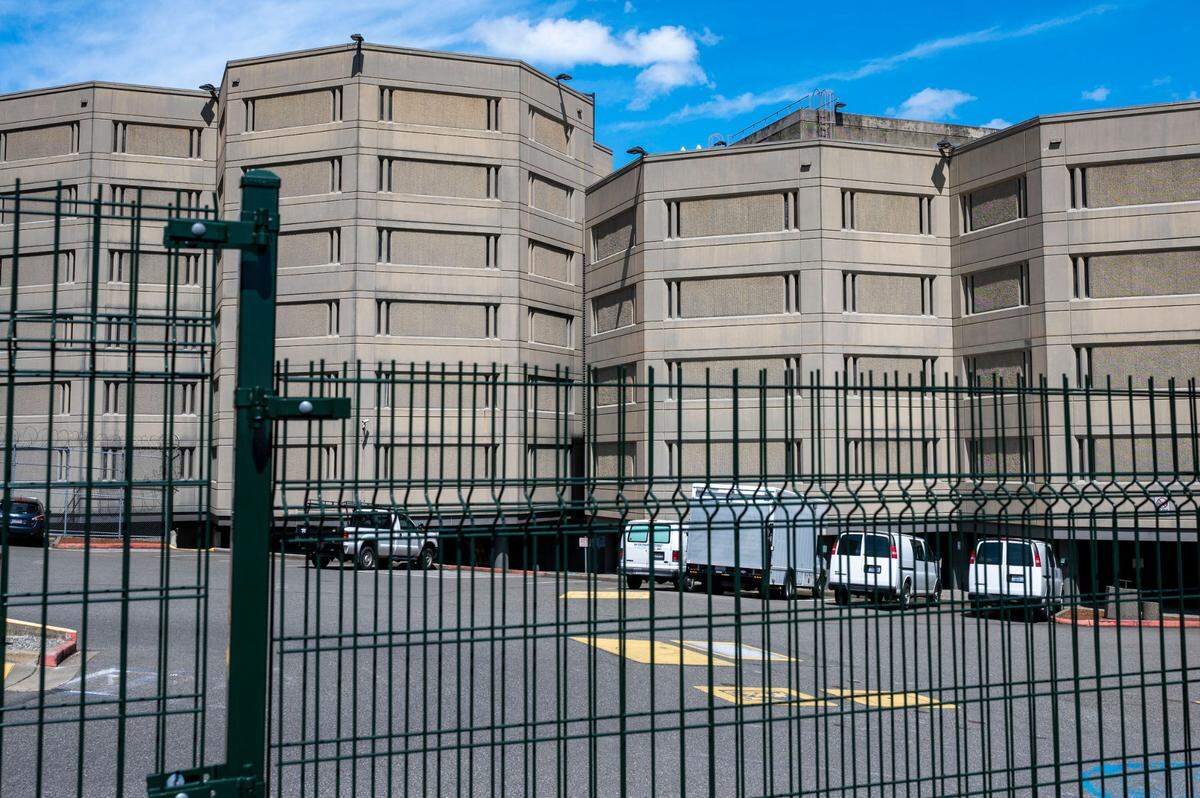
The so-called “soft reopening” of the downtown Tacoma facility also came with a cost.
By late May, the push to increase admissions into the jail was largely reversed and reverted to stricter booking limitations after a COVID-19 outbreak the month prior, illustrating that there remains risks to bringing more people into custody.
At the mercy of a virus
The most recent COVID-19 outbreak lasted a month to six weeks, roughly the same time span as previous bouts with the virus, according to Jones, who said no inmates or staff had to be hospitalized. Only one inmate had ever been taken to the hospital for COVID-19, Jones added, and he did not stay because the hospital was short-staffed and he was not sick enough.
Through June, the jail has had 416 total reported cases of COVID-19 since the pandemic began, according to figures provided by the Sheriff’s Department. The agency reported 184 cases during the first six months of 2022, compared to just 85 over the same period last year, indicating that 2022 appears on pace to be worse.
There were 54 cases during the recent outbreak in April and May, the figures show.
“We’re just kind of at the mercy of — if we open up, it does put us at more risk,” Jones said. “But at some point, we still need to be a jail.”
Making matters more challenging, staffing woes are prevalent inside the jail, which is short roughly 40 correctional deputies, Troyer said, which also affects how many inmates the jail can safely hold.
The case for limited detention
Michael Kawamura, the director of the county’s Department of Assigned Counsel, which represents defendants who cannot afford a private lawyer, said that keeping the jail safe was “an obvious concern for everyone.”
Kawamura said he believed jail officials have thus far been vigilant in making booking decisions based on those concerns, and that there would obviously be needs to detain certain individuals.
“But at the same token, it raises questions about — there’s also the flip side of it,” he said. “There are people detained pre-trial that probably don’t need to be there.”
While Kawamura acknowledged the risk of repeat offenders, he said that more often than not, people get released from custody without causing new problems.
Jaime Hawk, the legal strategy director for the ACLU of Washington’s Smart Justice Campaign, warned against tying crime rates to incarceration trends, saying she has long heard the narrative that jails were not booking enough people.
“It’s been easy to kind of point at folks being released pre-trial as some kind of causal impact about what crime rates are happening,” Hawk said. “That, I think we need to be really, really careful about.”
Instead, she said, it would be more meaningful to address the root causes behind the crime wave, noting that property crimes are often driven by economic struggles. She preferred to focus on the fact that there are success stories of people who have avoided months of sitting behind bars because they have no ability to pay bail.
When Hawk was told about the concerns of law enforcement and government officials, she said it sounded like many people were cycling through the criminal justice system, which she said was evidence of its systemic failure, and she questioned what steps were being taken long-term to change bad behaviors, including by developing case management.
“If incarceration was going to solve all our problems, we would have achieved that by now,” she said.
Steep reductions in jail populations during the pandemic — which occurred across the United States, at least initially — have been viewed by some, including Hawk, as a positive step toward eliminating overcrowded facilities and mass incarceration, which has disproportionately affected Black people and other minorities.
Hawk authored a piece in August 2020 that advocated for the state’s jails to permanently adopt the practices that resulted in them shedding significant inmate populations at the beginning of the pandemic. Unaffordable bail locked people into jail and put them at risk of losing jobs, homes and custody of their children, she wrote, as she called for pre-trial detention to remain reserved only for those suspected of the most serious crimes.
Reserving jail bed space for serious defendants has largely been the status quo in Pierce County during the pandemic. Today the jail is filled predominantly with felony defendants. As property crimes increased across the region between 2019 and 2021, so too did violent or person-on-person crimes, such as homicide and assault, albeit at a slighter rate, according to a News Tribune analysis of Sheriff’s Department-provided data and Tacoma Police Department crime briefing reports.
Jail population nosedives
The average daily population at the jail, which is budgeted to hold nearly 1,300 inmates, decreased by more than 45 percent between 2019 and 2021, Sheriff’s Department-provided data shows.
The number of bookings in Pierce County decreased 63 percent over the same period, according to the county’s Criminal Justice Dashboard.
At the onset of the pandemic, the jail released inmates serving time or awaiting trial for property crimes and restricted new bookings in March 2020 to only serious felonies and mandatory misdemeanors, which include certain domestic-violence cases, in an effort to reduce the likelihood of a COVID-19 outbreak.
From February 2020 to July 2020, the average daily number of inmates fell from 1,013 to 506, jail data shows.
The ACLU of Washington, which has been tracking jail populations across the state, found that the number of inmates statewide similarly decreased in the first few months of the public health crisis as jails sought to limit the flow of people into the facilities.
The average statewide daily population dipped from 11,435 in 2019 to a pandemic low of 6,335 in April 2020, but had since risen to 8,435 by March of this year, according to the organization’s compilation of figures.
Beginning in July 2021, the Pierce County Jail began to make major but incremental changes to its booking protocols as it worked with courts, public defenders, prosecutors and law enforcement “to return to a new ‘normal’ in a staged timeline,” records show.
It was not until April 18 of this year, however, in the midst of the biggest push since the pandemic began to book more accused offenders into jail, when the number of inmates reached a pandemic-era high above 800. After jail officials restored many previous booking restrictions following the COVID-19 outbreak, the population slid to 775 by June 23, according to Jones, who said the goal now was to whittle that number back down into the 600s.
In reviewing the trend of jail population, it is worth noting other potential factors, including that arrests slid 31 percent from 2019 to 2020, the most recent year with publicly available data. Robnett said her office also saw criminal referrals from law enforcement decline from more than 9,100 in 2019 to fewer than 6,900 in 2021.
Criminal justice reforms, including a 2021 bill that limited law enforcement vehicle pursuits and has resulted in fewer people pulling over for police, have played a major role in the reduction of arrests, according to Troyer, who also noted that resources were thin because the Sheriff’s Department was short nearly 50 patrol officers.
Also, judges can choose to release defendants on their own recognizance after the initial booking decision is made.
Businesses want more action
Despite officials’ efforts to address what they view as one contribution to a rise in lower-level offenses throughout Pierce County, some business owners do not see it as enough. They questioned police response times and the city’s response to a growing homelessness problem.
Tuck noted that it took police more than eight hours to arrive on scene after the February burglary at his shop. When news of the crime was picked up by two local television stations, that lengthy wait became headlines. A Tacoma Police Department spokesperson told KOMO News and KING 5 News that they understood the frustration but calls were prioritized by life safety issues first.
Lua Pritchard, executive director of the Asia Pacific Cultural Center in South Tacoma, said police also were slow to respond after the center was victimized by thieves who swiped computers and cultural items. On other occasions, people have stolen things out of vehicles in the parking lot, she said, adding that such incidents have become more prevalent during the pandemic.
“I don’t know why,” she said. “Because people are more hurting for more money, or whatever.”
Greg Hersey, owner of Superior Linen & Uniform Rental Services, located just south of the Hilltop neighborhood, said that no fewer than seven businesses in his square block, including his own, have been struck at least three times by break-ins since late last summer.
Hersey said thieves have cut holes in his fence to steal a catalytic converter from one of his trucks and, only recently, eight oxygen sensors off catalytic converters — a crime that he said puzzled him.
“There is no consequence,” he said.
Aware of limited bookings at the jail, Hersey said he did not bother to call police to report those crimes, and he noted that police had “other things to do other than chase these knuckleheads around.” He also criticized what he called the “vilification and disregard” of law enforcement that he said has come about in recent years and, in his opinion, has contributed to a climate where criminals “run the show.”
He said he believed that the crimes had been committed by a small portion of unhoused individuals, noting there was a growing number of encampments and motor homes nearby. Both he and Tuck said they did not think that Tacoma leaders have adequately addressed the city’s homelessness issue.
Woodards assured that the city was taking steps to improve public safety, including with a recently unveiled three-phase crime plan and by focusing on root causes, such as providing more economic stability through rental assistance and other programs.
“Tacoma is not the place,” she said, “where you can come and get away with crime.”
This story was originally published July 18, 2022 at 5:00 AM.