Is Maleke Pate responsible for murdering 4 in Tacoma? It’s now up to a jury to decide
Did Maleke Pate murder four people whom he had no connection to in Tacoma’s Salishan neighborhood? Or did police and prosecutors simply settle on a suitable suspect in the wrong place at the wrong time?
The question is in the hands of twelve Pierce County jurors.
A panel of nine men and three women, along with three alternate jurors heard closing arguments Wednesday afternoon in Pate’s trial in Pierce County Superior Court for four counts of aggravated first-degree murder. He is accused of killing Maria Nunez, 42; her son, Emery lese; Nunez’s brother, Raymond Williams, 22; and Williams’ girlfriend, Natasha Brincefield, 22.
The jury panel was to begin deliberations Thursday morning. If Pate is found guilty of just one of four charges of aggravated first-degree murder, he faces a mandatory sentence of life in prison without possibility of parole.

Deputy prosecuting attorneys Lindsay Chenelia and Sunni Ko in their closing remarks and rebuttal went through a slew of evidence they say ties the Oct. 21, 2021, quadruple shooting to Pate, a man who at the time resided with his mother in a duplex less than a half-mile from where the killings occurred.
Perhaps their most incriminating piece of evidence is a 9 mm handgun found in Pate’s bedroom after he was arrested. Prosecutors said there was no dispute it was the weapon used to kill the four victims. An expert testified to that fact within a reasonable degree of scientific certainty, Ko said.
The defendant’s DNA was not found on the gun, but the firearm was in a suitcase alongside documents with Pate’s name on them and a revolver that did have his DNA on it. More directly tying the murder weapon to Pate is a sight for a pistol. Prosecutors had receipts showing he purchased the piece the day before the shooting, then returned it the day after.
Chenelia took time during her closing remarks to show jurors photos of the flat top of the gun, where she said there were three screw points the sight would fit into. The revolver’s barrel was round, the attorney said, so the sight wouldn’t fit. She said the purchase was evidence of Pate premeditating the murders.
“The defendant purchased that sight and left his home with that gun on Oct. 21, 2021 with one thing in mind,” Chenelia said. “That he was going to use it. He saw his targets, he aimed and he fired. And he fired again and again and again.”
One of Pate’s attorneys from the Department of Assigned Counsel, Travis Currie, spent just under an hour poking holes in the state’s case.
The defense attorney said it amounted to partial descriptions of the shooter with some inconsistencies regarding clothing, surveillance footage of “maybe” the same guy fleeing the scene and the gun in Pate’s residence — presented in dramatic fashion by prosecutors he said were playing on jurors’ emotions.
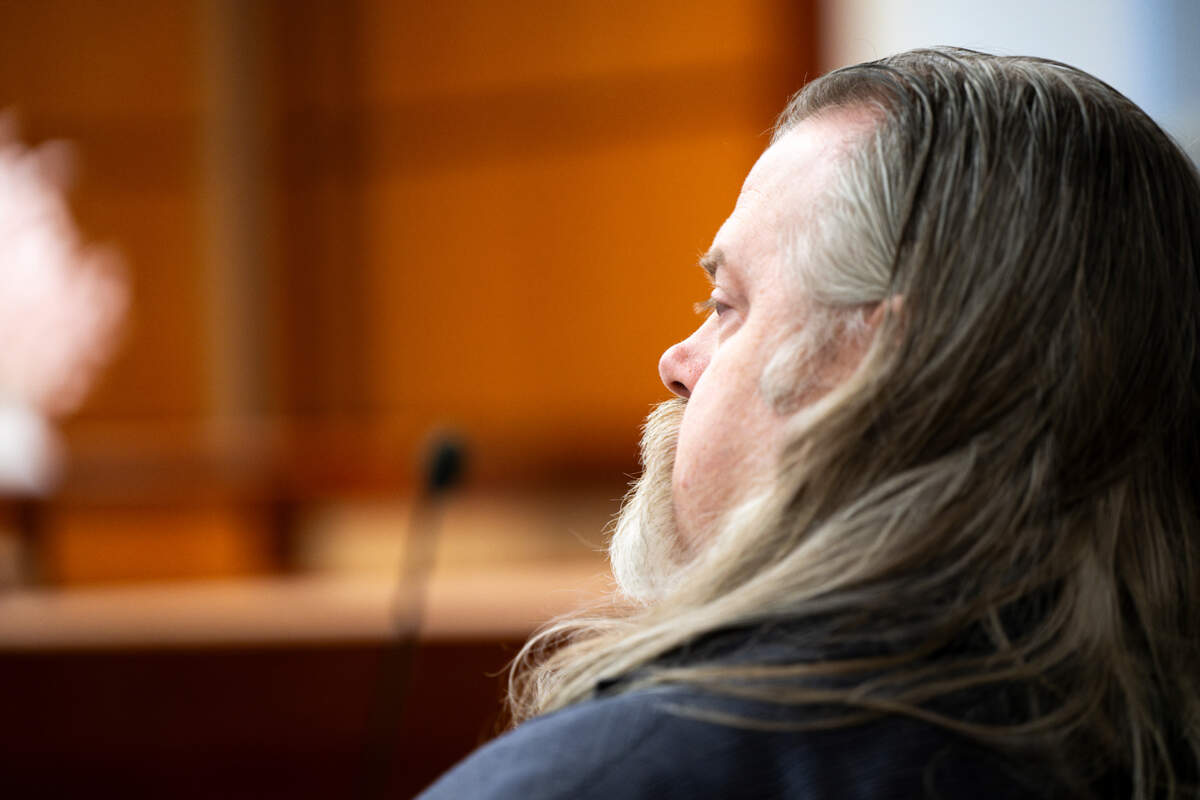
Currie said prosecutors had shown them targets Pate used for shooting practice at a range near Puyallup for “shock value.” The targets had bullet holes in the heads and chests of the silhouettes. All that proved, Currie said, was that Pate had gone target shooting in the past.
“There are other reasonable, alternative explanations for what happened here that would, he would not be guilty,” Currie said.
Pate’s attorney made the distinction that the murder weapon was found in the location where he was arrested, not on his person. Currie described the gun as a Glock and said it was “incredibly common.” He said it could have gotten to Pate’s residence at any point between the time of the shooting and when law enforcement arrested him. There was no receipt for the gun, and it didn’t have a serial number. Currie said prosecutors calling it a “ghost gun” was another attempt to shock them.
Currie said the case was made up of circumstantial evidence, and he noted that none of the eyewitnesses called by prosecutors identified Pate as the gunman.
Ko presented the state’s rebuttal, telling jurors she and the other deputy prosecuting attorney had spoken dramatically because Pate had taken the lives of four people in a dramatic way. She implored jurors to use their common sense to find him guilty.
Jurors were shown surveillance images during trial that purportedly showed Pate fleeing the area of the shootings. Ko said the defense had admitted in closings that the man in the video was Pate. For that to be true and for Pate to not be guilty, she said, would require coincidences on top of coincidences.
“To conclude that he just happened to be at the wrong place at the wrong time and he was running away, you would have to conclude that within 30 seconds of the shooting … Maleke Pate coincidentally happened to be in that space, in that time, in that area,” Ko said.
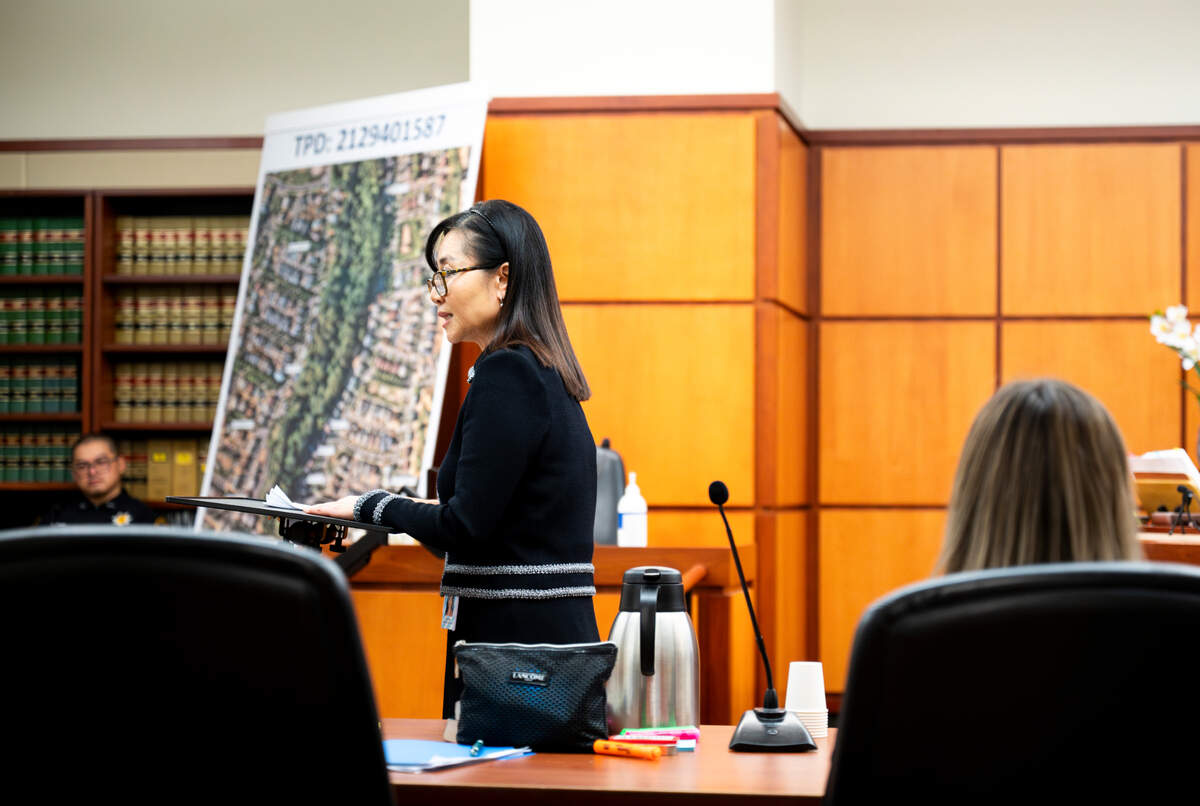
The deputy prosecuting attorney conceded that one witness who watched the shooting unfold from her bedroom window did not accurately describe the clothes the gunman was wearing. The witness said he was wearing a white tank top and blue jeans, but other witnesses and surveillance footage showed it was a black tank top, and he was wearing basketball shorts.
Ko attributed the discrepancy to the witness’s emotional state, asking jurors if she would have been more worried about getting the killer’s clothes right or if she would have been fearing for her life.
“You know what else she got wrong that day?” Ko asked. “She thought that Emery had tripped. No, he didn’t trip. He was shot in the leg. She thought that Emery was shot twice. Emery wasn’t shot twice, he was shot four times.”
Late in her rebuttal, Ko told jurors that when she first spoke to them during opening statements, she said they would not hear any evidence about why these killings happened. But as evidence unfolded and as defense counsel said there was no evidence of how this started, Ko said a “bell” went off for her.
There’s no evidence of revenge or retaliation, she said, but they had heard about how Pate got his shooting-range membership card in April 2020 and started target practice. Going to a shooting range doesn’t mean someone is going to commit murder, she said, but he decided in October it was time to stop practicing on targets.
“He decided it was time to take it to the next level,” Ko said. “It was time to see if he could kill real people with real guns, time to see and feel what it sounds like, what it feels like to have a real bullet strike through someone’s real skull, a real bullet strike through someone’s real flesh.”
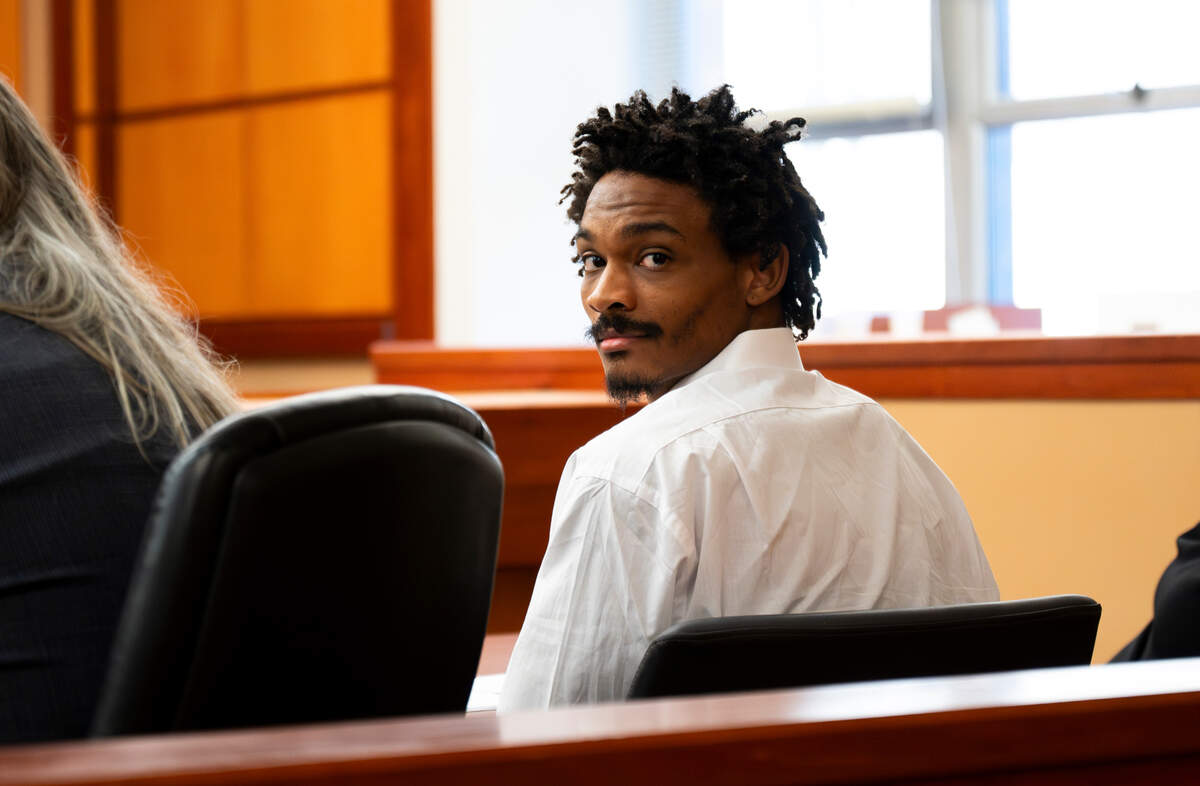
Ko said the time had come when it was necessary for Pate to use everything he had practiced in shooting to see what he’d learned. At the defense table, Pate scratched his head.
This story was originally published March 20, 2024 at 7:13 PM.