Renting hotel rooms for the homeless is working in Puyallup. What can we learn from that?
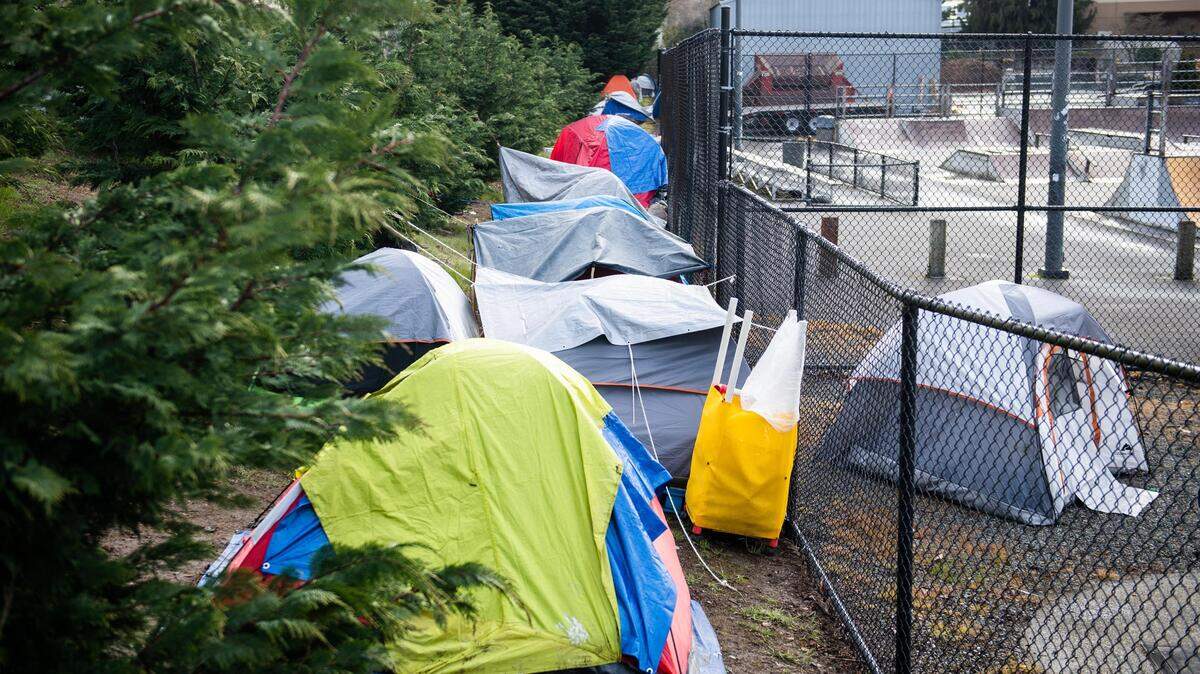
This is what the answer looks like — or part of it, anyway.
Since February, in Puyallup — of all places — 20 hotel rooms have served as temporary shelter for individuals experiencing homelessness. Launched as a six-month pilot project in emergency response to the COVID-19 pandemic, it was an idea borne out of necessity and urgency. The motivation was simple: protecting public health.
Three months later — as we inch ever closer to whatever post-pandemic life ultimately looks like — this much is also certain:
The outside-the-box hotel shelter — which is being run by Catholic Community Services out of a hotel on North Meridian and funded through a grant from the state Department of Commerce — has shown enough promise to prove that it (and similar efforts) have a usefulness that will outlive our COVID-19 response.
If the world of social services has learned anything from this crisis, it’s that an effective response to homeless requires flexibility and must include as many avenues for people to access help as possible. Hotel shelters alone aren’t the answer — nor are congregate shelters, tiny house villages, safe parking lots or managed outdoor encampments — but each of these options can play an important role in helping to meet people’s individual needs, giving them somewhere safe to sleep at night and stability from which to build.
None of these tools should be abandoned in our rush to “return to normal,” despite what we’re seeing in places like Renton. There the City Council recently voted to tighten restrictions and make it more difficult to provide homeless shelter in the city, including at a Red Lion Hotel where more than 200 people have been living as part of an effort to ease crowding at downtown Seattle shelters.
As The News Tribune’s Josephine Peterson recently reported, the Puyallup council will soon face its own decision, determining whether the city is interested in making hotel rooms available to homeless individuals beyond July, when the current pilot project is scheduled to end. To do so will require two things that can be hard to come by: political will and money.
The truth is that the lessons learned from the hotel-shelter experiment extend beyond Puyallup. Whatever conclusions are reached by elected leaders there, what’s transpired so far provides a potential blueprint for state, county and local cities moving forward, particularly in East Pierce County, where the resources available to single homeless adults are few and far between, and creativity is desperately needed.
According to Puyallup emergency manager Kirstin Hofmann, as of May 19 there have been 39 clients accepted in the program since its inception. While five have exited for noncompliance with the rules, others have accessed important medical services, gained employment, enrolled in substance-abuse programs and been referred to housing.
Most telling, the shelter has been full from nearly the day it opened, with a waiting list, Hofmann said.
By two key metrics — providing shelter and preventing the spread of COVID-19 — Hofmann said she considers the effort a success.
“When somebody exits the program, typically — the same day — there’s somebody else who then enters the program,” Hofmann said.
For Pierce County, the question now becomes how can we take these victories and add to them, even as the immediate threat of COVID begins to subside and the relief money from the state and feds potentially dries up? Returning to the pre-pandemic status quo — as easy as it would be to slide back into — should be unacceptable.
According to Kevin Glackin-Coley, the director of special projects for the Tacoma-Pierce County Coalition to End Homelessness, what efforts like the Puyallup hotel shelter help to teach us is the value of adaptability and making sure that an array of different resources targeting different people are available throughout the county.
Simply put, people are becoming homeless —and surviving homelessness — everywhere in Pierce County, and each of them have different needs. For some of these individuals, a hotel room might not be the answer. But for others, it can be, and utilizing these rooms as a resource is just one of many ways to reach them, Glackin-Coley said.
Glackin-Coley noted that the Pierce County Council is currently working to develop a plan to provide shelter to everyone in the county who needs it by November. He added that “in order to do that, it doesn’t mean just standing up a bunch of congregant shelters, which I think might have been the approach a while back.”
“It means looking at all those options and making sure they’re available,” Glackin-Coley said of things like hotel shelters, tiny homes, sanctioned encampments at local churches and safe parking sites.
Having helped to lead the city responses to homelessness in Tacoma and Olympia, it’s a conversation Colin DeForrest knows well. Now working as an independent consultant, DeForrest said that homeless advocates have been pushing for creative responses to the regional homelessness crisis for many years. He’s even championed several examples, including Tacoma’s Dome District stability site and Olympia’s mitigation and tiny home communities.
While DeForrest said options like tiny home villages and hotel-shelters are part of the answer — and without more affordable and permanent supportive housing to move people into, the gains will be limited — like Glackin-Coley, he said COVID-19 has forced many historically rigid local governments to respond in ways that would have been hard to imagine in the past.
He’s hoping the progress cities like Puyallup have made during the pandemic won’t be squandered or forgotten in the months and years to come.
“The worst thing that could come out of this is if we have shelters that shut down as soon as the emergency has been lifted. Regardless of how those individuals got there, at the end of the day what is being provided now is a safe shelter,” DeForrest said.
“Whatever the intervention is — hotels, tiny houses, outdoor camps — that’s awesome, and we need them all,” DeForrest continued.“One thing that hasn’t changed is we need to be creative in finding a safe site for all.”
Back in Puyallup, Mike Curry — who currently serves as director of operations at Catholic Community Services —is hoping that his agency’s chance to demonstrate the good a hotel-shelter can do will extend beyond July.
“I think there’s a tendency — and maybe it’s just human nature — to try to distill things down to the lowest common denominator in a way that that tends to oversimplify ... problems like homelessness,” Curry said. “There isn’t a single cause to homelessness, and there isn’t a single solution.
“This is just one more tool in the toolbox.”