Good riddance to 2021: Here are two goals for Tacoma and Pierce County in the New Year
The end of the year — and particularly a crummy one — invites reflection, and thoughts of the future. There’s no avoiding it. Whether it’s New Year’s resolutions or the wave of year-end lists that help journalists like me keep their fingers warm when everyone shuts down for the season, the slow days at the end of the calendar are perfect for taking stock — and plotting a course forward.
I’ve never been a fan of resolutions because they seem contrived. But I do like to take a moment — usually after the kids have gone to bed — to write down a few goals. Is that the same thing? Probably. Does it appease my inner cynicism? It sure does. Don’t judge me.
Some of my goals are usually simple, like, “Drink more water,” or “Stop eating potato chips before bed” — not that that means I always adhere to them. Some are far more complicated, like, “Be a more present parent,” or “Stop feeling the need to make a joke every time you’re on Zoom.” Whether I fully achieve these goals isn’t really the point. The power is in writing them down and staring at them, even for just a moment. Committing goals to paper gives them life.
In many ways, cities and communities are granted the same opportunity. While the calendar might be arbitrary, the pause — or, as The Atlantic’s Helena Fitzgerald called it, the “Dead Week” between Christmas and New Year’s — presents an opportunity to slow down and focus on the year ahead. What should the priorities be? What problems demand an answer? How can we be better in 2022 than we were in 2021?
For Tacoma and Pierce County, here are two suggestions. There could certainly be more. Even if they’re aspirational, we should all take a moment before the hustle and bustle returns to face them head on.
House the homeless
The South Sound has a homelessness crisis, and it’s not alone. Like places big and small, the number of unhoused individuals living in conditions that no one should be faced with should be a dire societal warning. Clearly, we’re failing.
The problem is complex, which is one reason it hasn’t been solved. Housing — and more of it, for everyone who needs it — is the obvious answer, but getting there won’t be simple. We already know that.
As a community, one thing we too often lose sight of is just how widespread and unseen the problem actually is. Our attention naturally falls on the encampments lining our streets and parks, while forgetting just how many of those experiencing homelessness are doing so in the shadows, in parked cars with suitcases in the trunk or on couches at a friend’s house. Redoubling our efforts to reach and serve everyone — and prevent homelessness before it happens — remains essential.
At the same time, the sheer number of people currently living in local encampments has pushed us to a breaking point, creating factions and arguments that threaten to consume us. There are far more than two sides in the homelessness “debate” — which is an admittedly stupid and callous way to frame a conversation that directly impacts people’s lives — but wherever you fall on the spectrum, one thing is certain: It simply can’t go on like this. All you have to do is look around.
For local cities and the county, solutions will require new approaches and political will. It also will require helping people who some will say don’t deserve it and having the guts to stand by decisions that make people angry. Local governments have made significant, important strides in recent years — opening shelter beds and committing to ambitious housing and spending plans — but until we have answers for everyone who has yet to accept our help, we’ll be stuck in the same place.
Keep schools open
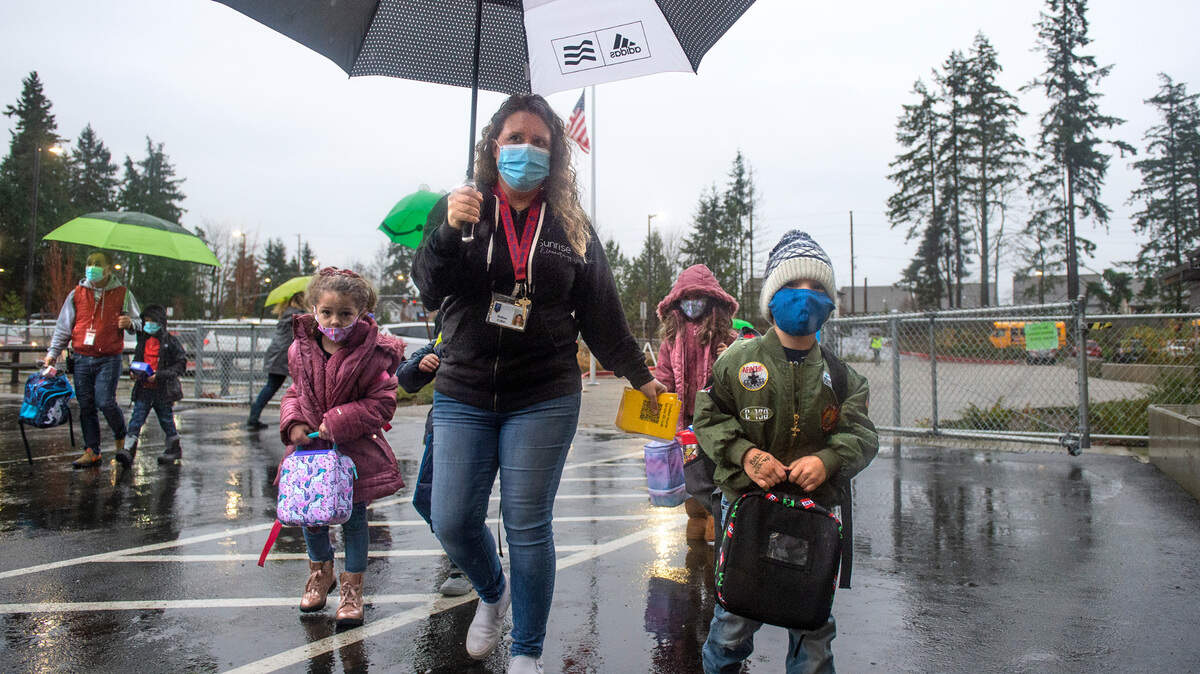
Of all the lessons the COVID-19 pandemic has taught us — and there are many, most of them painful — one of the most obvious is the role that public schools play holding everything together. They educate our children, first and foremost, but they also serve as a social safety net and, in many cases, provide the structure that allows our complicated lives to function. The coronavirus might have caused schools to close in March 2020, but it was the loss of in-person school (and child care) that caused so many other things to fall apart. For families already on the edge, the full impact of what we’ve been through might never be fully quantified.
That’s one reason why the rise of the omicron variant is so alarming, and why all of us should feel compelled to do everything we can to stop it. The fact that you can still get on an airplane unvaccinated — and, in Pierce County, dine at a local restaurant or see a movie in a crowded theater — defies logic. People can have their choices, but we shouldn’t cater to the irresponsible at the detriment of everyone else. It’s clear we’ll be living with COVID-19 and its various strains for years to come. We should start acting like it.
Similarly, as the omicron variant continues to cause cases to rise, the elected leaders and officials whose job it is to protect us will face difficult decisions. When it comes to schools and the need to keep them open, let’s hope experience has given them the wherewithal to soberly assess both the threat of the latest variant and the inevitable harm to students and families when classrooms go dark. Science can guide us, but it’s an exercise that adapts to new circumstances and everything we learn along the way.
More to the point?
There could certainly come a time when it’s necessary to close schools again, but that’s not a decision to be taken lightly — and, in the meantime, all of us should do everything in our power to make sure it doesn’t come to that. It’s what children and families deserve.
As for public school leaders, if they’ve walked away from the last years believing that remote learning should be anything other than a last resort, they haven’t been paying attention.