
‘This place, I love it.’ Meet the LGBTQ+ people leaving red states for WA
READ MORE
Reshaping Washington
The Olympian examines how the nation’s political divide is reshaping the future of Washington state.
Expand All
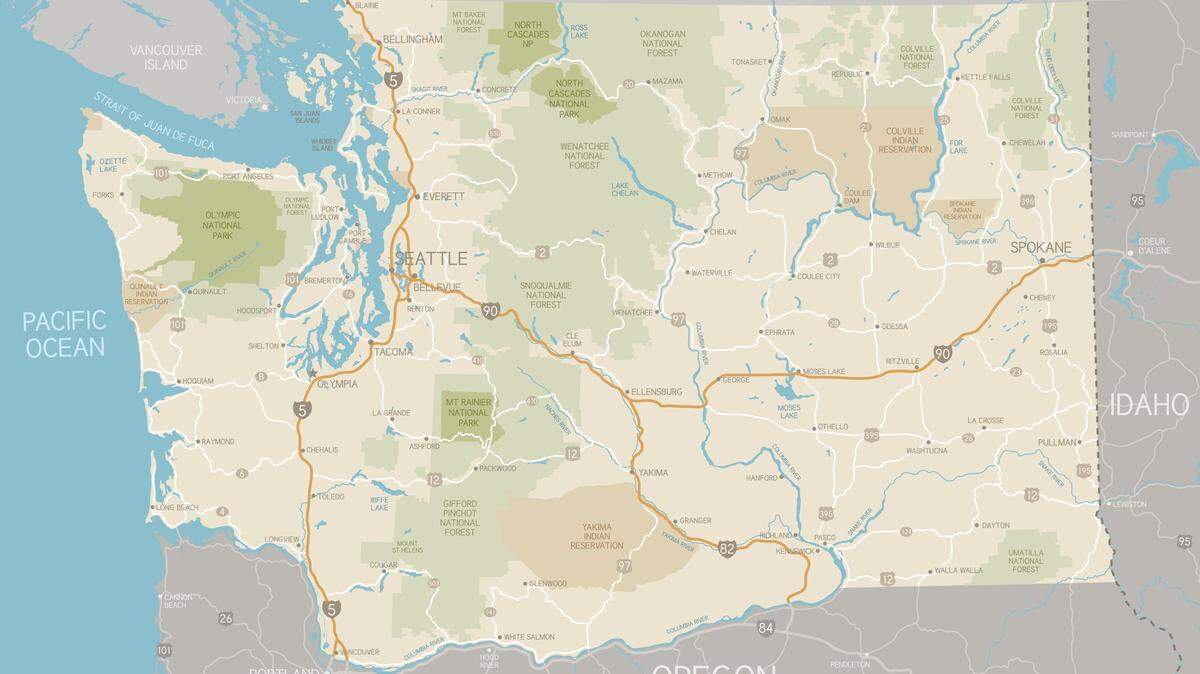
Is dividing WA in two a ‘win-win’ or ‘lose-lose’? Why some want a new state map

WA centrists are ‘politically homeless.’ Nirvana co-founder wants to change that
.JPG)
National politics are ‘killing Republicans’ in WA elections. Can that change?
He left WA on the ‘Seattle to Texas Express.’ Now he helps others do the same
.jpg)
‘This place, I love it.’ Meet the LGBTQ+ people leaving red states for WA
Editor's Note: This story is part of a five-part series by The Olympian that examines how the nation’s political divide is reshaping the future of Washington state.
Melinda Ramirez was living at a Marriott hotel in Houston while trying to get her son into a new school district when Child Protective Services knocked on the door. The search for a safe school for Vincent, who is transgender, was interrupted after his father’s therapist reported the family for allowing their child to be administered Testosterone, Ramirez said.
Two months later, Ramirez and her son were living in Seattle. The breaking of trust by the family’s therapist was the final straw in a string of hardships and fears brought on by Texas’ increasingly hard-right politics, she said.
LGBTQ+ people have been moving to Western Washington following the November 2024 election of President Donald Trump and the Republican takeover of the U.S. House and Senate. Olympia, the state’s capital, was the state’s first city to declare itself a sanctuary city for trans and queer people, joining only a handful across the country.
Traction, or Trans Community Action, is a Seattle-based nonprofit that started Project Open Arms. Its mission: to support red-state transplants who are seeking sanctuary amid a rise in anti-trans policies and rhetoric nationwide.
“Hundreds of thousands of Two-Spirit, transgender, nonbinary, gender-diverse and gender-nonconforming (trans+) people and their families are seeking to escape legislative persecution and violence,” according to the nonprofit’s website. “The Pacific Northwest has long been a destination for such folk, and we expect an increase in the number of migrating people and families over the next decade.”
Washington is listed among the nation’s most LGBTQ-friendly states, including by the Human Rights Campaign, with advocates highlighting the Evergreen State’s inclusive legal landscape.
Last year, the UCLA School of Law’s Williams Institute published a survey examining transgender people’s desire to relocate following the 2024 election.
Nearly half of respondents (48%) said they’d already moved to a more trans-affirming location in the U.S. or were considering doing so. Most who were asked where they wanted to move cited blue states and cities, frequently naming Washington, California, New York, Massachusetts and Minnesota.
Lucas Miller is a board member of PFLAG Olympia, a nonprofit that provides support, education and advocacy for LGBTQ+ people, their friends, families and allies. He said the Olympia chapter has been contacted with increasing frequency by LGBTQ+ people, especially trans people, who live in red states and are looking for a safe place to move.
They’re seeking access to healthcare, he said, and even just the ability to use a public restroom that matches their gender identity without fear of arrest. The Advocate reported earlier this year that 21 states have limited which bathrooms transgender people can use.
Miller said PFLAG has been getting many calls from parents in states such as Texas, Florida and Tennessee who are struggling to get healthcare for their trans children. Many of them see Washington as their best option.
‘It was the right decision, but it’s been really hard.’
Melinda Ramirez moved to Seattle in December 2024 from Houston in the wake of Texas’ ban on gender-affirming healthcare for transgender youth. Her son came out as transmasculine when he was 10, and he wanted to change his name to Vincent.
Ramirez saw Houston as a diverse and fast-paced city. She said Vincent fully embraces his heritage, and being a second-generation Mexican American is a large part of his identity that he had ample opportunity to explore in the state.
“Texas is a special place,” Ramirez said. “There are very hard-working, resilient people from all over the world.”
Ramirez said she built a lot of relationships in Texas. She hated having to leave chosen family behind: people she trusted and could lean on for support, and vice versa. But she said the state government had made it unsafe and illegal for her son to live as his authentic self.
Vincent, who is 15 now, started seeing a therapist at an LGBTQ+ community center in Houston and taking Triptodur, a puberty blocker prescribed by an endocrinologist, when he was 11. He received a shot once every six months. Ramirez said the bill was less than $100 each time, which included a nurse who came to their home to administer the medication.
Then Texas Gov. Greg Abbott signed into law in June 2023 a bill that bars transgender kids from getting puberty blockers and hormone therapies.
.jpg "260114_lp_olynlaty010726_13441 (2).jpg")
Ramirez said that before the law went into effect later that year, Vincent’s endocrinologist and their team helped them find a new place to take Vincent for care — in Albuquerque, New Mexico. The doctor they recommended was more expensive.
They couldn’t use insurance, she said, because doctors worried that would make it clear to the government that they were providing gender-affirming care, and they feared retaliation.
She said out of pocket, shots that lasted for three months were $2,000 each time.
Ramirez decided to let her son take Testosterone for hormone replacement therapy, though she’d wanted to wait until Vincent was at least 15 for a number of reasons: She needed more time to research, had concerns for her son’s health, and felt people would judge her family more than they already did. Other parents of queer children she knew shared similar feelings, she said.
But they could no longer afford the puberty blocker shots. Testosterone is more like $100 each time; however, it is often administered more than once every six months.
“My mom definitely wasn’t for it,” Vincent said. “But with Trump, it wasn’t the best decision to stay on puberty blockers.”
Vincent had started taking Testosterone and had begun freshman year of high school when Ramirez received a call from Child Protective Services stating that they were investigating her for putting her child through hormone replacement therapy. She was told they were going to schedule a visit with her, and then agents showed up at her hotel room.
Ramirez said the issue took about a month and a half to clear.
“It was scary, you know, like everything was concluded, and everything was fine, but that’s because our family and our friends, who they all interviewed, knew what to say,” she said.
Vincent was doing well in school and had a boyfriend he loved. Ramirez was about to begin renting a house and decided to wait a few weeks to see how the presidential election went. She figured if Republicans kept control on the federal level, Vincent’s access to care would become more restricted.
When Trump was reelected, she decided it was time to leave the state.
“It was really hard. Vincent wanted to do it too, and it was the right decision, but it’s been really hard,” she said.
Austin-to-Olympia pipeline
Meredith Efken moved to Olympia from Austin, Texas, last year with her husband, Jason, their partner, Ari Sobelman, and their youngest daughter, Catrin. Meredith, Jason and Sobelman are in a polyamorous relationship. The Efkens moved to Texas for Catrin’s education at a liberal arts school. They knew their politics didn’t entirely align with that of the state’s, and that it was a temporary move. They ended up staying for a decade.
Before Texas, Meredith said their family lived in Omaha, Nebraska. Catrin was interested in pursuing an education in film, but there weren’t many opportunities for that in the state. Austin was better known for having an indie film scene.
The Efkens said Texas has many insulated, welcoming areas, but that it doesn’t take much to find the opposite.
Sobelman, who lived in Austin for about 13 years, takes particular issue with Gov. Greg Abbott, who was first elected governor in 2014.
“I was aware that he was doing everything he could to just break down the bubble of things that made me feel safe there,” Sobelman said.
According to reporting from The Texas Tribune, Abbott suggested in 2024 that Texas public school teachers should be barred from wearing clothes that don’t conform to traditional gender norms.
The family referenced a move by the Texas Senate in 2025 to approve a new congressional map that more heavily favors Republicans. According to The Texas Tribune, Republicans pushed for the new map, which squeezes Democratic voters in Houston and Dallas into smaller districts. Dozens of Democratic lawmakers left the state to try to prevent a quorum to protest the new map, though it ultimately passed.
.JPG "IMG_36df6a54-104f-447f-8_3_1_F0QE1E0S_L892624952 (1).JPG")
Meredith said the family moved last year after they started to realize just how bad things were getting in the state. Their kids had graduated from school and were off to college, so they no longer had a reason to stay in Austin.
Among other things, they worry about how the ban on abortions and gender-affirming healthcare could affect their friends in Texas.
According to reporting from ProPublica, two pregnant women in Texas died during miscarriages in 2023 and 2024 after doctors refused to provide proper reproductive care. ProPublica investigated those deaths and five others across three states in the past few years and found that abortion bans have influenced how doctors respond to pregnancy complications.
Lawmakers in Washington state, meanwhile, have enacted more abortion protections in recent years.
Sobelman said they have several trans friends still in Texas. Some plan to leave, but others don’t want to uproot the lives they started.
“It’s just a scary kind of situation, like I’m still worried about my friends there,” she said. “You know, we’re out, but we care about a lot more people than just us.”
The Olympia subreddit
Meredith said she fell in love with Olympia from afar because of the Olympia subreddit. In June 2024, an Olympia resident went to the subreddit to request 30 to 40 garden gnomes for some sort of mysterious war. The community provided in days.
“This place, I love it. I must go,” Meredith remembers thinking.
She said the family visited Olympia for the first time in January 2025 with the mindset that if they liked the area in the middle of winter, they’d like it year round. One of the first places Meredith went to was Our Local Yarn Store. An employee there said another group of people who just moved from Austin had been in the week prior.
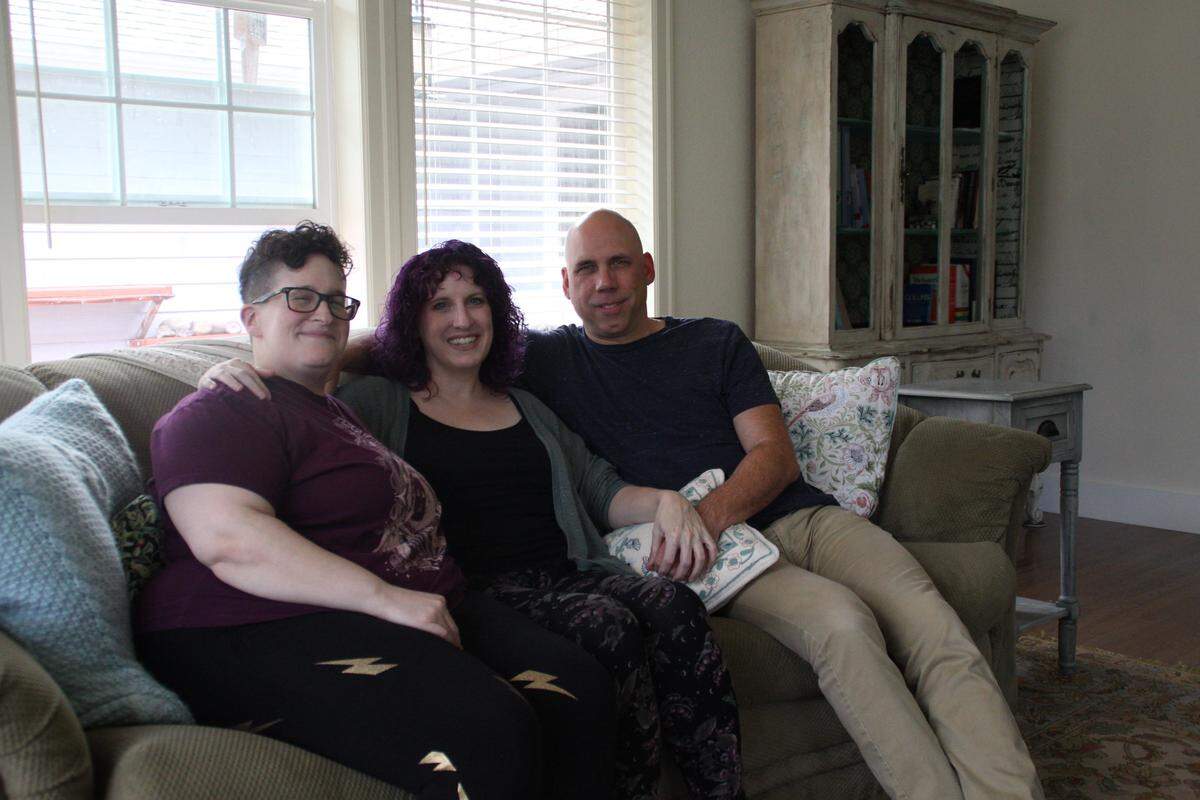
When the family moved to Olympia in April 2025, they were grabbing ice cream downtown when Meredith wondered if the treat would be similar to Amy’s, an Austin brand. A woman near her recognized the name and the two connected on being Texas transplants.
Sobelman said there’s a definite pipeline from Austin to Olympia.
“I don’t know what it is about Olympia. I don’t know if this is happening in other parts of Washington too, but it does seem like there’s something about Olympia that kind of seems to be a good fit for people who are trying to get out of Austin,” Meredith said.
Sobelman said she was sold on Olympia after walking around downtown and seeing the signs, flags and murals for Black Lives Matter, trans rights, Palestinian rights and more.
Meredith said she feels like the Olympia, Lacey and Tumwater areas have more of a sense of community on a civic level than she’s ever experienced.
The Olympia City Council unanimously passed two ordinances on Feb. 24 making the city the first in Washington with explicit protections for polyamorous families and other diverse family structures, as previously reported by The Olympian.
“People here just seem to be really authentic,” Meredith said. “It just seems like it’s a healthier organism. Everybody is a welcome part of the community here; at least that’s how I feel.”
Move from Ohio to Lacey
Sunny Stead, a 22-year-old who uses they/them pronouns, moved with their family from Lancaster, Ohio, to Lacey, Washington, in 2021. They felt like a social outcast in Ohio, they said, and in the South Sound feel like the life of the party.
Stead’s family lived in the Bremerton area for about four years before their dad landed a job in Ohio. Stead said they were ostracized from day one in Lancaster, and it never let up.
“As soon as I moved to Ohio, it felt like there was something wrong with me, like I was a puzzle piece that couldn’t fit in anywhere,” Stead said.
In Ohio, state legislators have passed laws that bar gender-affirming care for minors, limit where transgender youth can use the bathroom, and ban trans girl student athletes from playing in female sports, according to recent reporting from the Ohio LGBTQ+ news site The Buckeye Flame.
“It’s just that I felt that an overwhelming majority of the people were automatically against me, because they could tell I identified as LGBTQ+ before I did,” Stead said. “It was like they could smell it before I ever had that happen.”
.JPG "IMG_04CapitolRainbow.jpg_3_1_SVJTQD3V_L627882067 (1).JPG")
Stead said their family started looking at moving out of Ohio when the COVID-19 pandemic pushed everything online in 2020. Stead graduated high school the following year, and the family felt like Ohio was only becoming more hostile for LGBTQ+ people. It was time to get out.
From June 2022 to June 2024, the nonprofit GLAAD tracked 70 anti-LGBTQ+ incidents that took place in Ohio, according to reporting from The Buckeye Flame. Of those, more than 50 occurred between June 2023 and June 2024 alone.
Stead, who now attends The Evergreen State College, said they feel more comfortable and safe living in Washington.
Living in Seattle
Ramirez said she and Vincent had trouble finding housing when they first moved to Seattle. They have an apartment now, but she doesn’t really know anyone outside of the organizations that helped connect them to resources for Vincent.
She’d thought about moving them to somewhere like New York, Boston or Colorado, but she had previously lived in Seattle and knew it’d be a good fit for her son.
Ramirez has found some community and connection through the queer-supporting nonprofit PFLAG, and Vincent has started going to Lambert House, a Seattle-based organization that empowers LGBTQ+ youth. Vincent takes the light rail and has a girlfriend and lots of friends.
.jpg "260114_lp_olynlaty010726_13526_6 (2).jpg")
Ramirez said she has struggled to find her footing here, but that it would be harder to move back home to Texas. And she wants Vincent to continue having the life they get to live in Seattle.
They live within a 10-minute bus ride or 30-minute walk of the University of Washington Medical Center, where Vincent receives care. Ramirez said he’s even able to go on his own to meet with specialists if needed. There’s also a healthcare center in the school he now goes to, and he has access to therapists.
“It’s been really great,” Vincent said. “I’ve honestly never been happier in my whole life.”
He feels accepted here.
“The year I’ve spent here is basically the only year I’ve ever been gendered correctly in public,” he said, “and it’s just been so incredible.”
He’s learning how to play the bass and trumpet, and is taking art classes. Ramirez said it’s all been worth it for Vincent.
Still, Ramirez said through tears, it’s been a scary transition — and they’re still scared as “things in the government are escalating.”
In January, Ramirez said she was looking into options for Vincent’s healthcare, in case the federal government pulls funding from UW’s programs and other nearby hospitals.
“It’s been so hard and so great at the same time,” she said. “There’s so many good things that have happened that have helped balance everything out. I’m trying to see the good. There’s a lot of good.”
Vincent said that although he loves Seattle, he misses Texas. And he hopes to move back one day. He said there are many wonderful people there, including queer people, and it’s one of the most racially diverse places in the country.
“They deserve to be happy, too,” he said. “It’s a place that deserves good laws, good politicians, people that care about the community, and I don’t want people to give up on Texas.”
This story was originally published June 5, 2026 at 5:00 AM with the headline "‘This place, I love it.’ Meet the LGBTQ+ people leaving red states for WA."
.jpg)