
Northern lights may be visible in night sky above Washington state. How to see
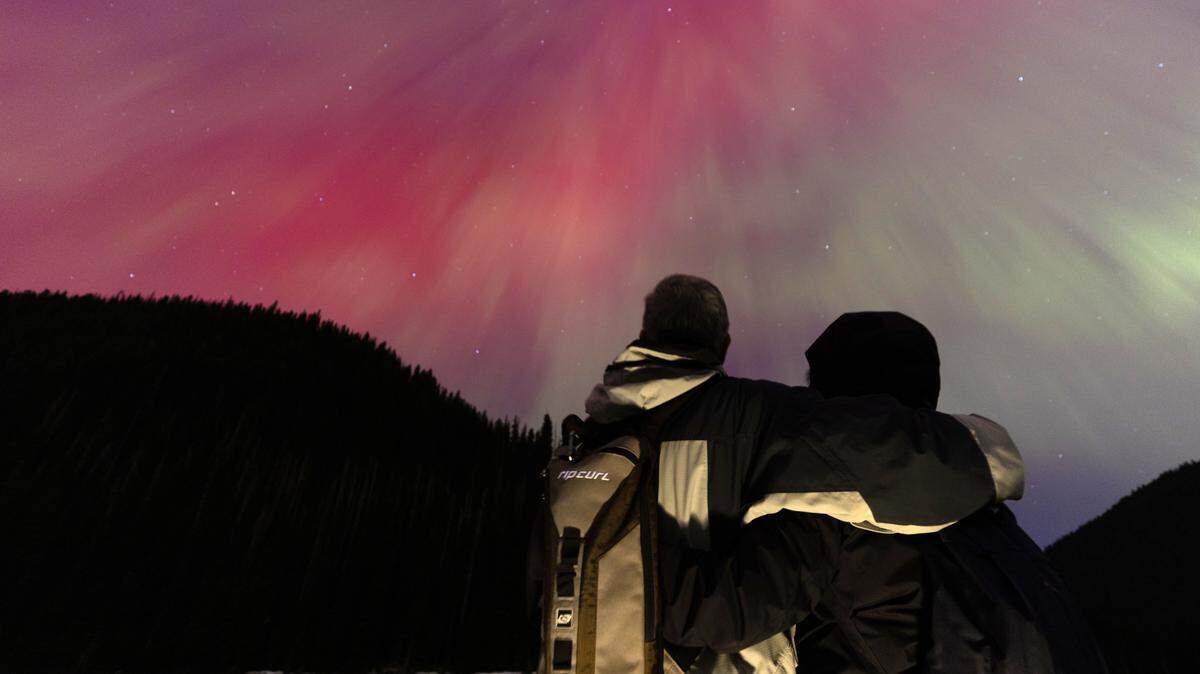
Sky watchers in Washington state have lots to look for in May, including a blue moon and meteor shower.
Stargazers may soon spot another natural phenomenon in the night sky on Thursday: the northern lights.
The aurora borealis will be visible in northern parts of the United States, including Washington state, due to geomagnetic storms, according to the National Oceanic and Atmospheric Administration.
Here’s what to know:
What is aurora borealis?
The northern lights, also known as aurora borealis, are visual displays of “particles and magnetism between the sun and Earth,” according to NASA.
The collision of energetic particles from the sun and our magnetic shield causes the appearance of colorful streaks in our atmosphere, the space agency said.
When will northern lights be visible in Washington state?
NOAA is forecasting a stream of fast solar winds coming from a large hole in the sun’s atmosphere, leading to geomagnetic storms.
These storms appear in Earth’s atmosphere as the northern lights.
The peak of activity is expected from 8 to 11 p.m. Thursday, May 14, according to NOAA.
Sky watchers may be able to see activity on May 15 as well, but the phenomenon will likely be lighter and more difficult to view.
How can I see the northern lights in WA?
Due to these storms, it may be possible to see the northern lights in Washington state, especially at higher elevations.
“But remember, auroras are fickle creatures,” Space.com skywatching editor Daisy Dobrijevic wrote in a Thursday article. “Their visibility depends on several factors, including cloud cover, darkness and how Earth’s magnetic field responds to the incoming solar wind.”
“Even during strong geomagnetic storms,” Dobrijevic added, “sightings aren’t guaranteed.”
For your best chance at catching the phenomenon, Space.com recommends getting to a location far from city lights. Online maps measuring light pollution can identify possible options.
Once the sky is dark, look north.
If the auroras are faint, smartphone cameras can aid in viewing the phenomenon.
This story was originally published May 14, 2026 at 2:28 PM.