
Critical race theory to sex ed: WA parents deserve easy access to school board meetings
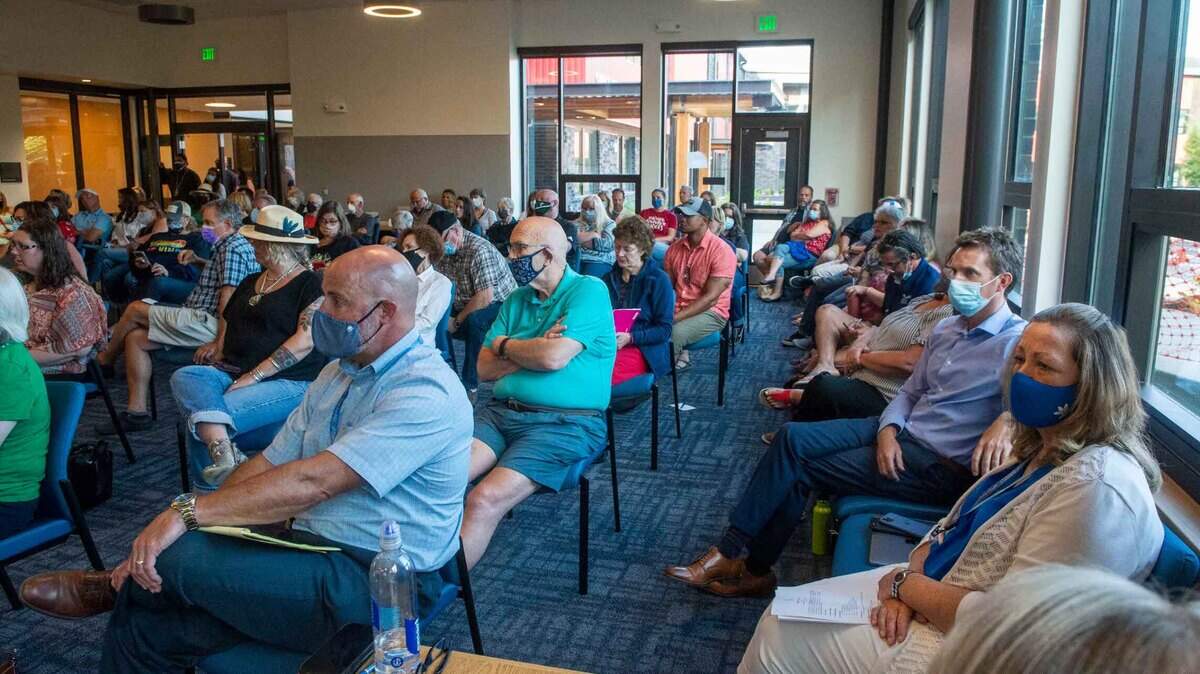
We’ve seen it right here in the South Sound, repeatedly: local school board meetings — which have historically flown under the radar — becoming flashpoints for the most contentious and loaded issues of our time.
The critical race theory debate — ginned up by advantageous conservative activists like Chris Rufo — has embroiled several local school boards, much like it has across the country. So have anti-mask crusaders. Last November, the Clover Park School Board in Lakewood publicly condemned a member who had referred to district equity officers as “race pimps” in email exchanges. The list goes on.
Frankly, it’s a lot to follow — for parents already trying to do their best to put food on the table and partake in their child’s education, and local journalists, like those at The News Tribune, who often find local school board meetings on their never-ending list of things that need covering.
It’s the kind of thing that makes Washington’s Public Records Act — which was designed to ensure that residents of the state have access to records and materials maintained by state and local agencies — so important. Missing a Thursday night school board meeting shouldn’t mean missing out on how your local school district makes its decisions, and the paper trail that’s created behind closed doors is just as important.
That’s why The News Tribune Editorial Board was encouraged on Tuesday when the state House of Representatives unanimously passed HB 1973, which would require school board meetings across Washington to be audio recorded. It would also encourage districts to make the recordings available online. Bafflingly, in the year 2022, that’s not a law that exists — but it certainly should.
The TNT Editorial Board was equally encouraged by a late-game amendment to the bill that filled a potential loophole that had public transparency advocates like the Washington Coalition for Open Government rightfully concerned.
Together, there’s little question that the bill and the amendment now making its way to the Senate would represent a major improvement over where things currently stand. But even if it passes and is signed into law, a review of HB 1973 and Pierce County school districts’ current practices reveals more work to be done.
First, about that loophole …
As originally drafted, HB 1973 would have required anyone requesting school board meeting records to include a specific meeting date. If no date was included, the request could have been denied. That would have meant that anyone curious to know now how their elected school board leaders were discussing issues like special education, or sexual education, or even what gets served in the cafeteria would have had to know the exact meeting when the conversation occurred.
If the goal is open and transparent government, it would have been an unnecessary roadblock, not to mention a dangerous precedent to set for other state and local agencies. Thankfully, an amendment submitted by Rep. Gerry Pollet (D-Seattle) — which allows for requests covering “a range of dates” — largely remedies this deficiency.
State Rep. Skyler Rude, who hails from Walla Walla and represents the 16th District in the House, is HB 1973’s prime sponsor. Rude told The News Tribune that he was inspired to take action after learning that a number of the school districts in his neck of the woods weren’t recording board meetings. Rude said he was happy to work with Pollet — who serves on the board of the Washington Coalition for Open Government — to improve the bill.
“I was interested in what was happening at the school board level, and just because of my schedule, oftentimes I’m not able to attend school board meetings. So I would like to go back and listen, which is what I do at the legislature. If I can’t attend a committee meeting, I go back and listen to the recording. And there just was no recording,” said Rude, whose bill would require recordings to be saved for five years.
“It just seemed like a good step toward more transparent and accessible government,” Rude said.
It certainly is. But as we noted above, it won’t automatically solve every problem. For starters, the bill simply encourages districts to make recordings readily available online. While Rude is confident that posting recordings online would be the “easiest way to comply with the disclosure requirement” included in HB 1973, some Pierce County districts will need to step up their open government game if that’s the case.
In districts like Sumner-Bonney Lake, Bethel and Puyallup, archived recordings of school board meetings are easily accessible online. That’s good. In Tacoma and Peninsula, they’re also available, as long as users are comfortable using platforms like Facebook and YouTube to access them. That’s adequate.
Troublingly, however, in the Clover Park School District — which has experienced its fair share of recent school board controversy — recordings of school board meetings are currently only available via a public records request. According to district spokesperson Leanna Albrecht, users must provide their own USB thumb drive to avoid being charged; if they don’t have a thumb drive, they have to foot the bill to buy one.
Albrecht said it’s a policy Clover Park is considering changing.
“It’s being actively discussed,” Albrecht said. “The CPSD school board …has asked the superintendent to explore the cost and feasibility of posting the board meetings online.”
That should really be the bare minimum — whether HB 1973 mandates it or not.
Particularly as local school board meetings grow more contentious, Washington residents deserve simple, easy online access to how the decisions that impact their children are being made - free of charge.
News Tribune editorials reflect the views of our Editorial Board and are written by opinion editor Matt Driscoll. Other board members are: Stephanie Pedersen, News Tribune president and editor and Jim Walton, community representative.
This story was originally published February 11, 2022 at 5:00 AM.