Create a new city in Pierce County? Here are lessons from the last time it happened | Opinion
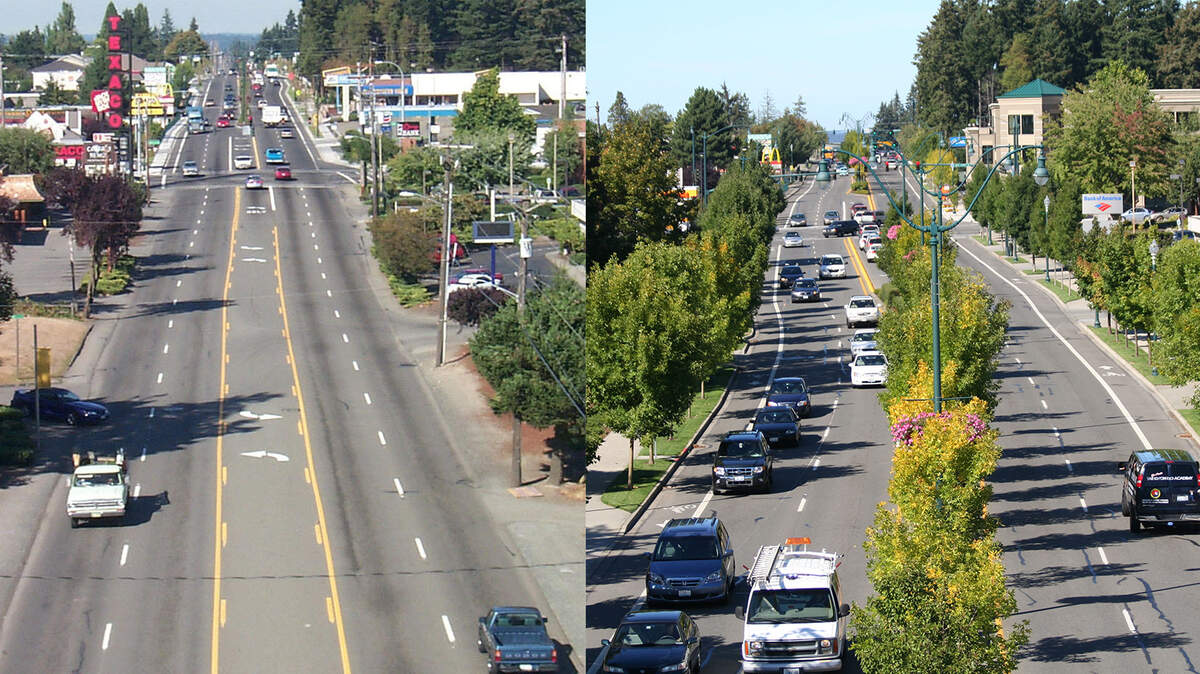
The people wanted sidewalks. They wanted more services and more police. Most of all, they wanted a say — and, ultimately, control of their destiny.
Largely, they felt short changed and ignored, like the taxes they paid went somewhere else and the development decisions impacting their future were made by leaders who didn’t have their communities’ best interests in mind.
Sound familiar? It should. As The News Tribune’s Becca Most reported last week, the feasibility of cityhood in several established unincorporated areas of Pierce County — specifically, Parkland, Spanaway, Summit-Waller and Frederickson — was recently studied by the Washington State Department of Commerce, at the behest of state Rep. Melanie Morgan, an advocate for incorporation who represents the Parkland area in the state legislature.
While the study ultimately concluded that the vast stretch of Pierce County under consideration, which is more than 20,000 acres and home to more than 125,000 residents, would struggle to pay for basic services and transportation, Morgan, a Democrat, remained undeterred.
Incorporation isn’t just possible, Morgan suggested, it’s essential — and without it, the place she calls home will continue to be an afterthought, suffering from a lack of resources, services and thoughtful planning.
“I’ve been here for over 30 years, and I raised my children in this community, and we are always lacking services,” Morgan told The News Tribune. “There are no resources here. And that’s an issue.”
Now, here’s the thing: the sentiments described in the first two paragraphs of this column didn’t originate in Spanaway or Parkland, or any of the other areas recently studied for incorporation, even if they sound almost identical to the present-day arguments of Morgan and plenty of her neighbors.
In fact, they’re nearly 30 years old, vestiges of Pierce County incorporation battles long since decided.
In 1994, University Place residents went to the ballot box and voted to incorporate — becoming the first new city in Pierce County in more than 30 years, according to The News Tribune archives. Under state law, voters must approve any decision to incorporate or annex a previously unincorporated territory.
The next year, in 1995, the largely rural community of Edgewood followed suit, as did Lakewood, where cityhood proponents had failed three times before.
Pierce County hasn’t welcomed a newly incorporated city since, for various reasons — including state-level changes and Tim Eyman initiative efforts in the years that followed that cut into available tax revenue.
Still, with incorporation talk always lurking — and now bubbling once again —the lessons learned in University Place, Lakewood and Edgewood over the last three decades are worth revisiting.
Was incorporation worth it? Did it pay off?
Absolutely, according to Bob Jean, University Place’s first city manager, and Linda Bird, who helped spearhead University Place’s incorporation effort and went on to become something of an expert in the field while also serving on the UP City Council and as mayor.
There’s just one catch, they told me.
For areas with a strong enough tax base, incorporation gives local residents control over important land-use decisions, and the ability to fund the services and amenities residents deserve — like parks and bike lanes.
What cityhood can’t accomplish, they said, is the impossible: making time stand still or halting all forms of change.
“You can have haphazard growth, and if someone who owns a piece of property can get the hearing examiner to agree with him, you know, who knows what you’ll get in near your neighborhood? Local control can help mitigate that. It won’t save you from change,” Bird said.
“Things change all the time, and the pressure to develop is always there,” she continued.
“If you want to have a say in how that development occurs, then you need the ability to write the codes.”
Sidewalks and parks
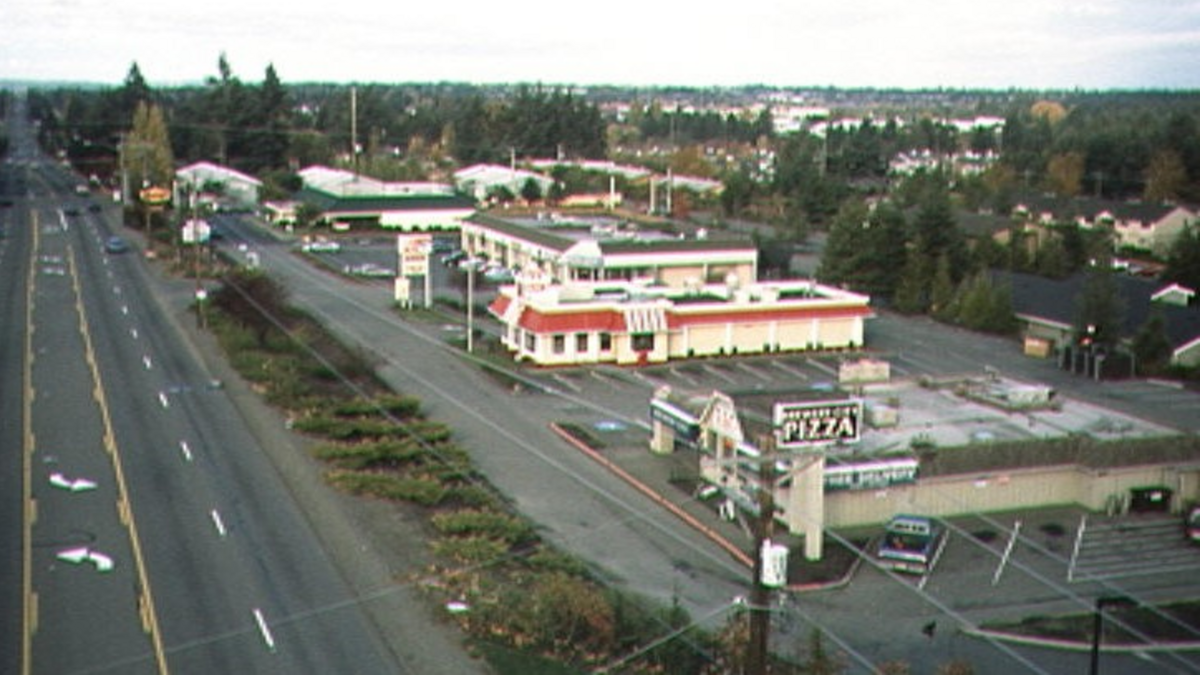
Speaking by phone last week, Bird told me that the positive impact of University Place’s incorporation isn’t hard to spot, at least for those who remember the area before the vote.
All you have to do is look at the before-and-after photos, and specifically the new sidewalks and parks, she said.
“I’m sure people have no concept of what it looks like in University Place before incorporation because it’s been that long and so many people live here that didn’t live here then,” said Bird, who advised incorporation supporters in Edgewood and Spokane Valley after leading University Place’s successful campaign.
“You just have to erase every sidewalk and park,” Bird continued. “I’m very proud when I drive our community and I see what’s been accomplished.”
Asked to assess the prospects for successful incorporation today in places like Parkland, Spanaway and Frederickson, the calculations aren’t much different than they were 28 years ago, Bird suggested.
While property values and property taxes certainly come into play – and building new cities often depends on new sources of development revenue — the math largely comes down to “cash registers,” she said, and the amount of sales tax revenue a new city can generate.
In that regard, Bird is convinced that Parkland, Spanaway and Frederickson all have enough economic activity to make cityhood pencil out. Her opinion is buoyed by a 2018 U.S. Supreme Court Decision that expanded the ability for cities to collect sales tax on online purchases made within their boundaries, helping to offset the demise of the state’s sales tax equalization efforts, which she said fell by the wayside shortly after Eyman began targeting car tab fees.
Specifically, Bird pointed to Edgewood, which back in 1995 clearly had the weakest tax base of any of Pierce County’s newly established cities. While Edgewood’s experience has been bumpy, including challenging budget shortfalls, heated sewer debates and even a vote in 2015 to switch from a city manager form of government to a strong mayor spurred by a petition effort led by disgruntled citizens, Bird said that if Edgewood could pull it off, she has little doubt that Parkland, Spanaway and Frederickson can do the same.
Jean, who served as Puyallup’s city manager before being hired to do the same job in University Place and has since served as city manager in places across the Puget Sound region, agreed.
Specifically, he told The News Tribune that local decisions about whether to create new standalone road crews and police forces or contract with existing agencies for these essential services can go a long way towards balancing a budget – especially at first.
Jean has not formally reviewed the state Department of Commerce’s study of the Parkland, Spanaway, Summit-Waller and Frederickson, but in 1994 he helped counter a Pierce County-funded review of University Place’s viability as a city that provided a similarly pessimistic analysis.
Jean suspects the state’s recent study likely suffers from the same miscalculations and faulty assumptions, he said.
“My personal opinion is that I doubt this report was written by a city manager. It was probably written by an analyst doing some comparative costs and running averages, which is not how you build a city budget,” Jean said.
“You build it based on actual needs.”
Taxes and oversight
None of this is to say that mounting a successful incorporation campaign is easy, or that winning the support of local voters is a walk in the park.
A review of The News Tribune’s archives from the time of University Place, Lakewood and Edgewood’s incorporation reveals familiar concerns — and one’s that are surfacing again as talk of incorporating other areas of Pierce County heats up.
First and foremost, the fear of higher taxes is ever-present, even if cityhood proponents, like Bird and Jean, argue that local property taxes typically decrease after incorporation.
Meanwhile, some residents of unincorporated Pierce County simply like living in a place that’s largely rural where the oversight and restrictions associated with city life don’t exist, and they’re not necessarily interested in the changes proponents of incorporation tout as potential improvements, according to Char Davenport, a resident of the Summit-Waller area since the 1960s.
“If you want sidewalks, live in town,” Davenport wrote in a letter to the editor submitted in response to The News Tribune’s coverage of the state Department of Commerce’s recent incorporation analysis.
“Most of the people (in Summit-Waller) are happy. They’re just enjoying the green space,” Davenport later told me by phone, indicating that the thought of joining Parkland or Spanaway makes her stomach churn.
“There are people who need a little bit of space, and I think kids need to see there are options,” Davenport said. “You don’t have to just live in the city.”
Skepticism like this can create an uphill battle, Bird acknowledged. While the vote for incorporation in University Place was a landslide, the vote in Edgewood was razor-thin, and it took advocates in Lakewood four tries before voters approved cityhood, she noted.
It’s one reason why Bird believes taking a strictly nonpartisan approach to an incorporation campaign while providing accurate information to voters and realistic expectations for what cityhood can accomplish is essential.
“From the beginning, I said this is going to be nonpartisan. I had prominent Democrats … and active Republicans, and we all sat down and swore an oath that we were going to keep politics out of it,” Bird said.
“If the politics gets mixed in there — if the leader of this movement is a prominent Democrat or Republican — you’re going to have a much more difficult time selling that to the public,” she added.
Threat of annexation
Cheryl Tucker has lived in Lakewood since 1991, though her history in Pierce County dates back even longer. When the city voted to incorporate in 1995, she’d already been living in the area and working at The News Tribune for roughly two decades, serving on the TNT’s Editorial Board at the time.
Inspired in part by her firsthand experience living in what was then unincorporated Pierce County, not far from Fort Steilacoom Park, where she still regularly walks, Tucker wrote several editorials analyzing the pros and cons of incorporation in her community and other Pierce County communities — and the neighborhood concerns that ultimately motivated people to support the idea.
Perhaps the biggest driver, Tucker suggested, was one that also fueled efforts in University Place and even Edgewood.
At the time, there was talk of Tacoma annexing parts of Lakewood, an idea that rubbed many in Lakewood wrong. There were similar fears in University Place, Bird recalled.
In Edgewood, according to current mayor and longtime resident Daryl Eidinger, the situation was similar. Many locals were opposed to the potential of Edgewood being cut up and divided between Milton, Summer and Puyallup, Eidinger recalled, and cityhood was pitched, at least in part, as a way to prevent it. Just as important, it was viewed as a way to stop Edgewood from exploding like South Hill, Eidinger said
One of the things that all three would-be cities had in common was a long-established sense of place and community, Tucker told me. Each had its own civic identity, and it’s something residents sought to protect, she suggested, particularly given the perceived threat of annexation.
Tucker supported Lakewood’s incorporation 28 years ago and believes cityhood has helped the area to improve, including bolstering services, municipal amenities and public safety, she said.
Today, she wonders if residents of Parkland, Spanaway and Frederickson are equally inspired, at least in part because it’s an area largely defined by decades of lax development decisions and strip malls, making its unique character hard to define.
Plus, the motivating prospect of annexation doesn’t loom as large, Tucker said.
“The folks out in the county, unless they’ve got an extremely well-organized, well-oiled group committed to incorporation, it’ll be a tough slog for them,” Tucker said.
“They don’t have any kind of a real city center, and it’s just basically suburban sprawl.”

Local control
Then there’s the elephant in the room: land use and development.
As Bird told The News Tribune, successful incorporation efforts often depend on residents being largely united in what they hope to prevent — mainly, the kind of unfettered growth that voters believe will eviscerate a community’s character if gone unchecked.
But it’s a double-edged sword, Bird said, because declaring cityhood can’t insulate an area from the inevitability of change. For starters, successful cities depend on the revenue development creates, she said, and the best incorporation can do is give residents a say in local zoning and land-use decisions.
Plus, the state’s Growth Management Act requires cities (and the county, for that matter) to plan for and accommodate new growth, which means that anyone who supported cityhood in hopes of quashing growth entirely had the wrong idea, Bird indicated.
Decades after residents of Edgewood voted to incorporate, the tension Bird described is still on full display.
Eidinger, who settled with his family in what at the time was often described as Puyallup’s North Hill in the early 1990s, confirmed this reality. Showing Edgewood voters in 1995 a photo of what the city has become today would likely elicit a resoundingly negative response, he acknowledged, but what has actually transpired in the years following the city’s incorporation is more complicated, he argued.
Yes, Edgewood’s main thoroughfare, Meridian, has experienced massive growth in recent years. The road has ballooned in many places, and new, denser multifamily housing developments now surround it. Even beyond the city’s main drag, developments with million-dollar homes now stand in fields that were once home to horses and cattle.
There’s no doubt that Edgewood is far different from the place that voted to become a city nearly 30 years ago, Eidinger said. But the local control that residents had along the way, which allowed city leaders to limit the growth to the areas of Edgewood best suited for it while working to protect as much rural land as possible, can’t be underestimated, he suggested.
Cityhood hasn’t accomplished everything incorporation advocates originally set out to do, and there have been plenty of difficult compromises along the way, Eidenger told me.
What becoming a city has done for Edgewood is allow local residents to guide the ship along the way, he said.
There’s a lot to be said for that, Eidenger suggested.
“What has to happen beyond just the idea that you want to stop something is you have to have a vision for what you want to do in the future,” Eidinger said. “Is Edgewood working toward that vision? I think so. Have there been hiccups along the way? Absolutely.”
“Through local control and good planning … we are trying our hardest to maintain what we thought we wanted to have back in those days,” he added.
This story was originally published August 21, 2023 at 5:00 AM.