
We’re not opposed to helping. But Pierce County Village endangers this wetland | Opinion
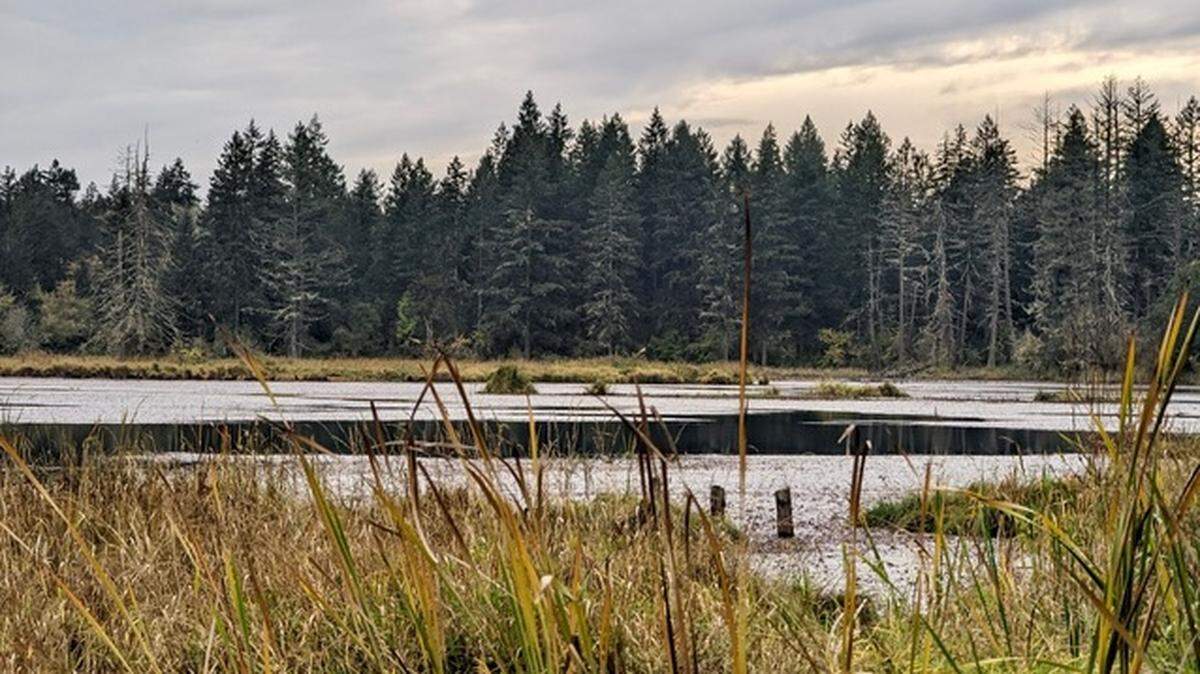
The Parkland-Spanaway-Midland community is not opposed to helping people experiencing homelessness. But the choice of the Spanaway Marsh — originally zoned low-density to protect its ecological importance — for a high-density development like the permanent supportive housing village Pierce County envisions is an environmentally irresponsible choice and must be stopped.
Spanaway Marsh, a unique wetland, is a vital, valuable and irreplaceable asset to life, and an essential component of the Chambers-Clover Creek Watershed Basin, filtering rainwater, adding nutrients, recharging and replenishing both ground and surface water and infiltrating tidal waters of our resident Orca. It provides priority habitat for several threatened and endangered species. And it sits over a sole-source aquifer that supplies our drinking water.
Recently U.S. Reps. Derek Kilmer and Marilyn Strickland, recognizing the basin’s importance, procured millions of dollars in federal grant funds to restore Chambers Bay and its estuary at the far end of the watershed. The Chambers Creek dam will be removed, giving salmon, which once ran abundantly through the basin up into Parkland and Spanaway creeks, access to the watershed once again.
This could be crucial to saving our profoundly endangered Orca population.
But what good is restoring salmon fisheries and jobs at one end of a watershed basin if we degrade the other end?
Environmental degradation
This development may destroy, once and for all, the chance to restore the watershed.
It will begin with removing trees that provide habitat and cooling. Then it will dump 50,000 cubic yards of fill on the marsh, according to the SEPA checklist submitted for the project.
Finally, much of this will be paved over, creating a heat island that could contribute to the drying of the marsh (the Eastern Forest Environmental Threat Assessment Center has documented drying of forests and wetlands due to the heat island effect) and pavement run-off that could pollute it (the Environmental Protection Agency has documented that impervious surfaces increase pollution-laden runoff).
At Spanaway Park, which includes the public part of Spanaway Lake, community member Donna Kercher regularly cleans up hypodermic needles, pills and other evidence of substance abuse.
The development for the chronically homeless, some of whom likely struggle with drug use, could increase hazardous waste going into the watershed.
Experts weren’t listened to
As a county land-use volunteer, I have worked with Pierce County planner Sean Gaffney for over twenty years and believe he is committed to responsible land use.
News Tribune investigative reporter Shea Johnson unearthed emails from executive counsel Steve O’Ban to Gaffney asking whether the Spanaway Marsh could be used for this project. As The News Tribune reported, Gaffney answered, “There are a ton of critical areas, shoreline, flood plain and wetlands specifically. This is zoned Residential Resource, the lowest urban density zone on the books.”
In other words, there is a lot there to harm.
Instead of listening to Gaffney, it seems O’Ban’s response was to find a planner who would support the project.
The community was not included
Executive Bruce Dammeier told The News Tribune that this project has included more public involvement “than anything else probably we’ve ever seen.” That is patently false. As a local resident, in my view most of the planning happened behind the Spanaway-Parkland community’s back.
The O’Ban-Gaffney emails show that, as far back as late 2021, the Spanaway Marsh was being considered for the high-density village site. Yet the community was not informed until almost a year later, in October 2022 as Johnson reported.
Since then the community has submitted hundreds of comments opposing this use of the marsh. Yet our concerns are blatantly ignored. Councilman Dave Morrell and others have tried to bully us, suggesting as fact that if this project doesn’t go forward, there will be worse development on the marsh.
Morrell and Tacoma Rescue Mission Executive Duke Paulson have accused the community of simply not wanting homelessness in our backyards.
We are in fact a united watershed, from Spanaway to Chambers Bay, committed to preserving the basin in perpetuity.
A proposed solution
The Chambers-Clover Creek Watershed Council has recommended that Spanaway Marsh be preserved and protected under the Conservation Futures Program, as an Aug. 18 letter shows.
This would both free the Tacoma Rescue Mission to look for a less environmentally damaging site and be a responsible steward of the watershed. It is a win-win solution.
What the community wants is to preserve our waterway. Elected officials should want that, too.
Now is the time to step up.
This story was originally published September 26, 2023 at 5:00 AM.