Was Pierce County homeless village ‘cooked’? Questions dogged $62M project from start
READ MORE
Headwinds for Pierce County Village
The Pierce County Village is a planned micro-home community near Spanaway for people experiencing chronic homelessness. The News Tribune reviewed more than 18,000 documents spanning nearly two years to learn the origins of the ambitious tiny-home community.
Expand All
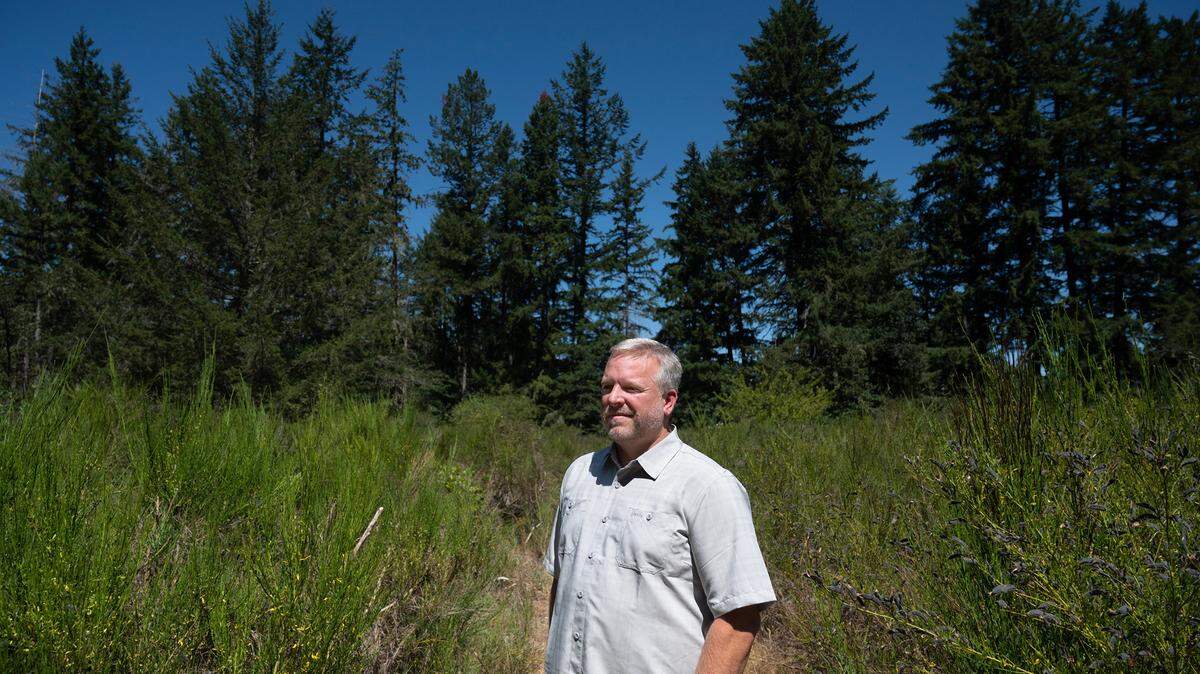


The idea began with a question of how to replicate a successful homeless project in Texas and led to a search for a partner and land. One proved much easier to find than the other.
The Pierce County Village was an ambitious undertaking from the county’s Executive’s Office and progressed in coordination with the Tacoma Rescue Mission several months before the nonprofit won the competitive bid to operate it, according to internal county emails obtained by The News Tribune.
Efforts to identify land were hampered by environmental concerns and a lack of available properties that met the project’s need and zoning. With the pool limited, Republican county Executive Bruce Dammeier sought proposals for high-impact state legislative changes that could expand site options and a senior county planner who’d be willing to think creatively to find a solution to the dilemma, emails show.
After a site was chosen near Spanaway, the 285-unit micro-home village for people experiencing chronic homelessness was given the green light in March. If it succeeds, proponents say the village — based on a proven model in Austin, Texas — will create permanent housing, on-site services and a sense of dignified community for roughly one-quarter of those who are among the longest-struggling residents in the county.
Critics argue that the location is all wrong.
The multi-phased village, with an estimated $62 million development price tag, is projected to cost $3.2 million annually to operate upon its expected full completion in 2029, project materials show.
In an effort to examine how a cornerstone but controversial homeless project in the county unfolded, The News Tribune reviewed more than 18,000 documents spanning nearly two years that were obtained in a public records request. The News Tribune also interviewed more than a dozen people, including key project stakeholders.

Dammeier and other county officials spearheading the project were determined to capitalize on a rare opportunity to leverage significant federal dollars to fund a major but novel homeless development even as some council members remained deeply skeptical about the village’s feasibility, including its siting.
“We have an opportunity in Pierce County, the second largest county in Washington State, to do something big,” county senior counsel Steve O’Ban wrote in an email to representatives of Mobile Loaves & Fishes, developer of Community First! Village in Austin, following a tour that he and others took there in June 2021.
Some Democratic council members were dissatisfied with the search for a site in Pierce County, believing it to not be exhaustive enough; complained that project information wasn’t being shared; and expressed frustration about being nudged to release $22 million in federal funds set aside to launch the project before they were ready to do so in order to meet deadlines.
“Exec has this cooked and is backing us in to a corner,” Councilman Ryan Mello, a Democrat, wrote in a text message on Oct. 24, 2022, to Richard Dorsett, an advocate for the homeless and a former state lobbyist.

Dammeier told The News Tribune that the Council, as a whole and individually, was extensively engaged in the project that stemmed from his office. He said they had set timelines and Mello, who was appointed council chairman in January, dictated “the timing and pacing of information sharing.”
“This is a very different animal, and it has had a lot more public involvement and scrutiny through the Council than anything else probably we’ve ever seen,” Dammeier said in an interview.
Finding a partner
Accompanying O’Ban on his first tour of Austin’s village in June 2021 was Duke Paulson, executive director of the Tacoma Rescue Mission. The union between the Executive’s Office and nonprofit appeared to be a logical one made early in the project process, according to interviews and records. O’Ban had learned of the Austin initiative through a news article, and it came to Paulson’s attention via an email distribution list for rescue missions across the country, each said in separate interviews.
Dammeier said he tasked O’Ban with scouring the country to find an effective model that would be restorative for people experiencing homelessness and that would garner community support, because “doing nothing was not acceptable.” Paulson, whose interest in Austin’s village traced as far back as 2020, when a planned trip to see it was canceled due to the pandemic, said he accepted O’Ban’s invitation on short notice.
“They were one of many people from our community that visited the site down in Austin,” Dammeier said about the nonprofit. “The fact that they had some expertise to help us think about this was probably important.”

Records show that Paulson and O’Ban were working on what would eventually evolve into the Pierce County Village several months before the rescue mission would answer and win a competitive bid to operate it over the Low Income Housing Institute, a nonprofit affordable housing developer based in Seattle.
Enthralled by what they saw in Texas, O’Ban and Paulson coordinated efforts to educate and persuade council members and potential donors to support the village model locally. O’Ban encouraged Paulson to outline for the council how the rescue mission planned to use county funds in joint pursuit of the project, according to emails. O’Ban also asked Paulson and Greg Helle, a developer who’d ultimately join Paulson’s project team, to visit prospective sites.
In August 2021, county director of Human Services Heather Moss expressed skepticism that the rescue mission could achieve the project while also handling the expansion of its shelter and another initiative in Fife.
“In general, I know TRM is a trusted partner, but we have lots of other provider organizations in Pierce who we should give an opportunity to compete to provide services,” Moss wrote in an email to O’Ban in August 2021.
Six months later, O’Ban created a draft of the Notice of Funding Availability — which solicited proposals for a feasibility study and development and operation of the village — and sent a copy to county officials for feedback and editing, an email shows.
When project bids by the rescue mission and LIHI were considered in April 2022, records show O’Ban was the only one of five county scorers who favored the rescue mission in a preliminary round — and he did so by a relatively wide margin, which gave the rescue mission a slight edge in total score. After an interview round, in which all judges leaned toward the rescue mission, it was declared the winner.
“I don’t think anyone questioned who was going to be doing this project when they went down to Austin together,” Theresa Power-Drutis, co-executive director of New Connections, a small nonprofit based in Tacoma that provides housing for recently incarcerated women, told The News Tribune.
The rescue mission might have been the most qualified to perform the work, but the interactions between the nonprofit and the county could spur questions, according to John Pelissero, senior scholar in Government Ethics with the Markkula Center for Applied Ethics at Santa Clara University in California. Pelissero also suggested that O’Ban should have recused himself from scoring the bids to eliminate any appearance of conflict.
“It would appear that TRM was advantaged because of the frequent engagement that county officials had with them,” he said in an interview. “That will potentially raise some ethical questions in the minds of citizens and taxpayers of the county.”
O’Ban said that his unique experience and perspective on the village model, as the county’s lead on the project, made him an appropriate choice to be a scorer. The fact that the other judges initially weighed LIHI more favorably than he did was proof that each scorer used independent judgment, he added.
When he reached out to the rescue mission — one of the county’s two-largest homeless service providers — the village was merely a concept and Catholic Community Services, the other major services provider, indicated they weren’t interested in pursuing it due to their existing workload, he noted. The county wanted expert advice, and the rescue mission has been in the community for more than a century.
“It would be frankly very normal to think of them being part of the effort to try to encourage the council” to budget the project, O’Ban told The News Tribune.
Former Council Chairman Derek Young, a Democrat who departed the council last year due to term limits, said in an interview that he found the rescue mission’s early involvement to be ordinary.
“It’s not unusual to have experts in the field, that might end up running something like this, consult with you on it,” he said.
Helle is a partner in ASH Development and retired principal owner of Absher Construction Co. He has known Paulson for some time, and his company performed work on the rescue mission’s women’s shelter, Helle told The News Tribune. He’d taken a trip to Austin to view the village and, at Paulson’s request, visited the eventual project site in Pierce County, he said, before accepting Paulson’s invitation to join the project team when the rescue mission won the bid.
Helle said he believed in the project and assured that his interest was not financial. His role includes trying to secure assistance from those in the building industry willing to perform in-kind work and from others who also might want to help.
“This isn’t like something we’re retiring on,” he said. “This is something that we’re volunteering on.”

Paulson said the availability of one-time American Rescue Plan Act funds two years ago led to rare opportunities to invest in worthwhile projects and that multiple project options were in play at the time for the rescue mission, which was seeking one to fully engage in. Not wanting to appear as if he was operating “behind the scenes,” Paulson said in an interview that he communicated and shared information about the county’s proposed village with other service providers, including LIHI, prior to being awarded the project.
Of those served by the rescue mission, people experiencing chronic homelessness have the lowest success rate transitioning from shelters to permanent housing, Paulson said, and he saw in the initiative an opportunity to aid those hardest to reach.
“It’s a whole different engagement than what we’ve done before,” he said.
Search for a site
To pull off a development of this magnitude, county officials knew they’d have to find a location large enough to serve more than 200 people and attract providers who’d deliver services on site, including drug, mental health and medical, according to Dammeier. The notion of finding at least 20 acres of developable land within the county’s urban growth area was difficult enough, he said, but then officials needed to consider other factors such as proximity to transit and community impact.
The Council, which had authorized up to $500,000 in November 2021 to the Executive’s Office to create a village proposal, had their own criteria for prospective sites, including accommodating at least 150 micro-homes. O’Ban said the Council’s standards weren’t too far from the Executive’s Office’s own.
Nonetheless, necessary criteria left scant options. During a Council study session in October, when the project plan was publicly unveiled, Todd Sawin, a civil engineer on the project team, said that officials probably examined 100 possible locations. In a recent interview, O’Ban said only a dozen or so were viable.
The eventual choice to site the project off Spanaway Loop Road, which has drawn controversy because the zoning previously hadn’t matched and the land is environmentally sensitive, wasn’t always the preferred option. Land to the east at 176th Street and Waller Road had been the top prospect as late as April 2022, records show, but it was later determined to be too close to an elementary school, too far from public transportation and not large enough to accommodate small-scale businesses envisioned for the village such as an organic farm.
The Spanaway Loop site, meanwhile, appeared to emerge in site discussions in late 2021 when it was then “the top prospect de jure,” O’Ban wrote in an email to county planning manager Sean Gaffney. Its environmental challenges and inconsistency with county comprehensive plan policies were immediately noted.
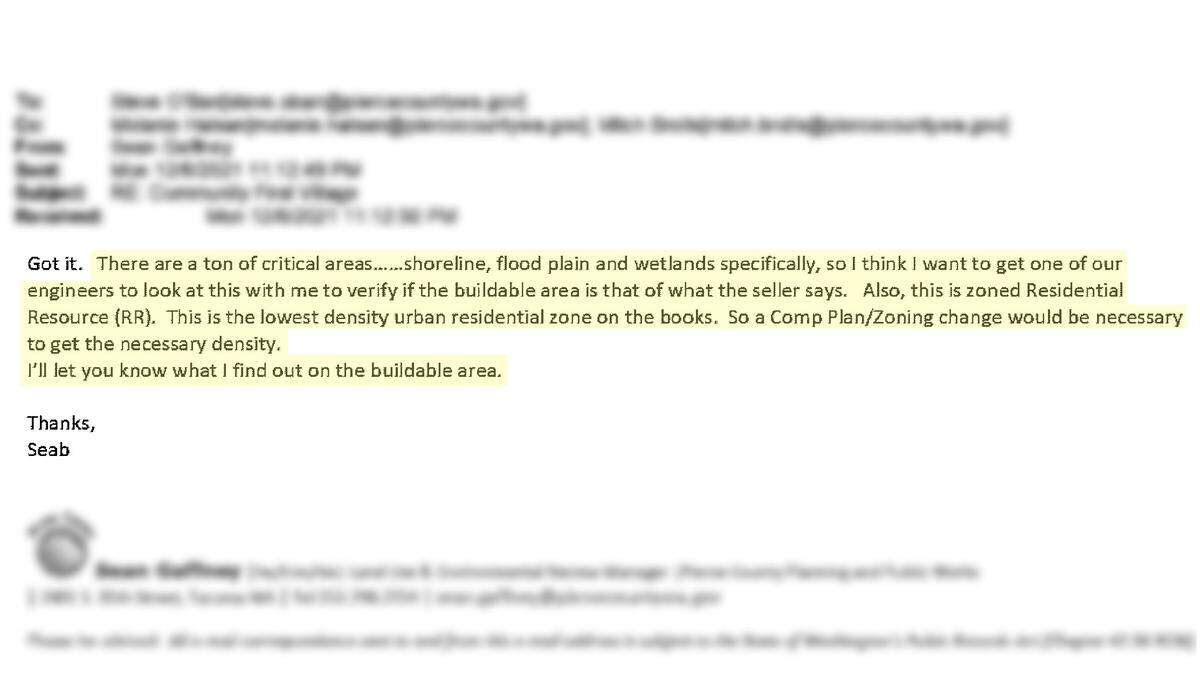
“There are a ton of critical areas,” Gaffney wrote in a December 2021 emailed response to O’Ban’s solicitation about whether the location posed any zoning issues.
Gaffney noted the area’s shoreline, floodplain and wetlands, and that a zoning change would be required there for a project of the village’s scale because the land was zoned residential resource — the lowest-density urban residential zone on the county’s books.
In addition to environmental and zoning concerns, there proved to be less developable land on the site than originally thought, records show, further sowing doubts that it’d work. With hurdles to clear, project leaders sought unconventional solutions.
“(Dammeier) suggested that what we need, whether they are on my work group or not, is a planner high up in Planning food chain who can be solutions oriented; instead of telling us what are the obstacles, take this on as ‘their’ project and think creatively,” O’Ban wrote in a December 2021 email to county deputy executive and chief operating officer Dan Grimm and noted that he was seeking someone with “that entrepreneurial spirit.”
Dammeier told The News Tribune that, in some cases, established code and zoning weren’t set up with the needs of addressing chronic homelessness in mind and, while all laws were to be followed, the project necessitated creative thinking.
“I can imagine we wanted somebody who understood the code and all of the limitations of it to help in that search,” O’Ban said in an interview.
Dammeier also requested exploring requests to changes in state laws to expand limited site options for the village, according to an email from O’Ban in December 2021. Then-Councilman Hans Zeiger, a Republican who’d sponsored a failed bill in 2019 as a state senator to enable tiny-home communities outside urban growth areas, attempted to resurrect momentum for the idea by reaching out to state lawmakers and found a willing partner in Rep. Michelle Caldier, R-Port Orchard.
Caldier’s House Bill 1952, which would have allowed homeless housing projects outside urban growth areas under certain conditions, died in committee during the 2022 legislative session, with critics worried that the bill would enable projects too far from services or unintentionally create urban sprawl, according to bill testimony and public records.
In August 2022, the project committed to the Spanaway Loop site. Helle, who’d been involved in the search for land, entered into an agreement to buy the property for $3.7 million and later assigned those rights at no cost to the rescue mission, which closed the sale. In October, the Council voted to create shared-housing villages, a land-use designation including permanent tiny-home communities, and then permitted that use within the zone that encompassed the Spanaway Loop site in March.
While the latter decision set the path for the Pierce County Village to be constructed on the land’s 27 buildable acres, it was also controversial. In a November email, county attorney Todd Campbell spelled out the legal ramifications at O’Ban’s request. The county Executive’s Office provided the same information to the Council. The key takeaway from the assessment was that the Pierce County Village would still be able to move forward in the face of any challenges because it’d be vested under the regulations in place at the time that permits were applied for.
The zoning ordinance indeed would later spur opposition from two groups who claimed it violated the state’s Growth Management Act. Last month, the Council unanimously voted to repeal their earlier zoning decision effective in December, with Democrats seeking, in part, to avoid any potential sanctions that could disqualify the county from receiving certain state funding if found in noncompliance with the act. Some, including Republican Councilman Dave Morrell, who didn’t respond to messages seeking comment, and the rescue mission’s lawyers, believe those chances are low.
Dammeier vetoed the repeal on Aug. 9, saying it sent the wrong message and limited future potential affordable housing projects. The Council voted 5-2 to override the veto less than two weeks later.
Of the search, Paulson said in an interview that land was either unavailable or really expensive and properties that were possibilities all had pros and cons. The village needed to be removed enough from urban centers, in part, to accommodate the required land space but also near services, he said, adding that the Spanaway Loop site isn’t close to a school or church and it’s big enough to handle the project’s density.
“It checked all the boxes of things we we’re looking for and it was relatively affordable,” Paulson said. “Everything else had a big red flag.”
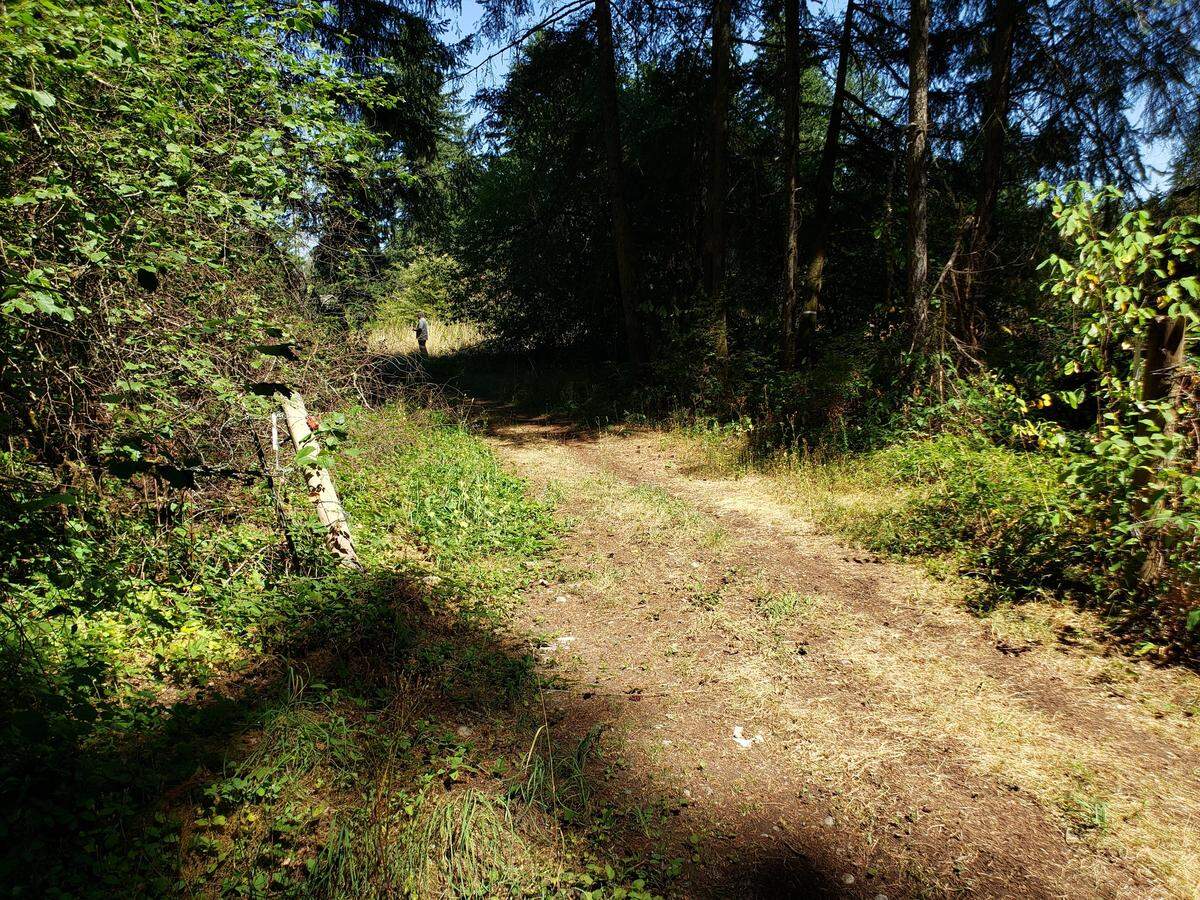
Even so, project proponents acknowledged that there was no “ideal” land to place a unique project of the village’s scale but that the chosen site was simply the best available option. The county has pointed to environmental studies conducted in December that “confirm that the Site can be developed outside wetlands and buffers in full compliance with environmental regulations.” And proponents say the village will be less detrimental than 185 upscale single-family homes that, due to allowed zoning, could hypothetically be constructed there instead.
Its desirability, however, has been questioned.
“This land has been sitting for many years,” Mello said in a text message to Dorsett in October. “In large part because it has no infrastructure and is really wet.”
Other critics contended that the village’s development on the site would cause environmental harm.

Ed Larson and Scott Munson both live in homes alongside nearby Spanaway Lake and, as advocates for the lake’s cleanup, were concerned that the village will prove to be detrimental.
“You can’t say there will be no effect,” Larson, 58, said in an interview. “There will be an effect. What it is, we don’t know.”
Invasive weeds and hazardous algae blooms already pose problems. Anything that seeps into wetlands at the village site will further affect the lake, according to Larson. The two men worried that the project could lead to oil runoff, human waste, drugs and trash polluting the water if the village isn’t run well. Both also disputed that NIMBYism — a term defining not-in-my-backyard opposition to new projects — had anything to do with their reaction.
“They’re saying it’s a homeless issue, I’m saying it’s a water quality issue,” Munson, 62, said in an interview. “Even if they do get this thing done and funded, it will be a constant potential liability for the county.”
Ongoing concerns
A primary conflict for some council members is that they strongly support the idea of the village but struggle with its logistics, including its siting.
In March, all but one lawmaker — Republican Councilwoman Amy Cruver — supported releasing $12 million of the $22 million in American Rescue Plan Act funds that the Council set aside for the project. Earlier in the same meeting, Cruver and Democratic Councilwoman Robyn Denson voted against the zoning ordinance that allowed the village to be built off Spanaway Loop Road. That decision was “really, really tough,” Mello said at the time, although he voted for the ordinance. Still, he noted his concern about environmental impacts and said that the Council had repeatedly asked the Executive’s Office to search for another site.
“They found it; they fell in love with it,” Mello said in an interview, adding that the search had frustrated some council members and he questioned whether it was extensive enough.
Mello said it was ultimately up to the Executive’s Office to identify an appropriate project landing spot and it had not been demonstrated to the Council, which could only express its concerns, that the search was exhaustive. Although Mello said he believed the search was hampered by focusing only on land for sale, Paulson assured that the effort engaged real estate experts and extended to properties not on the market. Still, the end result shouldn’t have been a site that required hoops to jump through to get permitted, according to Mello.
“Never did it cross our mind that a site was going to come to us where the use was not allowed in county code,” he said. “If I were county executive, I would not have brought a project to council that did not meet the use.”
The Council passed a resolution in December requesting broad information related to the project, including the production of two additional prospective sites beyond the Spanaway Loop property. Three locations that met the Council’s criteria were highlighted, according to the county Executive’s Office’s response, but each was either too far from transit, too close to schools or lacking sufficient buildable acreage.
“If the County Council nevertheless directs a further search for another site, it is not only likely to be unsuccessful. It is also likely to take a long time,” an unnamed county homeless advisory board member wrote in remarks that were cited in the county Executive’s Office’s reply to the Council. The member added: “the County does not have the time to spend in that way.”
The urgency of the homelessness crisis and deadlines to obligate and spend the ARPA dollars fueled the exigency to push the village forward but also raised concerns, according to interviews and records.
“I do think it was on an expedited time frame because of the ARPA dollars to make it work, and it would have been nice if we could have spent some more time searching for more properties,” Denson said in an interview.
Young told The News Tribune that the Executive’s Office wanted to get the siting resolved by the end of last year and had put pressure on the Council to authorize federal funds when lawmakers still needed to complete their due diligence. In an email Young sent to two council aides in October, he expressed a similar sentiment.
“There’s been no public vetting and funding is a major concern for at least a couple of us,” Young wrote in a message that referenced an email from O’Ban explaining key project actions that awaited the Council’s release of ARPA dollars. “I don’t want to drag this out, but it seems like they’re trying to jam us again.”
A month earlier, Pacific Lutheran University president Allan Belton sent an email addressed to Dammeier to endorse the village, which Belton said he understood was being proposed within proximity of the university. Google Maps indicates the school is roughly five driving miles to the north of the Spanaway Loop Road location.
Internal county emails show that Democratic Councilman Marty Campbell, who didn’t respond to a inquiry seeking an interview for this story, viewed Belton’s message as an informal notice that a site had been chosen — “an odd way for council to learn this” — although he was later assured by county Legislative Affairs Advisor Alice McDaniel that no location had been announced. Still, the communication reflected how some council members, at times, felt as if they were being left in the dark.
Councilwoman Jani Hitchen, a Democrat whose district is just south of the project’s site, pointed to the university’s letter as an example of how “I again feel blind-sided about conversations happening about my district that I know nothing about,” according to an email she authored to an aide.
“We were not the drivers of this project,” Hitchen said in an interview. “We were brought along.”
Hitchen recently visited the Community First! Village in Austin — the fourth council member to do so following earlier trips by Republicans Paul Herrera, Morrell and Cruver.
Asked to respond to concerns from some council members who, at times, felt out of the loop, Dammeier noted in a statement that there’d been open invitations to each county lawmaker to see the village in Texas firsthand. He noted that only three, at the time, had accepted the offer but so too had many community leaders.
“This is an important community project,” he said in an interview, “not an important Bruce Dammeier project.”