How behind-the-scenes politics helped win approval for Pierce County homeless village
READ MORE
Headwinds for Pierce County Village
The Pierce County Village is a planned micro-home community near Spanaway for people experiencing chronic homelessness. The News Tribune reviewed more than 18,000 documents spanning nearly two years to learn the origins of the ambitious tiny-home community.
Expand All

In successive votes in March, two significant matters were at stake: a 0.1% sales tax for affordable housing sought by Pierce County Council Democrats and an ambitious homeless project championed by a Republican-led Executive’s Office.
The timing was no coincidence. If one failed, the other was in jeopardy.
Democratic council members and Executive Bruce Dammeier ultimately backed the other’s coveted initiatives only because support was reciprocated for their own plans, according to interviews and internal records obtained by The News Tribune in a public records request.
The underlying issues were clear. Democrats expressed concern about the Pierce County Village’s long-term funding and didn’t want to approve the project without the safety net that a small portion of the tax proceeds could provide. On the other hand, Dammeier has long been averse to raising taxes and doubted that county lawmakers would’ve responsibly used the new tax revenue if the project had been nixed.
On March 21, the tax passed in County Council chambers, followed by a zoning measure and release of funding that cleared the way for the village — a permanent supportive housing community for people experiencing chronic homelessness — to be sited near Spanaway.
How those votes materialized rubbed some the wrong way, including the village’s owner/operator.
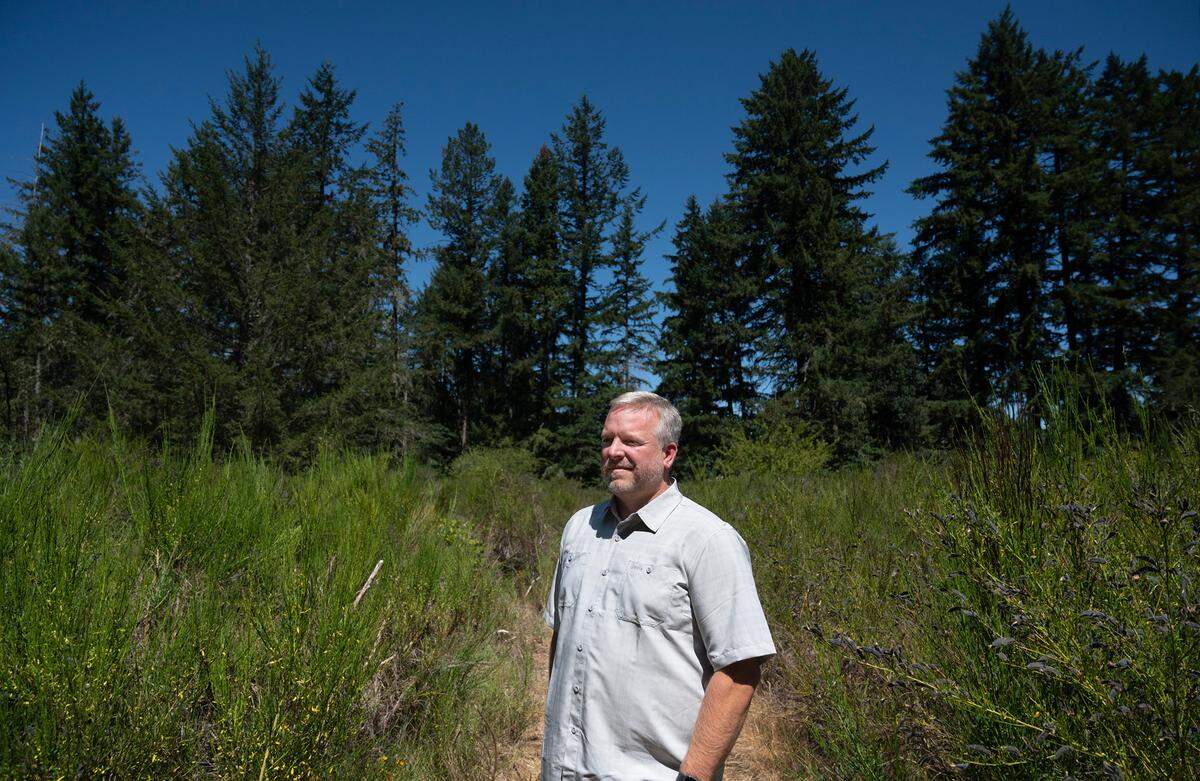
“It should never have to have been that ugly,” Tacoma Rescue Mission executive director Duke Paulson told The News Tribune, adding that he viewed the project and tax — which he did not oppose — as separate issues that should stand on their own merits.
Richard Dorsett, an advocate for the homeless and a former state lobbyist who indicated support for the tax but skepticism about the village’s logistics, also used the term “ugly” to describe their pairing. Then again, he said in an interview, it was also “maybe practical.”
No tax, no project
Council Democrats leveraged their skepticism about the Pierce County Village’s funding model to push the sales tax that otherwise might have been destined to fail, according to public records and interviews.
At least some Democrats questioned the village’s philanthropic financial model — as did some philanthropists — and were reluctant to commit $22 million in federal dollars to jump-start the project without a recurring and internal funding source that could support it year after year if necessary.
“Without that, that would have made me incredibly nervous,” Councilwoman Jani Hitchen, a Democrat, said in an interview. “We need both.”
That new funding source wound up being the 0.1% sales tax for affordable housing, which local governments were authorized to adopt by Washington law in 2020. It was long overdue, according to Hitchen, but needed a Republican council member to provide a fifth vote to get it done. That deciding vote proved to be elusive until March, when the tax, expected to generate roughly $20 million yearly, passed immediately before the project did.
Fueled by their concerns about funding for the experimental, 285-unit microhome community, Democrats tied its essential survival to passage of the tax.
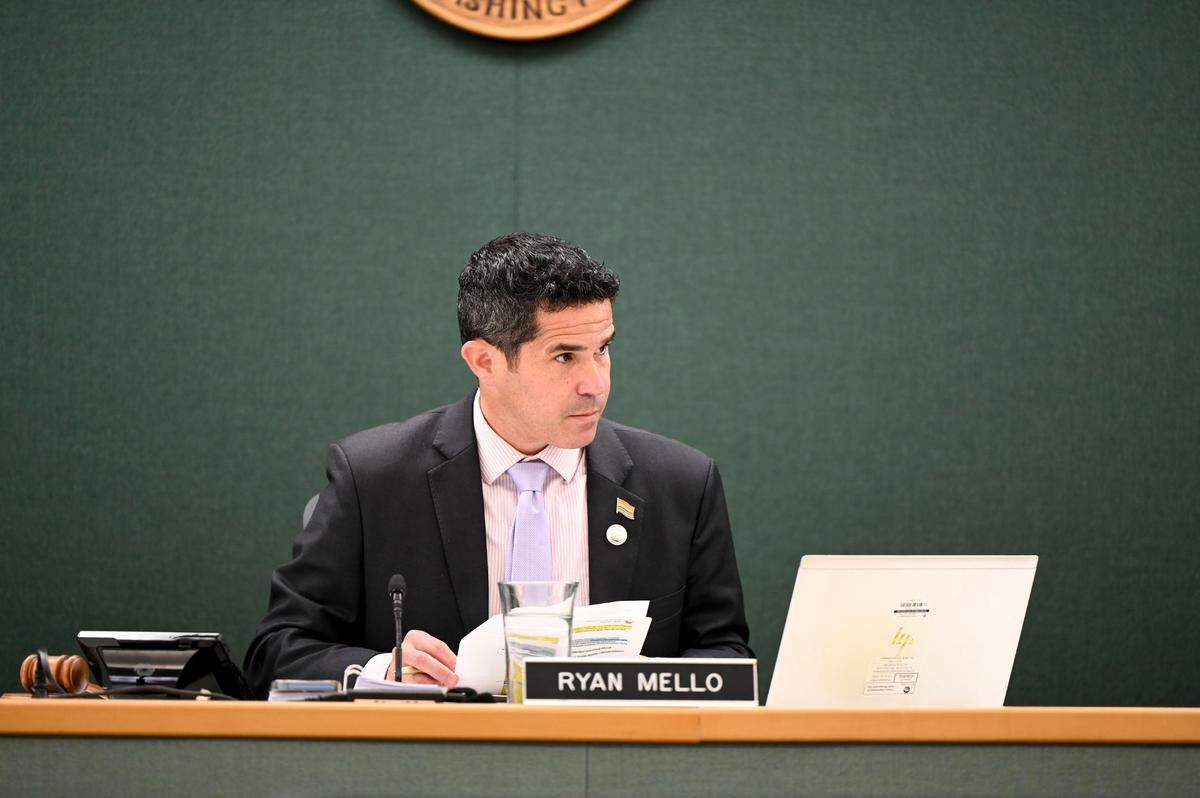
In an October email to a nonprofit operator, Democratic Councilman Ryan Mello said he sought to “use the enthusiasm the Republicans have for this project” to make the tax a reality.
“As CM Hitchen indicates, the (village) will require some ongoing public subsidy and we could dedicate a small portion of the 1/10 for that purpose,” Mello wrote in a different email that same month to Hitchen and a council aide, suggesting that the tax’s passage be a condition for releasing American Rescue Plan Act (ARPA) dollars set aside for the project. “But this could be the leverage we need to get the 1/10 passed this year.”
Project materials show that donors could potentially provide $18 million over four years toward the village’s projected $62 million development price tag. Democrats were particularly concerned that the Tacoma Rescue Mission might also lean on fundraising to cover any shortfall in the project’s estimated $3.2 million annual operating costs, despite project leaders’ confidence that it can be done.
“I think the (funding) model and the system that we presented is fair and reasonable,” Paulson said in an interview. “I feel that we didn’t need to find another source on top of that.”
The Council initially requested that the nonprofit present a proposed budget reflecting no ongoing contribution from the county, meaning no assistance beyond one-time capital costs, according to Paulson. Later, he said, some promoted the tax as a key tool for the project’s sustainability and sought for Paulson to concur. He wouldn’t.
“I felt a little trapped,” he said. “It became a political play. I don’t want to be used as a political chess piece.”
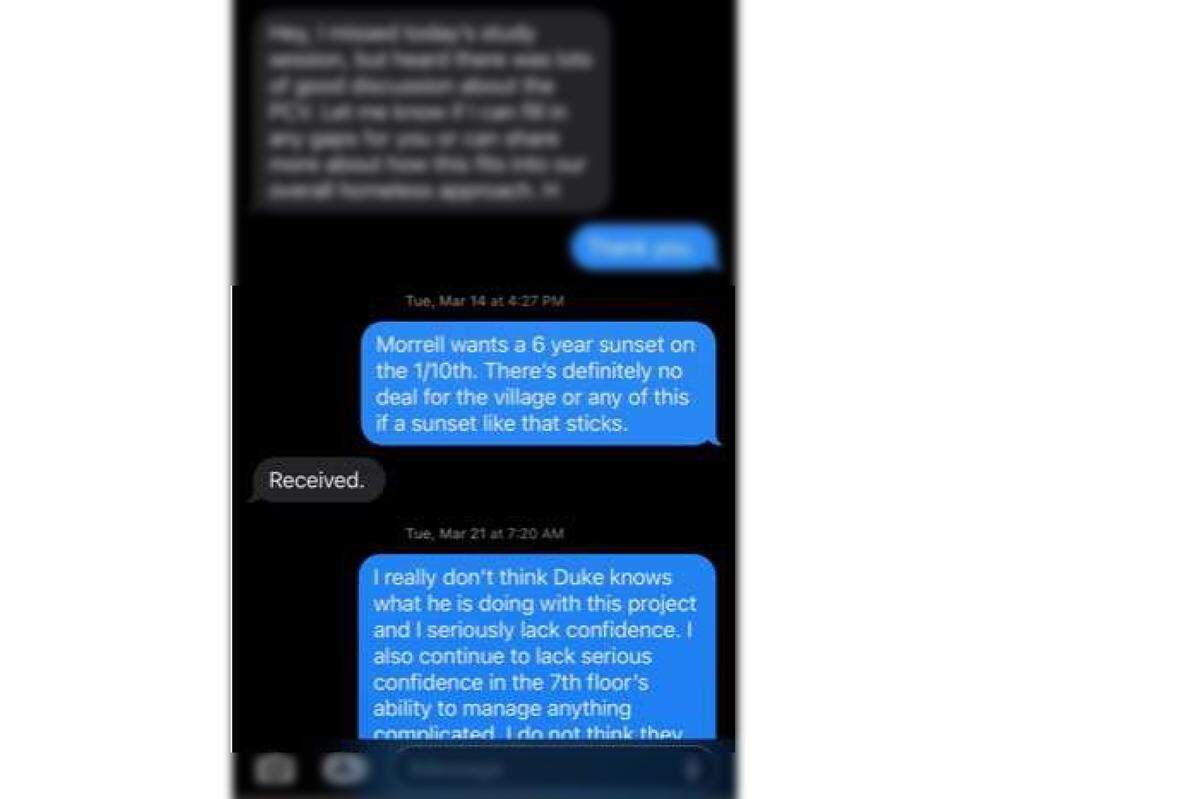
A week before the vote in March, Republican Councilman Dave Morrell was apparently seeking a provision that the tax end after six years. Mello made his displeasure known to county Human Services director Heather Moss.
“There’s definitely no deal for the village or any of this if a sunset like that sticks,” Mello said in a text message.
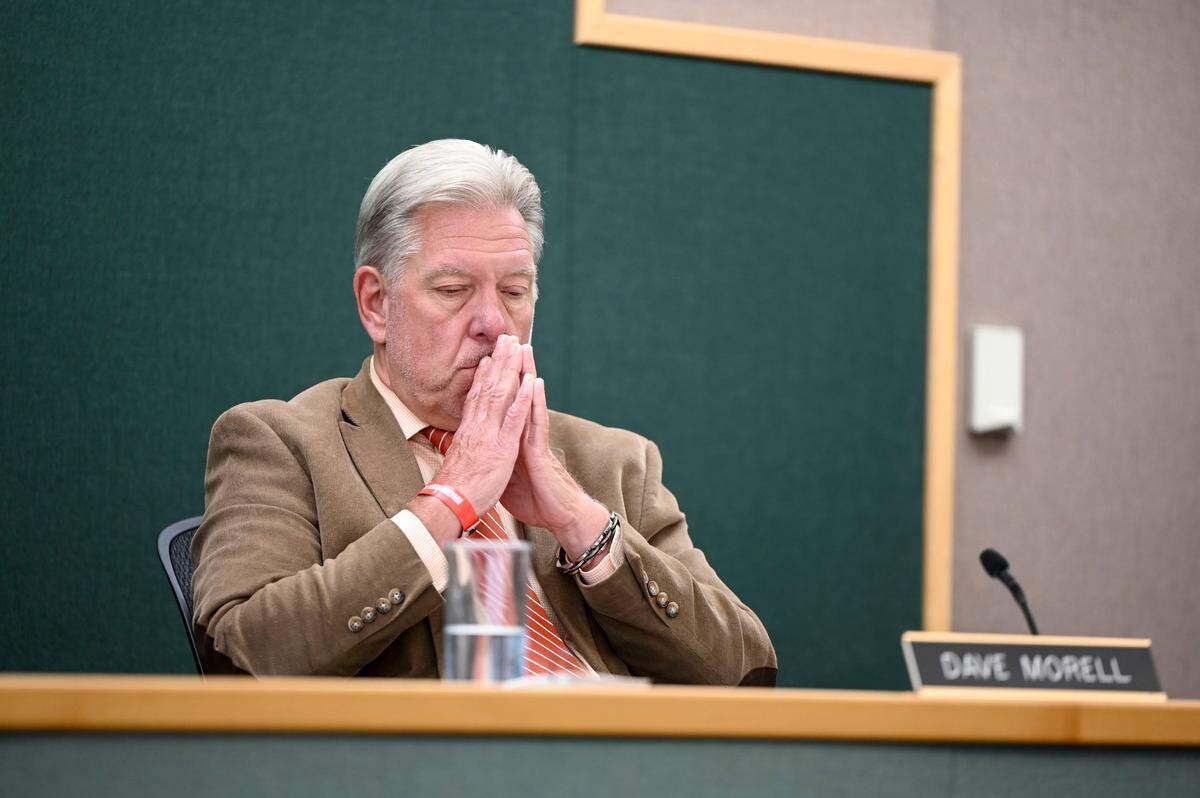
The tax ultimately passed 5-2, without a sunset clause, after Morrell, who did not return messages seeking comment for this story, joined unified Democrats to approve it.
The tax ordinance then awaited the signature of Dammeier, the top official in the Executive’s Office where the village idea originated, who acknowledged to The News Tribune he has been reluctant to support new taxes. He offered his signature, making it only the second tax he has ever signed in nearly seven years in office.
The outcome might have been different if county lawmakers hadn’t voted favorably on a controversial land-use measure to allow denser residential construction needed to site the homeless initiative off Spanaway Loop Road.
To support new taxes, “I must be convinced that the public need is fully justified and that the money will be well spent,” Dammeier said in a statement. “If the Council had rejected the Pierce County Village, a proven transformational solution desperately needed by so many of our chronically homeless, I would not have had confidence that they would use the new tax money responsibly.”
Asked later how the village’s passage provided him with that necessary confidence, Dammeier responded in a follow-up statement: “When the Council took action supporting ‘shared housing,’ it allowed both the innovative and proven Pierce County Village model as well as other affordable housing options for our residents. The affordable housing tax, without the political will to create innovation housing options, would not deliver the housing outcomes and flexibility our community needs.”
The Council majority wasn’t going to spend a significant sum of ARPA dollars unless it had a stronger sense that the village would be financially viable, Mello said in an interview, adding that he’d also been advised by “several” people in the philanthropic community that the project had many unknowns. The release of the ARPA dollars is staggered — with county lawmakers releasing just $12 million in March — so that village proponents could demonstrate they could get the project permitted and raise the necessary money, he said. Those efforts are currently underway.
The tax and the project simply represented a “perfect alignment” of the county’s top two issues: housing and homelessness, according to Mello. While the spotlight in this instance was on the village, he said, it was only one of many projects expected to come under the county’s affordable housing strategy that would need an ongoing public subsidy and would benefit from tax revenue.
“You really have to take advantage of moments like this,” he said.
Village’s funding details
The village, essentially a replica of the Community First! Village in Austin, Texas, will provide permanent housing for people who’ve struggled the longest in the county and bring social services into the community setting. The payoff could be big: refuge for approximately one-quarter of the county’s population of people experiencing chronic homelessness, county officials said.
A key component to Austin’s initiative is that it has found success solely with private funding. Proponents of the county’s village, a public-private partnership, say the project’s early private funding prospects appear encouraging.
On the development side, roughly half of the village’s estimated $62 million cost is projected to be accounted for from ARPA funds and as much as $10 million in state money, according to project materials. During a Council study session in October, county senior counsel Steve O’Ban said that a consultant for the rescue mission had estimated $18 million could come from the philanthropic community — a group O’Ban said was “eager” to contribute.
It’d be enough private donations to complete the estimated cost of the project’s first three development phases, leaving roughly $13 million outstanding for the fourth and final phase with time to identify additional funding sources before that stage was to commence in early 2027, project materials show.
“I believe it’ll be there,” Paulson said during the study session.
Annual operations, projected to be $3.2 million once the project is fully developed, are anticipated to be more than covered by revenues from rent ($1.97 million), housing vouchers ($468,000) and state Department of Commerce rights-of-way dollars ($1.67 million), available for housing and services to people who live in certain state-owned rights of way — although the rescue mission has said it expects it could raise sufficient funds to fill any gaps that might arise.
O’Ban, whose first trip in summer 2021 to visit the Community First! Village in Texas had given birth to the idea of recreating the model locally, told The News Tribune that proving the concept worked would breed interest from others to financially support it. During the council’s study session in October, he said he knew that Pierce County wasn’t Texas, with oil barons and a billionaire-led foundation willing to offer up an unsolicited $36 million grant, which Austin’s village received. But the tech industry could step up, he said.
“A project with this level of private funding for dignified housing for the hardest to house in our community, it just doesn’t happen,” O’Ban said during the study session. “And yet this council has an opportunity to make it happen with the partnership of the Tacoma Rescue Mission, which has been around in our community for over 110 years.”
A few days after the study session, Mello emailed questions about the funding model from him and Hitchen to O’Ban. They were concerned that identified state money could expire in a few years and that the proposed budget didn’t account for vacancies, unpaid rent, potential hurdles in using vouchers and needed reserves for capital improvements, maintenance and unexpected costs.
“Our County’s investment in the development of this proposed project will be historic and before making a decision on making this investment,” Mello wrote, “we would like a clearer picture on how this project will be able to cover operating expenses over the 25+ year lifetime of this project once built out.”
In response, O’Ban assured that the project — which he said was anticipated to prompt a long waiting list for units and budgeted for a 94% rental rate, vacancies and rent non-payment — was similar to other permanent supportive housing initiatives that identify operational funding sources but not commitments.
“This project meets, if not exceeds, the operational funding plans of most PSH projects at this stage of capital development, and, respectfully, should not be held to a different standard,” he wrote.
There were nearly two years of dedicated state funding and time to seek out other sources, including the potential renewal of state dollars past 2025, he added. O’Ban also noted that the rescue mission, which sees up to 60% of its operational funding from philanthropy, had a safety net unmatched by other service providers, including Austin’s village when it began: A growing base of 20,000 individual donors over a recent five-year period.
“We believe the Council should give weight to the fact that TRM would not put at risk its key relationships with the County and philanthropic partners by taking on the village project unless it were confident its donors would step up to the challenge and find the operational costs if needed,” he wrote.
Apples to apples?
In local philanthropic circles, some were less certain that the economics that have worked in Austin would necessarily translate in Pierce County, where the donor base in general is much smaller.
Erika Tucci, senior program officer for the Ben B. Cheney Foundation, said she didn’t believe that local foundation philanthropy had the capacity that some thought it did and noted that the sector traditionally did not engage in ongoing operations, according to an email she wrote to Mello in October, speaking of both the village and projects in the broad sense.
“Also, Austin has a large corporate base,” she wrote. “We have none of significance.”
Tucci, who declined a request for an interview, had advised Mello to “ask for specifics” if the Council was informed that philanthropy would produce large sums of money for any project, saying that local governments of late had routinely sought out donors to fund a wide array of projects, which set “a dangerous expectation.”
She had shared similar sentiments in a message to O’Ban nearly a year earlier.
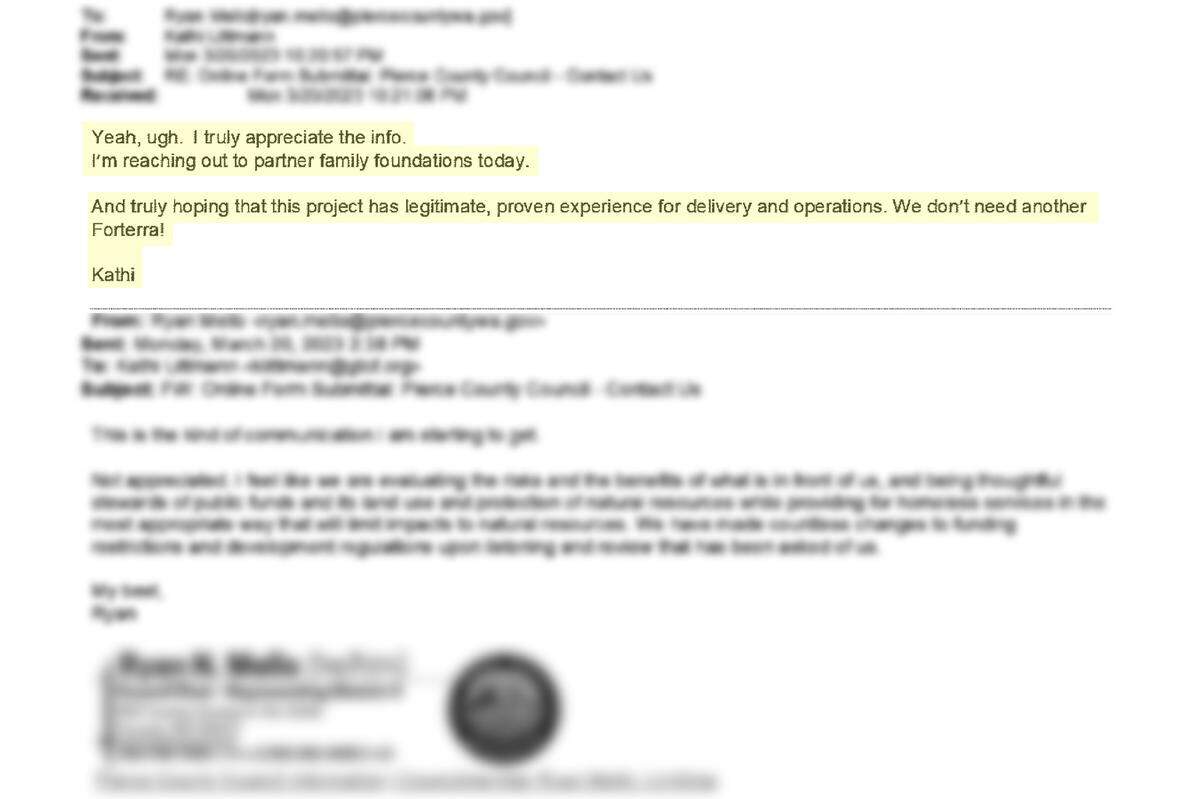
The day before the Council voted on the tax and key project items, Kathi Littmann, executive director of the Greater Tacoma Community Foundation, told Mello that she hoped that the project would have “legitimate, proven experience for delivery and operations.”
“We don’t need another Forterra!” she wrote in an email, referring to an environmental nonprofit’s stalled housing development in Tacoma’s Hilltop.
In an interview, Littmann said she meant to acknowledge only that there needed to be funding to keep the project running — a crucial piece that often gets overlooked after design, construction and other development. While philanthropy can fill gaps, it’s not the first-line provider, Littmann said.
“I tell every nonprofit and every agency, we are not your permanent revenue stream. That is not the purpose of philanthropy,” she said. “So anyone who assumes that is starting out with the wrong philosophy. And even if that worked in Austin, I don’t think it’s a sustainable, good practice.”
A ‘win-win’?
Depending on whom you ask, addressing lingering funding concerns by tethering the village to the tax was either a shrewd political calculation or common sense.
“From my perspective, one was contingent on the other,” former Councilman Chairman Derek Young, who left last year due to term limits, said in an interview.
The Council had budgeted a different “great” affordable housing project and pre-funded it contingent on passing a tax, he said, illustrating the broader importance of a new funding stream, which was also necessary to protect the village from going belly-up years down the road. Young didn’t see the connection as political as others had.
Carolyn Read, executive director of Revenue for Housing, which advocated for the tax, said she believed negotiations had helped to garner needed Republican support for the tax.
“To be honest, it’s not perfect but I think it’s a win-win,” she said.
The tax was named after the late Maureen Howard, a well-known advocate for people experiencing homelessness. In November 2021, Howard raised the notion of tying the village to passage of the tax, in an email to Mello. It was the earliest suggestion of connecting the two ideas, according to internal county emails reviewed by The News Tribune that dated back to summer 2021.
In addition to Howard and Read, a group consulting the county was also among those advocating for the Council to pass the tax.
The county’s Comprehensive Plan to End Homelessness Implementation Advisory Board recommended the tax’s approval as a companion to the village, board member Michael Mirra told The News Tribune.
Mirra, a project supporter and former executive director of the Tacoma Housing Authority, said the tax will bring in more dollars than it collects, noting that an internal revenue source enables a local government to qualify for and match available funding elsewhere.
While ongoing funding for projects such as the village was regularly a concern, Mirra said his own fell within the “normal range.” Plus, the rescue mission’s fundraising track record was one reason why they were chosen to run the project, he added.
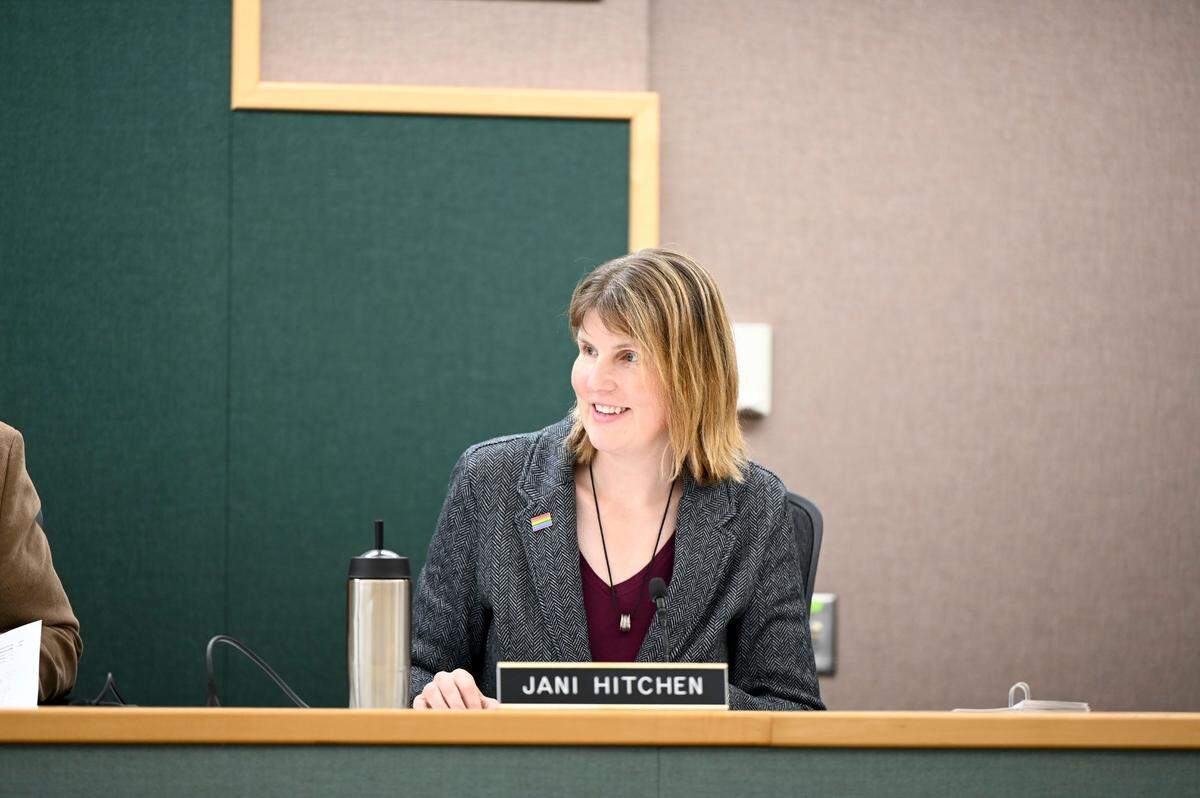
For Hitchen, who also lauded the rescue mission’s ability to raise money, the project’s long-term success couldn’t be fixed to philanthropy or revenue assumptions.
“I think it’s going to be something that will need to be monitored and kind of kept tracked of,” she told The News Tribune. “We’ll kind of have to wait and see.”
In a November 2021 email to a council aide, she expressed the same worries.
“I am really interested in the funding aspect of this whole project,” she wrote. “It is a ‘If we build it, they will come,’ but if we can’t afford to run it, it will go horribly wrong.”
Editor’s note: This story has been updated to clarify former Councilman Derek Young’s reference to a “great” affordable housing project.
This story was originally published August 23, 2023 at 5:00 AM.