It was WA’s deadliest wreck in 22 years. Why do so many people blame the victims? | Opinion
I knew what I would find. I went looking for it anyway.
Call it a hunch. Call it a bizarre infatuation.
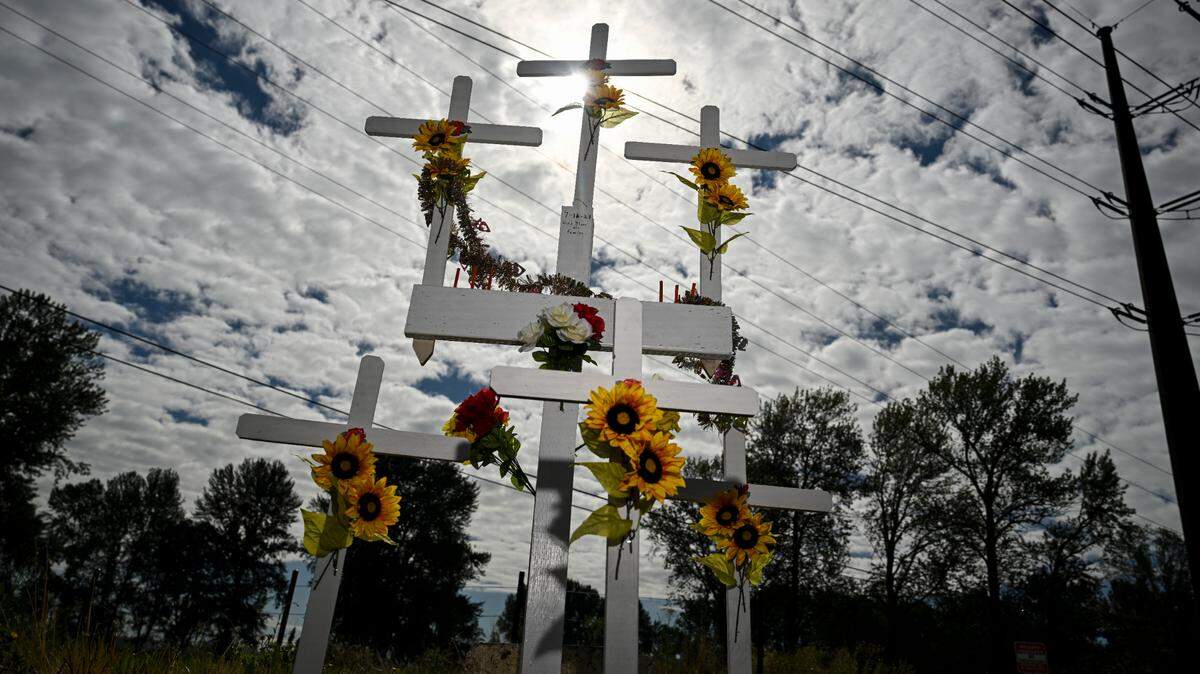
Earlier this month, The News Tribune’s Peter Talbot wrote about claims recently filed by high-powered personal injury attorneys on behalf of a grieving mother who lost her son in the state’s deadliest car wreck in two decades. The tort claim, which is a precursor to a lawsuit, seeks $20 million from the city of Tacoma and the state as compensation for the death, asserting in court filings that a “dangerous” road design led to the fatal accident, which claimed the lives of five other victims.
Shortly after Talbot’s story was published I ventured into the online comments section, even though it went against every bit of good sense I possess.
There, archived for digital posterity, was a record of a revealing and brutal human tendency I grew familiar with years ago, writing columns about two different local tragedies — precisely as I’d expected.
Experts call it the “just-world hypothesis,” and it’s based on the work of social psychologist Melvin Learner, a groundbreaking scholar in the field who, in the 1960s, began studying and documenting how people’s general belief in what he described as a “manageable and predictable world” helped them to “engage in long-term goal-directed activity.”
More pointedly, it’s a human phenomenon often known as just-world bias, and in practice what it looks like can be simple and callous:
Random people instinctively blaming the victims of tragedies for the terrible things that happen to them, typically by focusing on a perceived bad decision or momentary lapse in judgment, whether they truly deserve it or not.
“We tend to make attributions about other people’s behavior that are either due to their disposition — ‘She fell down because she’s clumsy’ — or because of the situation — ‘He fell down because the sidewalk was icy.’ We do this automatically,” Pacific Lutheran University psychology professor Michelle Ceynar explained to me this week.
“We have a tendency to make attributions that are self-serving, (or) make us look good, (such as) ‘I passed the test because I’m brilliant’ or ‘I failed the test because the test was unfair,’” Ceynar added. “Because we have this belief in a just world — good things happen to good people and bad things happen to bad people — we similarly make biased attributions that help support this belief and defend against fear that random bad things do happen to good people.”
It’s a theory based on decades of sound study and science, and to hear people like Ceynar tell it, it has its evolutionary use. I have no reason to doubt the veracity of the experts’ wisdom.
Still, my own experience witnessing the phenomenon — even from a columnist arm’s length — dates back seven years, to the horrendous deaths of two pedestrians at a rail crossing in Old Town, and it’s something that sticks with me.
If it’s natural for people to point the finger at victims when bad things happen, what else does the knee-jerk tendency says about the society we’ve built, I’ve often wondered in the years since..
What does it say about the people we sometimes become — particularly online?
Deadliest wreck in two decades
I remember where I was when I read the story — in my backyard, prepping the charcoal grill.
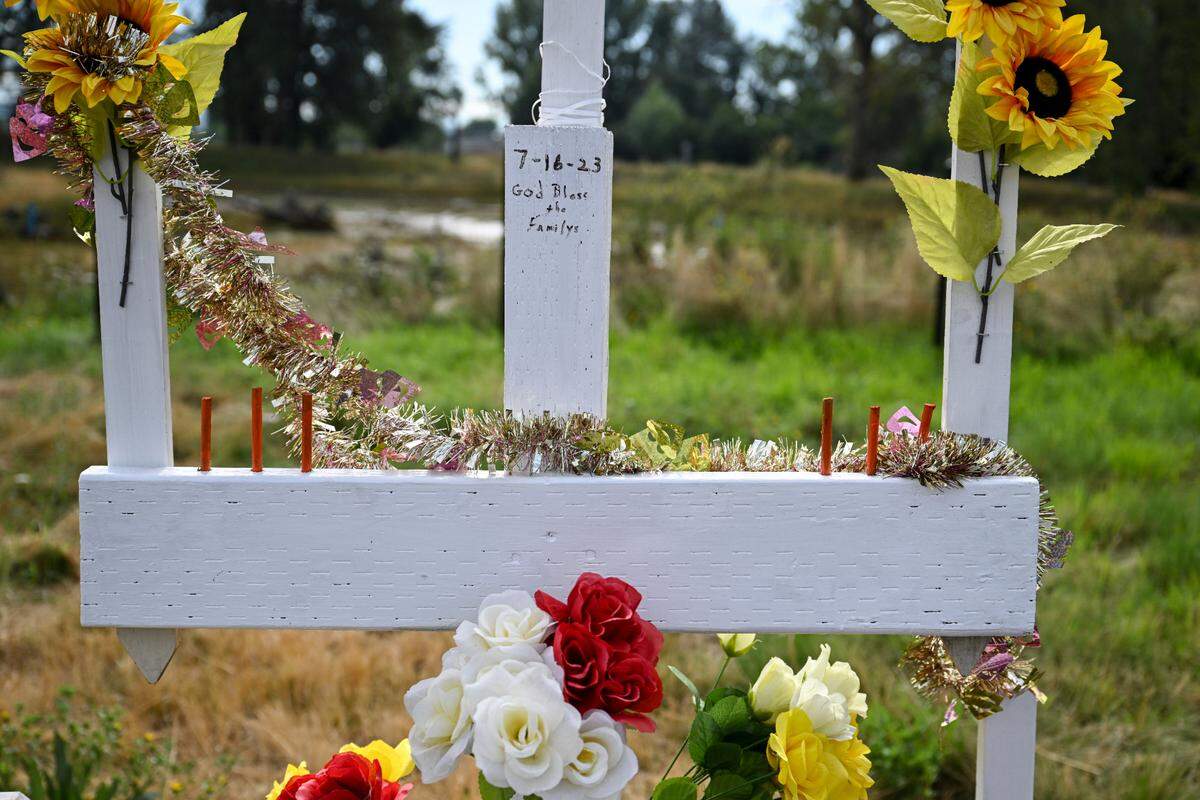
It was a Sunday, July 16 to be exact, which meant that McClatchy’s Rolf Boone, a longtime colleague on The Olympian staff who covers big stuff in Tacoma when no one else is around, broke the news. The rest of us had the day off.
There were six victims, and another in critical condition, casualties of what the TNT’s breaking coverage described as a “horrific wreck on the Tacoma Tideflats.”
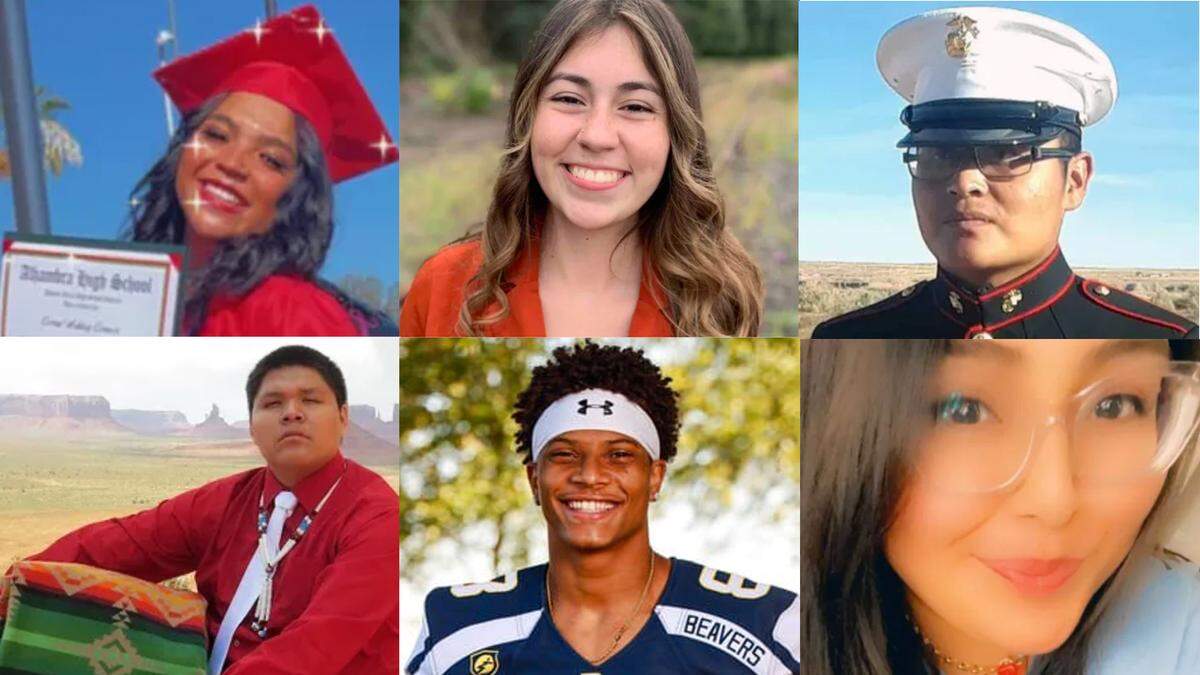
Five died at the scene, and another died on the way to the hospital. All of them — plus one man who survived – were packed into a Kia Forte traveling on Alexander Avenue when their vehicle was T-boned at the State Route 509 intersection by a white BMW SUV going north.
As the details emerged, it only got worse. We soon learned the victims were young — ranging in age from 19 to 25 — and from Arizona, in town for an Amway convention at the Tacoma Dome.
They were youthful and exuberant, their whole lives ahead of them, described in GoFundMe campaigns that soon emerged as beloved brothers and baby sisters and best friends since elementary.
At the same time, it wasn’t immediately clear who caused the deadly accident — and it’s still not: The State Patrol’s investigation remains pending. Local residents have expressed concerns about the safety of the intersection, as The News Tribune and others reported, but how it stacks up to other busy roadways and known danger spots remains difficult to say.
Drugs or alcohol intoxication aren’t believed to have been involved, troopers have indicated. We also know from WSP officials that speed was likely a factor, and that initial indications suggest one of the vehicles failed to stop for a red light.
Then there’s the unspoken part:
Kia Forte’s are compact sedans, only capable of seating five passengers safely — not seven.
A careless mistake could have been made, in other words.
Why we blame victims
Unsurprisingly, the possibility that a combination of human error and questionable decisions played any part in the outcome of the wreck was discussed at length in The News Tribune comments section.
It didn’t take long to spot the righteous indignation of the anonymous masses — or the conclusions they’d quickly reached.
“Although we feel the pain for the families’ loss … it is NOT the fault of the road. No matter how you slice it, if you are a competent driver, then you should take extra precautions when in an unfamiliar location,” wrote one online commenter with unsettling confidence.
“Nothing more than shifting blame for someone else’s poor decisions,” offered another.
It was all very familiar, taking me back to a different story, and a different time, which is how I knew what to expect.
In 2016, I wrote about a tragedy in Old Town, involving a young mother, 28-year-old Alexandria Lewis, who worked at a nearby law firm, and was hit and killed by an oncoming Amtrak passenger train she didn’t see coming while attempting to cross the dual set of railroad tracks on her way back from lunch on a mid-November afternoon.
A train sitting motionless on the first set of tracks blocked her view
Lewis’ death was the second at the train crossing in the span of just 12 months.
A year earlier, almost to the day, Cale Tyler, a 31-year-old local runner, was killed in nearly the same spot — under nearly identical circumstances.
Together, the two deaths made one thing clear, at least to me: The crossing’s design was flawed and lacked proper pedestrian safeguards, like a fence, warning signs and safety arms to prevent people from endangering themselves.
If some of those common-sense precautions had been in place, things would likely be different — which is exactly how I wrote it up.
Of course, I learned in short order that not everyone felt that way, which surprised me at the time and, in retrospect, revealed my own naivete.
While safety upgrades were eventually installed at the crossing — and the families of Tyler and Lewis were awarded $700,000 from the city of Tacoma as part of a 2020 court settlement — what I remember most vividly is the dozens and dozens of emails I received, and the level of certainty they suggested.
“We should all feel terrible sadness at the sudden loss of friends or family members. Once we are able to move beyond that — as difficult as it may be for those most directly affected — can you explain why it is the public’s responsibility to do the critical thinking for pedestrians crossing (the tracks)?” asked one reader, with apparent sincerity.
“As a youngster, I was taught to take responsibility for my own choices,” they added. “And that sometimes those choices, which may be poor, will have impactful consequences.”
Context and warning
When I spoke this week to Ceynar, the PLU psychology professor, I arrived with this conundrum in mind.
Ceynar told me her background was in the study of social psychology, which felt like a good start.
I hoped she might be able to help me make sense of a behavior I’d seen enough times to recognize it as a distinct thing — even if I didn’t have the right words to describe it just yet.
Another way to articulate the basic premise of just world theory is to call it “defensive attribution,” Ceynar explained. That’s how she often describes it in class.
“We all feel vulnerable and scared when we see people suffering. We also have a need to understand the world around us and make sense of things. It can be overwhelming. If I can blame a person for the bad thing that happened to them, then I don’t have to worry that the same bad thing might happen to me,” Ceynar said. “Oftentimes, these cognitive biases are simply automatic — mental shortcuts that help make sense of things quickly.”
As reasonable and rational as it sounds, particularly when you put it into writing, Ceynar’s by-the-book explanation didn’t entirely put me at ease.
Sure, the behavior in question might serve a purpose, helping average people navigate the often arbitrary brutality of life. But isn’t part of being human attempting to recognize these impulses and instinctive reactions and diagnose them for what they are, at least occasionally?
Isn’t that particularly important when behaviors manifest in toxic ways, like the blaming of victims or fighting progress that serves the common good?
Isn’t that one of the few things that separate us from wild animals and beasts, when you stop and think about it?
Ultimately, I found Ceynar’s perspective useful, including the warning she issued.
The intrinsic emotional, psychological and even spiritual need for a “just world” is one thing, Ceynar said, but that doesn’t prevent people from stopping to think before they instinctively cast unfair judgment — in real life, or an online comments section.
It just takes more work, Ceynar suggested.
“I think the anonymity of social media allows us to say things we might never say if grandma knew it was us. We scroll quickly and make snap judgments, (and) it’s a recipe for using these automatic processes,” Ceynar cautioned.
“To reach a more objective, fair conclusion we need to spend more time and effort understanding complex situations. Very rarely are we given the time and information to do that well,” she added.
“We’ve created a world where thoughtful, effortful decision making is almost impossible.”
This story was originally published September 28, 2023 at 5:00 AM.