Tacoma lost a critical arts and music venue — again. Why can’t we have nice things? | Opinion
It came fast, like a sucker punch thrown out of nowhere.
One day, Tacoma had a thriving music and arts venue — the kind of community hub that local scenes depend on, capable of fostering inspiration and expression while providing jobs and opportunities local artists desperately need.
The next day — poof! — it was gone.
Call it an abrupt end to a beloved and essential creative space.
Or, call it the latest chapter in a demoralizing story this scrappy, perpetually hard-luck city knows all too well.
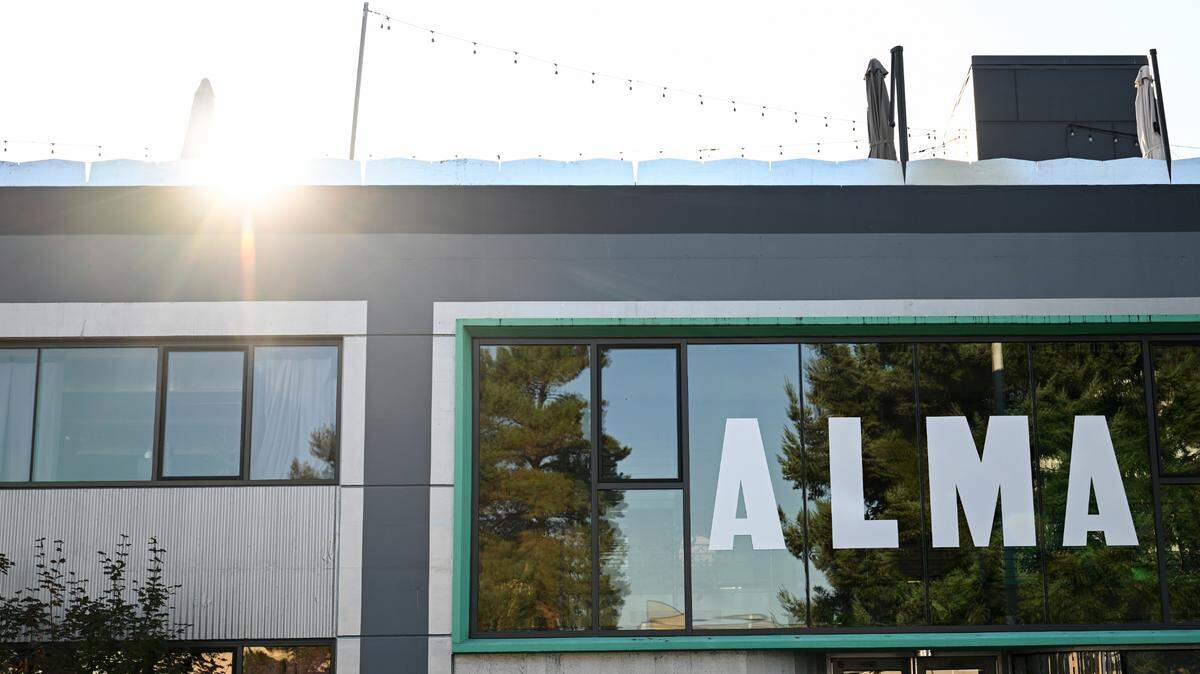
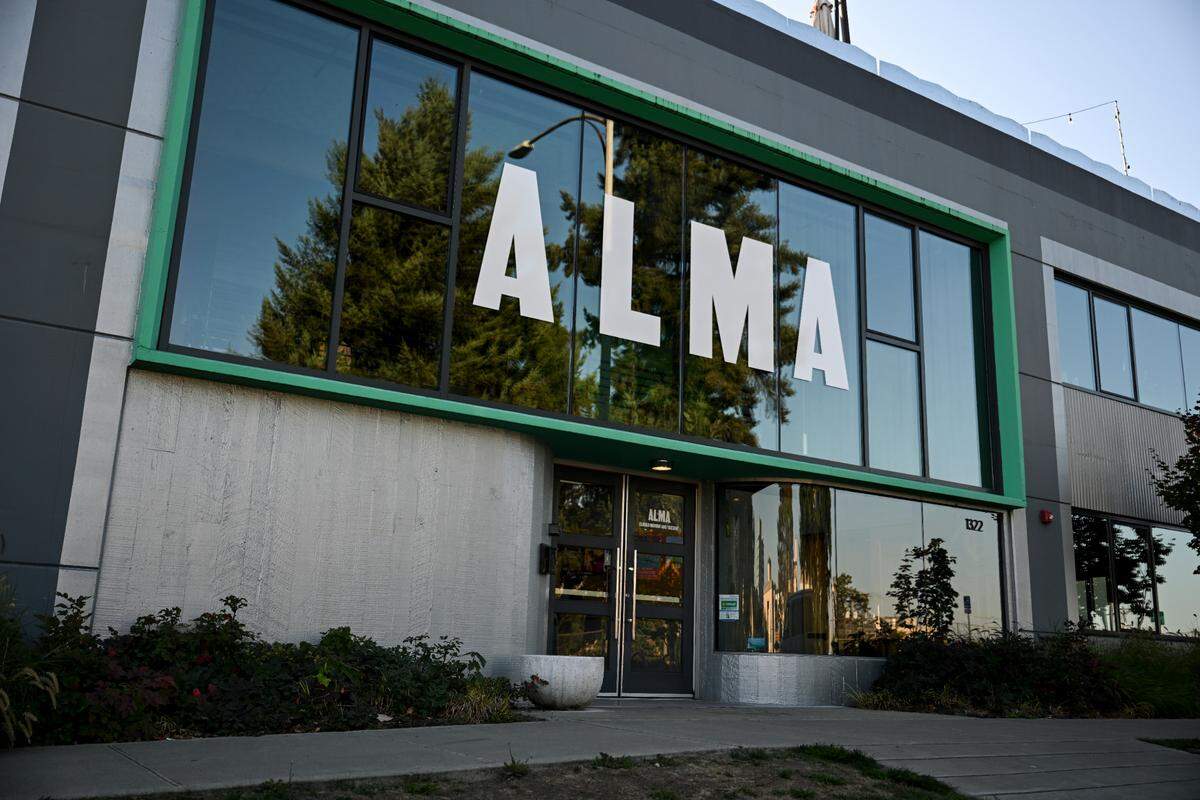
I’m talking about ALMA, the all-ages arts and music venue that unexpectedly closed earlier this year. It was Aug. 25, to be exact, when the philanthropic nonprofit responsible for writing the checks that brought the cultural incubator to life announced its intention to bail on the City of Destiny.
Since 2018, the Wend Collective — a “social impact fund” with millions to its name and ties to Walmart heir James Walton — had poured at least some of its vast resources into ALMA, a multipurpose arts and community center at 1322 Fawcett Ave.
A statement posted to ALMA’s website put an uplifting spin on the decision, thanking locals for their support, but semantics were secondary.
The backing that made ALMA possible — the outside money, to be more precise — was leaving town. That’s all that mattered.
ALMA was conceived as “an experiment with the intention of making great art accessible and a venue for great artists because we believed culture is critical to building successful communities,” the official statement declared, without divulging a specific reason for the decision to shut it down.
“It’s been an honor to be your neighbor, to serve our customers,” the Wend Collective’s online farewell added, “and to partner with others in the community to make us all better.”
Shortly after ALMA’s closure was announced, Tacoma’s arts and music scene began to wonder what would come next. It’s what we’ve been trained to do.
Could the building be sold to a local nonprofit or community group? Could the city step in? All are questions worth asking
Earlier this month a Wend Collective spokesperson said nothing is imminent and there are no deals in the works.
Meanwhile, City of Tacoma spokesperson Maria Lee and Tacoma Public Schools spokesperson Tanisha Jumper indicated neither entity is entertaining a purchase of the property.
Mixed reaction
Honorable intentions aside, ALMA’s reliance on the Wend Collective was an awkward fit from the beginning.
Given the city’s entrenched DIY pathos, forged out of scarcity and necessity, there’s a palpable disdain for all things corporate — including potentially dubious financial support.
This is Tacoma, after all. It’s who we are.
Sure, the Walmart eventually found us, as Neko feared.
That doesn’t mean the unprompted generosity of a Walton — even a cousin — was received without suspicion and side-eye.
“ALMA was its own monster. Great room, in a cool building, but the Walmart ties are why I couldn’t personally support them,” said former Portrait of Poverty guitarist and local live music venue owner Ken “Flash” Connel, who operated and booked the well-known Sixth Avenue rock club Hell’s Kitchen for roughly a decade in the early 2000s.
“They also tried to run it like it was in Seattle,” added Connel, a caustic punk from a bygone era with a Tacoma chip on his shoulder. “Plus, no parking around there didn’t help.”
Still, facts are facts, regardless of Tacoma’s trademark snarl — or where the money came from.
ALMA provided Tacoma with an impressive 500-seat venue, in addition to expansive restaurant, classroom, kitchen and recording studio space. The Wend Collective owns the property and was largely responsible for its recent development and transformation, including paying the salaries of those who filled it with opportunities.
During its run ALMA hosted live music and events and served food and cocktails. It eventually offered its space for Tacoma Public Schools kids from three high schools participating in an Elements of Education initiative, while serving as a home to important community and cultural events, like the Native Art Market.
ALMA also employed 48 local people, not counting contracted security and production staff. That’s important.
Now, ALMA is gone. The run is over; back to square one.
It’s a tale as old as time in Tacoma, and one that raises a nagging, familiar question:
Why can’t we have nice things in this town — for the long run?
Strange bedfellows
Like so many audacious, short-lived efforts that came before it, ALMA was powered by real-life locals striving to build something meaningful in the imperfect city they love.
If that meant relying on unusual partnerships and using the bits, pieces and finite resources on hand, so be it.
Even if it meant partnering with a Walton.
Lisa Fruichantie, who has a long history in Tacoma’s arts scene, was responsible for guiding ALMA in recent years, including being tasked with delivering the news of its imminent closure to employees.
Fruichantie, who served as CEO, described ALMA as a cultivator for Tacoma’s eternally burgeoning arts and culture scene, helping new artists blossom and older artists find homes.
Fruichantie said ALMA was also an ally in the fight for equity and social justice, including its support of local food justice and indigenous sovereignty.
At the end of the day, what ALMA did in Tacoma was the direct result of the passionate locals it employed and the invested community partners it worked with, Fruichantie said.
“I am profoundly sorry that we are experiencing this collective loss right now, for each of us and our community, both seen and unseen,” Fruichantie explained via email.
“The common thread for the organization was the utilization of our funding to do whatever was in our power to support artists and activism throughout many pockets of our community,” she added.
Fruichantie chose to “use ALMA’s economic privilege and power” as a force for local good, she told me.
Court C Coffeehouse
The tightrope act Fruichantie describes — using unorthodox means to achieve a worthy goal — is a challenge Chris Lunn can relate to.
Lunn arrived in Tacoma roughly 60 years ago, and it wasn’t long before he found a similar opportunity, he told me recently.
Having relocated from California, Lunn was a musician with experience putting on open-mic nights. He’d built a thriving one in Palo Alto, he explained, known for hosting members of the Grateful Dead and other local luminaries of the late 1960s folk and rock scene. But his parents lived in Pierce County and they were aging, so he pulled up stakes and moved north at a time when angst and turmoil were in the air.
Lunn, now 86, took up residence on Silcox Island — which was only accessible by rowboat. It was a lifestyle he embraced as an established member of the counterculture.
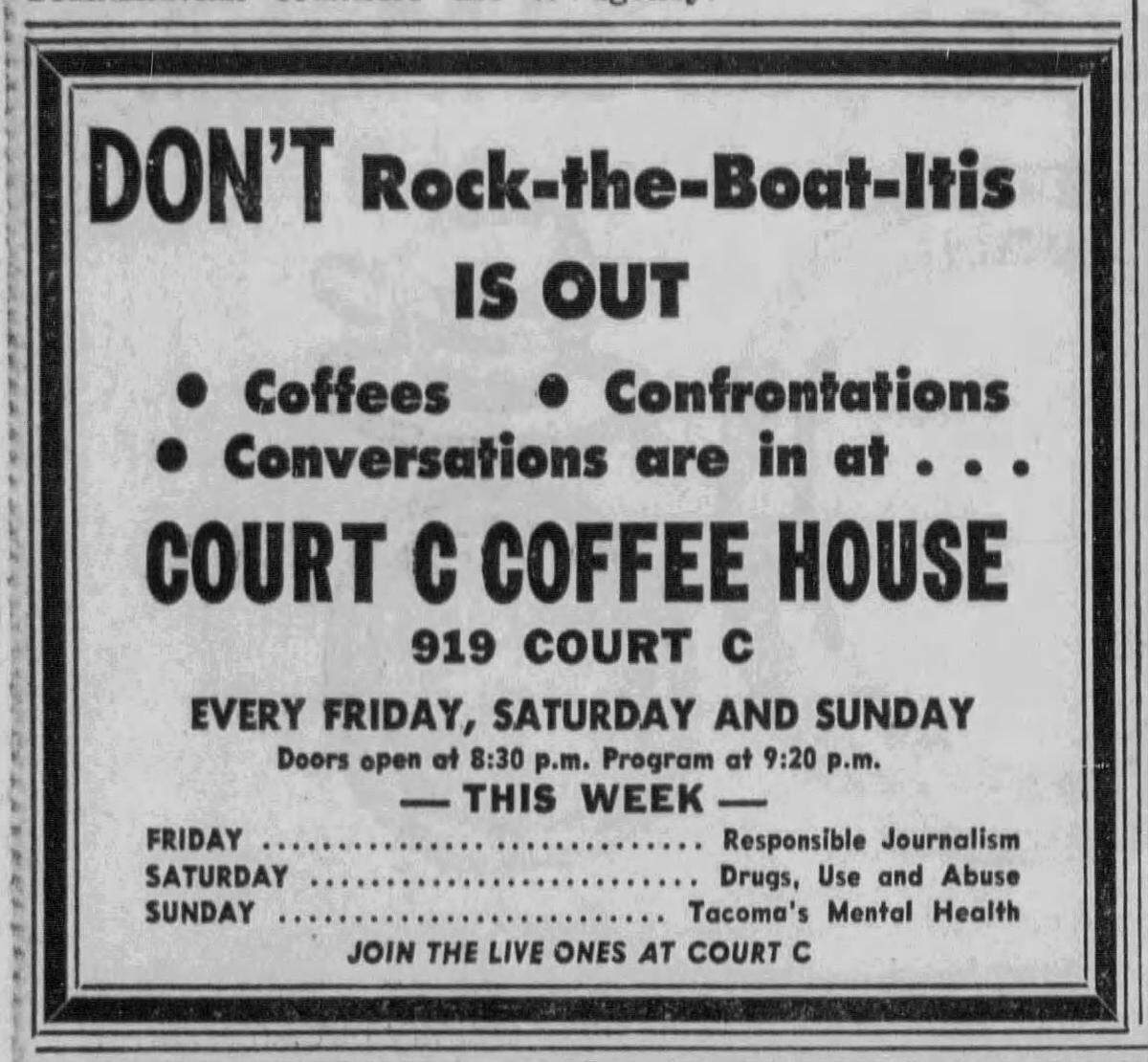
Lunn’s mother lived in Bonney Lake. He remembers the day she drew his attention to an ad in The News Tribune, announcing that a relatively new coffee shop downtown was looking for someone to book live music.
Known as Court C Coffeehouse, it was located at 915 Court C, in an old building that’s been gone for almost four decades now — accessible through an alleyway door between Broadway and Market, not far from the historic Rialto Theater.
Lunn inquired and got the gig. He held onto it for roughly six years, beginning in 1969.
“It was right up my alley,” said Lunn, who’s now a pilates instructor at local YMCAs.
“It took off immediately.”
An unusual partnership
Once home to KMO Radio — the AM “voice of Tacoma” — Court C Coffeehouse was designed to play host to community gatherings and important civic conversations.
There was just one curveball: The new venue was the brainchild of a group of like-minded local faith leaders — largely ordained ministers and average lay people from Tacoma-area churches, including the recently organized Associated Ministries.
As an article in The News Tribune put it, Court C Coffeehouse was conceived as “a place for dissident youth to gather, talk about their problems and attempt some solutions and reconciliation.”
It was a “revolutionary” idea, the Rev. Lynn Hodges, a prominent local Baptist minister who’s credited in the annals as Court C Coffeehouse’s driving force, would later tell Tacoma’s daily paper.
According to News Tribune archives, Court C Coffeehouse’s first event included a public discussion on “homosexuality,” at a time when the open discussion of contemporary LGBTQ issues was controversial and potentially dangerous. In 1968, the year it opened, the United States was enduring its bloodiest year in Vietnam, and the battle for long-overdue civil rights at home had given rise to the Black Panther Party and broader Black Power movement.
From Lunn’s perspective?
It was a chance too good to pass up, regardless of how many clergymen were involved — or the higher power they believed in.
“The group of ministers got together and said, ‘Let’s put on programs and get some discussion.’... They gave me the space to use, and I put music on after their programs, at first, and then also ran an open mic during the week,” Lunn said.
“We would put anything on, in any kind of format,” he added. “We didn’t care. We just knew we could do it.”
Birth of an Artists’ Mall
Success quickly bred expansion at Court C.
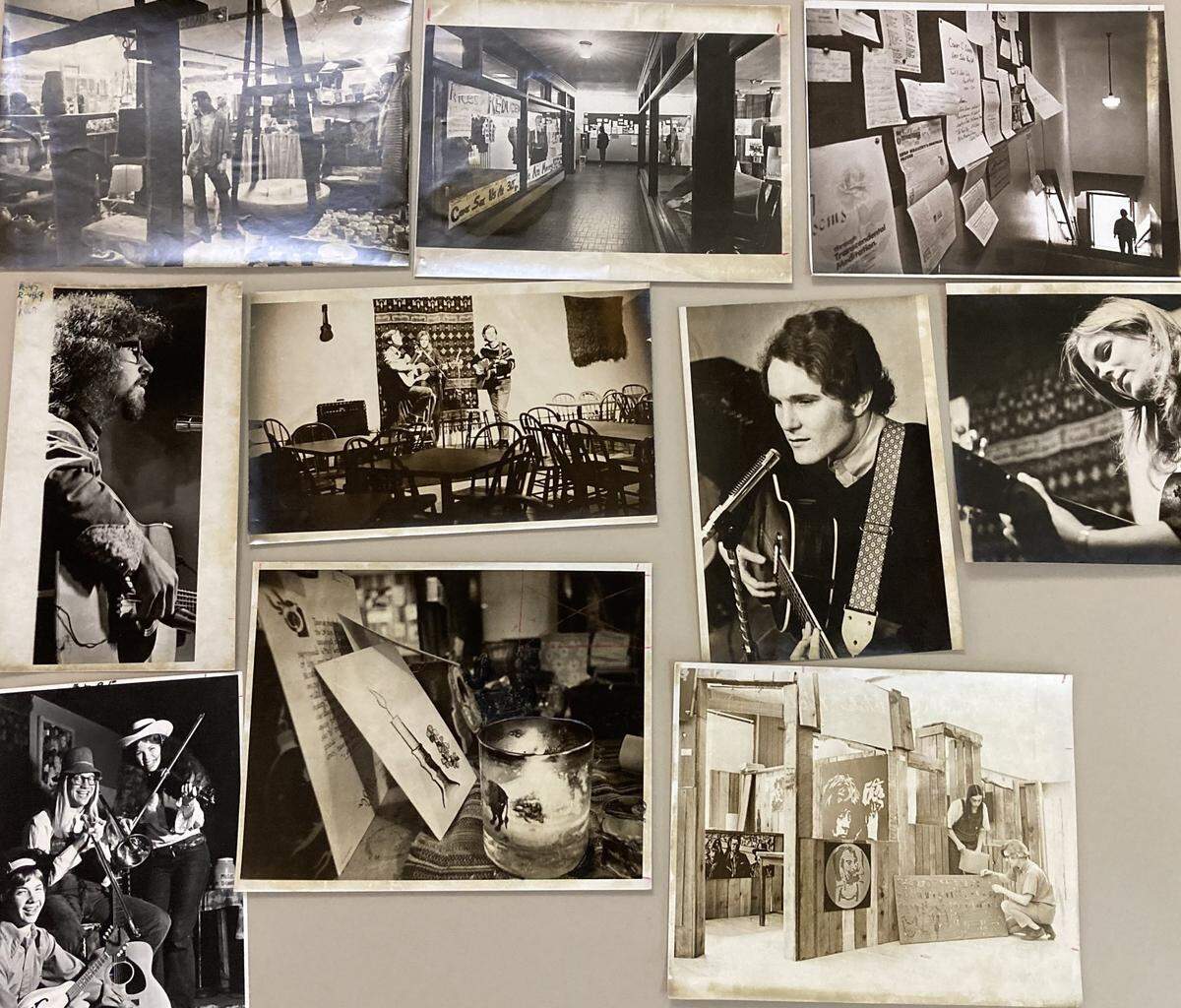
Lunn’s open mics were a hit. His first featured Seattle singer-songwriter Tim Noah, who would go on to become a household name in children’s entertainment. Noah later credited Court C Coffeehouse’s stage with helping to change his life. Well-known Seattle folk singer Jim Page has shared similar sentiments. Before long, Lunn was booking multiple nights of music most weeks, including jazz, blues and folk, he recalled.
He wasn’t done. By the early 1970s, the building the coffee shop occupied, previously full of unused space, had been developed into what Lunn called an “artists’ mall,” providing essential studios and shops to dozens of local creatives for rents even they could afford.
David Horsey, who would go on to win Pulitzers as an editorial cartoonist, described Court C Coffeehouse and Artist Mall as “a springboard for budding musicians” in a piece he wrote for The News Tribune as a college intern almost 50 years ago.
In the minds of many, the community venue and cheap space was exactly what Tacoma’s hardscrabble arts, music and creative scene needed. It was also as grassroots as it gets.
The property’s owner “didn’t have any use for this huge building, and they weren’t getting any money off it,” Lunn recalled.
“They said, ‘If you want to use it, pay us $25 a month,’ so that’s what we did,” he added.
“We got this whole building and put all these artists in there for 25 bucks. That was the cost of the thing.”
Court C Coffeehouse and Artist Mall was also short-lived, its seven-year run gone in an instant. It closed for good in the late summer of 1975.
Hodges had relocated to San Francisco three years prior.
Lunn called it quits not long before the Court C empire closed for good. He went on to found the nonprofit Victory Music and has enjoyed a long career producing live music in the area, including the long-running open mic at the Antique Sandwich Company near Ruston. He’s also a local pilates instructor.
When it shuttered in 1975, a short write-up in The News Tribune described Court C Coffeehouse and Artist Mall as “a victim of economic confusion and the changing directions of its proprietors.”
Today, Lunn blames Tacoma’s failed urban renewal efforts of the era, saying he “left because downtown was so bad. There were no people; they couldn’t get in there.”
Local artist Jay Tronsdale, who died in 1994 at the age of 61, also witnessed the fall of Court C. He’d spent roughly a decade as an art teacher in the Clover Park School District before quitting to become a freelance creative, working in acrylic paints and as a clothes and jewelry designer until his death.
Tronsdale was also one of the last people willing to give up on the Court C experiment, serving as the property’s manager until the end.
Tronsdale put it succinctly, speaking to The News Tribune in 1975.:
“What Court C has been to me is life,” Tronsdale said.
“I don’t see why people can’t understand it’s an important thing to have a place like this.”
History of setbacks
It’s been 48 years since Court C Coffeehouse closed. Plenty has changed during that time, from the skyline to the societal problems Tacoma faces.
One thing that hasn’t?
The underlying challenge the venue’s abrupt departure exposed — and the necessity for something like it, a reality Tronsdale and others described way back when.
Tacoma touts its artistic credentials proudly, but when it comes to sustaining essential arts and music spaces — and creative endeavors of similar, community-building motivations — the City of Destiny has regularly come up short.
Even the critical support provided through the city’s Spaceworks program has limitations and, to some extent, an implied expiration. The long-running effort has received well-earned acclaim for helping to birth a stable of important creative enterprises over the years, from Tinkertopia to eTc Tacoma; it’s an example of the city’s commitment to the arts and creativity. But the assistance it provides isn’t designed to last forever.
It’s a failure that has had a generational impact, squandering local talent and forcing many Tacoma artists to look elsewhere for the opportunities we could be providing here.
Sure, we’ve had clubs and venues over the years, many of them beloved among locals, like the Swiss, Jazzbones, the aforementioned Hell’s Kitchen and plenty of others. We’ve had committed nonprofits and museums.
What we’ve never had — for more than a few years at a time — is a space dedicated to the arts, designed with the sole purpose of lifting the whole scene up, one creator at a time.
A place like Court C, cobbled together by locals.
Or a place like ALMA, which depended on backing that eventually ran dry — chasing a dream that didn’t materialize fast enough.
Wanted: Sustainable support
Adam McKinney has covered arts and music in Tacoma for various publications over the last 15 years.
He’s intimately familiar with Tacoma’s tendency to welcome and bid farewell to important venues and spaces, in short order.
McKinney has seen too many things come and go over the years to remember, from flash-in-the-pan pop-up venues to resources designed to help struggling artists get by.
Many have relied on support that was easy to critique, but hard to turn down — much like the Wend Collective’s sojourn in T-Town.
Still, McKinney noted that two things can be true at the same time.
For instance, ALMA was an essential resource and venue in a city that desperately needed it. The support that made it possible was also less than ideal, at least in some people’s opinion.
The clear takeaway, if you ask me?
If Tacoma is ever going to build something special — and keep it — we have to find a way to come together and support it, long term, as a city.
What happens from here is uncertain. Same as it ever was.
One thing that’s not?
We’ve taken handouts and empty promises as far as they’ll go.
History suggests Tacoma needs a new, long-term approach.
“I know people who had no knowledge of the negative sides of ALMA and were gutted by its closing,” McKinney recently told me.
“Regardless of how (the Wend Collective) handled it, the idea was right — having a facility that incubates new talent and brings in bigger touring acts,” he added.
“That’s something we just don’t have.”
This story was originally published November 28, 2023 at 5:00 AM.