
Inspectors were denied entry to Tacoma’s private immigration detention center. Why? | Opinion
Residents of Tacoma count on our local and state governments to help make sure the restaurants we eat at have sanitary kitchens; that the drivers on our roads comply with safety rules; that the hospitals that treat us do so in accordance with professional standards.
Why would we expect any less for private prisons?
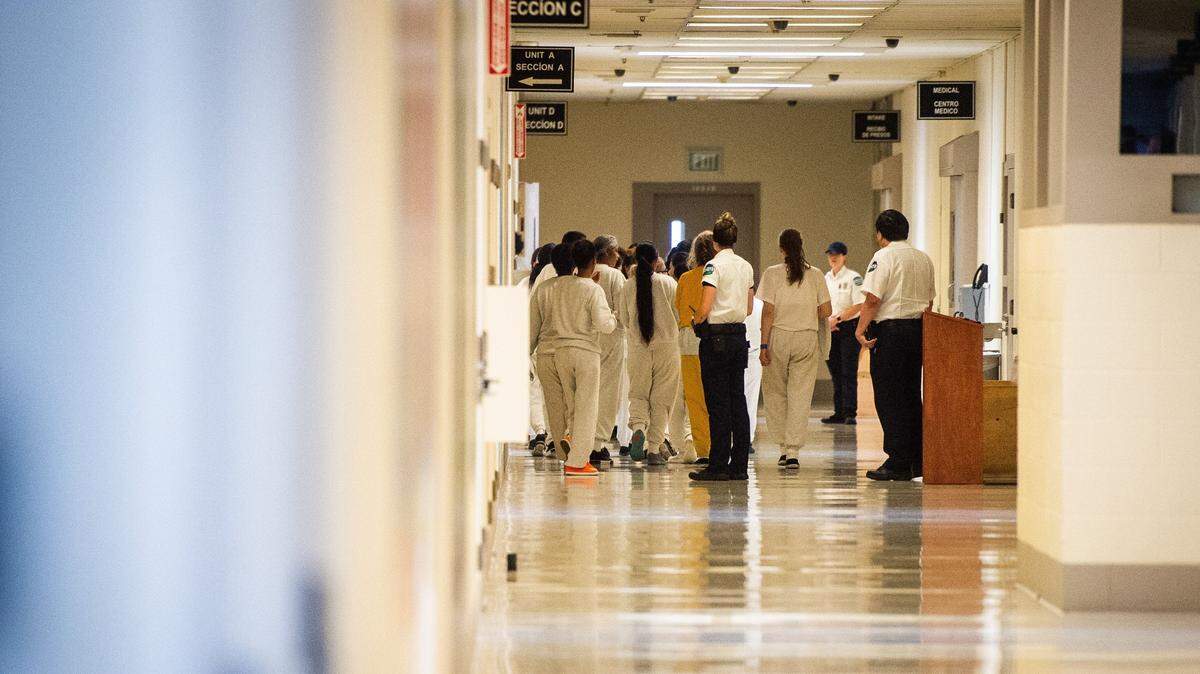
Illogically, this is exactly what GEO Group — the private company that, since 2004, has run the immigration detention facility on Tacoma’s tideflats, where up to 1,975 people may be held at any given time on civil immigration violations — has recently argued in court.
When employees from Washington State’s Department of Health and its Department of Labor and Industries have showed up to conduct inspections, as they would of any other business operating under Washington state law, they have repeatedly been denied entry to the Northwest ICE Processing Center, recent reporting has shown.
There is a long history here. After years of complaints of poor conditions at the facility — problems ranging from inadequate food, to lack of sanitation, to an overuse of solitary confinement reaching levels considered torture under international law — in 2023 the Washington State Legislature passed HB 1470, a law drafted by the same people detained at NWIPC and experts on the issue. The legislation instructs state agencies to conduct inspections of this facility just as they would of other private businesses.
The law provides specific benchmarks for decent conditions based on the experience of those detained there; among its most potent advocates were those who have experienced firsthand the horrors of detention in that place.
GEO, of course, doesn’t like this law; it cuts into their business model. It’s not hard to understand why: spending less on food means the company reaps more profit; more infrequent medical care could portend a bonus for the CEO.
Yet Labor and Industries have long conducted inspections of the facility; their most recent visit was in May 2022, after which they cited GEO for violations. In response to complaints by GEO, the Ninth Circuit Court of Appeals has upheld the right of states to regulate businesses operating in their jurisdictions, including private prisons like the NWIPC. If the state has a stake in ensuring restaurants and roads are safe, surely it can also regulate private facilities where humans are held for months, even years, at a time — all too often in dangerous conditions.
According to sworn testimony in federal court, from April to November 2023 alone, the State Department of Health received over 200 complaints from people detained at the NWIPC. Concerns included a lack of attention to medical needs, such as stroke, heart conditions, internal bleeding, and more. Food containing foreign objects was reported, as were other failures to comply with health requirements. Some detains were forced use of dirty clothing and bedsheets, including those soiled previously by other people. Sometimes, the facility used solitary confinement in retaliatory fashion, in contravention of international human rights law as well as the standards of Washington’s HB 1470.
Yet when employees from the Department of Health, following the requirements of our state’s laws and in compliance with the jobs they were hired to do, arrived to investigate these complaints in recent months, they were turned away at the door.
What is GEO hiding?
Recent reports by the University of Washington Center for Human Rights offer some suggestions: based on the facility’s own records, researchers found the NWIPC routinely fails to comply with GEO and ICE’s internal standards for fair conditions. To suppress resistance, it responds to those who speak out by spraying them with chemical gases or sending them to solitary confinement.
Undeterred, people inside continue to organize in defense of their basic rights. In 2023 alone, the facility saw seven hunger strikes; in 2024, we have already documented three more.
The organization I founded 10 years ago, La Resistencia, is based on a simple principle. There can be no justice as long as we allow private companies like GEO to rake in profits from human suffering.
In passing HB 1470, the Washington State Legislature indicated that it agreed, and sought to hold private prisons accountable to basic principles of human decency.
If GEO can’t abide by these simple rules, they have no right doing business in our state.
Would you eat at a restaurant that denies inspections of its kitchen? Drive on roads where motorists failed to comply with traffic rules?
Then why would you allow a private company to lock up your neighbors and pass you the bill, yet claim you had no right to even inquire about what went on behind closed doors?
Maru Mora Villalpando is a nationally recognized long-time community organizer and founder of La Resistencia, an immigrant-led group fighting to end all detentions and deportations in Washington State.