Tacoma’s best band turns 40 with a big show. But what if the Seattle-Tacoma feud is a lie?
For Bill Henderson, the reaction, a mix of disgust and dysfunctional Tacoma pride, appeared visceral. It seemed to come instinctively.
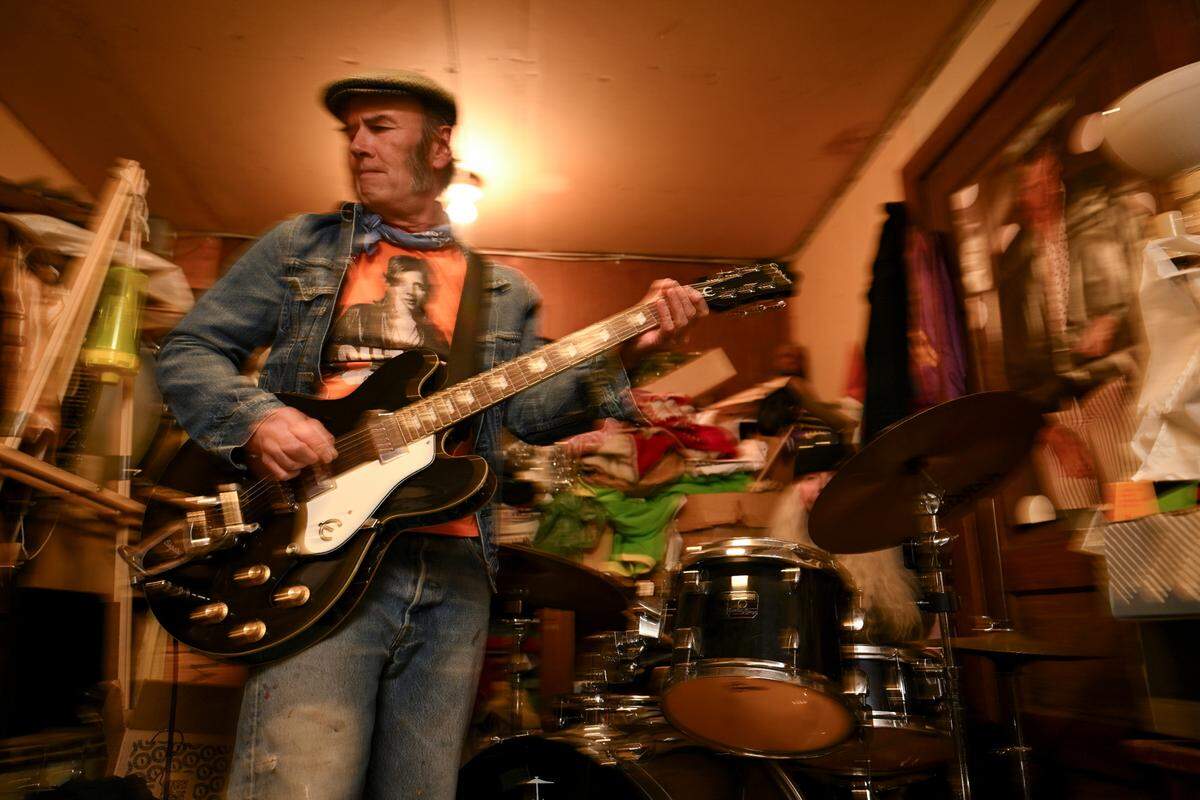
It was late summer, after 8 p.m., still light out. We were sitting in a disfigured circle of lawn chairs, drinking half-warm Rainiers at the damp and wooded Parkland residence where Henderson grew up and his legendary band was born. Referred to on stage as “Big Kahuna,” guitarist of Tacoma’s iconic Girl Trouble, now in its 40th year “eluding fame,” he was joined by his rock and roll soulmates: bassist Dale Phillips, singer-slash-frontman Kurt “K.P. Kendall and his older sister, Bon — same surname, but known behind the kit as Von Wheelie.
The subject at hand was familiar: the grief that all of us, historically, as Tacomans and, in Girl Trouble’s case, a band that’s now spent four decades as part of the scene, have taken from folks up north, most notably Seattle.
Eyes rolled. Middle fingers raised. Memories of gnawing slights followed.
For Henderson, one example in particular shot to the forefront. In his mind, everything about it typified the snotty, elitist disregard that people like him — and where he’s from — have long been subjected to.
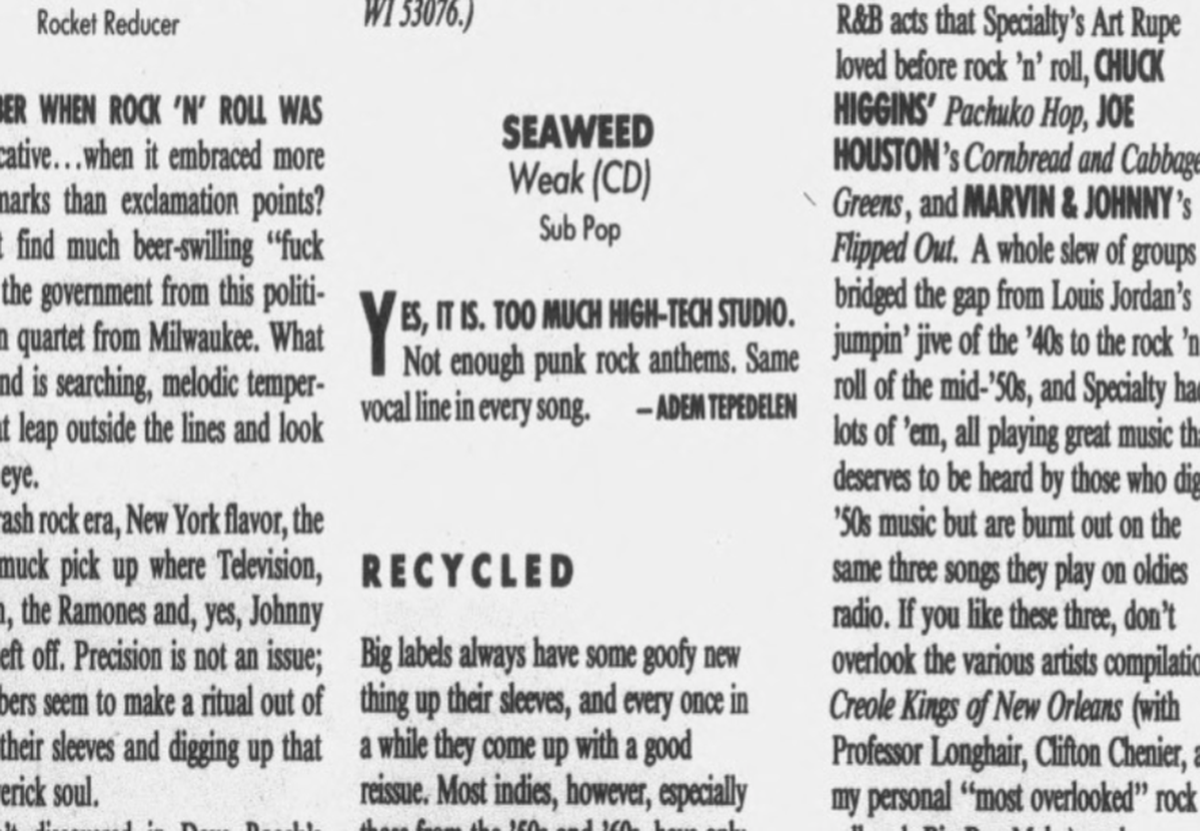
It was an album review from May 1992 that appeared in The Rocket. Four sentences, spanning only three lines of print, published in the legendary Seattle alt-press paper responsible for, among other things, chronicling the sweaty, distorted rise and eventual worldwide domination of the Pacific Northwest music scene in the 1980s and ‘90s.
The real kicker? The review in question wasn’t even about Henderson’s band. It was directed at another Tacoma group. He felt it all the same.
It was The Rocket’s take on Weak, Seaweed’s third full-length, and the punk band’s second for Sub Pop.
For Bill Henderson? The review was an obvious and brazen shot — taken by some snob from Seattle (of course) at some band from Tacoma (of course).
In particular, he recalled the first line of The Rocket’s write-up on Weak: “Yes, it is.” The words sprung from his tongue, like muscle memory, 31 years after the fact.
“Everyone kind of crapped on Tacoma,” he told me on that warm night seven months ago.
“Being Tacoma was kind of taboo. You were always looked down on. I think it made us stubborn and more determined. … You have to be a stubborn person to be in Tacoma.”
We all nodded in agreement. Truer words had never been spoken.
Then an unnerving thing happened:
I tracked that old record review down, recently, in anticipation of Girl Trouble’s big 40th-anniversary show on Friday, March 8 at the McMenamins Spanish Ballroom in Tacoma.
I assumed I’d find a time capsule validating one of the things I hold most dear as a Tacoman: the makings of my city’s perpetual underdog status and the defiant self-image people like me have crafted around it.
That’s not what happened, though. The review is brutal, don’t get me wrong.
But what if the age-old grudge was always more pomp than circumstance?
What if no one outside of Tacoma ever gave much thought to this city or where we’re from?
What if the disrespect Henderson remembers so vividly was just offhand snark, and the righteous satisfaction we’ve taken over the decades from being cast off and maligned by Seattle — whether it was in the arts, music or the world of business — was largely a delusion of our own making?
The Rocket preserved
Made up of graduates of Lakes, Stadium, Puyallup and Washington high schools, Seaweed followed the 1992 release of Weak the next year with Four — the band’s fourth album.
Then, in a move that was hardly unique for Pacific Northwest bands at the time — even some that technically called Tacoma home — Seaweed dropped its fifth album, the aptly titled Spanaway, in 1995, on a major label.
Released on the Disney subsidiary Hollywood Records — according to lore, after a record executive bidding war following a Seaweed SXSW appearance — Spanaway was a fine-tuned, big-budget alternative punk rock barrage that earned critical acclaim and comparisons. It’s a record panned straight from the musical gold rush that hit Seattle after “grunge” exploded, like so many others from an era now crystallized in nostalgic amber.
In 1992, though, The Rocket was having none of it.
“Yes, it is,” proclaimed the opening salvo of the paper’s review of Seaweed’s Weak, just as Henderson recalled, after all these years.
“Too much high-tech studio. Not enough punk rock anthems. Same vocal line in every song,” the review concluded, all but burying alive an album that went on to spawn the college radio favorite “Recall.”
That’s it. That’s the review. Eighteen words, in total.
I can confirm this now, because the entire Rocket catalog — 336 issues, spanning 1979 to 2000 — was recently digitized and made available to the public through the Washington State Library.
Late last year, the expansive Rocket archive went live.
The first thing I did was search “Seaweed” + “Weak.” I couldn’t help it.
The next thing I did was reach out to Charles R. Cross, The Rocket’s longtime editor and a Seattle-based music journalist now most famous for documenting the life and times of Nirvana’s Kurt Cobain.
My angle was straightforward, and as sound as could be, at least in my mind.I wanted to get at the root of the chip on Tacoma’s musical shoulder, drawing from a newly available digital record that I assumed — safely, I was certain — contained no shortage of insults and digs.
“Not exactly sure how to respond here,” Cross fired back via email the same day.
“I don’t want to sound defensive,” one of my alt-press heroes told me without mincing words, “but I’m not sure I buy into the theme of what you’re suggesting.”
What on earth?
The following week, after some backpedaling and face-saving on my part, Cross was generous enough to speak with me by phone from his Seattle-area home. He still wasn’t buying what I was selling, but the subject intrigued him, he told me, at least “bizarrely.”
In part, I learned, that’s because Cross is currently working on his latest book, this one focused on the “outsider” status that any aspiring band or musician from the Pacific Northwest had in the 1980s.
Back when all we had in this far-flung corner was Boeing, a handful of nerdy college dropouts with a love of computers and fewer than 20 Starbucks locations, the idea of any band from this area “making it” was pure “sci-fi,” he contended.
The feeling I described was real, Cross suggested, but it wasn’t a Tacoma thing, per se.
It was everyone.
As for Tacoma? Cross always loved the place, he maintained, including Girl Trouble and Seaweed, both of whom graced the cover of the paper over the years, he noted.
“I think Girl Trouble really embodies the ethic of Tacoma, which is blue collar, working class, we’re going to do it ourselves. “We like the Tacoma vibe. We like the fact that nobody else knows about our special hamburger place. That’s part of the reason we love it here.’ And I love that aspect of Tacoma, too,” said Cross, who oversaw The Rocket during its two-decade-plus run.
“In a way, it feels like what all of the old Northwest used to be like. People in Tacoma embody that — the idea that we’re almost on the frontier of culture, and we’re happy for it. … So much of the city’s ethos is rooted in that ” he added.
“I can only speak for myself and for The Rocket, but we loved Tacoma, and actually, it was the opposite: I think we had a bias towards bands from Tacoma.”
‘No one cares where you were from’
Looking back on The Rocket now, through the magic of hindsight and digitization, I can confirm Cross’ general assessment: There was no shortage of Tacoma bands covered, and much of what was published — outside of the paper’s review of Weak, at least — is marked by fascinated, outsider admiration, not one-upping nastiness.
Still, it’s also easy to pick up on the biting, big-brother dismissal that’s likely at the root of what people like the Big Kahuna and so many other proud Tacomans feel at their core. And when it comes to the history of rock and roll, it’s not like the Sonics, Wailers or Ventures ever got the credit they deserve.
“Drive south from Seattle on I-5 and you’ll encounter the stench of Tacoma about the time you get to the new Tacoma Dome. It transforms the air, this foul odor, making it into a putrid cloud that burns your nostrils and lungs,” wrote the great Dennis Eichorn, under the byline Ike Horn, in the September 1982 issue of The Rocket.
Eichorn adventured down south for a night out in the City of Destiny for his piece, at a time when the Asarco smelter still towered and downtown was still “bombed out” like “Beirut,” in the words of former mayor Harold Moss.
Eichorn ultimately concluded his column with compliments, noting that “if adversity breads strength then musicians from Tacoma who make it to the top of the heap are going to be tougher than owl (expletive) in the noonday sun.”
It hardly mattered. There’s no nuance in this fight. Just another example of the way Tacoma has always been treated, at least in the minds of many.
In other words? We’re not making it up in Tacoma. But the idea that the city and its residents have served as nothing more than a punching bag for Seattle musicians and scene makers isn’t quite right, either.
Zingers might have been lobbed, but it wasn’t personal. Much like today, some of the people and musicians most prominently associated with Seattle actually liked Tacoma better.
The city was raw and more real. Besides, no one was actually from Seattle to begin with.
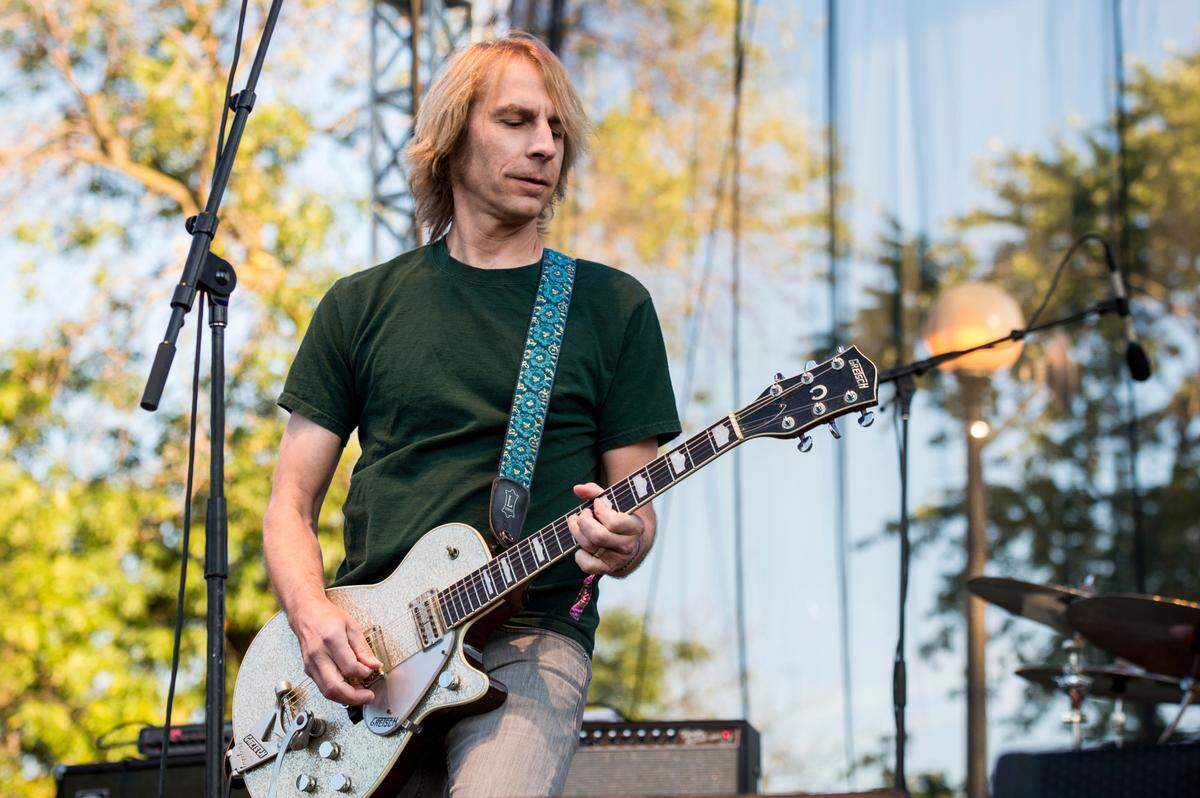
Scott McCaughey is a former writer for The Rocket and the leader of the Young Fresh Fellows. Recently, he told me he “never thought of the smell or any murders” when Tacoma came to mind.
“Because it’s seen as a poor sister, the artists from (Tacoma), like Girl Trouble and Neko Case, are always proud to make their Tacoma-ness a big part of their image and history,” McCaughey said.
“Now that is cool.”
Mark Arm, frontman of Seattle’s Mudhoney — and a rocker who may or may not have coined the term “grunge” — put it this way when we spoke by phone last week:
“Everyone I know that has seen Girl Trouble loves Girl Trouble. It doesn’t matter where they’re from. They’re proud of it, and that’s great,” Arm told me.
“I’m not one who’s really nationalistic or even local-istic,” he added.
“You could knock down any number of Seattle bands, and rightly so. I would not feel bad about that. Like, oh, they’re from Seattle? I’m gonna back my buddies from Seattle – who I couldn’t give a (expletive) about? … No one cares where you were from.”
Arm is one of a host of Pacific Northwest local music legends scheduled to perform at Girl Trouble’s 40th anniversary show Friday.
He grew up in the Kirkland area.
The chip on Tacoma’s shoulder
The question, then, is where does this leave us — in Grit City?
If we’ve been living a low-grade lie since the beginning of time, what does this say about us — and this broken, beautiful city we call home?
On one hand, facing up to the idea that the city’s hard-earned image as a place fit for outsiders and outcasts — and a place that’s constantly the butt of Seattle’s barbs — has never been all it’s cracked up to be could be unmooring, transforming up into down and left into right.
But perhaps it’s better this way — and the identity that’s revealed through an objective analysis of the facts tells us more about ourselves than a facade ever could.
Wade Neal, Seaweed’s guitarist, didn’t remember the record review that served as the impetus for this exploration of Tacoma’s rock and roll psyche, at least until I reminded him.
Neal certainly remembers what it was like to be a band from Tacoma back in the day, however.
Last week, he told me it doesn’t matter what other people say, or what they say. It never did.
“It was a lot of fun, being from Tacoma” Neal said. “You just sort of grew up going, ‘I want to do this. I don’t have a lot of resources, but let’s try something.’”
“I think that’s very Tacoma,” he added, “and it’s something I’m proud of.”
Dave Verellen, who graduated from Lakes High School in 1996 and rose to national prominence as lead singer for the influential Tacoma-based hardcore band Botch, suspects Neal has a point.
Verellen, whose band toured the world and earned critical acclaim, told me that not all of the cold shoulders were make-believe. They’re still not. The last thing Tacoma needs is another cupcake shop owner exported from Seattle to save us, he told me, and he still finds the Emerald City’s superiority complex grating.
At the same time, suggesting that Tacoma simply carries a chip on its shoulder doesn’t do the history justice, Verellen believes.
It implies we have something to prove, he told me, and the truth is we don’t — and never have.
That’s what the Seattle grudge has always been about, whether the smack talk was real or some of it was in our heads. And Tacoma is unique, he told me. With its history of struggle, swings and misses, perseverance and scrappiness, it’s not just somewhere in the shadow of another.
“For me, it’s a claim to fame. … Seattle and Tacoma are different places, and I like to force the issue,” Verellen said.
“I start every set with an introduction: We’re Botch, from Tacoma, Washington,” he told me.
“I want people to know.”
This story was originally published March 8, 2024 at 5:00 AM.