
A mega-warehouse project threatens Tacoma’s health. It’s not the only one | Opinion
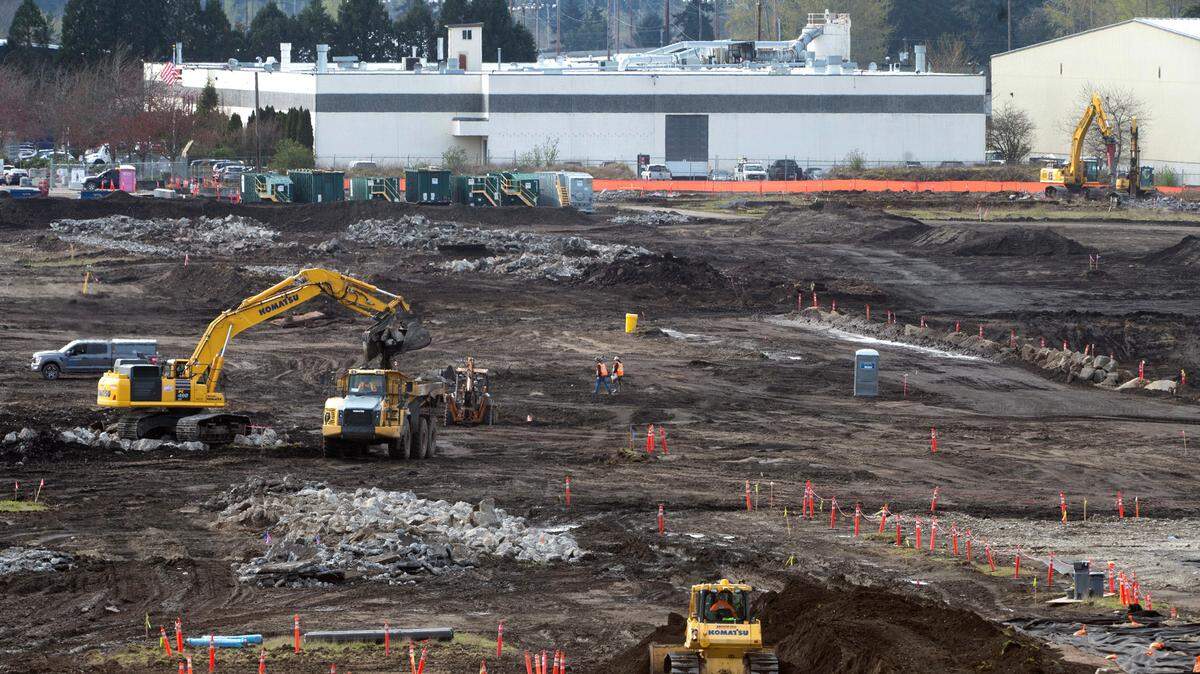
The Bridge Industrial Warehouse is very much like any other warehouse project but with significant and concerning differences.
There are many warehouse projects being constructed within and near the city of Tacoma. Some are completed, others are midway through construction — in Milton, Fife, Edgewood, Fredrickson, Bonney Lake, Puyallup, seemingly everywhere.
You may have one nearby that will significantly affect the water you drink, the air you breathe and the traffic you face daily.
But the Bridge Industrial project is different. It is on a partially remediated EPA Superfund site, directly over a Critical Aquifer Recharge Area and near a single-family housing residential neighborhood that has traffic issues without the project.
At 2.5 million square feet, its four buildings combine to become the eighth-largest warehouse in the world.
The project cost is estimated to be well over $400 million.
This is being built by an Australian private equity fund as a “speculation project” the community is told.
This is an EPA Superfund site
The area has been environmentally damaged in past years as the legacies of the Burlington Railroad and Time Oil left harmful lead, arsenic, zinc, copper, diesel fuel and other health-damaging contaminants.
The site continues to be monitored by the U.S. Environmental Protection Agency and Washington State Department of Ecology as it has been for more than 30 years.
The warehouse development is located near S. 56th Street and South Tacoma Way, an area zoned for industrial use.
It endangers critical aquifer recharge
Tacoma Public Utilities Water has three wellheads less than 1,000 feet away from the property that are susceptible to contamination if not protected. They are the most productive wells in the TPU water system. Together they provide more than 12 million gallons of water daily during summer months when the flow in the Green River diminishes.
As our annual snow caps and mountain glaciers retreat, these wells become more critical as part of our future water supply.
Covering the Critical Aquifer Recharge Area with 120 acres of impervious warehouse buildings, concrete and asphalt paving could harm the sensitive aquifer and naturally a cause for long-term community concern.
Will covering the wellheads with buildings, concrete and asphalt surfaces cause harm? Will the contaminated soils leach harmful chemicals into the water supply? We hope not.
In the permitting process, the city mentioned the project is in the South Tacoma Ground Water Protection District but did not require a hydrologic study of the aquifer recharge area.
It will mean much more traffic
Each warehouse project requires a traffic study. The city of Tacoma has three traffic studies for this site with wildly differing results.
The original project, at 1.9 million square feet, was estimated to increase vehicles on neighboring streets by 4,996 trucks and cars daily.
The latest vehicle estimate for this project anticipates less traffic even though the building area increased by 600,000 square feet.
Somehow, the estimated traffic came in lower for a larger project, on the already congested streets of South Tacoma.
Less street traffic for a much bigger project does not sound possible. Maybe it was calculated using some new kind of math?
And that means more air pollution
The air pollution from each vehicle trip degrades the air quality nearby. Some professionals and community observers believe the vehicle count may be considerably higher. A fair and reasonable analysis with appropriate mitigation must be undertaken.
Traffic increases will add to the air pollution burden of nearby residents and schools.
Even on a clear, sunny day, traffic pollution is often unseen. Yet it slowly and quietly causes long-term health damage as it slowly accumulates in you and your family.
The Tacoma-Pierce County Health Department has studied health outcomes depending on your zip code. If you live in some parts of North Tacoma you can expect to live as much as a decade longer than someone who lives further south, near Interstate 5 and the Parkland/Spanaway area. That doesn’t seem fair.
With mega-size warehouses popping up like dandelions on a spring day, we need to know the issues we face. We cannot continue to pollute our air, water and farmland without being directly affected.
Do you know where the next warehouse is being built?
Tell your neighbors. We need to talk.
Kit Burns is a graduate of Washington State University who retired after practicing architecture for more than 40 years. He was the lead architect and project manager on multiple school projects. He is a past member of the Construction Specifications Institute, the International Code Council and the American Institute of Architects.
This story was originally published April 9, 2024 at 11:31 AM.