$500K of art once lined Tacoma’s Link light rail. Some is now sitting at the dump | Opinion
This column started with an offhand comment. They often do.
I was with Tim Olsen, who over the years has become a source of sorts, providing tips about subjects near and dear to him: mainly, local history and trees.
We were downtown, walking along Broadway in the shadow of the Pantages and Rialto. Olsen had been needling me for months, trying to lure me out of the office for a tour of off-the-beaten-path historic places, like the parking lot where the Colonial Theater once stood.
In the early 1970s, Olsen, a luthier by trade and a lifelong member of the counterculture by choice, had a small shop there, when it was known as Court C Coffee House and Artists Mall. The area brings back memories.
That’s when Bill Ramsay’s name came up.
Ramsay, a celebrated local jazz musician who died earlier this year at 95 years old, was a fixture on the stages of Olsen’s heyday, I learned, and a familiar face at Court C.
Performing as a saxophonist, composer and big band leader, Ramsay made his mark as a world-class musician during a career spent collaborating with luminaries like Count Basie, Duke Ellington and Cab Calloway.
Ramsay’s ties to Tacoma ran deep. In the Army, he played to servicemen at Fort Lewis, and his post-military musical teeth were cut at the clubs that lined Pacific Avenue. That’s one reason he was honored at the old Theater District light rail station near South 9th and Commerce, Olsen recalled.
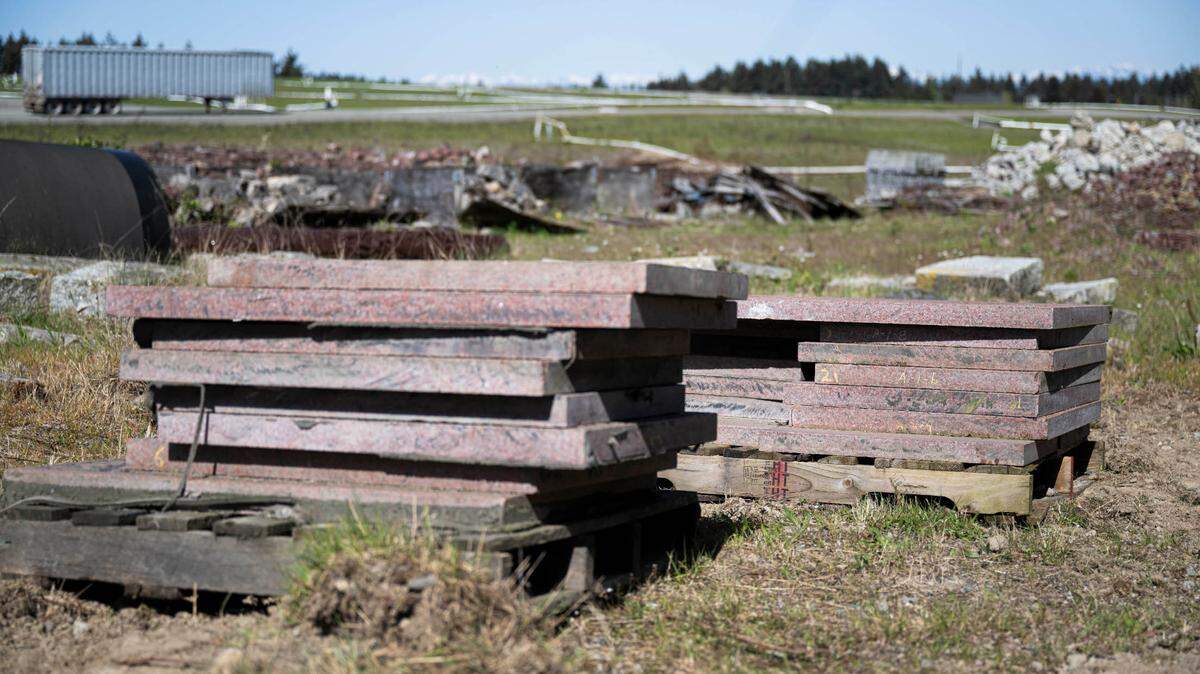
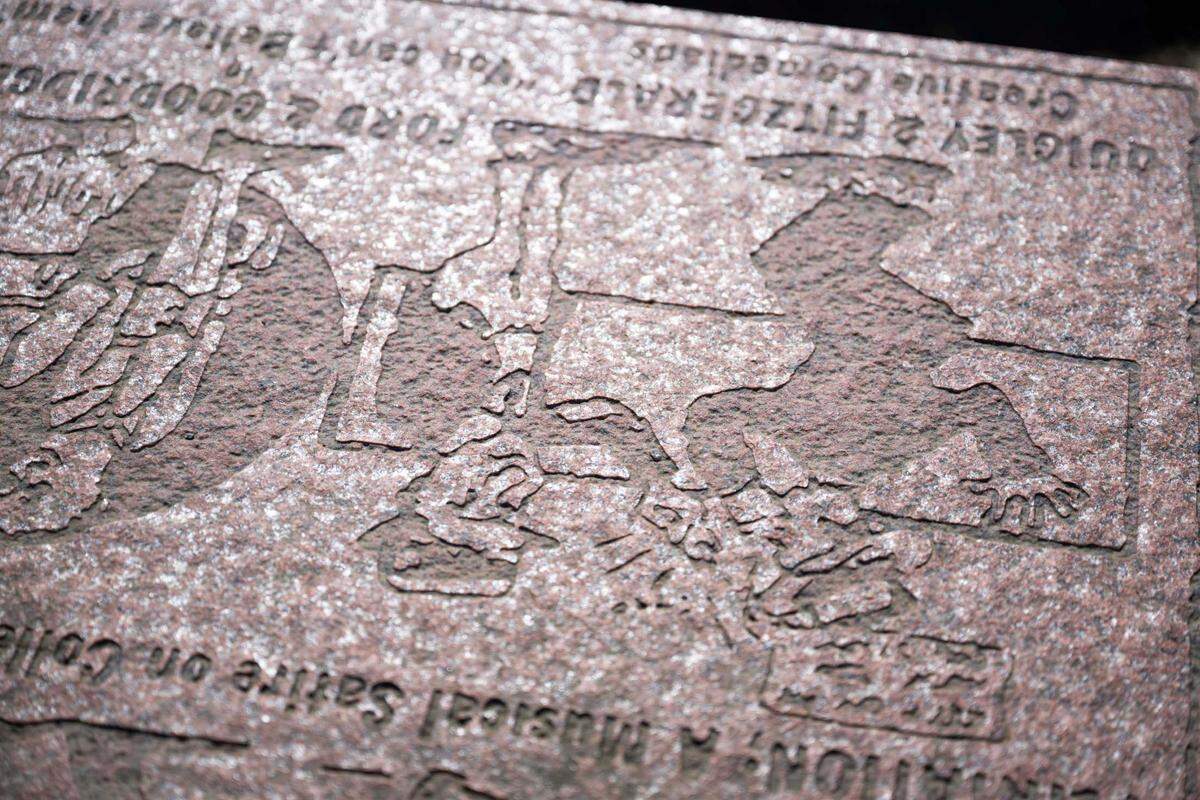
Ramsay’s likeness was etched into one of 25 red granite inlays designed to pay homage to the music, culture, events, old playbills and performers that helped make Tacoma’s Theater District what it is today. Produced by prolific local artist Fernanda D’Agostino, the pavers were placed into the sidewalk as part of the $80 million Tacoma Link light rail project, which debuted in 2003.
Funny thing about that old Theater District station, Olsen noted: Roughly a decade after it debuted, the decision was made to tear it down and replace it with a new station near Old City Hall.
In all, nearly $500,000 in public art was included in the original 1.6-mile Tacoma Link light rail line, spread across five stations, including the red granite pavers marking the original Theater District stop, according to The News Tribune’s archives.
As far as Olsen knew, the artwork in question — which accounted for a portion of the publicly paid tab — hadn’t been seen in years.
“Last I heard, they were in a Sound Transit maintenance facility somewhere,” Olsen said of the missing pavers.
Timing is everything
My curiosity was piqued, so I reached out to Sound Transit’s public information department in hopes of tracking down the displaced public art Olsen so clearly recalled.
Surely, the granite pavers had to be somewhere, I figured. If the artwork had been disposed of in the dark of night? Even better. People deserved to know.
Sound Transit addressed my inquiry in the most Sound Transit way possible — by failing to respond to repeated messages and emails.
Tacoma Public Art program manager Rebecca Solverson was more helpful.
Last week, Solverson provided an update on the public artworks’ whereabouts, and the timing couldn’t have been better.
Turns out, the pavers weren’t lost at all; they’d just been stowed away at a Sound Transit facility, much like Olsen suspected.
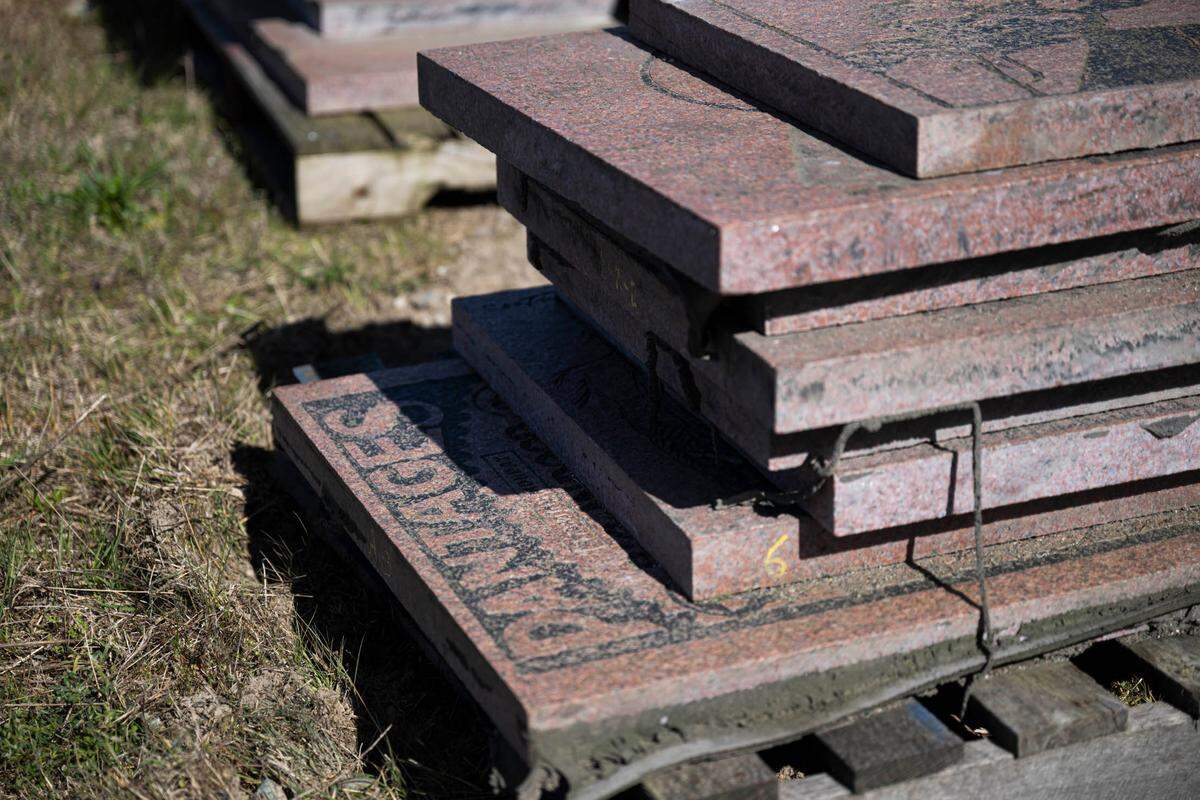
On Friday, April 19, the City of Tacoma took possession of the red granite slabs, unloading them on pallets at the city landfill, where they’ll be safely stored in hopes of one day being redeployed in public, according to Solverson.
“Sound Transit didn’t have a way to reuse them … so they approached us and asked if we would take (the artwork) as a donation,” Solverson explained.
In October 2023, Sound Transit officials signed off on the transfer, documents provided by the City of Tacoma show.
A memo signed by Sound Transit art collection manager Tim Marsden and Julie Montgomery, the transit agency’s director of architecture and art, cites a recommendation made by a special deaccession panel the same month.
The city has no plan to re-install the pavers in a new location, Soliverson stressed, but that’s the idea … at least eventually.
In addition to immortalizing Ramsay, D’Agostino’s series includes granite homages to pianist and former Tacoma resident Jelly Roll Morton, jazz legend Duke Ellington and playwright Noel Coward.
The city’s Arts Commission voted to accept the pavers into the city’s public art collection, Solverson noted.
“It means we’re responsible for them,” Solverson told The News Tribune.
“We think there’s a potential location for them in the future. … We don’t have a place in mind, but the city gets redeveloped all the time.”
‘Worth not throwing away’
I’m not sure how I expected Olsen to react when I told him I’d managed to track down the old pavers.
I’m nearly certain it wasn’t with an Indiana Jones reference.
“You know that last scene in ‘Raiders of the Lost Ark,’ where the precious treasure is ostensibly secure, but is actually forever lost?” Olsen asked, rhetorically I gathered, when I pressed him for a reaction to the big news this week.
I see.
Skepticism noted.
Olsen comes by his doubt honestly, it’s worth underscoring. Whether it’s trees or old buildings, the lifelong Tacoman, now in his 70s, feels like he’s been watching the things he cares about disappear since he was old enough to take stock. Lately, it seems like the pace is accelerating, he says.
Asked why a set of 25 red granite pavers — designed to be set into the sidewalk and trampled on by Theater District pedestrians — are worth saving, Solverson said it’s about helping people connect with their public spaces.
“Public art matters because it’s a way for us to tell our stories,” Solverson said.
“There’s a pretty low cost to keeping (the pavers) and … whenever we can, we think it’s worth not throwing pieces away when they still have a useful life.”
Olsen agrees. He’s just not holding his breath.
The city could install the pavers in any number of locations, he contends, like outside Old City Hall, or on Hilltop, or pretty much anywhere else.
The thing is, Olsen’s accustomed to seeing things disappear. He’ll believe it when he sees it.
“Of course not,” Olsen said when I asked if he was confident the pavers would eventually be redeployed downtown.
“History matters. Art matters. Our local culture-makers matter. Nice, good-quality things should be used,” he told me.
“We are gonna have to step on something; why not step on art? It’s all bought and paid for.”
This story was originally published April 25, 2024 at 5:00 AM.