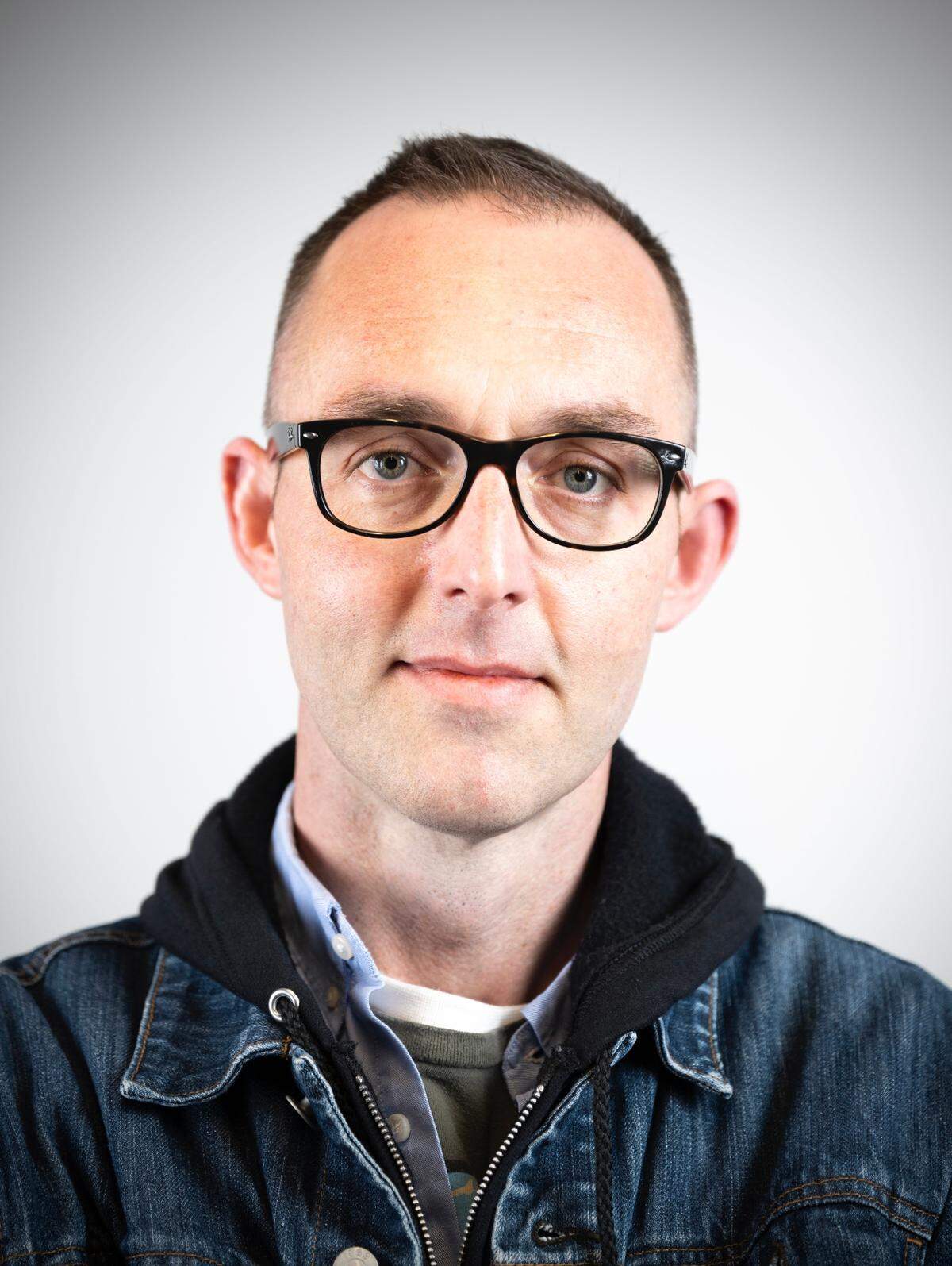
From a murder charge to executive director: Local grad proves prison education works | Opinion
A lot can happen in eight years.
It’s something Alyssa Knight knows better than most.
I first met Knight in June 2016, in a place that was foreign to me but agonizingly familiar to her: the Washington Corrections Center for Women (WCCW) — or Purdy as it’s more commonly known, where she arrived in 2004.
Knight was roughly halfway through the 22.5-year sentence she received for her part in a robbery-turned-murder. But at 33 — and with a teenage daughter waiting on the outside — Knight’s redemption story was underway.
Knight, who grew up in Idaho but “got into trouble in Spokane,” as she put it, graduated with an associate’s degree the day we met, in front of her mother, who embraced her after the simple ceremony as only a proud parent who’s been put through the emotional wringer can.
In prison, Knight was one of the founders of what eventually blossomed into the nonprofit Freedom Education Project Puget Sound (FEPPS). She was also a member of the groundbreaking prison education program’s first-ever graduating class, which is how our paths crossed in Purdy, surrounded by razor wire and armed guards.
Today, Knight is the executive director of FEPPS.
Governor Jay Inslee signed off on Knight’s clemency and granted her release in 2021.
Recently, she took the reins of a program she helped create — and the timing couldn’t be better.
On Saturday, June 1, FEPPS will celebrate another milestone at the Washington Corrections Center for Women: the graduation of the program’s first cohort of incarcerated students to receive four-year bachelor’s degrees.
Knight will be there, she said, watching a new class of incarcerated students cross the stage.
“I can’t imagine my life in this prison without being in a college program,” Knight told me back in 2016, her associate’s degree in hand and her early release still a dream.
“I’m just going to keep going,” she said.
Prison education movement
Knight and I spoke by phone this week. She was driving, a task that allows for some of her best thinking, she said.
After being released from prison, Knight, now 41, took a job as a dog groomer, a trade she picked up while incarcerated. She also applied to UW Seattle, determined to make good on her pledge to “keep going.”
When she arrived on campus, Knight already had a firm grasp on her academic calling, she said: the intersection of gender, identity and the criminal justice system.
Building on the associate’s degree she received at the Washington Corrections Center for Women, Knight’s work at UW was motivated by the challenges and disparities she’s encountered in her personal life, she said, particularly the 18 years she spent behind bars.
She graduated from UW last year with a degree in gender, women and sexuality studies.
“When I went to school (at UW), I thought, ‘There’s gonna be no jobs for me and I don’t care. I get to study the thing I’m passionate about, and we’ll see how it lands,” Knight said.
“I was able to take these things I care about — like gender studies, power structures and how we change cultures and educate people — and pursue them. And I had incredible support along the way, even after I graduated.”
Knight brings a similar drive to her role as FEPPS’ new executive director, where she’s positioned to champion a program she’s already validated through her individual success while building on a national prison education movement.
In 2019, FEPPS launched its bachelor’s degree program, aided by funding provided by the Mellon Foundation. The creation of the bachelor’s program, which originally included 15 students — ten of whom will graduate on Saturday — is part of an ongoing collaboration with the University of Puget Sound. Nationally, it’s the seventh B.A. program offered in a women’s prison. In Washington, it’s the first.
Meanwhile, the 2020 expansion of the federal Pell Grant program has opened a stream of financial aid to would-be students in prisons across Washington and much of the nation — not to mention academic institutions eager to offer Pell-eligible programs.
FEPPS currently serves approximately 70 incarcerated students, including those pursuing associate’s degrees currently accredited by Tacoma Community College and those working toward bachelor’s degrees accredited through UPS.
Associate professor Tanya Erzen, a former FEPPS executive director who played a critical role in creating the prison education program, teaches religion and gender studies at UPS.
Roughly 15 members of UPS’s faculty taught classes as part of the BA program, said Erzen, who began working with students at the Washington Corrections Center for Women more than a decade ago.
FEPPS is in the process of transitioning to a Pell Grant-based funding model that will allow even more students to enroll in college degree programs, she indicated.
According to Erzen, there’s growing recognition of the value of prison education programs like FEPPS, both for their ability to provide second chances that improve the lives of students and effectively reduce criminal recidivism rates.
It creates a critical opportunity, she said, and a chance for FEPPS to lead the way.
“Since the majority of people are going to leave prison, there’s a question for all of us: Do we want them to return to prison, or do we want them to have tools and support so they can be successful?” said Erzen.
“As an educator, I believe education should be accessible to everyone that’s outside and inside prison,” she added.
“I hope this will be a model. … (FEPPS) doesn’t just impact a person in prison, it impacts their families and communities. There’s a ripple effect.”
Knight agrees — but perhaps that goes without saying.
This week, she told me she expects to get “emotional” during Saturday’s graduation ceremony.
Next year, FEPPS hopes to welcome roughly twice as many prospective bachelor’s degree students into the program.
For now, Knight is focused on celebrating – and continuing to support — those following in her footsteps.
“If you’re telling a story, this is a full circle,” Knight said of the last eight years of her life and what she’s accomplished.
“But the thing is, I’m not unusual. There are a ton of brilliant minds and a lot of people who just are not getting the opportunity,” Knight added.
“Everybody inside has the ability to be transformed. … It just takes the public — and us as a society — to support it.”
This story was originally published May 31, 2024 at 5:00 AM.