
Want to cut crime and make cities safer? Give ‘convicts’ a second chance. No, really | Opinion
READ MORE
Our 2024 Civic Agenda
The needs in Tacoma and Pierce County are sizable. The 2024 News Tribune Editorial Board’s Civic Agenda focuses on four timely and pressing concerns.
Expand All
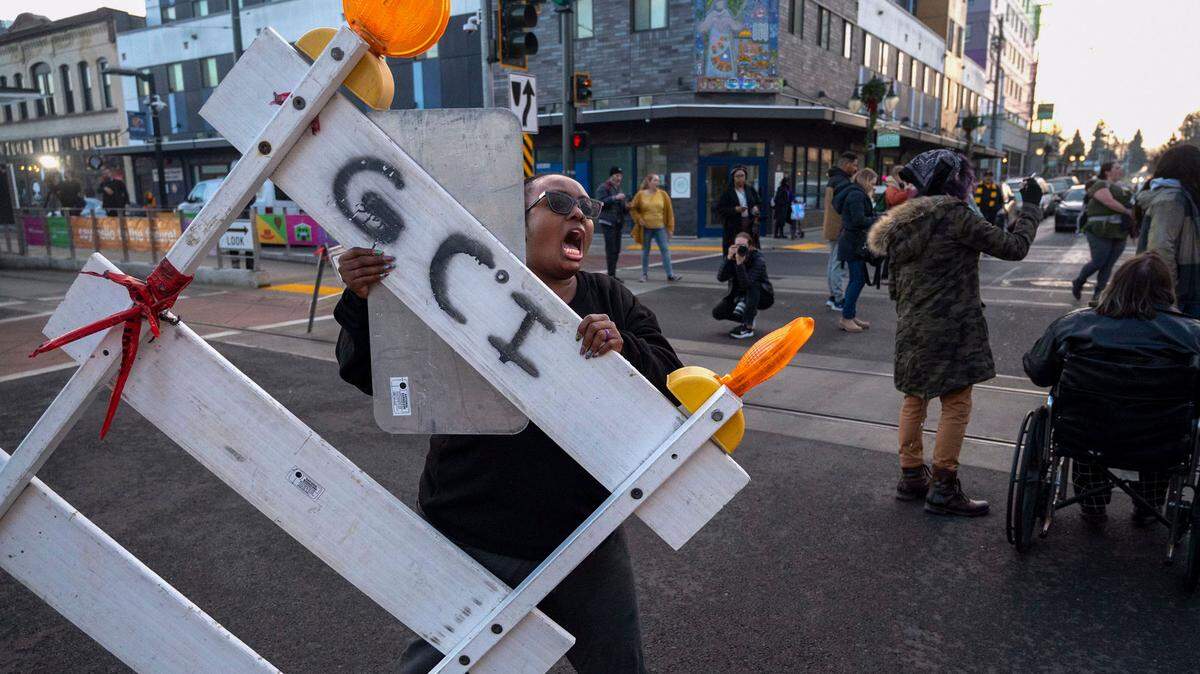
Some demand change. Cops want support. Can Tacoma do better after Manny Ellis’ death? | Opinion
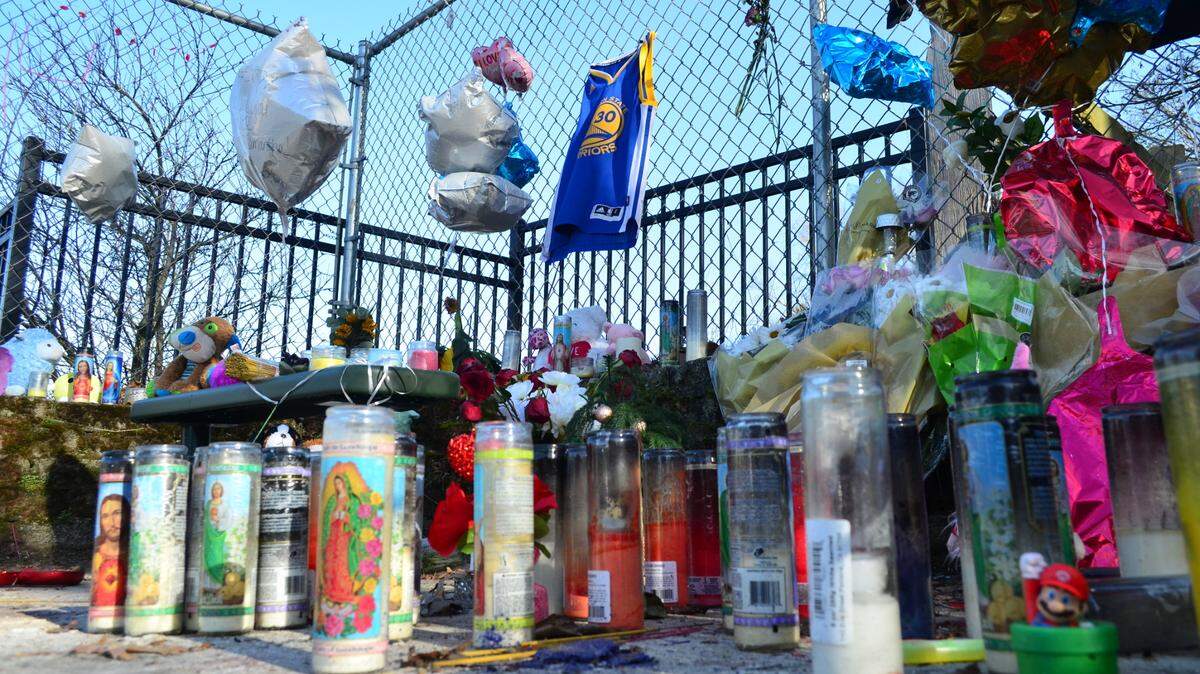
Tacoma kids see it all — from guns to Kia Boys. They told us what grownups miss | Opinion
Want to cut crime and make cities safer? Give ‘convicts’ a second chance. No, really | Opinion
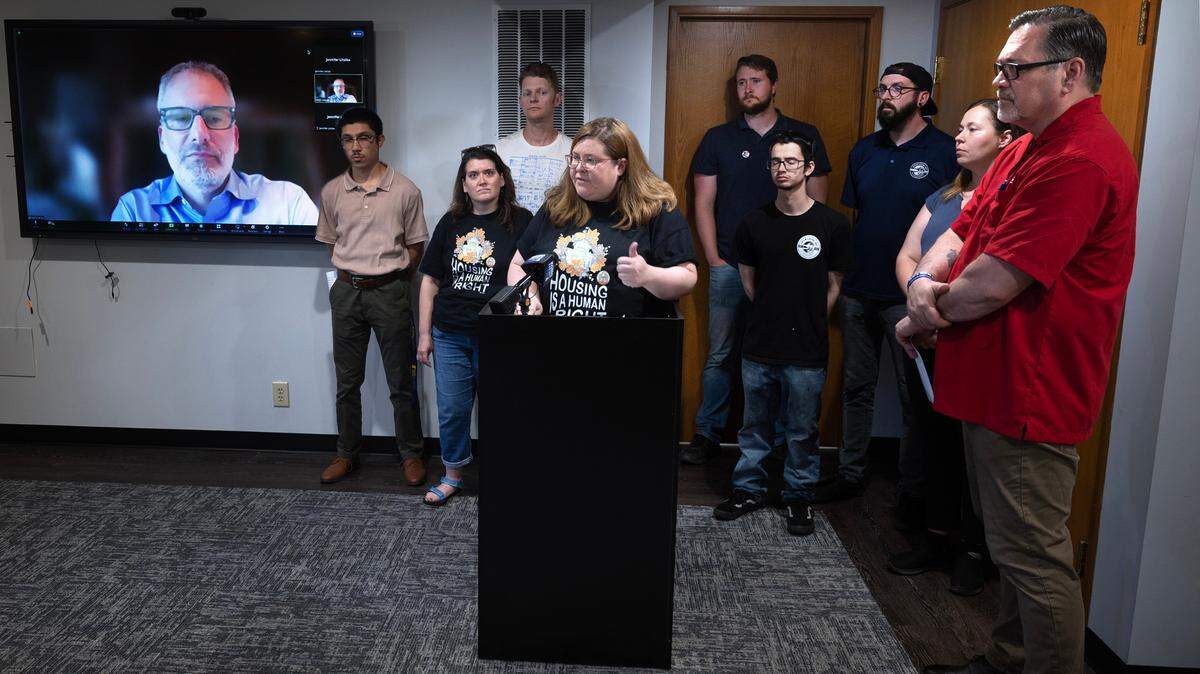
Tacoma passed tough, divisive tenant protections. Now we have a golden opportunity | Opinion
Editor’s note: This is the second installment of The News Tribune Editorial Board’s 2024 Civic Agenda, which will be published online as a four-part series between Jan. 29 and Feb. 2. For previously published installments of the 2024 Civic Agenda, click here.
If academia is a bubble or an ivory tower, as people often say, Christopher Beasley is the rare scholar who’s managed to burst it, or even more fitting, scale it from the outside.
Beasley is an associate professor of social, behavioral and human sciences at The University of Washington Tacoma. He’s also an academic with what’s politely called a non-traditional background.
Raised in rural Illinois, Beasley grew up like a lot of kids in the area, he recently told The News Tribune Editorial Board, short on opportunities and flush with negative influences.
In some ways, his upbringing provided what’s become a calling card for Beasley, at least when it comes to his academic career: the prison sentence he served.
As a young adult, Beasley was locked up on drug-related charges.
When asked, he says he was a product of his environment. He was also responsible for his decisions, he’ll tell you.
Mostly, Beasley describes his former life as a small-town methamphetamine dealer as a dysfunctional search for community and a sense of worth, as broken and backward as that might be.
The drug trade, Beasley explained, provided a sense of belonging and status, allowing him to be a “part of the community and have a respected role.”
“You may not see the things I was involved in — like drug manufacturing — as pro-social,” he acknowledged.
“But in my world, that was what the community wanted and something it embraced.”
Today, Beasley stands as a shining example of what can be made from a second chance. That’s what’s important.
For the rest of us, he’s a reminder of the profound power of redemption — and the value of creating a society where it’s possible.
The second installment of The News Tribune Editorial Board’s 2024 Civic Agenda is dedicated to “crime and public safety,” which has essentially become a blanket term for everything from auto thefts and assaults, to boarded-up windows, the fentanyl crisis and the region’s homelessness epidemic.
That’s one of the problems we have as a community when discussing it or trying to address it.
Earlier this week, the TNT Editorial Board opened this year’s Civic Agenda by digging into the challenges and mounting violence local young people face, with an emphasis on addressing root causes and creating lasting change.
We’ve taken the same approach here.
In response to spikes in crime across the country, growing encampments in our cities and what often feels like a gnawing sense of societal disorder in our public spaces, there’s been plenty of talk about the need to get “tough on crime.”
We wring our hands over repeat offenders. We look for easy solutions.
Meanwhile, our prisons are full of real people — roughly 2 million of them, spread across 1,566 state prisons, 98 federal prisons, 3,116 local jails, 1,323 juvenile correctional facilities, 181 immigration detention facilities and 80 Indian country jails, according to the non-partisan Prison Policy Initiative.
In Washington, where Black people are incarcerated at a rate 5.7 times higher than white people, there are roughly 28,000 people incarcerated and another 73,000 on probation or parole, according to a 2023 Prison Policy Initiative report.
The key?
One day the vast majority of them will be released. We already know offering education programs to people in prison has proven to be an effective crime deterrent.
A 2013 study conducted by the Rand Corporation, a nonprofit policy analysis organization found that incarcerated people who participate in prison programs have a 43% lower chance of being locked up again.
It’s just one data set cited by the U.S. Department of Justice in support of what the federal agency has described as “sweeping” reform efforts designed to cut recidivism across the country.
Here’s another: For every dollar spent on prison education, the United States saves four to five dollars over re-incarceration. That’s another thing that helps explain why federal prison reform and efforts to cut mass incarceration have received increasing bi-partisan congressional support, including the 2018 First Step Act, signed into law by former President Donald Trump.
All of it led us to Beasley, his UWT colleagues and a committed group of formerly incarcerated students and graduates at the school.
In particular, we’re highlighting the programs, culture and new possibilities they’ve helped to create in downtown Tacoma.
Some people would call Beasley a convict, and leave it at that.
But making long-term reductions in crime and meaningful improvements to public safety requires a different kind of thinking.

Prison education in Washington
If there’s one thing Beasley knows, it’s the stakes. They hit close to home.
Hired in 2017, Beasley teaches classes in psychology at UWT’s downtown campus. He’s also largely responsible for establishing the school’s Husky Post-Prison Research Lab, which studies the transition from prison to college, much like the bulk of his independent academic work.
Most recently, Beasley spearheaded what UWT calls the Husky Post-Prison Pathways project, or HP3 for short.
Its goal? Help incarcerated and formerly incarcerated students navigate the same higher-education terrain he managed to traverse.
“It was an idea that was kind of captured and adopted by many folks who have been directly impacted (by incarceration) at UWT,” Beasley said of the HP3 program.
“They entered into higher education after incarceration and thought to themselves, as a collective, ‘You know, it would be great if there was actual structured support around this process.’”
On an individual scholarly level, Beasley says his work is fascinating. He’s studied the link between suicide among the formerly incarcerated and people with a high need for structure. His addiction-related research — in particular addiction and recovery’s intersection with the criminal justice system — has been extensive.
Still, it’s the other stuff that drives him, he said.
As a community college student fresh out of prison, Beasley organized for LGBTQ rights. As a graduate student, he began rallying and organizing in support of formerly incarcerated students. A decade ago, he co-founded the Formerly Incarcerated College Graduates Network and still serves on the board.
For Beasley, it’s always been about opening the doors for others.
At UWT, he finds himself on the front lines at what might prove to be a monumental moment in state history.
Thirty years ago, the infamous “crime bill” of 1994 — the same piece of contentious federal legislation that “fed the mass incarceration crisis,” in the words of the ACLU — eliminated access to Pell Grants for people in prison.
The knee-jerk move effectively delivered a death sentence to most existing prison education programs, since low-income students rely on Pell Grants as the country’s primary source of college financial aid, including the majority of incarcerated students.
In Washington, roughly 75% of the prison population has a high school diploma or equivalent, the Seattle Times reported in June. Over the last four decades, the state’s incarceration rates in jails and prisons have skyrocketed, according to data compiled by the non-profit, non-partisan Prison Policy Initiative.
For the better part of 30 years, there’s been little to no way to further their education behind bars.
Now, that could change, potentially in a big way.
In 2020, U.S. lawmakers reversed course, opening up a stream of federal financial aid dollars for would-be students in prison and institutions that offer Pell-eligible programs. UWT is one of a handful of institutions that’s in on the early rush.
As of last year, nine community colleges and five four-year universities from across the state had either submitted a proposal to the state in hopes of establishing a prison education program or shown interest in the idea, the Seattle Times reported.
According to Beasley, UWT is currently working to develop a tailored program capable of serving students incarcerated at five prisons within an hour’s drive of campus. The idea is to build on what the school has already established through its HP3 program.
Beasley, with help from colleagues like UWT criminal justice associate professor Grant Tietjen, who spent time in federal prison two decades ago for drug distribution, is tasked with making it work, including establishing sustainable funding and helping to develop housing resources for perspective students.
Speaking to The News Tribune Editorial Board earlier this month, both scholars said the HP3 program and UWT’s recent efforts to develop and expand education programs for incarcerated students across the region are about more than padding a resume.
For some students, it’s the difference between lightness and darkness in their lives.
On a societal level, it’s also a proven approach to preventing crimes from being committed in the future.
“There is a movement going on … of system-impacted people within higher education, here, nationally and around the world,” said Tietjen, who views providing education in prison as a social and moral imperative that, to be successful, demands the input and influence of students who have been incarcerated.
“I want to promote the narrative that with resources and support most of us — if not all of us — have the capacity to succeed and make great positive social changes,” Tietjen added.
“If the water in the harbor rises, all the ships rise, big and small.”
Political pushback
The push to reform the U.S. prison system and expand education opportunities to the incarcerated and formerly incarcerated has made significant progress. Particularly of late, there’s been growing recognition, across party lines, that simply locking people up and throwing away the key isn’t the answer to anything.
Still, it can all slip away in an instant, Beasley and his UWT colleagues know.
For The News Tribune Editorial Board, it’s why we chose to highlight UWT’s Husky Post Prison Pathways program, which is far from the only local effort to expand prison education, reduce recidivism rates and change people’s lives for the better.
Through the Freedom Education Project Puget Sound, the University of Puget Sound now offers bachelor’s degrees to people incarcerated at the Washington Corrections Center for Women. Originally launched by UPS associate professor Tanya Erzen, the program will celebrate its first graduation ceremony in the spring.
At Tacoma Community College, meanwhile, the school’s New Chances initiative provides “personal support” — including enrollment, career planning and financial aid services — to Pierce County students who have been released from prison.
With all of it, no matter the scope of the program or its approach, the score is obvious: Crime is on everyone’s mind. Car thefts are way up. Murders have spiked in Tacoma and across the country in recent years, even if 2023 saw modest declines in the number of people killed. Well-meaning but flawed attempts to increase public safety by limiting law enforcement’s ability to pursue suspected criminals has created divisions in our communities. People are angry and scared, fueled by a mix of perceptions and reality.
It’s precisely the kind of environment where significant gains can quickly be squandered, Beasley said.
“In the last five to 10 years, there’s been bipartisan support for second chances and rethinking opportunities. … I think that’s felt pretty comfortable, up until now,” Beasley told us.
“Heading into this election, you certainly see some dialogue around being too soft on crime. That concerns me,” he added.
Recently, The News Tribune published an op-ed by Pierce County Sheriff Ed Troyer. As he has from nearly from the day he was elected, he argued that judges and state lawmakers have gotten too soft, prioritizing criminals over victims. He urged readers to vote for candidates who will do the opposite.
Pierce County’s sheriff isn’t right about everything — the connections he makes tend to be sweeping and dubious, never mind his vague political endorsements — but there are elements of truth in the frustration Troyer gives voice to.
There have been clear moments in recent years when the state’s approach to criminal justice has strained public trust. With help from hardline right wing commentators and pundits, who use missteps as rhetorical ammunition, it’s inspired valid criticism — and the kind of reactionary public sentiment that can swing the pendulum of progress.
In Spokane County, Sheriff John Nowels raised the alarm last year, noting that 14% of people booked into the county jail for crimes including robbery, burglary and assault are immediately released, a practice he described as unacceptable.
In Thurston County, Sheriff Derek Sanders has spoken out against the pretrial release of repeat offenders without imposing cash bail. In a public letter late last year, he highlighted the recent no-bail release of a suspect with 14 previous convictions in Washington accused of pointing a replica gun at officers responding to a reported domestic-violence call.
A Thurston County deputy opened fire in return, reportedly grazing the suspect with a bullet.
Meanwhile, in an op-ed recently published by The Seattle Times, Tiffany Attrill, who for more than a decade was a victim advocate in King County, explained why she abruptly quit a job she formerly loved.
“I couldn’t do it anymore because of the shameful failings of the system: the politics, the blame-shifting, the excuse-making, the enabling, the anger and blame directed at victims and survivors. The blatant disregard and shockingly horrible treatment of crime victims got the better of me,” Attrill wrote in a piece published last September.
“What I have heard from victims and families is they want justice — they want the offender to be held accountable, to take responsibility for their choices, behaviors and actions,” Attrill added.
“We need to stop making excuses and enabling criminal behavior if we are to truly honor the spirit of what it means to support the rights of victims. Accountability is the cornerstone of justice.”
For Beasley, it’s nothing new.
The vast majority of partisan “soft on crime” critiques have nothing to do with the value of prison education programs, and, objectively, what these programs accomplish helps to solve the underlying problem.
Still, insidious and unseen ways that political pressure and mounting public sentiment impact our laws and approach to incarceration is just one of many things scholars in the field have long documented.
Looking ahead, Beasley described a future that fills him with optimism and uncertainty.
In times like these, politicians and policymakers often fall back on an old favorite, he noted: harsher punishments for the convicted and new levels of dehumanization for the imprisoned.
The progress made by prison education programs across the state and country, including at UWT, provides a path forward, Beasley told The News Tribune Editorial Board.
Crime doesn’t happen mysteriously. It has known root causes, like poverty, lack of opportunity, educational neglect and racism.
If we want to cut crime and improve public safety for real, developing and implementing robust and accessible prison education programs to serve the incarcerated and formerly incarcerated in Pierce County are part of what it looks like.
Most important?
Unflinching support from the community — in 2024 and beyond — could make all the difference.
Beasley readily acknowledges the tenuous nature of his work.
The second chances and redemption institutions like UWT champions deserve Pierce County’s backing.
“I listen. Where are critiques coming from? Are people really talking about being too soft on crime? If they are, it probably means pushback is coming” said Beasley. “Punishment systems are designed to teach people to stop being like that. But if we don’t provide alternative pathways and alternative ways of being — alternative ways of meeting fundamental psychosocial needs that they were getting met in other ways — then we’re essentially telling people to stop being. I don’t know about you, but I’m not very good at not being.”.
“Post-prison, higher education does just that,” Beasley added.
“It did that for me.”
This story was originally published January 30, 2024 at 5:00 AM.