
Tacoma passed tough, divisive tenant protections. Now we have a golden opportunity | Opinion

READ MORE
Our 2024 Civic Agenda
The needs in Tacoma and Pierce County are sizable. The 2024 News Tribune Editorial Board’s Civic Agenda focuses on four timely and pressing concerns.
Expand All
Some demand change. Cops want support. Can Tacoma do better after Manny Ellis’ death? | Opinion
Tacoma kids see it all — from guns to Kia Boys. They told us what grownups miss | Opinion
Want to cut crime and make cities safer? Give ‘convicts’ a second chance. No, really | Opinion
Tacoma passed tough, divisive tenant protections. Now we have a golden opportunity | Opinion
Editor’s note: This is the third installment of The News Tribune Editorial Board’s 2024 Civic Agenda, which will be published online as a four-part series between Jan. 29 and Feb. 2. For previously published installments of the 2024 Civic Agenda, click here.
Last November, Tacoma voters — to borrow and sanitize a saying from the pop culture lexicon — messed around, narrowly approving some of the strongest tenants’ rights protections in the region, if not the country, in the form of a contentious ballot initiative.
Now, they’re fixin’ to find out.
On Dec. 8, the Landlord Fairness Code Initiative, as it’s officially known, went into effect. Among other things, the new protections for Tacoma renters include a ban on evicting certain tenants — like the elderly and families with school children — during the academic year and cold-weather months.
Citizens’ Initiative Measure No. 1, as it was called on the ballot when it eked out a narrow victory, also imposes strict caps on the fees landlords can charge and requires them to provide at least six months’ notice before a rent hike.
During a heated campaign, supporters of the initiative described it as a necessary step to protect vulnerable tenants and families in a rental-housing market increasingly stacked against them.
It would help prevent homelessness and displacement of longtime residents, they argued, in a city being dramatically reshaped by massive economic forces and gentrification.
Landlords and property owners, on the other hand, predicted disaster if the citizens’ initiative passed, including a mass exodus of “mom and pop” landlords and the evaporation of desperately needed affordable housing units.
Faced with a host of new burdensome challenges, small-time landlords would throw in the towel, opponents warned, allowing the homes and apartments they once rented to hardworking locals to be gobbled up by out-of-town profit-mongers.
How much of that will pan out remains to be seen.
For starters, enforcement of Tacoma’s new Landlord Fairness Code — which by law can’t be changed or amended for two years without a public vote — will rely on tenants taking landlords to court; the city won’t enforce it.
One thing that is certain?
Whether you supported Tacoma’s tenants’ rights initiative or not, the circumstances that led to its passage are beyond dispute.
Renters are feeling pinched like never before. Even long-time homeowners are terrified, watching old neighbors pushed out to make room for wealthier newcomers.
It’s why the city and its residents have entered into what former Tacoma Housing Authority executive director Michael Mirra describes as a grand “experiment.”
For the third installment of The News Tribune Editorial Board’s 2024 Civic Agenda, we’re focusing on what’s been aptly described as a local crisis with far-reaching consequences.
The region’s shortage of affordable housing is squeezing out families. It’s also fueling the area’s homelessness epidemic, even if there are other factors to consider when assessing how people become unhoused, like addiction, the rise of fentanyl and a lack of mental health resources.
As a board, we’re continuing our 2024 Civic Agenda quest to go beyond the surface and dive into the realities driving some of the most urgent problems facing our cities and communities. But for this installment, we’re flipping the equation:
Tacoma’s new Landlord Fairness Code was designed by citizens looking for new approaches to addressing the causes of homelessness and displacement, like eviction, economic instability, rapidly rising rents and an influx of large property-management companies that have descended on the city looking to extract as much profit as possible.
The question:
Will the new tenant protections work — and how can we make sure to assess the outcomes fairly?
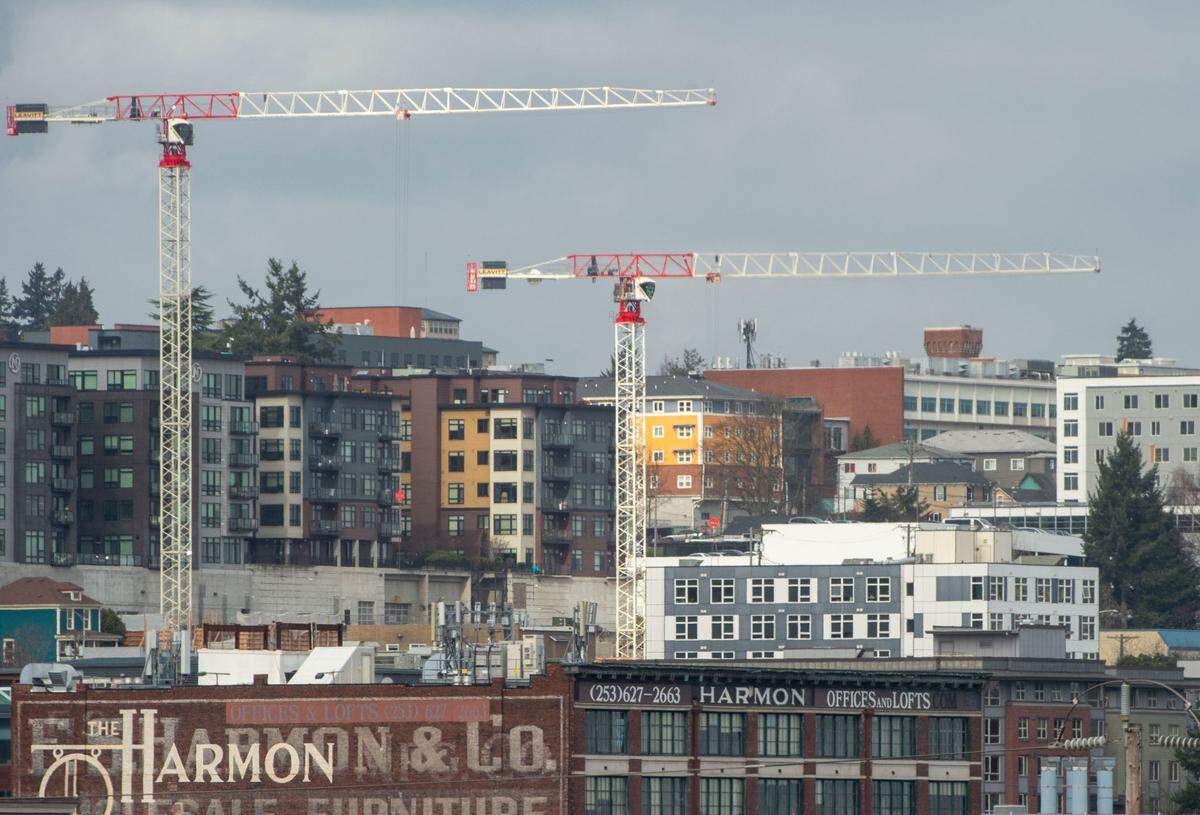
Affordable housing crisis
While the vote to approve Tacoma’s new tenant protections was close, with roughly 400 ballots deciding the outcome, that’s not to suggest public sentiment is divided on the underlying problem.
Over the last decade, Tacoma and Pierce County have rapidly become unaffordable for far too many people, renters and homeowners. alike
According to the city of Tacoma’s Affordable Housing Action Strategy website, nearly 20,000 renters citywide are living “precariously,” a designation based on a risk-assessment model developed by the Urban Displacement Project that weighs an area’s susceptibility to eviction, displacement and long-term poverty.
Nearly 20,000 homeowners fall into the same category.
In 2018, the city established a goal of creating 6,000 new units of affordable housing over the next decade, through direct funding and tax exemptions.
From January 2019 through mid–2023, more than 1,100 units had been created, according to figures provided by the city.
In the coming years, more than 1,000 more are on the way, including the development of roughly 60 units of affordable housing on Hilltop spearheaded by Shiloh Baptist Church and nearly 90 units downtown being constructed by the Korean Women’s Association.
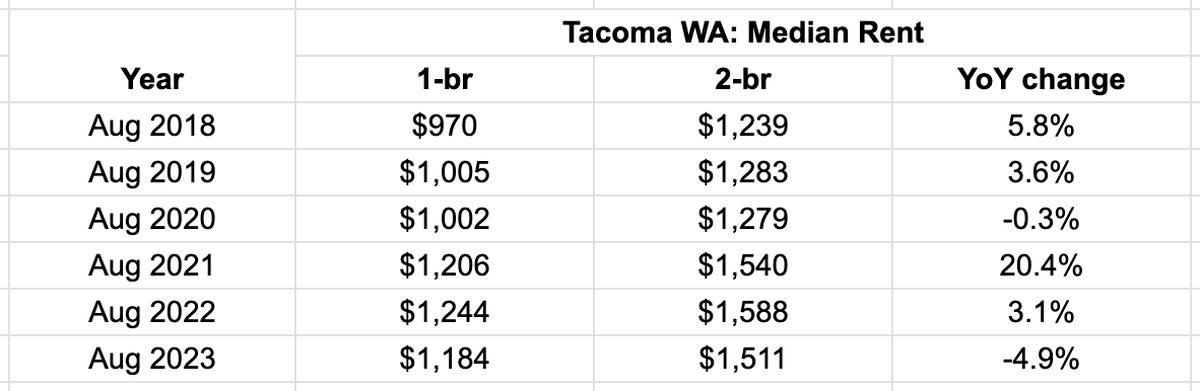
Still, the progress that’s been made pales in comparison to the need. Between 2017 and 2022, median rent in Tacoma grew by nearly 30%.
Even though data from late 2023 shows signs of rental relief, the city’s median rent still hovers in the ballpark of $1,400 a month.
It’s a tall task for many families living in a place where the median household income is less than $80,000 — and roughly half as much for individuals.
Heated public debate
During the 2023 general election, this tension came to a head in Tacoma, with the question of how the city should respond pushed to the forefront by a group of community organizers and housing activists.
Under the banner of Tacoma For All, the group crafted the city’s new tenants’ rights protections and qualified its initiative for the November ballot.
The debate was super-charged from the start, cutting across traditional dividing lines.
Bill Hanawalt, the former executive director of Peace Community Center and a supporter of the initiative, described the voter-led effort in The News Tribune as a moral and fiscal imperative. Hanawalt is also a small landlord; his family purchased a second Hilltop home in 2019 to rent as affordable housing.
Cathy Pick, a substitute teacher for Tacoma Public Schools and a resident of the city, shared similar sentiments. Describing her family’s narrowly averted descent into homelessness, Pick called for “bold and common sense tenant protections to combat rising homelessness, increasing rents, inflation and generally more difficult times.”
On the other end of the spectrum, local property owners and landlords like Derek Eyring warned that passage of the initiative would have dire consequences for everyone, not just people in his business. While Eyring acknowledged a “legitimate need for affordable housing” across the city, the new laws and requirements would be “bad for everyone in Tacoma, including the people the effort is intended to benefit,” he cautioned, packed with “severe” unintended consequences.
The initiative, Eyring said, used “a sledgehammer to beat down the very people our local affordable housing market relies on — small landlords.”
Mirra, the longtime director of Tacoma Housing Authority, found himself caught in the middle.
A thoughtful, pragmatic leader credited with guiding the vast expansion of THA’s affordable housing portfolio, Mirra is a longtime affordable housing champion who nonetheless harbors significant concerns about what passage of the initiative might mean.
Earlier this month, Mirra met with The News Tribune Editorial Board — not to look back, to gaze forward.
The voters have spoken, like it or not.
Tacoma now has an important, one-of-kind opportunity to analyze the benefits and costs of imposing tenant protections like few seen elsewhere around the country, Mirra believes.
“It confirms what we should already have known, that the rental market is not working,” said Mirra of the final vote last November on the Landlord Fairness Code Initiative. “The passage of an ordinance, even though I didn’t like it, is understandable. Part of me says, ‘We’ve got to try something.’”
“In two years, the City Council has the chance to change it,” Mirra added, alluding to the amount of time spelled out in the city’s charter before elected officials can tinker with an initiative of the people.
“Whether it does change it or not should depend on what effect the ordinance has had,” he argued.
The News Tribune Editorial Board agrees. It’s why we’re including Mirra’s call in our 2024 Civic Agenda.
A golden opportunity
Failing to gather the data and evidence policymakers will need to make the difficult decisions of the future would be an act of government negligence — not to mention an insult to the initiative’s supporters and critics alike.
Has the rate of homelessness gone up or down? Have there been fewer absences in local schools?
Have rent defaults increased or decreased, and among whom — including those covered by new eviction protections under the ordinance, low-income families, those living in nonprofit affordable housing and those simply unwilling to pay?
Have evictions risen or fallen? What about the security deposits landlords demand?
Have screening requirements for tenants become more stringent?
Did landlords sell off their holdings as predicted and leave town?
How has the city’s ability to attract developers of affordable housing fared?
According to Mirra, all of those questions — and more — must be answered for the city to objectively weigh its new tenants’ rights protections.
Mirra didn’t support the effort when it appeared on the ballot, but he believes it deserves a fair shake.
“The City Council is generally unequipped in situations like this,” Mirra told us, “unless they have adequate information.”
When asked about the city’s plans to track data and outcomes related to the new Landlord Fairness Code, including all the questions listed above, city spokesperson Maria Lee told The News Tribune Editorial Board that Tacoma’s Office of Equity and Human Rights — which is tasked with overseeing the city’s landlord-tenant program — is “working to establish and track a variety of metrics as a part of its day-to-day work.”
That’s encouraging, but it’s only the start — and far short of the commitment Tacoma deserves.
Mirra has spoken to faculty at the University of Washington Tacoma, he told the TNT Editorial Board, who have expressed interest in helping to study the matter.
Other local academic institutions of higher learning should follow suit.
So should The News Tribune. It’s a job the paper’s newsroom is dedicated to undertaking.
The 2023 general election was chock-full of prognostications and speculation.
In 2024, it’s time to let the data guide Tacoma’s response to the city’s affordable housing crisis.
Correction: An earlier version of this editorial misstated the period when median rent in Tacoma increased by 29%. The increase occurred between 2017 and 2021.
This story was originally published January 31, 2024 at 5:00 AM.