
Tacoma kids see it all — from guns to Kia Boys. They told us what grownups miss | Opinion
READ MORE
Our 2024 Civic Agenda
The needs in Tacoma and Pierce County are sizable. The 2024 News Tribune Editorial Board’s Civic Agenda focuses on four timely and pressing concerns.
Expand All
Some demand change. Cops want support. Can Tacoma do better after Manny Ellis’ death? | Opinion
Tacoma kids see it all — from guns to Kia Boys. They told us what grownups miss | Opinion
Want to cut crime and make cities safer? Give ‘convicts’ a second chance. No, really | Opinion
Tacoma passed tough, divisive tenant protections. Now we have a golden opportunity | Opinion
The News Tribune Editorial Board’s Civic Agenda is a tradition. For three decades, it was published early each year. The goal was always straightforward: provide readers with an assessment of the issues and themes we believe will demand the community’s attention over the coming year.
Forced into hibernation in 2019, last year the current iteration of the TNT Editorial Board brought the Civic Agenda back — largely at the recommendation of community representative Jim Walton, a Tacoma civil rights icon and a former city manager who joined the board in 2020.
Mr. Walton was right, as he so often is. Readers responded to the Civic Agenda’s comeback in a big way.
While the needs in Tacoma and Pierce County are sizable, this year The News Tribune Editorial Board’s Civic Agenda focuses on four timely and pressing concerns.
We’ve chosen to present them as four big questions for all of us to wrestle with over the coming year.
- How can we fill the critical need for youth and young adult development programs in our communities?
- How can we reduce crime and increase public safety long term by investing in people and systemic change, going beyond the tired debate over hiring cops or slashing law enforcement funding?
- How can new approaches and evolved thinking help us solve Tacoma and Pierce County’s long-standing need for affordable housing — fast?
- Finally, how can Tacoma — as a whole, together, community wide — achieve real progress, change and genuine collaboration in the aftermath of Manny Ellis’ death and the acquittal of three local officers charged with killing him in police custody?
Again this year, we’ve taken guidance from the editorial board’s community representatives.
This time, Amanda Figueroa, an Eastside resident who works in student affairs at the University of Washington Tacoma, challenged the board to dig deep and tackle root causes.
Figueroa also encouraged us to shine a light on the people and programs rolling up their sleeves and doing the work. So did Walton.
For the TNT Ed Board, that process began on a rainy Monday night, sharing Costco pizza with a group of students at Hilltop Heritage Middle School.
This year, the TNT Editorial Board’s Civic Agenda will be published in separate installments, a slight departure from the past. This is the first.
As always, we hope the agenda inspires reflection and community momentum as we tackle 2024.
Crisis of youth violence
The headlines are shocking and impossible to ignore.
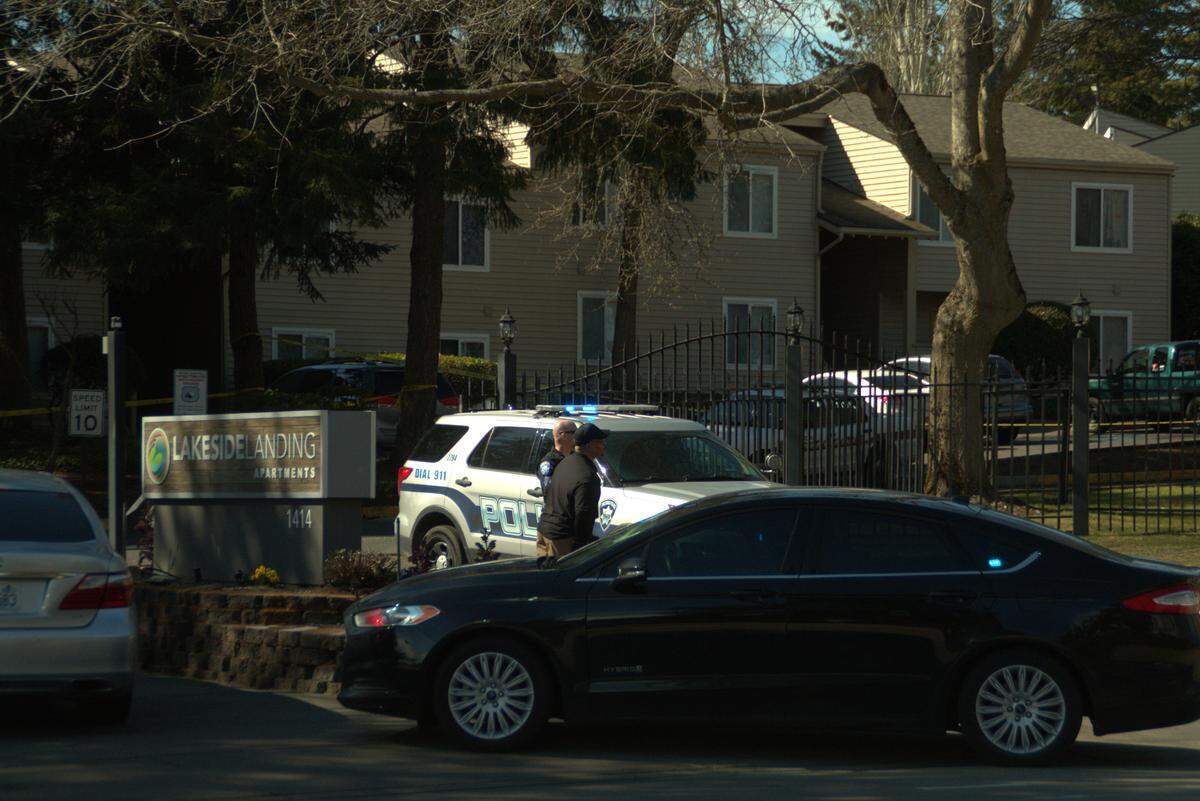
Throughout 2023, Tacoma and Pierce County couldn’t escape constant reminders of the fragility of life — or the violent reality local young people face.
Delivering her State of the City address early in the year, Tacoma Mayor Victoria Woodards led with what she described as a “deeply distressing uptick in violence.” She almost had no choice.
“Tragically we have already lost six lives to homicides this year, three of which happened in just the first three weeks, and heartbreakingly involved gun violence among our youth. … This level of violence is unacceptable and must stop,” Woodards said during a speech delivered March 16.
Roughly three weeks later, The News Tribune published an in-depth look at youth and young adult violence in Tacoma.
By that time, another four people had been killed, including a 16-year-old boy shot dead near Tacoma Community College.
On the year, there were 58 homicides in Pierce County, 12 involving victims 20 years old or younger, The News Tribune’s Puneet Bsanti recently reported — including six killings in Tacoma.
That’s a three-fold increase from 2022, when four Pierce County homicide victims were kids or young adults.
The 2022 data carried another ominous warning:
In a year when Tacoma hit an all-time high in homicides, The News Tribune’s Peter Talbot found that 19 of the people convicted of killing someone in Pierce County were 25 or younger, representing nearly a third of the total convictions stemming from 2022 murders.
At a time when crime trends are already on everyone’s mind — including the dramatic increase in auto thefts, the prevalence of things like broken storefront windows, and even the disturbing emergence of brazen young, armed, social media savvy car thieves known as Kia Boys — the outlook for Tacoma’s young people can start to feel dire.
At least until you sit down and talk to a few of them, we found out.
Here’s what we learned …
Roundtable conversation
Even without the specifics and data points to draw on, the increase in violence and other crime was top of mind for a group of roughly a dozen young people enrolled in the Hilltop Artists Program.
On Monday, Jan. 8, the students graciously welcomed members of The News Tribune Editorial Board. They’re part of the after-school program, ranging in age and location of enrollment.
Under the supervision of Hilltop Artists staff, the students agreed to share under the condition they wouldn’t be directly quoted or identified.
They didn’t speak on behalf of all young people, just for themselves, they stressed.
What they shared with the TNT Editorial Board underscored the multifaceted challenges local young people face, including how alone, alienated and misunderstood they often feel.
For members of the board, the students’ responses when asked about their overall level of optimism provided an enlightening starting point.
Most reported feeling hopeful about their own future. They shared inspiring dreams, ranging from plans to attend a college or trade school to goals of starting a band and pursuing the arts as a career or launching a small business. Most said they were confident they’d pull it off.
At the same time, the majority of the students we spoke with were far more pessimistic when assessing the larger state of the world. A few went as far as to describe the plight of humanity as practically hopeless.
What made the kids gathered around the table feel so bleak?
It wasn’t climate change or war, at least specifically.
Many pointed to a general, creeping feeling that society is increasingly devoid of compassion and empathy, largely driven by anger and the pursuit of self-interest.
Those problems we mentioned? They’re symptoms of the larger disease, the students told us.
If people cared about others, the world wouldn’t be boiling and the bloodshed of would cease.
If we had a genuine connection to our community and those around us, there wouldn’t be so much violence and disorder, the students argued.
They made a rather convincing case.
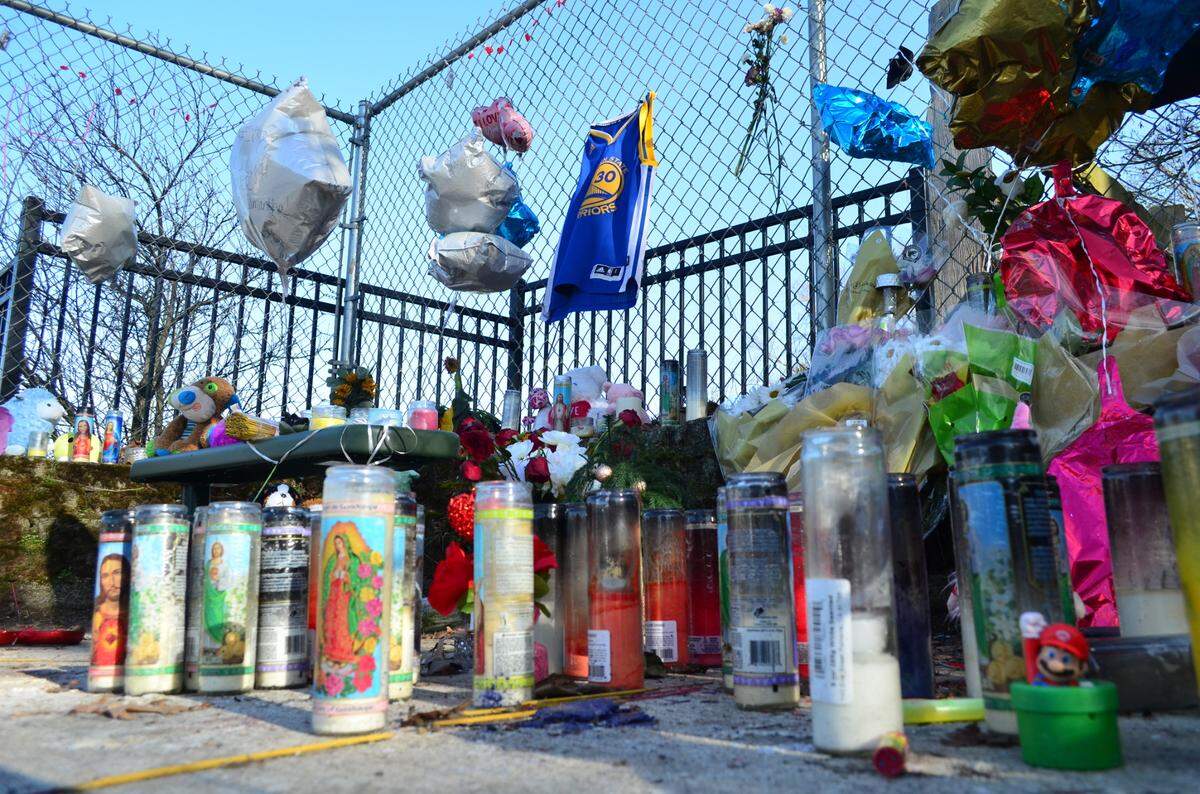
Experiences with violence
To varying degrees, the majority of the students we spoke with had witnessed violence at school.
Many told stories of various forms of harassment and intimidation they’ve seen in hallways and classrooms. A few relayed tales of friends with violent, abusive living situations and unstable home lives.
Some had been victimized. At least one reported having encountered a young person with a gun.
As our conversation crisscrossed the group, eventually the floor opened up for one of the younger members at the table.
Speaking over the hum of the Hilltop Artists glass-art studio, the student described a short list of dangerous experiences at school, including a time in recent months when brushes with “Kia Boys” were frequent.
Without exclamation or excitement, as if the close encounters they detailed were ho-hum occurrences, the student helped to illuminate the on-the-ground, schoolyard dynamics of a trend that law enforcement officials across the country have often described as a widespread public safety threat.
Carried out by young people who seemingly rip off the vehicles for sport, Kia Boys are known for posting their exploits on social media, often relying on masks. With disturbing regularity, firearms are involved.
For Tacoma, the national crime craze hit home late last year when thieves behind the wheel of a stolen Kia careened through Wright Park and ended up in the iconic duck pond.
In large part, it’s a viral fad fueled by an ignition defect in many Kia models that makes the vehicles obscenely easy to steal.
In the days leading up to crash, police received several reports of attempts to steal Huyndais and Kias.
On the day it happened, Hilltop Heritage had two modified lockdowns.
According to a statement from Tacoma Public Schools, the lockdowns were in response to erratic driving and the brandishing of a weapon on campus.
Fittingly, the occupants quickly fled the scene after careening into the Wright Park duck pond by stealing a nearby Hyuandai.
It might sound like something to laugh about if it weren’t for the larger trend and implications.
In December, for example, two 18-year-olds from Pierce County — both of whom identified as Kia Boys — were charged in a violent string of dangerous robberies.
According to prosecutors, the defendants’ alleged crimes and criminal records were lengthy.
Individually, they’d been accused of the armed robbery of several gas stations, the assault of at least one clerk, the theft of a necklace at gunpoint and the taunting of a woman and her children while she watched her Kia minivan be stolen.
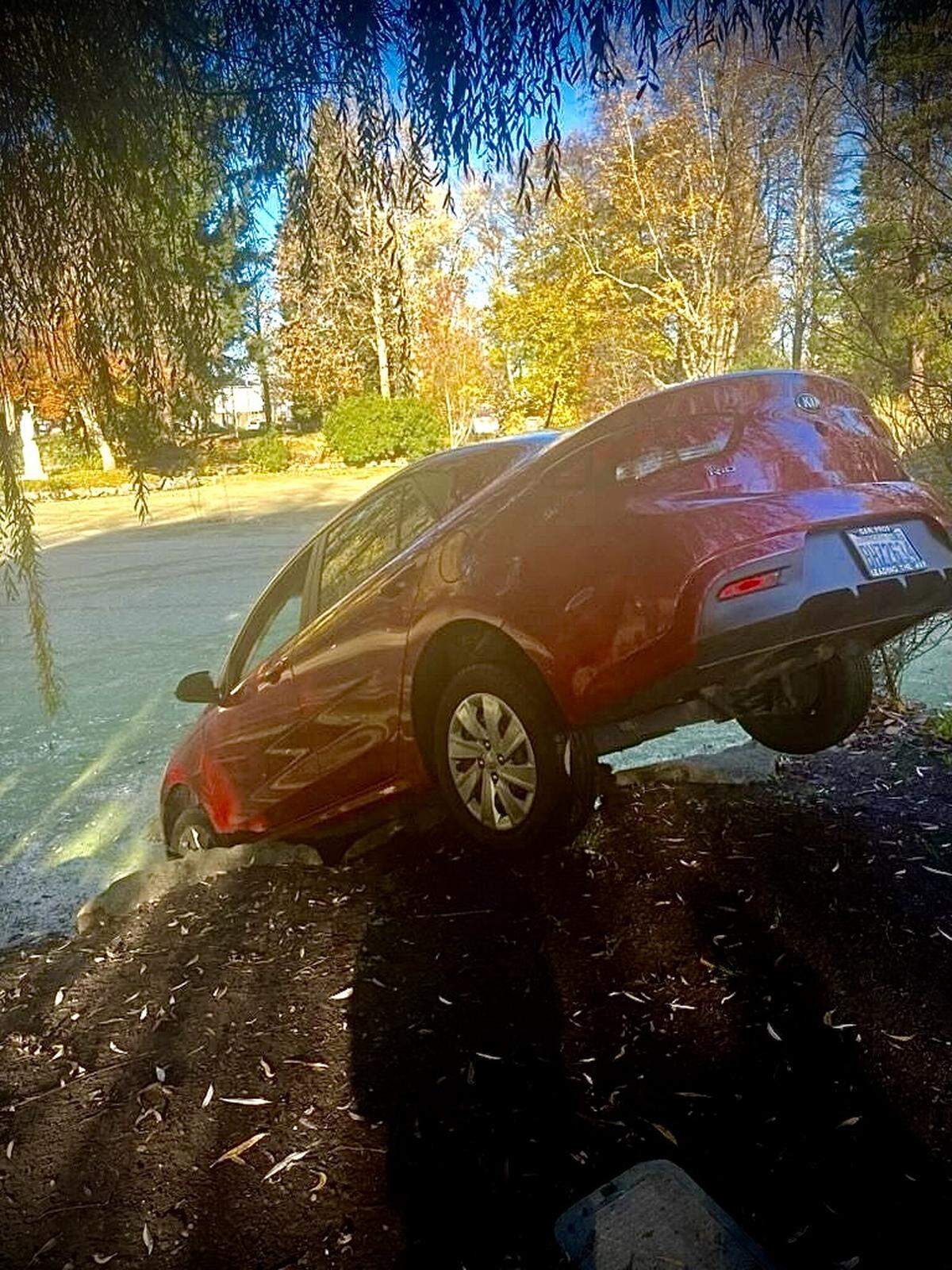
Making sense of Kia Boys
In the dinnertime conversations among adults, talk of Kia Boys, and particularly what it all means, can feel baffling, foreign and terrifying — even overwhelming. Where do you even start?
The young people we spoke with appeared more at ease with the subject, even comfortable much of the time.
Unanimously they condemned the behavior, describing it as the nadir of callous responsibility and selfishness.
Some saw it as part of the self-centered worldview at the heart of what some described as society’s underlying plague.
At the same time?
While no one condoned the Kia Boys’ criminal pursuits, there was a level of understanding that’s missing from most conversations and debates related to youth and public safety.
The same generation responsible for the Kia Boys craze and other dangerous activities popularized on social media are the kids forced into COVID-19 isolation during the height of the pandemic back in 2020, the students noted.
They spent roughly a year sequestered from their friends and classmates, forced to interact from the safe distance of a computer screen.
They were already living a reality that the grownups around them could never comprehend, a lifetime of ubiquitous smartphones, digital content, online thought silos and increased alienation.
What if the Kia Boys craze isn’t as mysterious as its portrayed, a few of the young people at the table urged us to consider?
What if this is about feeling unseen and unheard in an ever-changing world?
What if it’s about kids seeking social acceptance through online infamy and TikTok views because that’s where they can find it?
What if it has a lot to do with the lack of opportunities for local young people, including the transformation of the minimum-wage jobs that once existed for them, now filled by low-wage workers trying to feed their families?
What if, one shrewd student hypothesized, the disconnect described above could be summed up in one prime example? In Washington, it’s harder than most places for a young person to legally obtain a driver’s license.
Particularly in recent years, changes to state law have been championed by well-meaning progressives focused on safety data and the documented evidence that young people are more likely to be involved in car accidents and deaths on the roadway.
In addition to laws put on the books to limit driving at night and driving with passengers, teenagers are now required to complete driver’s education and clock at least 50 supervised hours of driving experience before getting a license.
If you want a license before you turn 18, all of it is mandatory.
Meanwhile, lawmakers also eliminated funding for driver’s education — two decades ago.
A staple previously offered in local schools, the instruction has essentially been privatized.
It now regularly costs in excessive of $500 to register and complete driver’s ed, depending on what strip mall you buy it from, not to mention a parent or guardian willing and capable to help a young person pull it off.
It goes to show how so many of the decisions we’ve made, the opportunities we’ve created and the causes we’ve championed have been well meaning but have failed to take the lives of actual young people into account, the students told us.
As a state, Washington should find a way for any 16 year old who needs a driver’s license — regardless of socioeconomic status — to complete driver’s education, preferably in our local schools. Just like it used to be.
Making driver’s education more equitable and accessible has been discussed by lawmakers in recent years.
More can be done. Tacoma and Pierce County can lead the charge.
What do kids want?
Keeping our focus on root causes and solutions in mind, The News Tribune Editorial Board paid particular attention to the things that the young people we spoke to said give them hope.
Specifically, we wanted to hear about the programs and organized activities that provide the support and opportunities they crave, and — just as important — what they believe is missing.
In a nourishing environment, like the one the Hilltop Artists program strives to provide, the students feel inspired to strive and reach for their dreams, they said. A handful of other local programs received shoutouts. So did an instructor or two.
The problem? There aren’t nearly enough of these opportunities, they said, and the programs that do exist are hard to access.
Taking stock of the landscape, many of the students we met with said things like traditional team sports and school clubs feel outdated and out-of-touch. They’re not inclusive, and they don’t speak to the reality of their lives.
They want new options and better options, they told us — and more of them, like opportunities to build community and engage in advocacy for the causes they care about, in particular the environment and social justice.
Some want more local music venues, recording studios and practice spaces for budding musicians of all kinds.
Others told us they would jump for more opportunities to take film and photography classes, engage in specialized post-secondary education counseling or receive career advice and small business mentoring.
Several students called for the creation of a program designed teach young people how to navigate the technology and the power of social media, allowing them to harness it to make change.
Why doesn’t it feel like much of anything is geared for them, a number of students asked?
It’s a fair question.
Screen time and tech addiction
The young people we spoke with are more connected and technology-dependent than any generation in history, and they know it.
It was true even before COVID hit, they said, and coming out of the pandemic it’s even more so.
Access to smartphones, screens and the internet are now a daily necessity, at school and at home. There’s no escaping it.
Screens have their benefits, the students maintained, despite the growing concern expressed by their parents and a chorus of experts.
Technology can create new space for friendship and community, something most have grown to depend on, particularly in recent years, many told us.
Mostly, they described a balancing act, acknowledging the danger of becoming isolated behind a screen and pair of earbuds.
Bucking the stereotypes, the kids also told us they’re hungry for genuine, face-to-face, human connection — the kind they’ve missed out on, to help fill a social-emotional void that’s left them exposed.
At least in The News Tribune Editorial Board’s estimation, it provides a wake-up call and a critical opportunity.
Speaking to The News Tribune, Anna Lembke, a professor of psychiatry and behavioral sciences at Stanford University, recently described screens as a drug, just as capable as caffeine, nicotine or cocaine of sparking addiction.
“The sheer volume of content, the portability, the 24/7 access, the cultural emphasis on the technology’s advantages … incorporated now into every aspect of our lives, including schools, it just takes it to a whole different level,” Lembke said.
In the same column, Mary Ann Woodruff, a prominent local pediatrician who has practiced at Pediatrics Northwest since 1989, drew a direct link to the increase Pierce County has seen in childhood depression, anxiety and other mental health emergencies and the amount of time young people are spending plugged in.
Andrea Donalty, a general pediatrician and the medical director of the Mary Bridge Children’s Primary Care Network, made the same connection.
Lembke believes that local schools bear some of the responsibility and should be a focal point of what she describes as a necessary tech and screen-time course corrections.
“Schools are at fault. Schools have completely over-embraced the use of technology, to the detriment of kids, and learning and teachers and everybody. … We absolutely need to unwind the way that technology and devices have been integrated into the classroom,” Lembke told The News Tribune.
Tacoma and Pierce County should set an example.
The pandemic has already put the kids through enough.
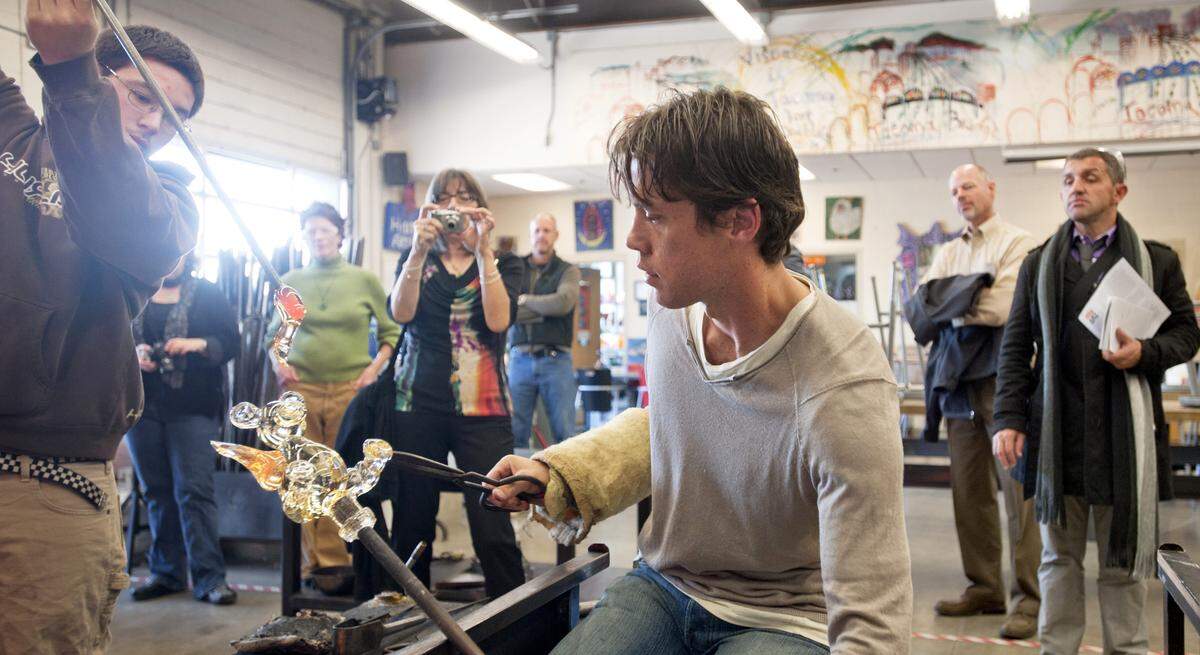
The big picture
On a rainy Monday night at Hilltop Heritage what we heard was unmistakable: If we build it, the kids will come, young people told us.
When we have in the past, they have.
They want to be heard, respected and fully included. They’re desperate for a reason to get off their phones.
They can also sense and feel the risks around them.
Originally designed for at-risk youth by Tacoma-born glass artist Dale Chihuly and gallery owner Kathy Kaperick, Hilltop Artists was launched in 1994, making this the program’s 30th year.
Having served thousands of local young people and aspiring artists over that time, it’s one of many successful, homegrown youth development initiatives to establish roots in Tacoma.
Directly or indirectly, the program also provides young people with an alternative to crime, violence and isolation.
According to Patricia Davidson, the interim program director at Hilltop Artists, the reason kids keep showing up is simple: The program provides something vital young people are looking for.
It’s something Hilltop Artists has done since the beginning, Davidson noted, which is mildly remarkable considering how much the lives and needs of local young people have changed over the ensuing decades.
“We’re talking about a program that is generationally successful, able to ride the wave of change over a 30-year period of time in a way that still fosters community and inclusivity and promotes an authentic experience for kids,” said Davidson, a glass artists and teacher who first volunteered at Hilltop Artists when the program was in its infancy.
“If people feel safe and respected, they’re going to do their best, they’re going to show up, they’re going to participate. That’s what Hilltop Artists is able to provide,” Davidson added.
“It’s a place where the kids feel safe and respected, and they feel listened to.”
The good news? As Davidson underscored, Hilltop Artists is far from alone in the work of local youth development.
In recent years, Tacoma Creates has pumped $4.5 million into local arts, culture, heritage and science, according to the campaign’s 2022-2023 annual report.
During that time, the voter-approved effort has provided funding to more than 50 nonprofit organizations, with a specific goal of reaching under-served kids.
Overall, nearly 1,200 events have been paid for, 85% of them in-person, according to the data, reaching more than a million participants in total.
Almost 80% of Tacoma Creates-sponsored events has been free.
Meanwhile, Metro Parks Tacoma is embarking on an effort to transform the way we think about parks, recreation and the opportunities local young people are offered — across the county.
In 2023, a report by the nonprofit Aspen Institute revealed what many already knew instinctively: Local kids aren’t as active as they should be, contributing to a host of health and well-being concerns.
Working across community partnerships and in conjunction with the Aspen Institute’s Project Play initiative, local parks will soon come much closer to providing the things young people say they want, like snowboarding, horseback riding and archery, The News Tribune recently reported.
According to Davidson, that’s the key.
It’s what Hilltop Artists manages to do so well.
Spending time with kids enrolled in the program will renew your hope for the future. We saw the evidence firsthand.
This year, instead of talking at young people or trying to read minds, grownups should focus on what the kids are crying out for.
They’ll tell you. As a community, all we have to do is deliver.
This story was originally published January 29, 2024 at 5:00 AM.