
‘I love this tree’: UPS student tracks Tacoma’s canopy connection | Opinion
When Easton Umansky chose a college, Tacoma’s trees were a deciding factor.
“We don’t have trees like this back home,” said Umansky, who hails from San Diego. That cinched his choice of the University of Puget Sound, he says.
The Washington city’s trees, which include native maples and firs as well as a multitude of happily naturalized species, ended up being more than a pretty backdrop to his studies at UPS. Umansky, a rising junior, has made them the subject of a summerlong research project. The result has been a connection with Tacomans over trees.
It’s the story of a college student branching out into his adopted community, and it’s also the story of one of humankind’s favorite neighbors: the city tree. Give people, even accidentally, a chance to talk about their local trees and prepare for things to get emotional.
That’s what happened in Melbourne, Australia when the city’s government created email addresses for local trees. The idea was to let residents report damage and other problems. Naturally, people took the opportunity to send love notes to the trees. Researchers in Finland found that humans grow relationships of admiration, nurturing and nostalgia with trees.
In Tacoma, Umansky turned his focus to the social impact of trees after first studying environmental science. He began wondering how trees were affecting the lives of other residents. So he changed his major to include sociology, and set out to discover how the city’s canopy looks to people from a variety of neighborhoods.
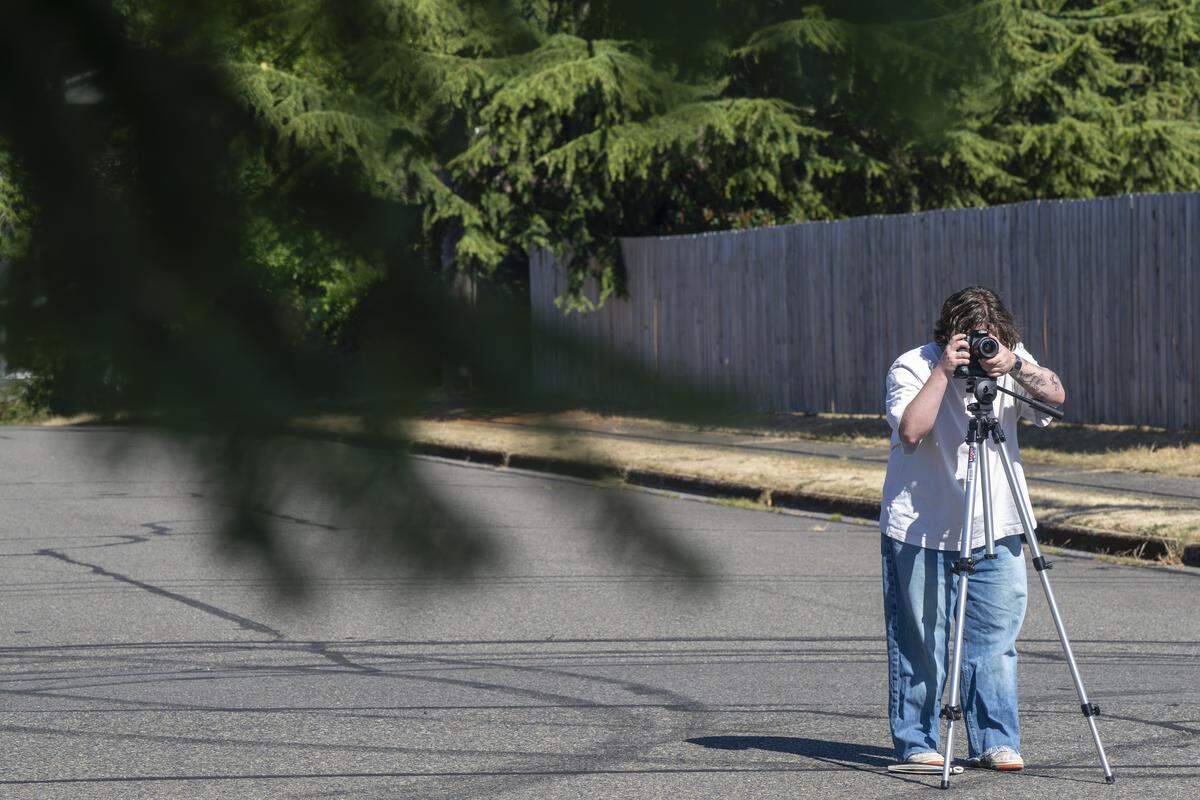
As part of the research, he’s sought out photo submissions of local trees with comments from Tacoma residents. He relies on interview methods he learned from his sociology studies and has partnered with the Tacoma Tree Foundation to reach out to residents. That’s netted him pictures from around the city, and an appreciation for the personal connections people have with their neighborhood trees
A personal connection can draw people in to bigger conversations about the importance of trees in cities, Umansky said. That in turn can help communities everywhere make policies that take residents’ experiences into account.
So far, he’s received submissions with simple remarks like “it’s tall,” as well as deep dives into scientific facts and the genus of a specific tree.
“But the knowledge level doesn’t alter the connection,” he said.
Tacoma’s trees are distributed unequally
There are many ways to experience trees in Tacoma, which is full of contradictions when it comes to the urban canopy. We have multi-acre forests in neighborhoods across the city and lots of tree-lined streets.
But some of those same neighborhoods, like Tacoma’s South End, are also home to heat islands. Those are blocks with a lot of paving and very few trees, and they get hotter in warm weather than in shaded parts of the city. This problem is echoed in cities around the country with histories of redlining, which typically reserved some neighborhoods for white residents until 1968 with the passage of the federal Fair Housing Act.
The policies live on in the number of trees on a given street.
“The areas with less funding, with [more] people of color and other marginalized groups, have less trees,” Umansky said.
In Tacoma, these differences are more stark than a crabapple tree in winter. Tacoma has neighborhoods with 3% tree cover, and others with cover reaching 64%, according to the city’s urban forestry program.
The low end of these numbers bring the overall percentage of the city covered by tree canopy down to 20%, the lowest of all communities in the Puget Sound. That’s hard to imagine on the leafy campus of UPS.
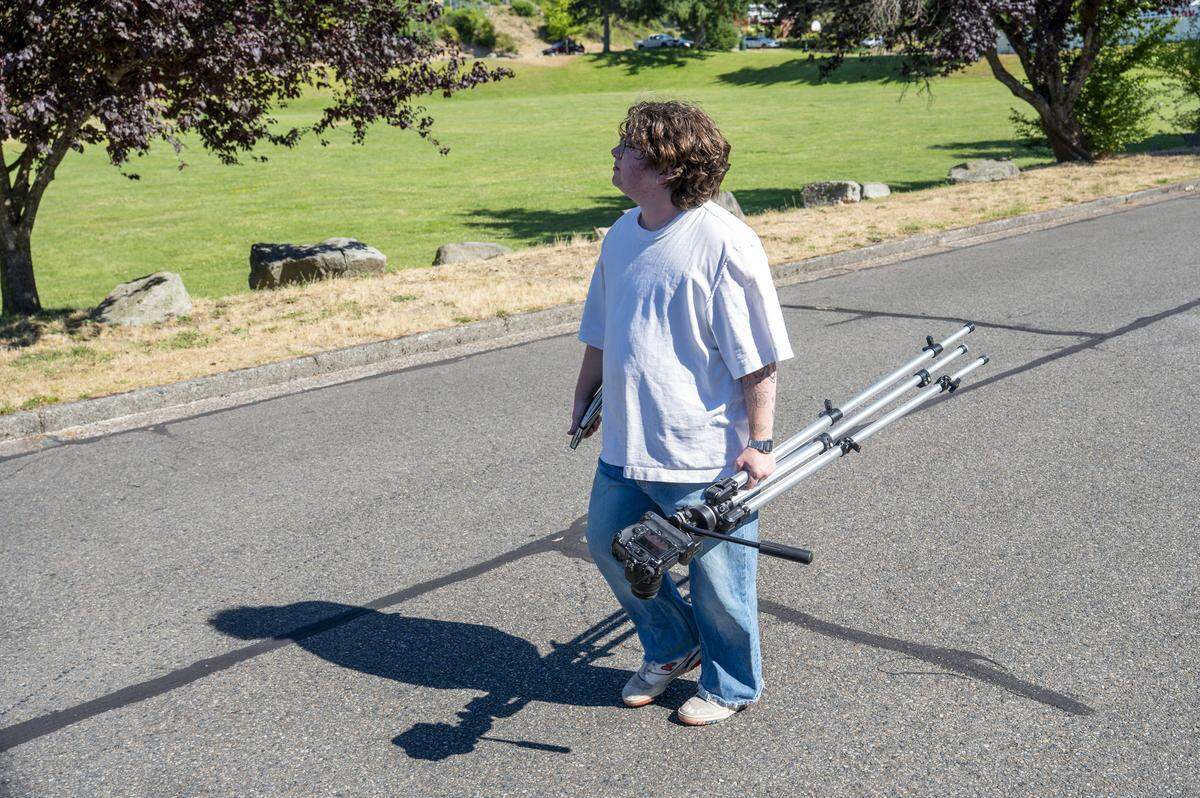
Tacomans connect personally with trees
One decisive trend in Umansky’s research so far is that, although people mention that trees are good for the environment, most responses have focused on the way people connect to trees on a personal level.
One of his favorite photo submissions so far featured a tall conifer at night. “I love this tree and how the stars twinkle behind it,” the submitter wrote.
“I got to actually see that exact moment, almost through her eyes,” Umansky said of the submission, “and I could just imagine how she felt through that photo.”
The methodology is called photovoice, and it encourages participants to create images of their worlds and then talk about them.
“This opens responses and allows for folks to respond in ways that are meaningful to them,” he said.
Umansky is planning an exhibition for later this year, which will feature submissions from community members, along with the photos and maps Umansky himself is creating of Tacoma’s trees.
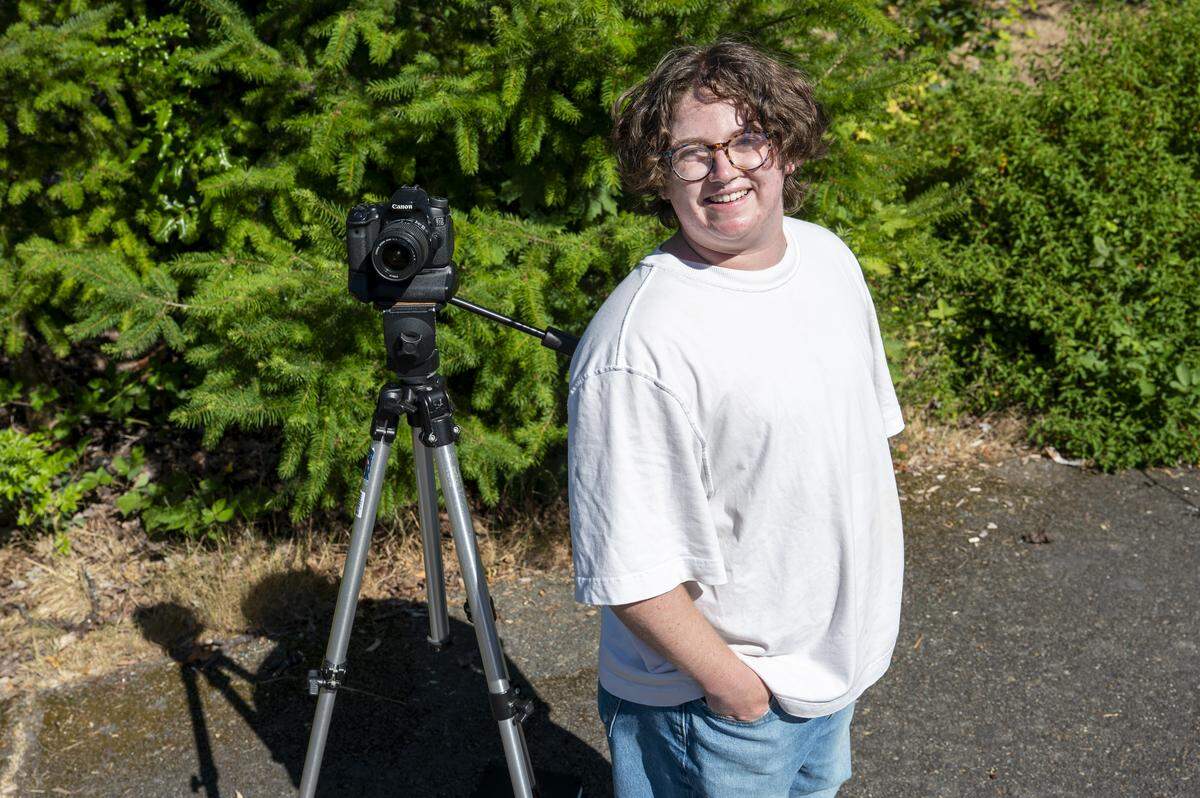
The project is in some ways a response to the city’s history of redlining. But it also comes as the city faces new policy questions around trees.
As Tacoma encourages the development of new housing, local officials are trying to make sure crucial trees don’t get the ax in the process. What’s more, climate change threatens the trees that exist now, making it more important to plant new trees that can survive weather extremes.
It’s these questions that make everyday peoples’ experiences important, Umansky said.
He hopes to bring them together, “So they can learn from each other, and policy makers can learn from them as well.”
This story was originally published August 19, 2025 at 5:00 AM.