Might Ferndale’s Doug Pederson come home to be Seahawks’ new OC? Plus, other candidates
Brian Schottenheimer has barely been fired.
Yet many in the Northwest already want a Washington kid to come home to be the Seahawks’ new play caller.
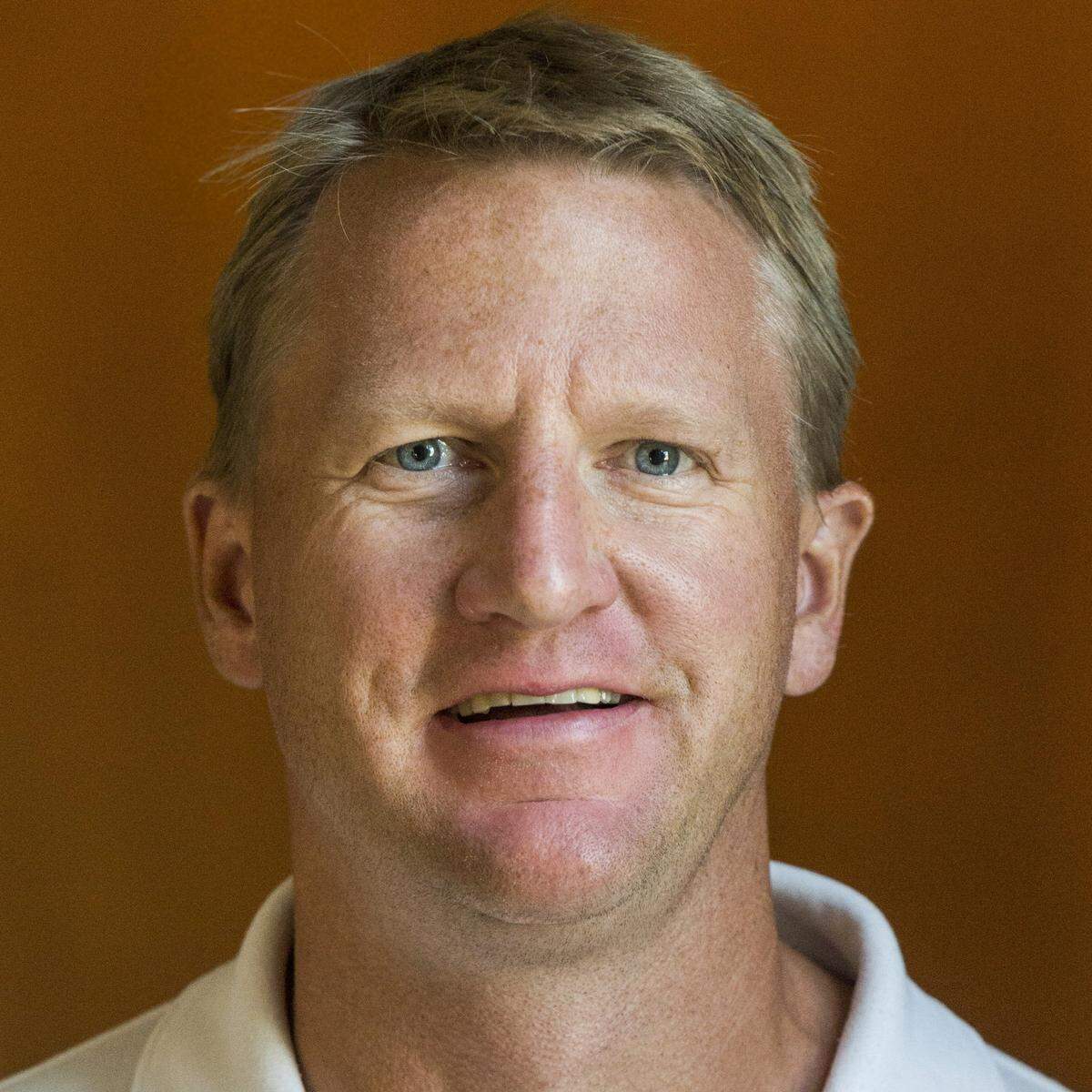
Just-fired former Philadelphia Eagles head coach—and former Seahawks season-ticket holder—Doug Pederson is available to be Seattle’s new offensive coordinator.
He knows the way here.
Pederson was born 53 years ago this month in Bellingham. He is a 1987 graduate of Ferndale High School.
The Eagles fired Pederson as their head coach on Monday. It’s been less than three years since he won the Super Bowl, Philadelphia’s first NFL title since 1960.
That’s the fastest ouster of a Super Bowl-winning coach in 49 years. The Colts fired Don McCafferty in 1972, five games into their second season following Baltimore’s win in Super Bowl V.
Pete Carroll fired Schottenheimer on Tuesday, after three seasons as Russell Wilson’s offensive coordinator and play caller. The team cited “philosophical differences,” and termed Schottenheimer’s exit as “we have parted ways” three days after the season ended in which the Seahawks set a team record for points scored.
The differences in philosophy between Carroll and Schottenheimer became obvious by season’s end, particularly in the Seahawks’ loss to the Los Angeles Rams on Saturday in the first round of the NFC playoffs.
Schottenheimer continued to have Wilson trying deep passes to DK Metcalf and Tyler Lockett. That worked wondrously during the first half of the season. While Seattle roared to its 5-0 start, the best in franchise history, Wilson was setting NFL records for touchdown passes to begin a season and Metcalf was leading the league in yards receiving.
That was when defenses were using varied coverages against the Seahawks. They used more single-high-safety coverage, with the free safety playing center field deep and cornerbacks often in man-to-man all over the field. A second, strong safety was up closer to the line of scrimmage to defend against the running game Carroll had based the Seahawks’ offense upon for most of his 11 seasons as their coach.
By midseason, defenses changed. They used more two-high safeties, more zone and bracket coverage with a safety deep and a cornerback short on Metcalf, specifically. It was double the amount of attention paid specifically to defending Seattle’s deep passes.
Foes dared Wilson to throw shorter, quicker passes underneath the umbrella-like coverages.
In Carroll’s mind Schottenheimer’s fatal flaw, through Saturday’s complete malfunctioning against the mashing Rams, was that his play calls never fully adjusted to defenses’ adjustments.
Carroll said in November, December and again Saturday after the Seahawks’ season came to a dismal end against the Rams, that the offense needed and needs to “adapt better.”
When Philadelphia hired Pederson to be a first-time head coach in 2017, he’d become known around the league for adapting. He had a keen ability to tailor his offense to the strengths of each player, and design it to avoid their specific weaknesses.
Adaptability with personnel has been one of Carroll’s hallmarks leading Seattle. He’s sought to use Seahawks players in ways that maximize what they do best while not asking them to do what they aren’t as good at just to fit a system.
Pederson was also used to having less than full autonomy or even normal control of the offense when he was the offensive coordinator in Kansas City. He was working for offensive guru Andy Reid from 2013-15. That remains the only coordinator job Pederson, the former quarterback and quarterbacks coach, has ever had.
Pederson is an adaptor not just by the job, season and week, but by the play. He became known in Philadelphia for perfecting the use of run-pass options in the Eagles’ offense. Those are the either/or plays in which the offensive line blocks for run and pass and the quarterback decides as the play develops whether to hand the ball off to a running back or keep it to throw a play-action pass.
Carson Wentz became an 11-2 quarterback with 33 touchdowns and just seven interceptions in his second season running Pederson’s RPOs with the Eagles in their Super Bowl-winning season of 2017. Pederson won it all inserting backup Nick Foles for the injured Wentz in December, then designing the plays that turned Foles into the Super Bowl MVP that season.
Apart from geography and family, Pederson has another link to the Seahawks: John Schneider.
The Seahawks general manager, whose contract the team just extended again into 2027, entered the NFL in 1993 as a scout working for his hometown Green Bay Packers. While Schneider was in that job, Pederson was Brett Favre’s backup quarterback.
Schneider was the Packers’ personnel executive to the GM when Pederson returned to Green Bay to end his playing career there as Favre’s backup again, from 2001-04.
There are 101 reasons why Pederson could—the folks in Whatcom County will say, should—become the Seahawks’ next offensive coordinator.
There are other reasons why he might not.
The chief one: So recently removed not only from his head-coaching job but winning a Super Bowl, Pederson must decide if he wants to wait for the next, right head-coaching job elsewhere—or if he’s ready to go back to being a coordinator serving another head coach.
Run-based, not run-first
Because he talks about such prehistoric (to many) football concepts as balance and running the ball to help the passing game, Carroll is widely viewed as a run-first coach.
That’s not entirely accurate.
Carroll is more run-based than run-first. He wants to run enough, and effectively enough, to take defenses out of two-high-safety coverage that make deep passes so difficult.
“Frankly, I’d like to not play against two-deep looks next year, all season long,” Carroll said.
He wants to see more of the coverages with a single safety deep that Seattle saw in its Super Bowl seasons of 2013 and ‘14, and in 2019.
That was the season after the Seahawks led the NFL in rushing in 2018, Schottenheimer’s first season calling Seattle’s plays.
“We need to run more with focus and direction and count on it a little bit differently than we did,” Carroll said Monday. “It isn’t going to be 50 runs a game. We’re not doing that. I don’t want to do that. I want to explode with a throwing game.
“But we need to dictate to the way we’re being played, and better, and see if we can do that.”
Carroll has a number he says proves you need to run to win. The number drives analytics and many Seahawks fans to chew their 12 flags, because it comes from Vince Lombardi-era football. It’s 50 combined completions and rush attempts. Carroll is constantly aware of that number before, during and after all games.
Overlooked during their flying, 5-0 start to this season, the best start in franchise history, when Schottenheimer had Wilson in bombs-away mode throwing it all over NFL yards: With lead running back Chris Carson healthy, the Seahawks hit 50 combined completions and rushes four times in those five weeks.
In the last eight games the Seahawks reached 50 completions and runs just three times. All three were wins.
They weren’t even close in the season-ending loss to the Rams: 36 (a season-low 11 completions by Wilson), and 25 runs. Four of those runs were by the scrambling Wilson, who got sacked five times holding onto the ball, waiting for deep passes that weren’t there.
Pederson’s Eagles were 10th in the NFL in rushing attempts his first season of 2016. They rose to sixth the year they won the Super Bowl. Over the next three years, they finished 20th, seventh and 24th.
The Eagles went 4-11-1 in 2020 with the fewest rushing attempts of Pederson’s head-coaching tenure.
Other candidates
Wilson might have a voice in who is hired as his new play caller. As the $140 million franchise player he surely had a heads-up, if not a vote on Schottenheimer’s exit. If Wilson gets his druthers, Dave Canales could be Seattle’s next offensive coordinator.
The 39-year-old Canales has been working for Carroll since 2009 when both were coaching at USC. He came with Carroll to Seattle in 2010, to be his wide receivers coach. He was that until becoming Wilson’s quarterback coach in 2018. In 2020 he was the Seahawks’ passing-game coordinator.
Carroll said Monday he’s lost trusted assistants who can talk frankly to him and be the authority with him that Carroll was over Schottenheimer. Carroll specifically mentioned Carl Smith as invaluable to him. Smith was Wilson’s position coach prior to Canales, from 2012-17. He spent this past season as a consultant for the Houston Texans.
“I always need more help, you know. I need to be coached up just like everybody else,” Carroll said. “Over the years I have lost a couple guys that have been (that for me). Carl Smith was a guy that was…’Tater’ would tell me anything. He was awesome. And I demanded it of him because he knew the truth, and he needed to speak it to me.
“So I have lost a few guys like that, and it is something I’m looking at.”
Shane Steichen is another name linked to the Seahawks’ new opening, by Mike Garafolo of NFL Network. The 35-year-old native of Sacramento was the Los Angeles Chargers’ offensive coordinator in 2020, before they recently fired head man Anthony Lynn and his staff.
With Steichen calling plays this season the Chargers had the ninth-most rushing plays. That was with lead back Austin Ekeler missing six games with an injury. In 2019 Steichen was L.A.’s interim coordinator. The Chargers were 28th in rush attempts that season.
Pep Hamilton is also in the market for a job from the fired Chargers staff. He was L.A.’s quarterbacks coach for rookie Justin Herbert’s smashing debut season in 2020. He was the offensive coordinator at Stanford (2011-12), when Andrew Luck was Stanford’s quarterback, and for the Indianapolis Colts (2013-15). For years, Stanford has been known as one of the run-heaviest teams in college football. The Colts were 22nd, 17th and 21st in rushing attempts with Luck at quarterback during Hamilton’s years as their coordinator.
This story was originally published January 13, 2021 at 1:40 PM.