Pete Carroll ‘can’t even imagine’ Jamal Adams not playing in Seahawks’ opener next month
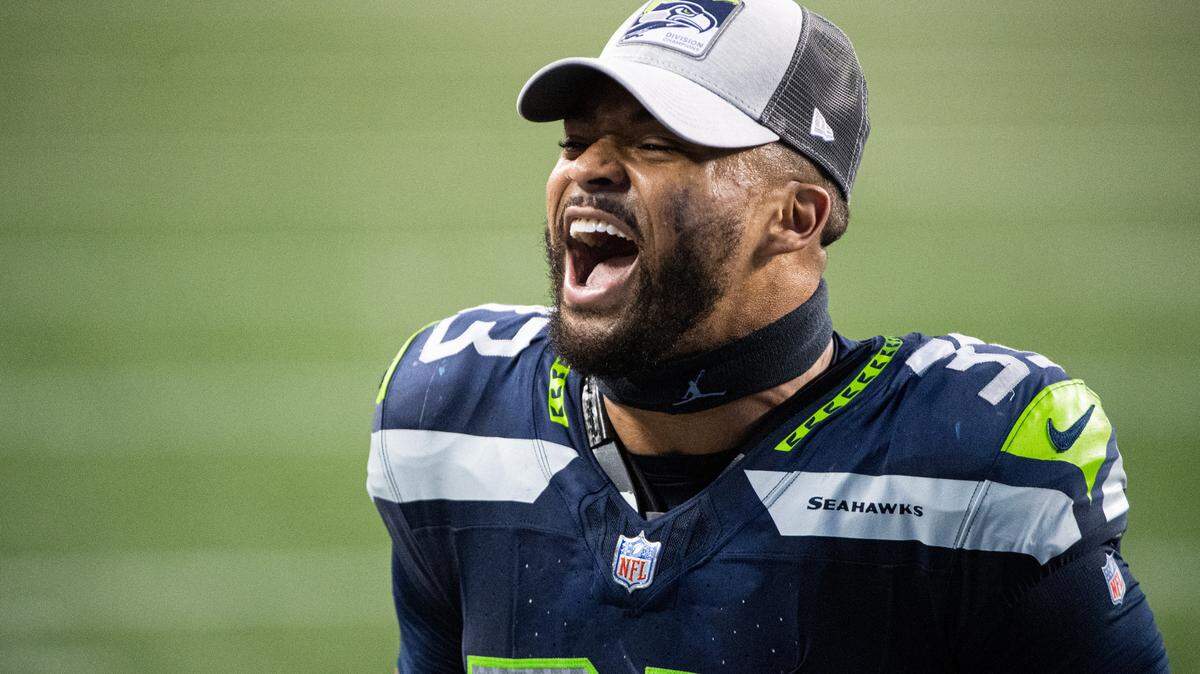
Finally, something new about Jamal Adams on day 13 of Seahawks training camp.
He wasn’t at practice, at all.
For the first time in camp, the All-Pro safety was not on the field watching his teammates as they walked through a light practice Friday afternoon, then boarded a jet for Las Vegas and their first preseason game there Saturday.
Adams has not practiced in this training camp or in offseason workouts. He wants a rich, new contract beyond his deal that ends after this season.
Seattle’s season begins in four weeks and two days, Sept. 12 at Indianapolis.
How possible is it that Adams’ contract stalemate with the Seahawks will continue through then, and that he will remain off the field and not play in the opener?
“I’m not even thinking about that, at all. I don’t know. I don’t know,” coach Pete Carroll said following Friday’s practice.
“I can’t even imagine that.”
So Carroll thinks one of two outcomes before then: that Adams and the Seahawks finally compromise and he signs his new deal, or Adams ends his “hold in” of being at the team facility but not on the field even without a new deal.
Players in contract years risk their financial futures by skipping regular-season games. Those are their 17 chances to show the rest of the league what they are worth for the following season and beyond. Plus, the NFL collective bargaining agreement mandates Adams would lose game checks, $547,778 per week in his case, if he refuses to play in the regular season.
Safety Kam Chancellor held out through the Seahawks’ training camp in 2015 and past the first regular-season game before dropping his stance and returning to the team before the second game. He lost one game check and did not get the new deal he was seeking before he began playing again.
Not practicing during training camp is about the only leverage Adams has in this situation. He hopes the team begins feeling urgent about getting him on the field to prepare for the regular season and makes concessions in negotiations.
He’s under contract at a guaranteed salary of $9.86 million this year. In May 2020 his former New York Jets exercised their fifth-year option on him as a first-round pick. Two months after they did that, the Seahawks traded two first-round draft choices plus veteran starter Bradley McDougald to the Jets to acquire Adams.
They did that while planning ahead to re-sign him and make him the NFL’s richest safety. General managers don’t send teams the haul Seattle sent to New York only to rent a 25-year-old star for two seasons and not pay him to stay longer.
Carroll, GM John Schneider and salary-cap executive Matt Thomas knew that market for safeties reset last year to above $15.25 million per year, the deal Denver gave Justin Simmons.
The Seahawks and Adams have known the parameters of his impending deal for a while now: likely between $16 million and $18 million per year.
Bobby Wagner is the Seahawks’ highest-paid defensive player, at $18 million per year. He’s been a fixture and All-Pro in Seattle for a decade.
Adams has been here a year.
Adams wants more than to be the league’s richest safety. He wants to be paid a premium as a unique force that transcends the position and its market. His 9 1/2 sacks last season, while playing with three injuries that required two surgeries following the 2020 season, set an NFL record for defensive backs. He wants to be paid more like, well, a unicorn.
How much more than $16 million per year?
Wagner seems to set the ceiling below $18 million per year. The $17.5 million per year the Seahawks reportedly have offered Adams makes sense, to pay Adams a premium above the top of the safety market while keeping Wagner as the team’s highest-paid defender.
Adams’ “hold in” continues now past halfway through training camp because of what is often the most complicated part of professional sports contracts involving tens and hundreds of millions of dollars: the last part.
That’s the detailing of guarantees.
How much of the total value of his contract is guaranteed at signing? How much is guaranteed against injury at the start of subsequent league years? What is the cash flow to Adams in the first three years of this deal?
Unlike in the NBA or Major League Baseball with its guaranteed contracts, the player in his prime in the non-guaranteed NFL seeks to hoard all the guaranteed money up front in his first deal beyond his rookie contract—before possible career-altering injuries or reaching the age of 30, a danger age in this league.
That’s where Adams is now.
The Seahawks in 11 years under Carroll and Schneider have preferred to back load their huge contract extensions for stars. They seek more manageable salary-cap numbers in the first years of new deals for foundation players, with ballooning cap numbers in final, non-guaranteed years.
That’s a hedge against paying large as a player ages, gets injured, or both.
If that star is healthy and rolling at the end of the back-loaded deal, the Seahawks tend to extend his deal again entering the year it is scheduled to end. That’s to lower the purposely ballooned cap charge at the end of the old deal into a more team-friendly cap number up front in another new, back-loaded contract.
See: Wilson’s NFL-record $140 million extension with the team he signed in 2019, before the final year of his second Seahawks deal.
If that star has a major injury and has turned 30 or older at the end of his back-loaded deal, the team can cut that player at little or no residual cap cost.
See: Richard Sherman. The All-Pro cornerback tore his Achilles tendon then got waived injured by Seattle in March 2018, before his $11 million cap charge for that year applied.
Adams and the 2021 NFL star don’t want back-loaded contracts. They want maximum cash up front, before their health or team and league situations change.
The Seahawks don’t have as much cash up front this year. Because of the pandemic, the salary cap went down this year for only the second time since the league adopted one in 1994 (the other time was during the 2011 lockout). It dropped from $198 million to $182.5 million. That’s less buying power, and less money, to sweeten Adams’ new deal up front.
Thing is, by 2023 the cap is likely to be well above $220 million, an increase of $40 million or more per team from now. That’s because of the NFL’s new media-rights deals signed in February kick in with the 2023 league year.
Plus, the Seahawks aren’t negotiating with Adams in a vacuum.
Pro Bowl veteran left tackle Duane Brown, who turns 36 this month, has told the Seahawks he wants a contract beyond his that ends with after this season. He isn’t practicing, either.
”We’ve got to figure that out,” Wilson said this week, “because we need Duane Brown.”
Quandre Diggs, Adams’ Pro Bowl partner at safety, is entering the final year of his deal. Wagner’s contract ends after the 2022 season. Same with record-setting receiver DK Metcalf. Through his first two seasons Metcalf has massively outperformed his rookie contract as a second-round pick and is due for a mammoth raise.
And some guy named Wilson has his contract ending after the 2023 season.
That’s further reason why a deal with more money later makes more (dollars and) sense for the Seahawks.
But not for Adams.
All this is why the deal’s not done—not yet.
This story was originally published August 13, 2021 at 1:58 PM.