After 4 years and millions spent, Tacoma’s homeless crisis persists. So what now?
READ MORE
Homelessness crisis in Tacoma
Four years after the city of Tacoma declared a public health emergency related to homelessness, it is still a reality for a growing number of people in Tacoma. What is being done and what can be done?
Expand All
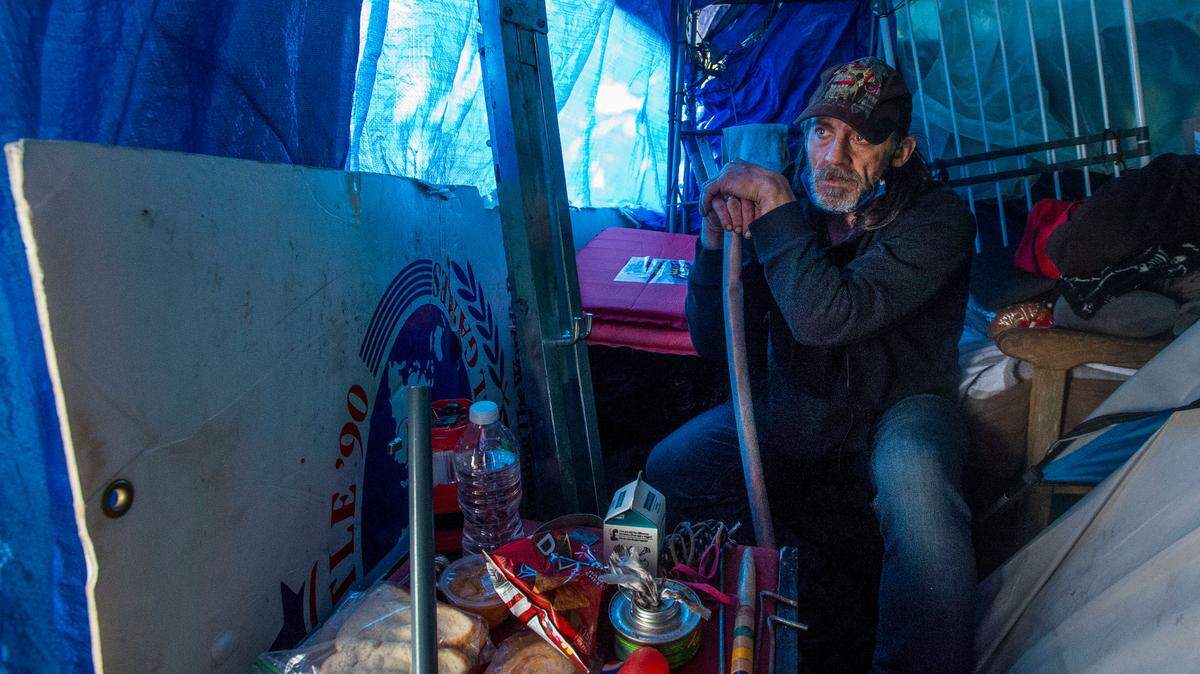
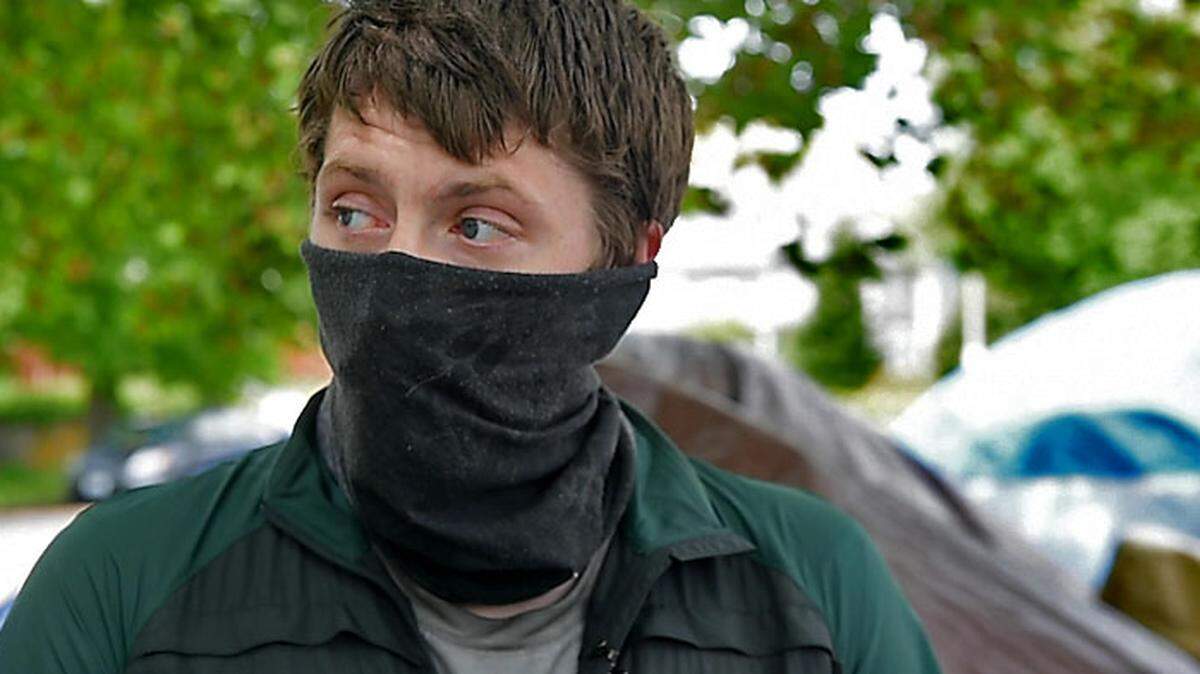
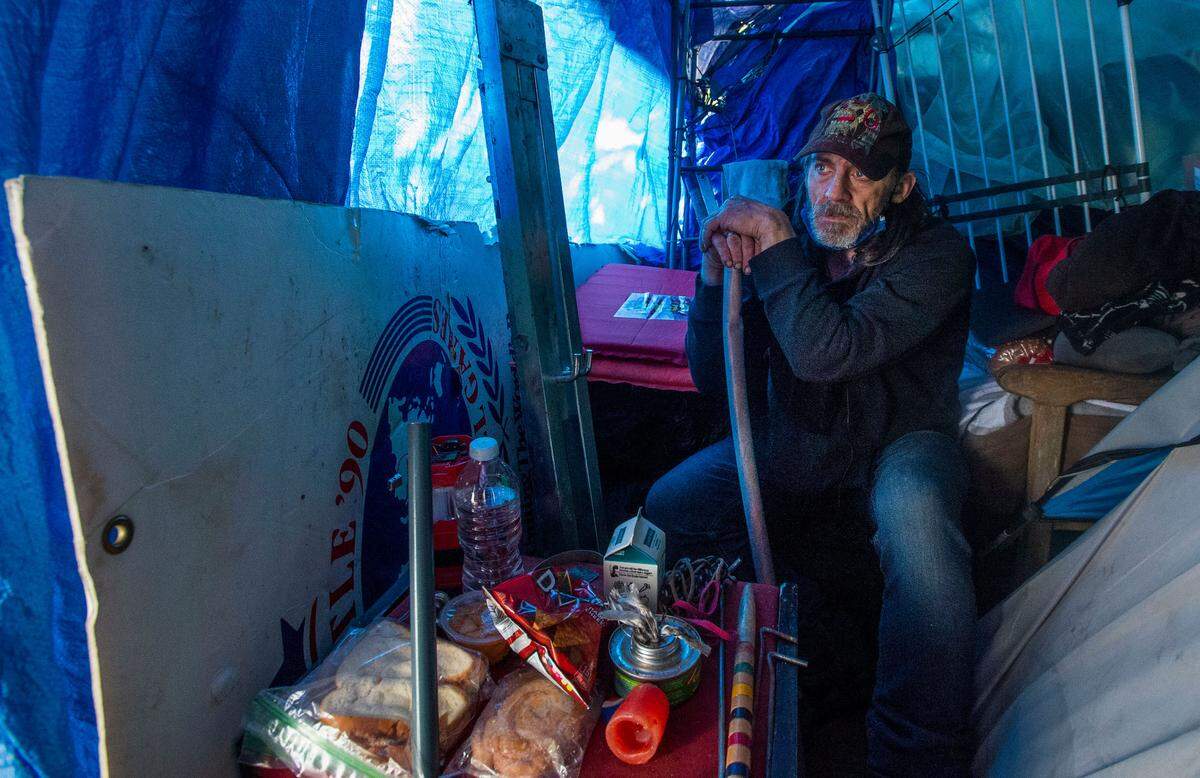
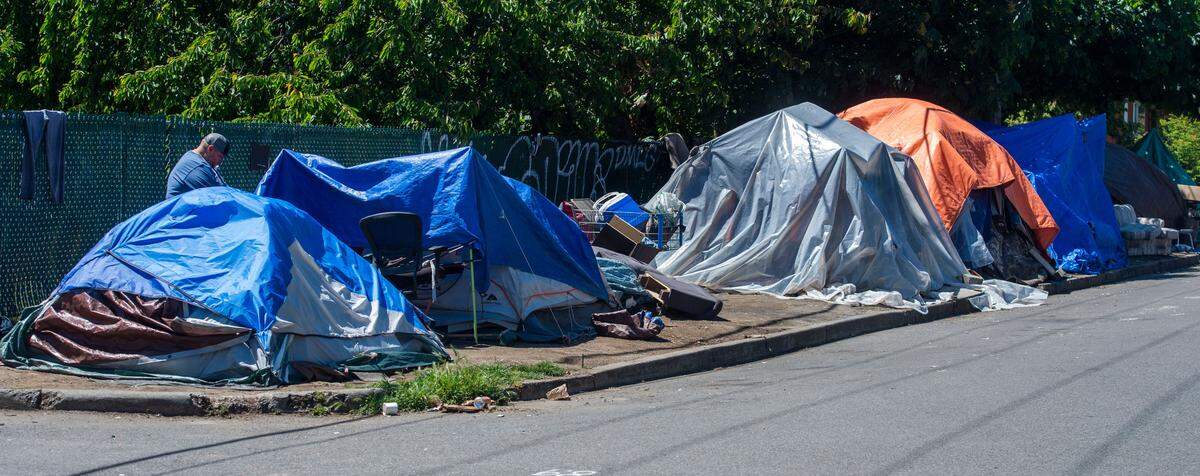
In 2017, the city of Tacoma declared a public health emergency related to homelessness, launching a three-pronged approach to addressing growing encampments across the city.
“Our goal is to make sure no one who’s in Tacoma has to sleep on a street, in a park, beneath an overpass or outside, and the message we want to send is help is available,” former Tacoma Mayor Marilyn Strickland said at the time.
Four years later, that’s still a reality for a growing number of people in Tacoma. Programs that keep track of homeless populations show there’s more people without homes now than in 2017.
It’s not just Tacoma.
There’s a larger national trend of increasing rents and lack of affordable housing that is causing an increase in numbers. The COVID-19 pandemic, which caused unemployment numbers to soar like never before and led to increased evictions and homelessness, didn’t help.
Now the city of Tacoma is returning to its planning stages for a five-year strategy that officials say moves beyond a reaction to street homelessness. The new plan builds off the city’s existing work to expand shelter beds but will take a closer look at racial disparities in homelessness, amplify community partnerships and its Affordable Housing Action Strategy, and identify the needs of specific populations struggling to find housing.
The details of that strategy are still in the works. The city plans to conduct outreach with residents, people experiencing homelessness and advocates in the coming months.
The city also is working with Pierce County on a newly-formed Pierce County Ad Hoc Committee to End Homelessness, a 10-member committee created by the county to put together a short-term plan to end street homelessness by Nov 1. and a long-term “comprehensive” plan to address policy and funding. Those plans also are in the works.
Members of Tacoma City Council vary in their views but tend to agree that despite there still being a problem, the city has learned more about what works and what doesn’t in the past four years.
“Do I think the homeless situation is worse than 2017? Absolutely,” said Mayor Victoria Woodards. “Do I think Tacoma is better off because of what we’ve done? Absolutely. But there is absolutely more to do.”
What the numbers say
Ways to track the number of people experiencing homelessness in Tacoma vary, but all of them generally agree that homelessness is increasing.
The number of people without homes in Tacoma grew from 6,664 people in 2017 to 10,858 in 2020, about a 63 percent increase, according to data from the Pierce County Homeless Management Information System (HMIS). The HMIS counts everyone that touched the system, whether they experienced homelessness for one day or one year.
Pierce County’s annual Point in Time Count, which counts the number of people experiencing homelessness on one day in January, recorded 1,321 people experiencing homelessness in Pierce County in 2017, with 313 people saying their last residence was in Tacoma. In 2020, the count recorded 1,897 people, with 544 people as having their last residence in Tacoma. The count includes people living both sheltered and unsheltered and is generally considered to be an undercount.
The 2021 Point in Time Count for Pierce County counted 1,000 people without homes, unsheltered individuals were not counted, so as to prevent the potential face-to-face spread of COVID-19.
Individuals are considered “unsheltered” when they are living outside, versus “sheltered” individuals, who are staying in a shelter or transitional housing program.
Tracking street homelessness — people living on public and private properties — can be trickier, but that also appears to have grown in Tacoma. There were 37 people categorized as “never sheltered” in Tacoma in 2017, compared to 300 in 2020, according to the HMIS.
Pierce County spokesperson Kari Moore clarified that someone is considered “never sheltered” if they have never stayed at a shelter at any point within that year.
“So yes, someone living in a tent on the street would fall into this category, but only if they stayed there all year, for example, and never stayed overnight in a shelter/housing project,” Moore explained in an email.
The city of Tacoma tracks encampments reported by the public through 311, the city’s non-emergency helpline, and puts them on a map, along with the city’s response to that complaint. Staff from the City of Tacoma provided a snapshot of the number of requests mapped between the dates of March 1-15 within the last four years.
The data shows shows an increase:
2018: 29 requests
2019: 47 requests
2020: 60 requests
2021: 115 requests
City spokesperson Megan Snow said the increase in requests prior to the pandemic might be because more people learned of the reporting service. She added that the 2021 requests might be higher because the city halted encampment removals during the pandemic.
The increase in the number of people who find themselves without homes hasn’t just been growing in Tacoma.
According to the National Alliance to End Homelessness, the number of people experiencing homelessness increased every year from about 550,000 in 2017 to roughly 585,000 in 2020. The COVID-19 pandemic has largely delayed Point in Time Counts for 2021.
Researchers say that COVID-19 undoubtedly worsened the homelessness crisis. One January study from the Economic Roundtable, a nonprofit research organization based in California, projected that job loss, less stable living conditions and evictions could cause chronic homelessness to increase 49 percent in the United States.
‘We’ve learned a lot’
Generally, Tacoma City Council members feel the city is in a better place than it was four years ago, despite an increase in people experiencing homelessness.
“Better off in terms of, we’ve learned a lot,” said Conor McCarthy, who is one of three current members — including Robert Thoms and Keith Blocker — who were sitting City Council members in 2017, the time of the declared emergency.
Mayor Victoria Woodards was not on City Council at the time of the emergency but previously served as a council member and was elected mayor shortly after. Woodards told The News Tribune in an interview in April that it’s hard to compare 2017 to 2021 because the homeless situation in Tacoma is different now.
“I guess for me the question would be, if we did nothing, would Tacoma be in a better off position than it is today? And the answer is absolutely not,” Woodards said. “We needed to make a change, and we needed to invest in the issue.”
Following a large encampment clearing under Interstate 705, Tacoma declared a public health emergency related to homelessness in 2017 and launched its three-phased approach to address the issue.
The first phase was to provide amenities like toilets and waste receptacles and increase enforcement of illegal activity. The second phase was to create temporary emergency shelters, starting with the 58-bed stability site on Puyallup Avenue, which served 135 people last year. Of those, 23 exited into housing. The third phase was to partner with existing service providers and neighboring jurisdictions, like Pierce County, to create more permanent housing.
The city’s 2017 declaration has been extended four times. In December 2019, City Council added a caveat that the emergency will be in place until there’s shelter availability for 95 percent of unsheltered individuals for three consecutive years, using data from Pierce County’s Point in Time Count. That condition has not been reached.
While there are more people experiencing homelessness in Tacoma, there are also more shelter beds than there used to be in 2017.
The total number of Tacoma residents seeking shelter grew from 641 in 2017 to 930 in 2020, according to numbers from Pierce County Housing Inventory Count, the Point in Time Count and projections of city staff.
In 2017, there were 614 permanent, emergency and temporary shelter beds to serve those individuals, compared to 871 in 2020, thanks, in part, to increased funding from the city.
The city also found that in 2020, shelter beds specifically for people escaping domestic violence were most successful, with 72 percent of 359 people served in 2020 leaving the shelter for housing. Shelters that serve families and children also helped house 66 percent of 597 people served in 2020.
By comparison, shelters serving single adults were the most used but had the lowest shelter-to-housing rate, with 9 percent of 2,367 people served in 2020 receiving housing.
“While the City has seen an increase in the number of the people needing services within our homeless system since 2017, our ability to serve them has improved and partnerships in the community have advanced to make further progress on this important issue,” Snow said.
Millions in spending
In the past four years, the city has spent millions to address homelessness.
In the fall of 2017, the city added $7.7 million to address homelessness in the 2017-18 biennial budget. In 2019, the City implemented “program-based budgeting,” enabling staff to more easily track spending for specific issues like homelessness.
According to numbers provided by the city, Tacoma has allocated about $28.5 million towards homelessness efforts between 2019 and 2021, including $14.9 million from the city’s general fund, and $13.6 million from the city’s one-tenth of 1 percent sales tax for mental health and substance abuse, which was passed in 2012.
The city also receives annual federal grant funding, totaling around $1.5 million since 2017, toward housing and homelessness programs. Because of the COVID-19 pandemic, the city received an additional $14 million to support homelessness services between 2020-2023. Staff is looking to leverage the funding for additional dollars.
When asked what actions the city has taken since 2017, a spokesperson for the city sent a list of more than a dozen actions, including:
Creating a homeless outreach team
Creating the “purple bag” program
Allowing for faith-based organizations and nonprofits to host temporary sheltering in 2018
Establishing temporary micro-shelters across the city
Placing hygiene services at encampments
Allocating $1.6 million for Tacoma Rescue Mission shelter expansion for up to 50 people
Opening temporary winter warming centers and an air quality relief center
Partnering with Valeo Vocation to expand employment opportunities for homeless individuals
Specifically, City Council members looked to the success of the temporary emergency “tiny home” shelter sites, of which there are currently three in Tacoma, including one operated by the Puyallup Tribe.
While at first the shelters drew concern from neighbors, complaints after they were in operation were minimal, council members say. In some cases, neighbors changed their minds completely about the shelters after they were set up, as was the case with one business owner who worked near the former micro shelter in Hilltop.
“In ‘17, we put our money where our mouth was, not knowing what would work, dumped a bunch of money into this. We’ve helped a lot of people, we’ve made improvements,” McCarthy said.
The work is far from over.
“All you have to do is walk or drive around Evergreen State College, or the central school administration building or down Yakima Avenue, to realize that we’ve got a lot of work to do,” he said. “Part of it is creating more housing options, and then part of it is how to address people who refuse to accept services when they’re available, which is a reality.”
‘Lack of action’
Brenda Barteck noticed when a homeless encampment along South 76th Street near her South End home started to grow in January.
She said her neighborhood was impacted by trash and crime because of it, and she contacted the city to see what could be done.
Neighborhood and Community Services Department head Linda Stewart told Barteck via email that the city’s outreach team visited the site and was able to get some people connected to services and planned to return to offer more.
But the problems continued, said Barteck, who said she has a background in mental health services. She wants people to get the care they need and not live on the street.
“The neighborhood is becoming more and more upset over the lack of action,” Barteck told The News Tribune in March. “It’s immoral to let people live like this.”
In June, Barteck said the encampment near her house is now gone, but she credits that to her neighbors rather than the city. Neighbors had previously placed boulders near the encampment to prevent it from growing.
“When the city won’t help you for months and months, people end up having to take matters into their own hands,” she said.
Barteck’s case is one example of a frustration among some neighbors over what they feel is a lack of response from the city to address encampments near their homes or businesses.
A recent report conducted by Matrix Consulting Group found that the number of encampment complaints through 311, the city’s non-emergency helpline, that remained open at the end of each month grew from around 400 in November 2019 to about 1,000 in November 2020. That is largely due to the impacts of the pandemic, when the city pulled back on clearing encampments to prevent the spread of COVID-19, the Matrix report said.
In addition, the study showed that as encampments are cleared, a number of new encampments are often formed in the surrounding area over the following 1-3 weeks.
What’s also a factor in clearing encampments is the 2019 Ninth Circuit court decision that declared people cannot be criminalized for being homeless and must be offered available and adequate shelter space before being asked to move from public property.
“We are under an obligation to have available shelter space when we perform encampment removal,” said Allyson Griffith, assistant director for the city’s Neighborhood and Community Services Department.
“We do have some available shelter space right now, so it doesn’t mean we can’t perform encampment removals, but it is another factor when we’re talking about why you might see more.”
Some City Council members feel that there needs to be some type of response to those who refuse services and remain on public property.
McCarthy said that no matter where someone stands on the issue, allowing people to live on sidewalks isn’t safe for them or for surrounding neighbors.
“If we continue to build successful temporary shelter sites, if we start building (a) new low-barrier shelter site, but we don’t also address the camping on the sidewalks in other public spaces, then I think we’re done, then we’re not taking a holistic approach,” McCarthy said. “Without that enforcement piece, nothing will change.”
What that enforcement will look like is not entirely clear.
In April, Council members Thoms and Blocker and Mayor Woodards requested a camping ban on public property be placed back on the books after it sunsetted at the end of 2019. If approved, violations of the law would have been similar to a misdemeanor, with convictions resulting in a fine of no more than $1,000 or by imprisonment not to exceed 90 days, or both.
“When we originally (passed the no-camping ordinance), we had less (shelter) capacity, and each convening month we’ve added additional capacity for people to find shelter or pathways to stable housing,” Thoms said in April.
The vote to reinstate the law was postponed so that the city could work with members of the Tacoma Pierce County Coalition to End Homelessness on the language of the law. Advocates opposing the proposed law say it criminalizes homelessness, and Council members say that’s not the intention.
Among members of the homeless population, opinions also differ.
Parker Wilson, 29, is experiencing homelessness and said he is staying at the Nativity House after a long wait. He worries a camping ban would overload the shelter system.
“They would have to have shelters open and ready to go, because as it is there’s already a wait list for the shelters,” he said. “I had to wait probably 10 days to get in (to the Nativity House).”
At the same time, Wilson understands the frustrations of people who have to live near encampments and said putting people in jail who refuse services and moving off public property could make a difference — but not for everyone.
“I do think putting them in jail, just for a few days, would switch a large majority of their mindsets to, ‘Maybe I should get into housing and off the street,’” Wilson said.
But Wilson said it’s disheartening that people experiencing homelessness are often seen as “one dirty group.”
“There’s definitely homeless people that are very disrespectful of people and businesses and they trash everything,” he said. “There’s a group of homeless people that will clean up the messes, and right away those same people will go through and trash the same place. So it’s a never-ending battle, even within the homeless community, to keep it clean.”
This story was originally published June 11, 2021 at 5:05 AM with the headline "After 4 years and millions spent, Tacoma’s homeless crisis persists. So what now?."