Is city ramming through a big warehouse project in South Tacoma? Some folks think so
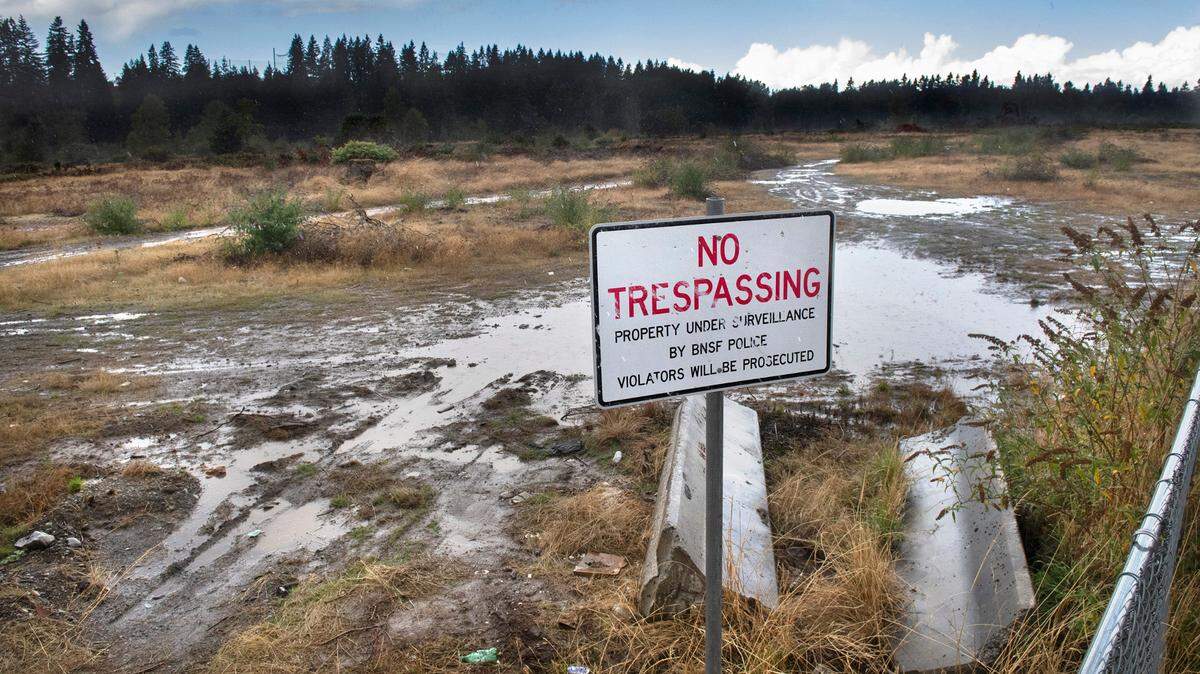
Plans for a new warehouse complex in South Tacoma are not going over well with some of its neighbors.
Bridge Industrial, a Chicago-based industrial park developer with an office in Bellevue, has been acquiring Pierce County properties in recent years. Its Bridge Point Tacoma 2MM is in a permit review process with the city of Tacoma.
The project is being marketed for buildings ranging in size from 323,526 to 960,682 square feet in a four-building option to up to 1,156,762 square feet in the largest of its three-building option.
Bridge filed a pre-application with the city in February 2021.
The company told The News Tribune in a statement this week it is “fully committed to delivering a project that complies with all environmental regulations, and we will continue our work with both the City of Tacoma and relevant public agencies to ensure our final plans meet these rigorous standards.”
Some people say the process is moving too fast for neighbors to be adequately informed, and a neighborhood council that tried to introduce a code amendment to create a Green Zone at the site said it is waiting for its requests to make their way through the city process.
“Very few people seem aware that Tacoma’s largest aquifer is directly below this proposed warehouse site,” Heidi Stephens, who serves on the South Tacoma Neighborhood Council, told the News Tribune. “We have to protect the aquifer from contamination as well as keep it well-supplied, both of which would be accomplished by retaining the land above as open green space and restored to its more natural condition, which the neighborhood council has advocated for over many years.”
In its statement, Bridge told The News Tribune:
“Bridge Point Tacoma 2MM is currently working through the State Environmental Policy Act (SEPA), which requires the quantification and mitigation of any and all environmental impacts related to this project. This includes, but is not limited to — traffic impacts, wetland and critical area impacts, and aquifer recharge.
“The Bridge team is working closely with city and traffic engineers to navigate the SEPA process and identify areas of impact for potential improvement; any required improvements will be the responsibility of Bridge and its contractors to complete and pay for.”
MULTIPLE PROJECTS
Bridge has acquired land for over 7 million square feet of Class A industrial buildings throughout the Northwest since opening its Seattle-area office in 2018.
Other projects include Bridge Point Lakewood 90, Bridge Point I-5 Seattle in Milton, Bridge Point Auburn 200, and two others in the Tacoma area: Bridge Point Tacoma 125, 10002 Steele St. S., and Bridge Point Tacoma 210, 10917 34th Ave. E., next to state Route 512 and just west of the Crestview Village neighborhood.
Bridge Point Tacoma 125 received land-use approval in October and is working its way through the permit process, with its building permit submitted Feb. 28.
Bridge Point Tacoma 210 faces a few hurdles, given its proximity to nearby residences. It submitted its noise and air quality studies Feb. 28 for a conditional-use permit. Those are in review, according to the county.
Its third Tacoma site, Bridge Point Tacoma 2MM, is on land formerly owned by BNSF Railway. It was purchased in September for $158.3 million, becoming one of the top land sales in the county for the year.
The area also is monitored as a Superfund site from Burlington Northern Railroad’s past use of the site and other industrial activity. Activities included rail-car manufacturing, repair and maintenance from 1892 to 1974, according to the EPA’s description. Two foundries also produced rail-car parts.
Piper Peterson of the EPA’s Superfund Emergency Management Division responded to a resident questioning the project and EPA’s oversight. In an email response forwarded to The News Tribune, Peterson wrote: “EPA’s role in the project is limited to ensuring it does not adversely affect the current remedy at the Superfund site.
“The other environmental issues are not within EPA’s regulatory purview. Those concerns are best directed to the City of Tacoma during their public comment period ...”
A public notice about the project sent to about 975 residents has raised concerns about the plans among nearby residents, particularly when it comes to traffic and environmental concerns, including for the aquifer.
The notices went out in early February, according to Shirley Schultz, principal planner with the city’s Land Use and Zoning.
“We used a mailing radius of 1,000 feet, since this doesn’t fall into the ‘heavy industrial’ notification for projects,” Schultz told The News Tribune via email in response to questions. “Warehousing/distribution is more of a ‘light industrial’ category.”
Stephens and others contend a proposal of this size needs wider notification distribution and more time for feedback.
“I don’t think many people are even aware of it yet,” Stephens said.
Adrienne Jones, who also serves on the neighborhood council, said the pace of permitting seems too fast.
“I just moved from Fircrest as a renter, bought my first home in South Tacoma, and it seems that there’s a lot of policy that keeps getting pushed through right now while people are in full-on survival mode, and also unaware of the processes to be engaged in their communities and its process,” she told The News Tribune in a phone interview.
The neighborhood council is scrambling to notify people at a time when it is trying to fill board positions.
“We’re in survivor mode as well,” Jones said, adding that the project’s permitting status wasn’t on their radar until the postcards came.
“The city needs to have a public meeting and enough notice for people to attend,” she added.
According to Schultz, “A public meeting can be requested by the neighborhood council or by written request from five people who received the notice. I would expect we’ll have a public meeting (with a two-week notice), and the public comment period will be held open 7 days after that meeting.”
She added: “It’s another way to provide project information and get comments from people, but it is not a public hearing.”
TRAFFIC AND PUSH FOR ‘GREEN ZONE’
Bridge’s submitted traffic report lists a total of “4,980 new weekday daily trips with 842 new trips occurring during the weekday AM peak hour (682 entering, 160 exiting), and 842 new trips occurring during the weekday PM peak hour (185 entering, 657 exiting).”
Access to the site, according to the report, is proposed at four locations: North Access Road/South 35th Street, South Madison Street/South 56th Street, South Burlington Way/South 56th Street, and South Washington Street/South 50th Street.
The report notes: “Truck trips are estimated to account for about 28 percent of the total new weekday daily trips, and 12 percent of the total new weekday AM and PM peak hour trips.”
The added traffic is a concern for some nearby residents.
“This area already has some of the highest air pollution in the nation, along with the worst public health in Pierce County,” Stephens told The News Tribune. “Bringing that much more truck traffic into this already marginalized community would be extremely negatively impactful; resulting in more air pollution, noise, congestion, heat-zones. Loss of green space to a low-income/high minority neighborhood is a form of environmental racism.”
Last year, the neighborhood council hoped to reclaim the land as an Economic Green Zone to protect the aquifer while also retaining open green space.
In March 2021 it submitted a request for a code amendment to the Planning Commission, as part of the the 2022 Amendment process that began in January 2021 when the commission started accepting applications.
Details of the green zone would be determined in a city scoping and visioning exercise sometime in 2022, but the STNC paperwork called for “No new polluting industrial/manufacturing within the (South Tacoma Groundwater Protection District) and aquifer recharge areas (for promotion of proposed South Tacoma Economic Green Zone).”
Lihuang Wang, senior planner, in response to questions, told The News Tribune via email: “The STNC’s application requests the City to improve regulations pertaining to the South Tacoma Groundwater Protection District in order to more effectively address environmental and health risks, and explore the potential transformation of the general area of the STGPD into an ‘Economic Green Zone’ that would accommodate more environmentally friendly and sustainable businesses and land uses.”
He noted the application was “complex,” affecting three neighborhood councils (South Tacoma, Central and South End), requiring collaboration with multiple agencies and “requires significant staffing and funding resources.”
“It proposes potential changes to the vision, policies, and strategies in the One Tacoma Comprehensive Plan. It involves amendments and reorganization of the STGPD regulations. It requires extensive outreach to and engagement with stakeholders (including residents, businesses and the community),” Wang wrote.
According to the neighborhood council’s application, “Our intent is initially for a broad review to align the Comprehensive Plan, the Urban Tree Canopy, Tacoma Environmental Act, Climate Justice Action Plan and Groundwater District Protection Code into a new unified Eco-Industrial Green Zone within South Tacoma.”
It also stated: “The South Tacoma Aquifer (providing up to 40 percent of Tacoma’s back-up water supply) is damaged and threatened. The South Tacoma Groundwater Protection District and its current zoning overlay are in serious need of updating to reflect modern-day knowledge for better proactive action, instead of simply reacting to post-contamination which continues to occur.”
The application called upon the city to take action not only for the environment but also to help improve the health of its residents, noting “the contaminated soil above the groundwater aquifer continues to be constant concern, as well as air quality and early mortality rates in South Tacoma being the worst in Pierce County and even the nation (per Tacoma-Pierce County Health Department/Tacoma Environmental Action Plan, citing our city as one of only 32 areas in the US below standard air quality).”
Nearly a year after submitting the application, it is slow-going to get through the city process..
“Right now, the city is only at the point of setting up dual public hearings just to approve a work plan for updating the protection district, not even close to the Green Zone consideration yet,” Stephens said.
“Compare that to how fast this warehouse proposal is being pushed-through, with nearly no further environmental review,” she added.
Wang, in a lengthy email response to questions about the amendment process, told The News Tribune that the Planning Commission is scheduled to complete the analysis work for applications included in the 2022 Amendment Package in early March, “conduct a public hearing in early April to receive public comments on the 2022 Amendment Package, and formulate its recommendations to the City Council in early May. The City Council is scheduled to conduct its review and public hearing in May-June, and adopt the 2022 Amendment Package in June 2022.”
He added, “Council’s adoption of the Package means that the Council agrees with the approach for STGPD code amendments as outlined in the Work Plan. Staff will then begin to carry out the Work Plan. The resulting STGPD code amendments will be added to the next year’s amendment cycle ... and scheduled for the Council’s adoption in June 2023.”
Work on the Economic Green Zone will take longer, he noted.
“The land use designation of an ‘Economic Green Zone’ is really a longer term work and will involve a lot of community conversations. The main tasks will be worked on in the 2023-2024 timeline, following up on the scoping and visioning exercise scheduled for some time in 2022.”
THE PROCESS SO FAR
There’s still a chance Bridge’s South Tacoma project could come before the hearing examiner, but that would require a challenge to the wetland permit or State Environmental Policy Act (SEPA) determination, still to come.
A public notice stated that the city “has preliminarily determined a Mitigated Determination of Non-significance will be issued for the proposal ... Mitigation is likely for traffic impacts.”
“It’s a technicality of how public noticing works with SEPA when there’s an associated land use permit,” Schultz explained. “When we do a combined notice we have to say what we ‘think’ the outcome of the environmental review will be.”
While the preliminary determination has been made, “it’s not final. Public and agency comments matter,” she added.
“So far, it’s pretty clear that there will be changes required to the north as part of traffic generation, specifically to the intersection of 35th and Union,” she wrote. “Beyond that, there may be additional conditions that come out of SEPA and project review.”
Those sometimes can include a restriction in construction hours, or special conditions related to how grading/filling is done, or other measures related to either localized or off-site impacts. Schultz noted.
The project could eventually get a hearing, depending on the level of challenge mounted.
“If the wetland permit is appealed, the appeal will be heard by the Hearing Examiner. It’s the underlying permit for this action and needs to be appealed along with the SEPA determination,” Schultz explained.
At least one letter has been sent to the city requesting a 60-day extension for public comment, which for now closes at 5 p.m. March 10.
“This public comment extension is necessary to allow for more local communication, examination of the 30-year history of the environmental remediation, and community meetings with the South Tacoma Neighborhood and Business District,” wrote Tacoma resident Timothy Smith.
“It should be the city’s goal to give as many people as possible a say in its future, not limit awareness and rush a plan as impactful as this warehouse complex will be,” he wrote.
TO OFFER FEEDBACK, READ MORE
Comments about the project can be mailed to Shirley Schultz, Principal Planner, 747 Market St, Room 345, Tacoma, WA, 98402 or sent via email to shirley.schultz@cityoftacoma.org or call 253-345-0879. The cutoff is 5 p.m. March 10.
More information on the documents submitted so far about the project, go to tacomapermits.org and select “Public Notices.” The project is listed under LU21-0125,
This story was originally published March 3, 2022 at 5:00 AM.