The Lushootseed language exists today, attesting to ‘uninterrupted love’
READ MORE
Indigenous peoples profiles
Indigenous Affairs Reporter Natasha Brennan profiles the contributions, cultural knowledge and strength of Washington state’s Indigenous peoples.
Expand All
This profile is one of a series on the contributions, cultural knowledge and strength of Native peoples in celebration of Washington state’s Indigenous peoples year-round.
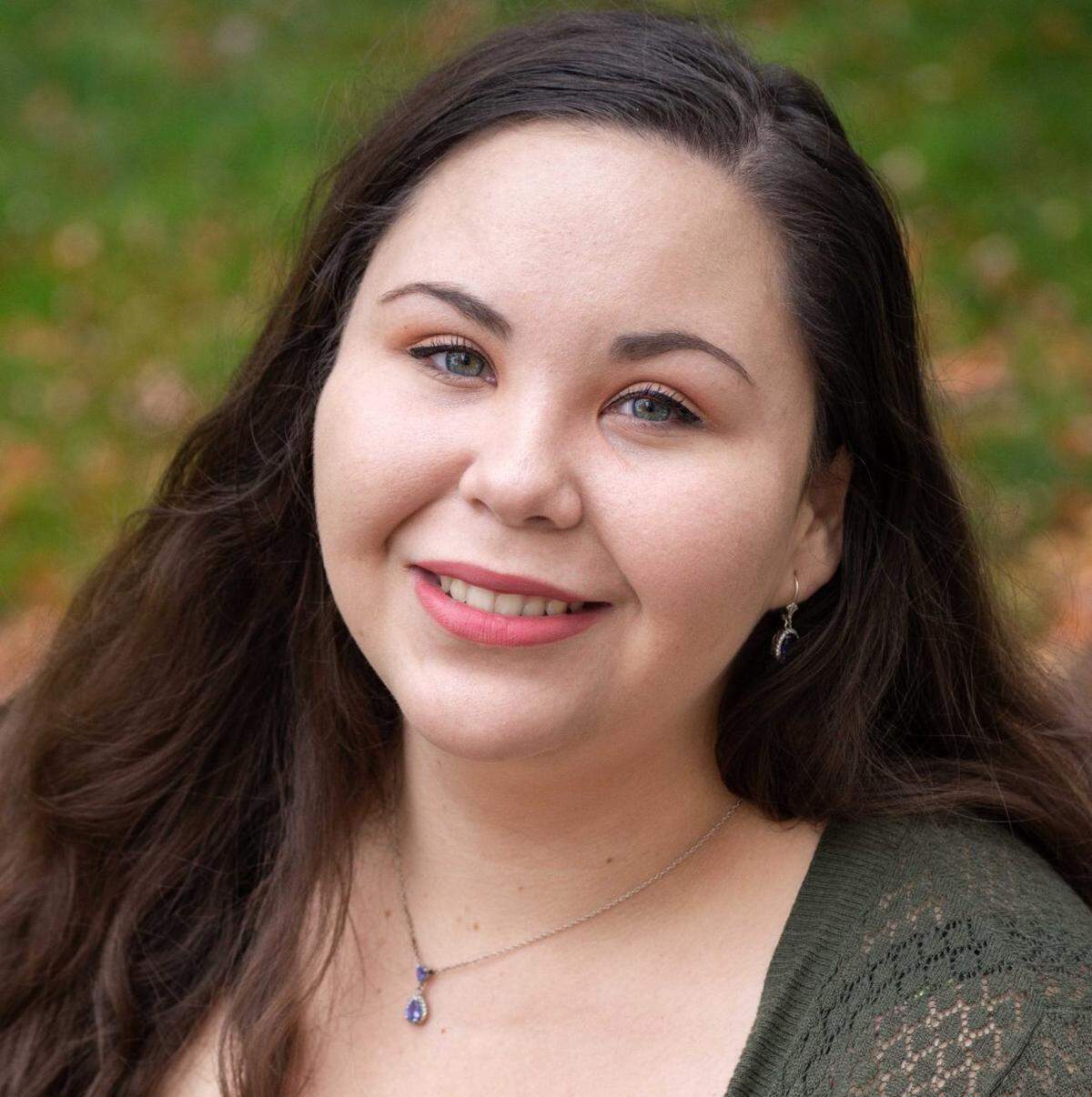
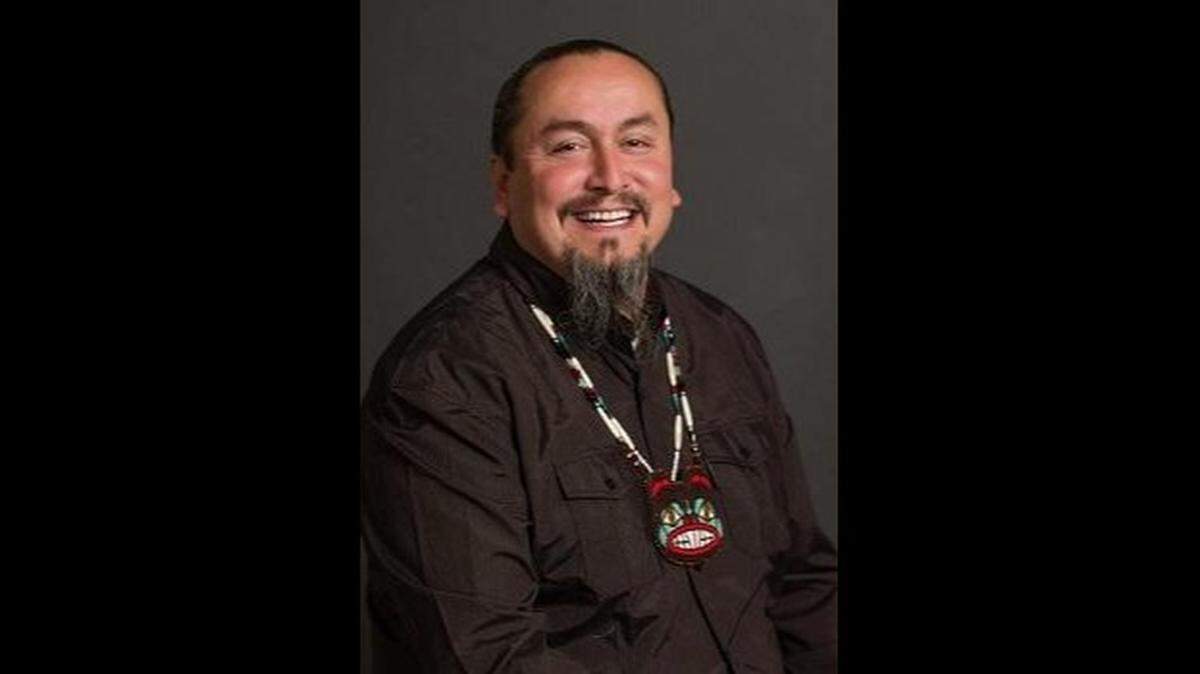
Puyallup Tribal member Chris Briden said he’d never forget the day his mother, Roberta Basch, told him his grandfather, Ruben Wright Sr., knew Lushootseed — the language of many Coast Salish Tribes, including the Puyallup Tribe.
“She said, ‘Oh, by the way, scapaʔ (grandfather) speaks the Puyallup language. That just blew my mind. I was so excited to learn it, but I was too young to know how to learn a language and my grandpa, even though he spoke the language, he didn’t really know how to teach it. So I really lost a lot of opportunities,” he said.
It was the 1980s and he was obsessed with “Star Wars.”
“I kept going up to him and say, ‘Grandpa, Grandpa, how do you say Luke Skywalker in the language? How do you say TIE fighter in the language? How do you say Deathstar in the language?’” he said. “That of course didn’t get me to be a speaker, but I got to hear the language. I got to learn a lot of words. To be honest, as a kid, I thought the language was kind of funny sounding.”
He would listen to sxʷiʔab (traditional narratives) and as he grew older, his mother learned the language, eventually becoming a teacher.
Despite being surrounded by the language, he grew hesitant to learn Lushootseed.
He took up the viola and went to Central Washington University to study music education. After transferring to Indiana University, he completed his undergraduate degree and master’s degree in early music. He studied the viola da gamba, violin, lyra da braccio and returned to Washington to work at a violin repair shop in the Seattle area.
“I loved music, but I also really, I loved languages. I studied Japanese, Hindi, German, Sanskrit, Latin — all kinds of languages. At some point, I found one of my mom’s old textbooks. I discovered that, because I had been around the language, I could pronounce it. I think one of the most tricky things for beginners is all the sounds that exist in our language that don’t exist in English, but having heard them my whole life, I could pronounce them pretty easily,” he said.
He’s also studied Old Irish, Turkish, French, Italian and Mandarin and would love to speak Korean and Vietnamese well enough to visit the countries.
After studying for a while, he contacted the Puyallup Language Department to find more recordings of the language.
Zalmai Zahir, a consultant for the department who holds a Ph.D. in theoretical linguistics from the University of Oregon, recognized his name from having taken Lushootseed classes with his mother. The pair studied under Upper Skagit elder and language conservationist Vi Hilbert.
“When he heard my name, he said, ‘Oh, sign this guy up for classes!’ So I took the online classes with him around 2015, finished the series and really enjoyed them,” he said.
Soon after, he was connected with Puyallup Language Department Director Amber Hayward and applied for a job as a teacher with the department in 2017.
“I scared everybody at Taco Time that day. I just stood up and yelled, ‘Yes!’ when I got the job,” he said.
Having taken the classes online himself, Briden found teaching them to be comfortable. He typically taught classes of about four students, but also helped teach students at the Tribe’s Chief Leschi Schools or other in-person classes.
“The pandemic happened and suddenly everything was online. Our classes just exploded. We had all these online events that we would never have had before. And more people can see them than we would have been able to fit in our old spaces. So it really, I don’t want to say that was a good thing. But there was a silver lining to the pandemic,” he said.
One of the events, Creation History Nights, allows language teachers, students and speakers to take turns telling sxʷiʔab, traditional narratives, from the teachings of Snoqualmie elder Jerry Kanim. The presentations are accompanied by Coast Salish art done by various local Native artists. Briden helps to coach the interchanging storytellers for their turn presenting.
“It’s beautiful. We have a large base with several families, multi-generational families, all learning together the stories of our people,” he said. “We’ve been able to reach families that have told us that they never could have attended in person or we have Tribal members in other states who watch regularly.”
The beautiful thing about revitalizing a language, Briden said, is that everyone is still learning.
“Our language was almost exterminated. Even if somebody does not have very great pronunciation, that is a win. And I don’t say that like I’m not impressed. I am impressed. Every person there makes me really, really happy because we came very close to this being entirely impossible,” he said.
He explained that when a child pronounces words wrong, like “besketti” for “spaghetti,” it’s considered cute.
“Everybody gets so excited. We tell them, ‘Say ‘sketti’ again!’ We celebrate the mistake. Whereas when we’re adults, and we say a mistake, we tend to get down on ourselves or judge one another. But I think that’s the opposite of what needs to happen. We need to continue that excitement for mistakes in class. Not to say that we won’t correct them, but your mistakes that you’re going to be a better speaker. You’ll remember how to say it right next time. It’s part of becoming a better speaker.”
As new recordings are found or discussions are had, even the teachers learn something new every day. This is reflected in his teaching style.
“I remember from my grandpa I would ask him to translate something and he would say a phrase meaning, ‘I don’t know.’ I would get frustrated as a kid. How come he kept telling me that he didn’t know stuff? But I realize now he was trying to teach me, if you don’t know something, hey, don’t make it up. And don’t be afraid of not knowing something. That’s the only way you’re gonna learn — admitting that you don’t know about it,” he said.
In addition to being Puyallup, he also has Blackfeet and Coeur d’Alene heritage. He has worked to study and learn other Indigenous American languages.
“I sat down and counted that in my ancestry alone, there are eight extinct or near-extinct languages. Where we are at now,” he said while at the Tribe’s Emerald Queen Casino in Tacoma, Wash. “...there used to be a school where Native kids were brought, and if they spoke Lushootseed, they were whipped, they were beaten, or their food was taken away.”
In the first volume released on its investigation, the Department of the Interior’s 106-page report underlined how, for over a century and a half, U.S. officials removed Native American children from their homes and relocated them to 408 federal boarding schools. Fifteen schools existed to forcibly assimilate Indigenous people in what is now Washington state.
“It’s a very immediate sense of our history right here. It was only within a few generations. My grandpa, luckily, didn’t go to that school, but my great-grandpa on my mother’s side, who actually spoke the Coeur d’Alene language, had scars on his back from being whipped, because he went to the schools and only spoke Coeur d’Alene. They whipped him until he just didn’t speak and learned English. That same thing is very common here.”
Over a decade ago, the Tribe’s Language Department and Historic Preservation Department put together The Boarding School and Cushman Project to document stories from Tribal elders who attended St. George’s Indian Boarding School, Cushman Indian Boarding School or Cushman Indian Hospital and Sanatorium on the Puyallup Reservation in Pierce County.
“That’s one of the reasons I find myself getting so happy during classes. A lot of people put a lot of energy into making what my students do entirely impossible. I think every time they speak, even one word, it’s an expression of the love for the language and for one another because, in order for language to continue, you need a parent, a mother speaking to their child in that language. And so the fact that the language exists today attest to that love that was uninterrupted since the beginning of time,” he said.
This story was originally published May 30, 2022 at 5:00 AM.