Oversight of Sheriff’s Office, jailed youth to be sent to Pierce County voters
Proposals to establish oversight offices for two Pierce County departments that have drawn sky-high litigation costs in recent years — the Sheriff’s Office and Juvenile Court — will be on the ballot in November.
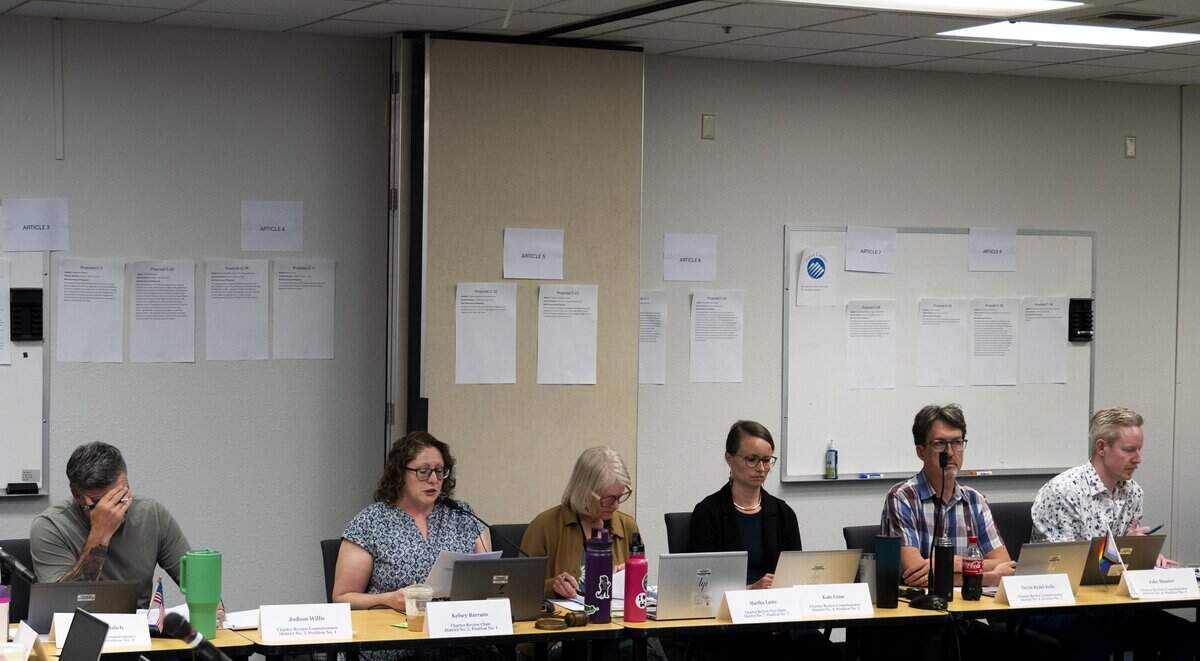
Voters will decide if they want to bake two new offices into the county government’s guiding document, the Pierce County Charter. The proposals were placed on the ballot by the 21-member Charter Review Commission, an elected group of citizens which completed its once-in-a-decade review of the charter at the end of June and sent seven suggested amendments to the ballot.
The proposed departments of Public Safety Ombuds and the Juvenile Detention Advocate Office take different approaches to oversight, but supporters say the offices will reduce liability risk, save the county money and improve public trust.
Critics are skeptical of the promised savings and wary of the offices’ uncertain operating costs. In the case of the Public Safety Ombuds, officials who voted against advancing the proposal to the ballot warned that it would face opposition from Sheriff Keith Swank and the union that represents the rank-and-file of the Sheriff’s Office.
Commissioner Troy Serad (District 5), voted “yes” on sending both amendments to the ballot. He said during a June 17 commission meeting that he was a strong believer in accountability in government offices.
“It will bring some transparency with the office that presently, I think me and the public do not feel is present there, and will hopefully build additional trust between the department and maybe constituents within Pierce County,” Serad said of the Public Safety Ombuds.
Commissioner Jerome O’Leary (District 1) voted “no” on both amendments. At the June 17 meeting he said the Public Safety Ombuds looked like an unnecessary 10-year experiment and that it should instead be built by the County Council with more comprehensive budgetary projections.
“Is accountability important? Absolutely. Is transparency important? Yes, it is. And I think all should be held to that standard, but again as stated previously, this document doesn’t do that,” O’Leary said.
At the heart of both charter amendments is an attempt to fend off litigation tied to some of the county’s largest and most expensive departments. The Sheriff’s Office 2026-2027 budget is about $406 million, equal to that of the combined budgets of the 17 least-funded departments bankrolled by the county’s general fund. It is budgeted for 715 employees between law enforcement and corrections. Juvenile Court’s budget is $55 million, the fourth-most expensive department funded by the county’s general fund. It is budgeted for 147 employees.
Data show the Sheriff’s Office and Juvenile Court were responsible for 72 percent of all claims and litigation expenses paid out by the county between 2021 and 2025, according to a county finance report prepared for the Charter Review Commission. That’s nearly $27 million for claims and litigation arising out of the Sheriff’s Office and $11.3 million for Juvenile Court.
The proposals also demonstrate a desire to strengthen accountability mechanisms to protect the public at a time when both the Sheriff’s Office and Juvenile Court have made headlines.
The former leader of the Sheriff’s Office Criminal Investigation Division, Chad Dickerson, was convicted of vehicular assault DUI earlier this year for crashing his pickup into an SUV carrying a family of six. He was convicted of obstruction for leaving the scene to seek medical treatment before the Washington State Patrol arrived. Prosecutors said Dickerson challenged a deputy about using her body camera when she spoke to him, and an internal investigation later found that a deputy’s body camera was off during “critical phases” of the response to the wreck.
Swank has said he is proud to have more complaints filed against him with the state’s Criminal Justice Training Commission than any other sheriff in Washington, though most of those complaints relate to his brash public speech rather than any actions. He has tried to disqualify candidates for jobs in the Corrections Bureau on the grounds that they were not U.S. citizens — contrary to state law — and threatened to not enforce laws passed by the Legislature that he disagrees with.
Juvenile Court, meanwhile, is the subject of nearly 150 cases alleging abuses of detained youth, according to the rationale included with the original version of the proposal for a Juvenile Detention Advocate Office. Most are allegations from incidents that occurred before 2000, and a spokesperson for the county has said that the high number of new claims was a result of the state Legislature and the Washington Supreme Court lifting or expanding the statute of limitations on those types of cases.
County Executive Ryan Mello has described the number of claims as a serious challenge to the county’s financial viability. Pierce County has recently awarded about $9.7 million to people who allege they were abused as children while detained at Remann Hall.
It’s unknown what it would cost the county to operate the Public Safety Ombuds or Juvenile Detention Advocate Office each year, but some supporters said the offices would pay for themselves by reducing litigation costs.
Commissioner Kate Ginn (District 4) said during the June 17 meeting that data from the International Ombuds Association showed an ombuds office typically saves three to eight times its operating costs by preventing litigation.
“Obviously that depends on how it’s implemented,” Ginn said. “It has to be done right. But I think at this point there’s a lot of examples of good ombuds offices.”
In an email to The News Tribune, Ginn said she had a quote estimating that operating a two-person office could cost about $450,000 per year. Vice Chair Martha Lantz (District 7) said in an email that the county would be working on fiscal estimates.
Sheriff’s Office oversight faces internal opposition
If the Public Safety Ombuds department is approved by voters, according to the text of the proposal, it would monitor “all matters involving the affairs of the executive department of sheriff and its employees.”
The ombuds would have the power to subpoena information and witnesses for investigations or to respond to complaints against the Sheriff’s Office. Findings and recommendations from investigations would be published, and the ombuds would refer complaints to the appropriate authorities as needed.
The proposal notes that the County Council is expected to further define the powers, duties and operations of the ombuds. The director of the Public Safety Ombuds would be appointed by a majority of the council from a list of three candidates submitted by a five-person panel of appointees selected by the county executive, the sheriff, the Superior Court judges, the Tacoma-Pierce County Bar Association and the largest bargaining unit in the Sheriff’s Office.
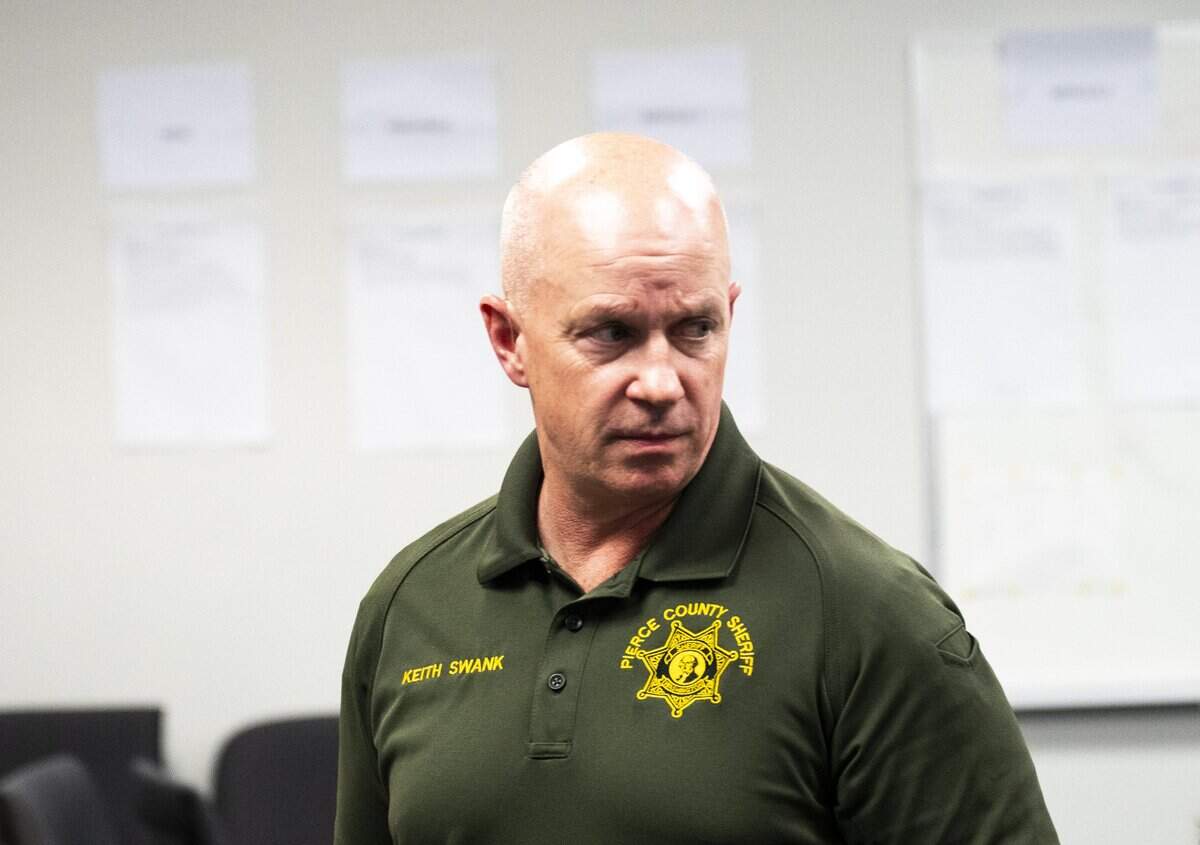
At a June 1 Charter Review Committee meeting, Swank called the ombuds office proposal “virtue signaling” and said it would be an ineffective layer of bureaucracy rather than a solution to any problems.
“This is designed specifically to control the sheriff,” Swank said. “If this passes as long as I’m sheriff, the Pierce County Sheriff’s Office will not participate.”
Swank’s threat to not cooperate could be moot depending on the outcome of another charter amendment on the November ballot. It proposes switching to a system of appointed, rather than popularly elected, sheriffs and terminating Swank’s term in office Jan. 1, 2027.
The sheriff’s second-in-command, Undersheriff Cynthia Fajardo, also spoke against the proposal at a June 3 meeting. She stressed that there had been no meaningful cost analysis for the ombuds and argued that forming it was needless.
“We already have a statewide system in place for law enforcement oversight,” Fajardo said. “The Washington State Criminal Justice Training Commission has the authority to review misconduct, investigate, decertify officers who violate their oath. Creating a duplicate county-level oversight structure is not only redundant, it’s fiscally irresponsible.”
Possible redundancy was also on the mind of Commissioner Loujanna Rohrer (District 6) when she voted no on the proposal June 17. She argued that Internal Affairs, County Council’s budget authority, the courts, the state auditor, the Criminal Justice Training Commission, the Pierce County Force Investigation Team and the State Office of Independent Investigations all represented accountability systems.
The president of the Pierce County Deputy Sheriffs Independent Guild, Sgt. Shaun Darby, said at the June 3 meeting that deputies are subject to “extensive oversight” through supervisors, internal investigations, prosecutors, the courts, public records laws, government and elected leadership.
“The question is whether creating another layer of government will improve public safety or simply create additional expense, duplication and conflict,” Darby said.
In a June 4 letter to the Charter Review Commission that was also sent to County Council and Mello, Darby said the guild’s research indicated that Seattle spends nearly $15 million each year on its police-accountability system.
That system includes the Office of Police Accountability, which has a 2026 budget of about $6.4 million, the Community Police Commission, with a roughly $2.5 million budget and the Office of Inspector General for Public Safety with a budget of about $5.4 million.
Darby said that those expenditures were not supported by assessments showing those systems have improved accountability, public safety, officer performance or public confidence.
“Those are substantial public dollars that could otherwise be invested in direct law enforcement staffing, response capacity, and community-based crime reduction efforts,” Darby wrote.
Seattle’s police-accountability system formed out of the U.S. Department of Justice’s 2012 consent decree. According to the ACLU of Washington, it mandated the creation of the Community Police Commission, and its work led to recommendations that became the foundation of the 2017 Police Accountability Ordinance. That legislation established the Office of Police Accountability, Office of Inspector General and the Community Police Commission as the three key oversight offices.
Last year, a federal judge ended the consent decree as a result of police reforms. According to NPR member station KUOW, city officials said in court filings that the Seattle Police Department dramatically curtailed use of force.
Another challenge the county will face in establishing Public Safety Ombuds is bargaining obligations with the deputy guild and other unions representing employees in the Sheriff’s Office, such as corrections deputies.
Commissioner Devin Rydel Kelly (District 4) acknowledged as much during the June 17 meeting. He voted in favor of the proposal and said law enforcement officers organized under a collective bargaining agreement, like any other union, have an incentive to turn things into a bargainable issue.

“It is going to be up to the negotiating teams on both sides to determine whether it is and potentially an arbitrator,” Kelly said. “This is always the case with anything involving law enforcement, and it doesn’t mean laws shouldn’t be passed.”
Future bargaining agreements between the county and law enforcement unions could dampen the authority and powers of the Public Safety Ombuds. In Seattle, after the city signed a contract with the Seattle Police Officers Guild in 2018, a federal judge later found parts of it failed to address officer accountability and ruled that the city had fallen partially out of compliance with the federal police reform agreement.
Court leader says oversight goals already implemented
Compared to the Public Safety Ombuds, the setup of the Juvenile Detention Advocate Office appears to provide less independence to its director, who would be appointed by the Superior Court and subject to the direction of the court’s presiding judge and court executive.
If passed in November, the office would be expected to be available to juvenile detainees and their families, take and respond to complaints, monitor detention conditions and comply with regulations governing mandatory reporters of child abuse or neglect. The office is expected to report data to the Superior Court regarding use of force, room confinement, staff training and facility population characteristics among other metrics.
The proposal also dictates that juvenile detention be independently audited or reviewed for accreditation at least every five years by a nationally- or state-recognized juvenile detention audit or accreditation authority.
Chris Gaddis is the court executive responsible for the non-judicial operations of the Superior and Juvenile courts. In a July 2 email, he told The News Tribune that as a general principle, the court supports transparency and public review of policies related to the protection of youth involved in the court’s detention programs.
Gaddis said many of the objectives outlined in the proposal for a Juvenile Detention Advocate Office have been implemented over the past decade. He said the primary change introduced related to how information is reported and who is responsible for conducting the audit.
“The Court’s only concern involves the costs associated with the proposal and whether those resources could be used more effectively in other areas of court operations,” Gaddis said. “The Court otherwise takes no position on the proposal’s passage.”

The court’s leadership spoke at Charter Review Commission meetings in opposition to a previous version of the proposal that would have had the director appointed by the county executive and confirmed by the County Council. Superior Court Judge Tom Quinlan said during the June 22 meeting that the proposal would have interfered with judicial independence and allowed for undue political intervention.
Gaddis told The News Tribune that the revised version of the proposal addressed those concerns and represented a meaningful improvement.
Commissioners who opposed the Juvenile Detention Advocate Office objected to its placement in the charter and described it as an overreach. Commissioner Hollie Rogge (District 3) said during the June 22 meeting that Superior Court was already one of the most regulated departments and noted that Juvenile Court has been recognized nationally for its efforts to find safe alternatives to locking up young people accused of crimes.
“We’re going to put something out to the voters that we don’t know how much it will cost or how much impact it will have,” Rogge said. “And we have all of these things already in place to oversee the Superior Court with experts who know how to deal with children and the courts who know how to deal with detention.”
Commissioner Brenda Lykins (District 7) said concerns still exist with the operation of Remann Hall. She said a January investigative overview done by the Human Resources Department identified multiple systemic gaps in oversight, inconsistencies in hiring, probationary evaluations, discipline and compliance with the Prison Rape Elimination Act (PREA).
Lykins also noted that in 2024, Juvenile Court went through a PREA audit that included a six-month corrective action plan.
The plan, according to an annual report, had four requirements. They included ensuring documentation for PREA investigations included elements necessary to determine if an allegation was substantiated, unsubstantiated or unfounded. It required implementing a screening tool to assess the risk of sexual victimization for all youth. It mandated weekly meetings between the detention manager, PREA coordinator, mental health specialist and nurse. And it instructed the court to develop and train supervisors on a response plan for incidents of sexual abuse.
The 2025 PREA report shows that last year zero of the seven allegations of staff sexual misconduct were substantiated, three were unsubstantiated and four were unfounded. Two allegations of sexual harassment were substantiated out of six reported.
Lykins said the court completed the corrective action plan and passed its 2024 audit. She said the January investigation from Human Resources still showed significant gaps. Lykins noted that court leadership told the commission it has made changes.
In February, the Superior Court announced a new management structure meant to enhance accountability among other objectives. In April, longtime juvenile court administrator TJ Bohl was pressured to resign, and he was replaced by former Superior Court Clerk Kevin Stock as interim deputy court executive. Lykins said new personnel could come and go.
“This needs to be a priority,” Lykins said. “And is it an unfunded mandate? Yes it is. But it’s a preventive cost structure.”